Science & TechnologyS


Eye 1

Constant surveillance: How big tech's household devices are SPYING on you

spying tech
© Pixabay / Gerd Altmann
The expansion of home tech products to make life increasingly convenient requires consumer privacy sacrifices, the full extent of which won't be revealed for years to come, but have been hinted at through a slew of missteps.

This past week Amazon hit headlines after its virtual assistant Alexa was caught passively recording couples arguing, having intimate family discussions and even having sex (apparently sex noises can trigger Alexa-activated Echo speakers).

Data is the new dominant commodity of the 21st century and the trade-off of convenience for privacy and security has been highlighted in a plethora of cases involving consumer 'smart products' in recent years.

Comment: Embrace the current technological revolution at your own peril. It's entirely likely that Big Tech works hand in hand with the US intelligence network to create these devices specifically so that they can be used to invade our privacy and send data back to those who want to use it against us.


Evil Rays

Ultra-thin layers of rust can be used to generate electricity from flowing water

rusted bridge supports
© Morteza Akhnia/Unsplash
There are many ways to generate electricity — batteries, solar panels, wind turbines, and hydroelectric dams, to name a few examples. .... And now there's rust.

New research conducted by scientists at Caltech and Northwestern University shows that thin films of rust — iron oxide — can generate electricity when saltwater flows over them. These films represent an entirely new way of generating electricity and could be used to develop new forms of sustainable power production.

Interactions between metal compounds and saltwater often generate electricity, but this is usually the result of a chemical reaction in which one or more compounds are converted to new compounds. Reactions like these are what is at work inside batteries.

In contrast, the phenomenon discovered by Tom Miller, Caltech professor of chemistry, and Franz Geiger, Dow Professor of Chemistry at Northwestern, does not involve chemical reactions, but rather converts the kinetic energy of flowing saltwater into electricity.

Eye 1

'Terminator' style robotic eye lens controllable by users developed by scientist

Cyborg aka Terminator
© Daniel Juřena/Flickr/Wikimedia Commons
"Man is something that shall be overcome," wrote Friedrich Nietzsche in Thus Spoke Zarathustra. "Man is a rope tied between beast and overman - a rope over an abyss. What is great in man is that he is a bridge and not an end." Nietzsche's assertion was that humanity could be perfected through individual will and vigorous action here on Earth. Whether or not you agree with Nietzsche's philosophy, his words here allude to a larger point that can't be denied: humanity is not at its end state. This is particularly evident in DNA self-hackers, CRISPR experimenters, Elon Musk's Neuralink project, and those who tinker with Human Machine Interfaces (HMIs), i.e., those who aim to improve human cognition, strength, and sensory perception with implants, exoskeletons, prostheses and other technologies connected to living tissue.

A group of scientists from U.C. San Diego has just made an extraordinary breakthrough in the latter category with a soft robotic eye lens that can be controlled by blinking and looking around. Their research was published in an article in the journal Advanced Functional Materials. The invention uses electrical signals - the "electro-oculographic signal" - generated by the movements of the eye to "control the motions and the change of focal length of a biomimetic soft lens. The motion and deformation of the soft lens are achieved by the actuation of different areas of dielectric elastomer films, mimicking the working mechanisms of the eyes of human and most mammals." In other words, by looking around and blinking, the wearer can focus these soft lenses as though they were a natural part of the eye.

Bandaid

Researchers design new bandage that uses body heat to heal

bandages
© Wyss Institute at Harvard UniverThe active adhesive dressing (AAD) contracts when it heats up to body temperature, allowing it to accelerate the healing of open wounds on the skin.
When you get a small cut or scrape you probably reach for an ordinary bandage, which is typically nothing more than an adhesive strip holding a tiny patch of sterile padding. It's a simple design that has stood the test of time, but researchers from Harvard's Wyss Institute think they've come up with something even better.

The researchers took a cue from nature, designing a new kind of wound covering that not only speeds up the healing process but can actually reduce scarring as well. Inspired by the fragile skin of animal embryos which can heal itself without leftover scars, the new dressing is impressively high-tech but also incredibly simple to use.

The bandages use a heat-activated hydrogel that doesn't just cover a cut or gash, it actually contracts and pulls the edges of the wound together. It's designed to begin working at temperatures of around 90 degrees Fahrenheit, meaning that it is activated by body heat alone, slowly shrinking and holding the edges of the wound in place to promote healing.

Info

Japan approves first ever human-animal embryo experiments

Japan has approved the first ever human-animal embryo experiments. This research could produce an alternative sources of organs for transplant. However, there are an array of ethical and technical hurdles to be addressed.
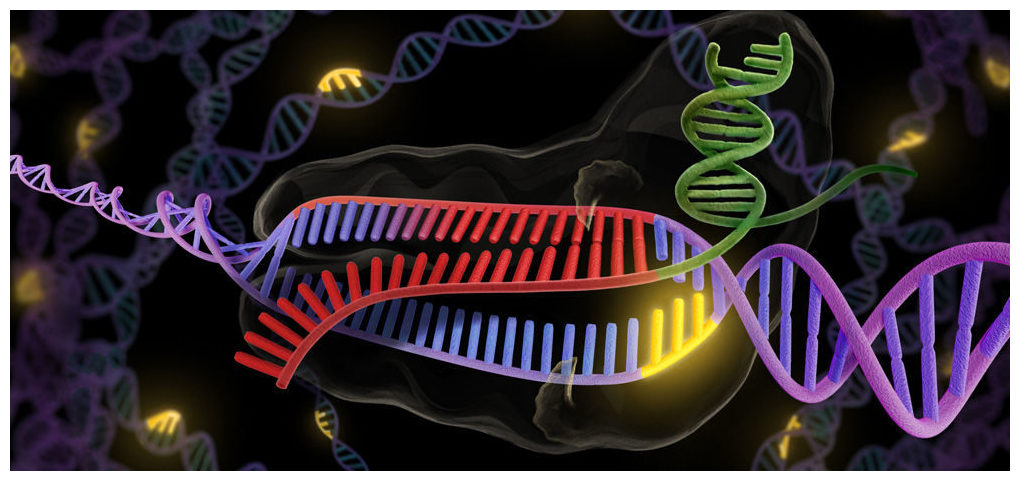
CRISPR - revolutionary new tool to cut and splice DNA
© Illustration courtesy of Jennifer Doudna/UC BerkeleyCRISPR - revolutionary new tool to cut and splice DNA.
According to Nature, a Japanese stem-cell scientist is set to be granted government backing to develop animal embryos that contain human cells. These embryos will then be transplanted into surrogate animals. This follows the rescinding of such a ban earlier in 2019.

The study will be led by Hiromitsu Nakauchi (University of Tokyo) with support of scientists from Stanford University in California. The aim is to grow human cells in mouse and rat embryos. The long-term goal is to create animals with organs composed of human cells an for these organs to be capable of being transplanted into people.

On being given permission Nakauchi stated: "Finally, we are in a position to start serious studies in this field after 10 years of preparation. We don't expect to create human organs immediately, but this allows us to advance our research based upon the know-how we have gained up to this point. by the government."

Meteor

Another near-miss: Scientists shocked to discover 'city-killer asteroid' that just whizzed past Earth

Asteroid 2019 OK
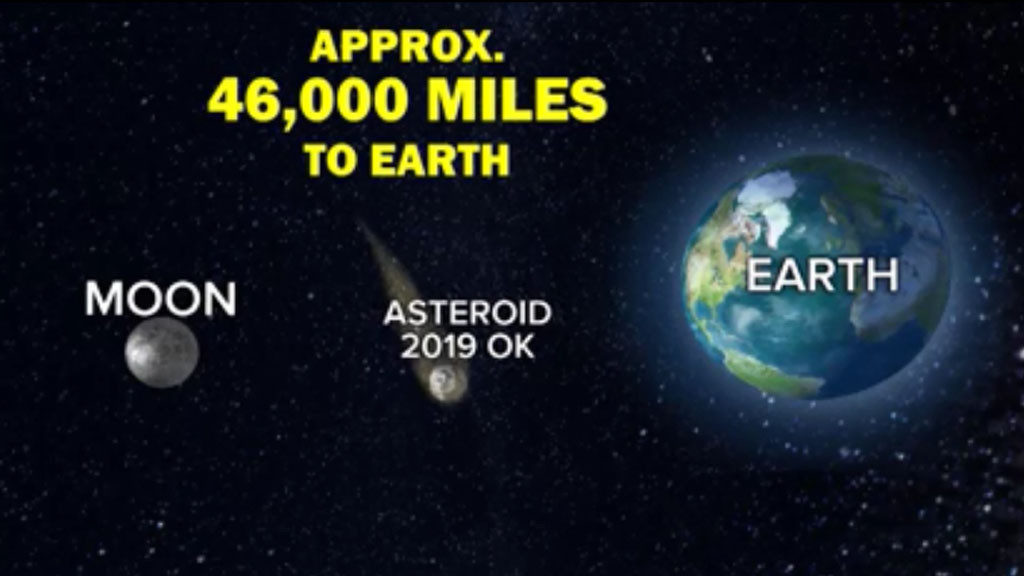
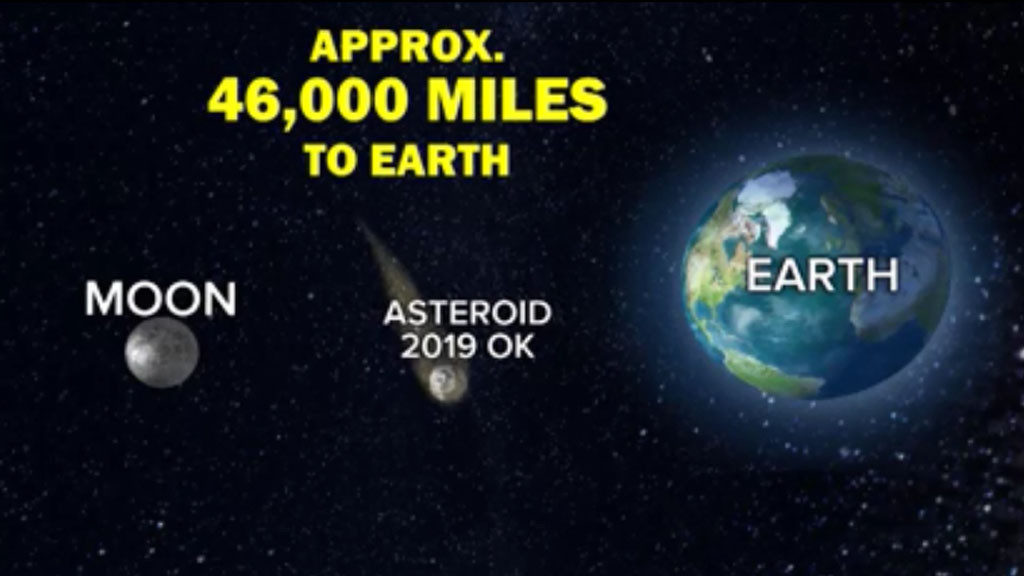
The space rock, named Asteroid 2019 OK, came hurtling toward Earth at a speed of nearly 15 miles a second, before flying past on Thursday. Scientists say they had no idea the 328-foot wide asteroid was coming our way.
Alan Duffy was confused. On Thursday, the astronomer's phone was suddenly flooded with calls from reporters wanting to know about a large asteroid that had just whizzed past Earth, and he couldn't figure out "why everyone was so alarmed."

"I thought everyone was getting worried about something we knew was coming," Duffy, who is also lead scientist at the Royal Institution of Australia, told The Washington Post. Forecasts had already predicted that a couple asteroids would be passing relatively close to Earth this week.

Then he looked up the details of the hunk of space rock named Asteroid 2019 OK.

"I was stunned," he said. "This was a true shock."

This asteroid wasn't one that scientists had been tracking and it had seemingly appeared from "out of nowhere," Michael Brown, a Melbourne-based observational astronomer, told The Post. According to data from NASA, the craggy rock was large, roughly 110 yards wide, and moving quickly along a path that brought it within about 45,360 miles of Earth. That's about one-fifth of the distance to the moon and what Duffy considers "uncomfortably close."

Comment: Scientists might not have been so shocked if they had been paying attention to the increasing frequency which such undetected asteroids are whizzing past earth.


Sun

Standing Rock Sioux Tribe fights back with clean energy

solar system
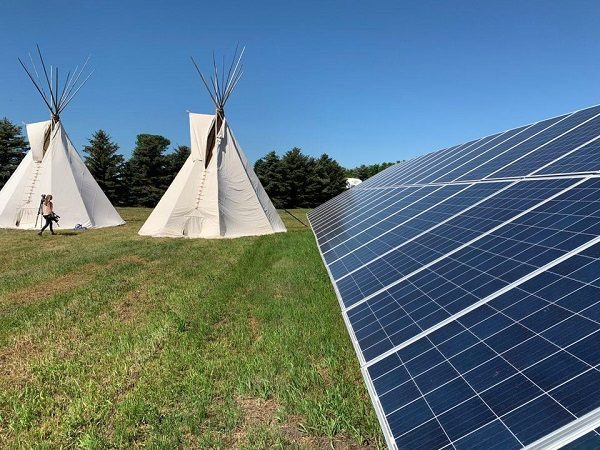
© GIVEPOWER FOUNDATIONThe new solar system at Standing Rock was inaugurated on 26 July 2019.
The Standing Rock Sioux Tribe first stood up against big oil, and is now backing clean energy. In 2017, the controversial Dakota Access Pipeline became operational, despite the passionate protests of the tribe's members who were joined by indigenous people from around the world supporting the right to self-determination for all Native Americans. The pipeline was originally planned to be built near the city of Bismark, which is majority-white, but was moved to pass through the reservation after residents there protested about the risk to their own water supply. When the indigenous residents of the Dakotas highlighted their own concerns about the pipeline, it seemingly fell on deaf ears in Washington D.C.

Out of this controversy and the concerns of the pipeline's impact on the environment, the Sioux Nation is now fighting back by building the largest solar energy farm in North Dakota. At 300 kW, the installation might not sound big by national standards, but North Dakota has the dubious distinction of ranking dead last among US states when it comes to solar energy.

Despite its expansive landscape conducive to solar energy generation and high poverty areas that desperately need to cut costs and create jobs, North Dakota is ranked last in U.S. solar production, with just three local solar installers. The Cannon Ball Community Solar Farm went live earlier this year and already represents half of total solar energy being generated in the state. Currently, the farm powers the Sioux Nation Community Center and Veterans Memorial Building and has projected cost savings of $7-10,000 each year, which will be put directly back into the community.

U.S. Rep. Tulsi Gabbard, a leading supporter of Sioux Nation's commitment to the environment said, "The Cannon Ball Community Solar Farm is the result of a coalition of Native American leaders, military veterans, environmental groups and sustainability-minded business interests coming together around a common vision of citizenship and stewardship of our precious natural resources."

Blue Planet

Modern humans interbred with at least 5 other archaic groups across Eurasia

Fossiler Schädel eines archaischen Homo Sapiens
© WikimediaCommons, CC BY–SA 2.0Homo Sapien fossil in the Smithsonian Natural History Museum.
Genetic analysis has revealed that the ancestors of modern humans interbred with at least five different archaic human groups as they moved out of Africa and across Eurasia.

While two of the archaic groups are currently known -- the Neandertals and their sister group the Denisovans from Asia -- the others remain unnamed and have only been detected as traces of DNA surviving in different modern populations. Island Southeast Asia appears to have been a particular hotbed of diversity.

Published in the Proceedings of the National Academy of Sciences (PNAS), researchers from the University of Adelaide's Australian Centre for Ancient DNA (ACAD) have mapped the location of past "mixing events" (analysed from existing scientific literature) by contrasting the levels of archaic ancestry in the genomes of present-day populations around the world.

Comment: See also:


Blue Planet

Iceland's Forest Service works to bring back areas razed by Viking settlers

iceland reforestation
Iceland is now trying to bring the trees that once lushly covered part of the island back, but faces challenges
Before being colonised by the Vikings, Iceland was lush with forests but the fearsome warriors razed everything to the ground and the nation is now struggling to reforest the island.

The country is considered the least forested in Europe; indeed, forests in Iceland are so rare, or their trees so young, that people often joke that those lost in the woods only need to stand up to find their way.

However, it wasn't always that way.

When seafaring Vikings set off from Norway and conquered the uninhabited North Atlantic island at the end of the ninth century, forests, made up mostly of birch trees, covered more than a quarter of the island.

Comet 2

Impact hazard from disintegrating comets

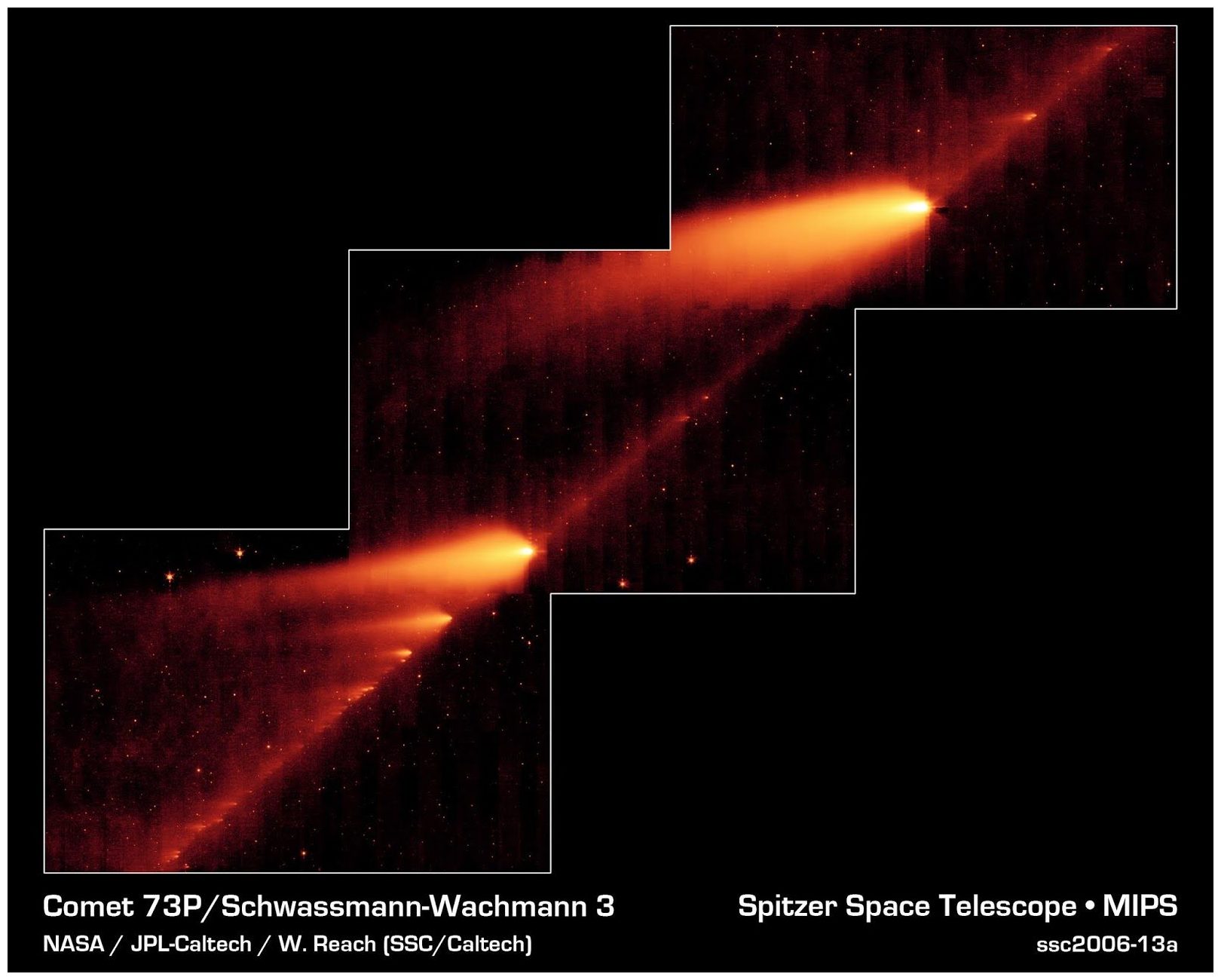
Comet 73P
© NASA/JPL-Caltech/W.Reach [SSC/Caltech]
Last month, Bill Napier (co-creator of the coherent catastrophism theory, with Victor Clube) published his latest paper (MNRAS, vol. 488, p 1822-1827) on the impact hazard from disintegrating comets in the inner solar system. His focus is on a large 100 km comet in an Encke-like orbit. It is a sophisticated work that extends his earlier estimates, this time by combining explicit orbital simulations with a calibrated model of comet fragmentation (published by de Sisto et al. in 2009).

His aim, like mine in Prehistory Decoded, is to estimate the hazard to Earth from the kind of comet thought to have become trapped in our inner system a few tens of thousands of years ago. We know, pretty much, that this happened because of the massive zodiacal dust cloud and correlated fragments that remain in orbit.

He concludes that we can expect one or two impact collisions over the last 20,000 years, or so, with energy over 6000 Mt, and that this energy will likely be unevenly distributed across a hemispherical region. This is roughly 600 times the energy of the Tunguska impact, which itself was large enough to demolish one of our biggest modern-day cities (like Greater London).

This broadly supports my own estimates in Prehistory Decoded, based on simple fragmentation pathways and Opik's collision formula, where I find that we can expect one or two collisions with an energy of at least 10,000 Mt, and perhaps another ten with energy over 1,000 Mt, from the same sized comet over the same timescale. Great!