Science & TechnologyS


Butterfly

Temperate zones not tropics may host more modern evolutionary innovation according to plant study

hibiscus
The tropics are the birthplace of most rosids, a massive group of flowering plants that includes this hibiscus, a member of the mallow family. But researchers found new rosid species are evolving in temperate zones twice as quickly as the tropics, a finding that challenges a longstanding hypothesis.
In a surprise twist, a major group of flowering plants is evolving twice as quickly in temperate zones as the tropics. The finding runs counter to a long-held hypothesis that tropical regions, home to the planet's richest biological diversity, outpace their temperate counterparts in producing new species.

The tropics are the birthplace of most species of rosids, a group that makes up more than a quarter of flowering plants, ranging from mangroves to roses to oaks. But in an analysis of about 20,000 rosid species, researchers found the speed of tropical rosid evolution lags far behind that of younger communities in temperate habitats.

Although rosids originated 93-115 million years ago, the rate at which the group diversified, or formed new species, dramatically increased over the last 15 million years, a period of global cooling and expanding temperate habitats. Today, rosids are diversifying far faster in places such as the southeastern U.S. than in equatorial rainforests, said study co-lead author Ryan Folk, assistant professor of biological sciences and herbarium curator at Mississippi State University.

Comment: See also: And check out SOTT radio's:


Moon

Unexpected metal on moon could signal close connection with early earth

moon
© NASA/GSFC/Arizona State UniversityAn image of the near side of the moon based on data from NASA's Lunar Reconnaissance Orbiter.
Earth's moon is more metal than scientists imagined.

NASA's prolific Lunar Reconnaissance Orbiter (LRO) found rich evidence of iron and titanium oxides under the surface of the moon, which may show a close connection with Earth's early history.

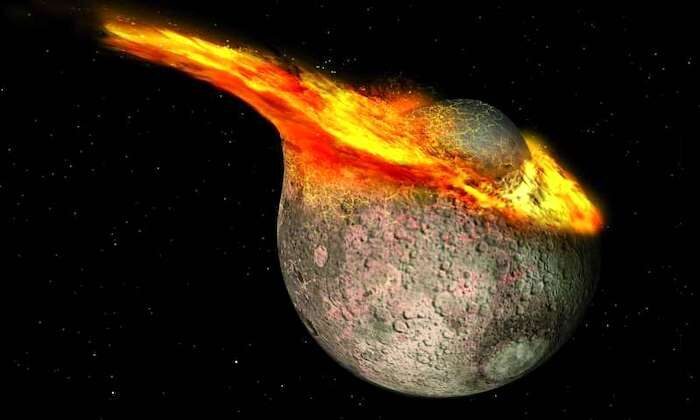
Scientists have been debating how the moon formed for decades. The leading theory suggests that a Mars-size world collided with Earth billions of years ago. The colliding world shattered upon impact and blasted part of the proto-Earth's surface into space. The debris surrounded Earth with a ring; the moon we see today is the result of that ring slowly collapsing under its own gravity.


The moon's chemical composition, however, doesn't show clear evidence of that theory. The lunar highlands on the moon, visible from the Earth as bright regions, have rocks with smaller amounts of metal-bearing minerals relative to our planet.

Cassiopaea

Two bright new supernovae light up nearby galaxies

Two bright new supernovae are now within the range of amateur telescopes in the western sky at nightfall.

Supernova 2020nlb
© Gianluca MasiSupernova 2020nlb in the galaxy M85 in Virgo was a 17th-magnitude blip at discovery but has grown brighter each night. Now at magnitude 12.2 (July 7th), it's bright enough to see in a 6-inch telescope. M85's supernova is currently almost a full magnitude brighter than the 13.1-magnitude field star immediately to its northeast. The supernova sits 1.0″ east and 43.2″ north of the core. North is up.
If you want to see a supernova in your lifetime, why wait around for Betelgeuse to blow up? If you have a 6-inch telescope and access to a dark sky, you can see one right now. Two actually. Both are visible in the western sky at nightfall in the neighboring constellations Virgo and Coma Berenices.

The first of the pair, dubbed 2020nlb, was discovered by the Asteroid Terrestrial-impact Last Alert System (ATLAS) on June 25th in the 10th-magnitude galaxy M85. Located in Coma Berenices 60 million light-years from Earth, M85 is an elliptical galaxy a quarter again as large our Milky Way. The "M" stands for Charles Messier, an 18th century French astronomer who compiled a list of galaxies, star clusters and nebulae he stumbled on during searches for his favorite prey, comets.
Supernova 2020nvb
© Gianluca MasiLocated just 3.3″ west and 8″ north of the core, the bright supernova 2020nvb appears "stuck" to NGC 4457's bright nucleus. North is up.

Telescope

Dying stars breathe life into Earth: study

NGC 7789, also known as Caroline's Rose
© Guillaume Seigneuret and NASANGC 7789, also known as Caroline's Rose, is an old open star cluster of the Milky Way, which lies about 8,000 light-years away toward the constellation Cassiopeia. It hosts a few White Dwarfs of unusually high mass, analyzed in this study.
As dying stars take their final few breaths of life, they gently sprinkle their ashes into the cosmos through the magnificent planetary nebulae. These ashes, spread via stellar winds, are enriched with many different chemical elements, including carbon.

Findings from a study published today in Nature Astronomy show that the final breaths of these dying stars, called white dwarfs, shed light on carbon's origin in the Milky Way.

"The findings pose new, stringent constraints on how and when carbon was produced by stars of our galaxy, ending up within the raw material from which the Sun and its planetary system were formed 4.6 billion years ago," says Jeffrey Cummings, an Associate Research Scientist in the Johns Hopkins University's Department of Physics & Astronomy and an author on the paper.

Info

White dwarfs reveal new insights into the origin of life in the universe

Caroline's Rose
© Guillaume Seigneuret and NASANGC 7789, also known as Caroline's Rose, is an old open star cluster of the Milky Way, which lies about 8,000 light-years away toward the constellation Cassiopeia. It hosts a few white dwarfs of unusually high mass that were analyzed in this study.
A new analysis of white dwarf stars supports their role as a key source of carbon, an element crucial to all life, in the Milky Way and other galaxies.

Approximately 90 percent of all stars end their lives as white dwarfs, very dense stellar remnants that gradually cool and dim over billions of years. With their final few breaths before they collapse, however, these stars leave an important legacy, spreading their ashes into the surrounding space through stellar winds enriched with chemical elements, including carbon, newly synthesized in the star's deep interior during the last stages before its death.

Every carbon atom in the universe was created by stars, through the fusion of three helium nuclei. But astrophysicists still debate which types of stars are the primary source of the carbon in our own galaxy, the Milky Way. Some studies favor low-mass stars that blew off their envelopes in stellar winds and became white dwarfs, while others favor massive stars that eventually exploded as supernovae.

In the new study, published July 6 in Nature Astronomy, an international team of astronomers discovered and analyzed white dwarfs in open star clusters in the Milky Way, and their findings help shed light on the origin of the carbon in our galaxy. Open star clusters are groups of up to a few thousand stars, formed from the same giant molecular cloud and roughly the same age, and held together by mutual gravitational attraction. The study was based on astronomical observations conducted in 2018 at the W. M. Keck Observatory in Hawaii and led by coauthor Enrico Ramirez-Ruiz, professor of astronomy and astrophysics at UC Santa Cruz.

Magnet

Simulations show Earth's magnetic field can change 10 times faster than previously thought

Earth’s magnetic field
© Aubert et al./IPGP/CNRS Photo libraryA simulation of the Earth’s magnetic field.
A new study by the University of Leeds and University of California at San Diego reveals that changes in the direction of the Earth's magnetic field may take place 10 times faster than previously thought.

Their study gives new insight into the swirling flow of iron 2800 kilometers below the planet's surface and how it has influenced the movement of the magnetic field during the past hundred thousand years.

Our magnetic field is generated and maintained by a convective flow of molten metal that forms the Earth's outer core. Motion of the liquid iron creates the electric currents that power the field, which not only helps guide navigational systems but also helps shield us from harmful extra terrestrial radiation and hold our atmosphere in place.

Blue Planet

Flying snakes exist and now scientists finally understand how they do it

paradise flying snake (Chrysopelea paradisi)
Paradise flying snake (Chrysopelea paradisi)
Flying snakes exist. And now, scientists finally understand how they can fly... There are snakes that can fly and scientists now know how

Anyone scared of snakes on the ground may not want to read this story — because the reptiles are also in the sky.

The paradise snake, which is native to south and southeast Asia, has been known to scientists for some time. But they never really understood how the species — and others like it — are able to glide through the air.

Researchers at Virginia Tech conducted controlled tests with the snakes in an indoor environment.

Comment: Another fascinating take on the paradise snake


Chalkboard

Mistakes ID critics make: Information theory

scrabble letters
© Surendran MP on Unsplash.
In previous articles, I demonstrated how substantial quantities of biological information cannot emerge through any natural process (see here and here), and I described how such information unambiguously points to intelligent design. Now, in posts today through Friday, I will address the mistakes typically made by critics who challenge these claims (see here, here, here, and here). Nearly always, the errors fall into three categories:
  1. Misapplying information theory.
  2. Misinterpreting research related to protein rarity.
  3. Misunderstanding the creative potential of evolutionary processes.
The Nature of Biological Information

Skeptics of information-based design arguments typically misunderstand the nature of biological information (see here and here). For instance, one physicist, Randy Isaac, stated the following:
We first note that, from a thermodynamics perspective, living cells are dynamic, open systems that continually exchange energy, entropy, and information with their surrounding environment...Thus there is plenty of opportunity for information to be transformed from one variable to another, from various physical states to useful information-bearing variables. Information in a cell is not conserved, just as entropy is not conserved in an open system.
His analysis reveals a common confusion between what is termed the Shannon measure of information and semantic information (more generally, specified complexity).

Comet 2

Neowise is 'brightest comet' in 7 years, Russian cosmonaut snaps photo from ISS

neowise
© Twitter / Ivan Vagner
The NEOWISE comet has just passed so close to the Earth, it has been seen with a naked eye. Yet, Russian cosmonaut Ivan Vagner saw right from space - and shared his photos of the rare event.

The celestial object, also known as C/2020 F3, raced past our planet at a distance of some 103 million kilometers. Vagner snapped a photo of it while on board the International Space Station (ISS) and shared the picture on Twitter.

Comment: Twitter is full of excellent amateur footage of NEOWISE:


See also:


Telescope

This NASA mission may cause an artificial meteor shower

NASA's Double Asteroid Redirection Test spacecraft
© NASA/JHUAPLAn artist’s concept of NASA’s Double Asteroid Redirection Test spacecraft, which, if all goes well, will slam into a space rock and knock it into a different orbit.
If all goes to plan, in September 2022 a NASA spacecraft, the Double Asteroid Redirection Test mission or DART, will slam into a space rock with the equivalent energy of three tons of TNT. The goal is to nudge the orbit of its target object ever-so-slightly, a practice run to see if we could divert an asteroid from a catastrophic impact with our planet in the future.

The impact on that asteroid could produce the first meteor shower ever to result from human activities in space, according to a paper published earlier this year in The Planetary Science Journal. Observing the shower could let scientists on Earth study the composition of near-Earth asteroids. But this cloud of debris would also mark a small irony for a space mission that has a goal of helping to protect our planet.

If this small shower of space rocks reaches our planet, it will create a minuscule amount of peril for orbiting satellites. Although the risk is tiny, the study's author says, anticipating the effects of the spacecraft's operations could establish a template for future space missions to minimize their impacts on Earth and the commons of space through which it travels.

Comment: See also: