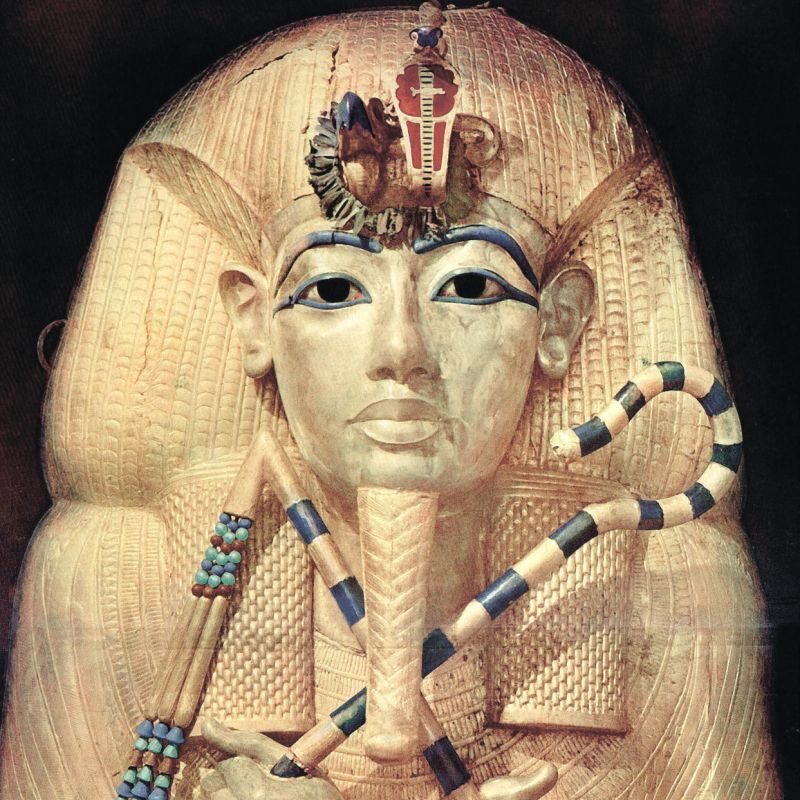
© Courtesy of Google Art & CultureEgyptian King Tutankhamun. “The use of pictures is a window into understanding how the Egyptians saw the world," says Israel Museum curator Shirly Ben-Dor Evian.
The pharaohs are smiling in their tombs. Things were pretty rough for them way back when, but today, several thousand years later, everything's great. Egyptian hieroglyphs are making a comeback. The Google Arts & Culture app has just launched
Fabricius,
a new online tool that harnesses "the power of artificial intelligence to help decode ancient languages" - including hieroglyphics.Maybe you didn't know that this is exactly what's been missing in your life, but
Google knows you better than you know yourself. How does its new AI invention work? Users enter texts in English or Arabic and receive a translation in hieroglyphs, pictorial and other symbols that until today were fully understood by only a small number of people.
On July 15, 1799, a
French soldier in Napoleon Bonaparte's army discovered a large, black stone slab set into the wall of a fort near the town of Rashid (Rosetta), in the Egyptian Delta. To Pierre-François Bouchard's credit it must be said that he realized that this was the greatest prize in the lottery of Western culture - the key to deciphering the mysterious, ancient Egyptian system of writing. Today, exactly 221 years later, the Rosetta Stone is still the most popular exhibit in the British Museum in London. Indeed, it is considered one of the most important archaeological discoveries in history.
The world-famous stele, originally created in 196 B.C. in the city of Memphis, in Egypt, but later moved and used in construction in Rashid, is inscribed with the text of a decree in three languages: Ancient Greek, Ancient Egyptian (using hieroglyphs) and Ancient Egyptian using Demotic script (a simpler, cursive form of Egyptian writing).














Comment: See also:
- Compelling Evidence That SARS-CoV-2 Was Man-Made
- Despite lack of genetic diversity narwhals still thrive
- Why Darwinism Is Wrong, Dead Wrong - Part 1: Intelligent Design and Information
- Darwinism, Creationism... How About Neither?
And check out SOTT radio's: