Science & TechnologyS


Bulb

The COVID-19 panic shows us why science needs skeptics

COVID-19
© CDC
The dumpster fire of COVID predictions has shown exactly why it's important to sustain and nurture skeptics, lest we blunder into scientific monoculture and groupthink. And yet the explosion of "cancel culture" intolerance of any opinion that doesn't fit a shrinking "3 x 5 card" of right-think risks destroying the very tolerance and science that sustains our civilization.

Since World War II, America has suffered two respiratory pandemics comparable to COVID-19: the 1958 "Asian flu," then the 1969 "Hong Kong flu." In neither case did we shut down the economy — people were simply more careful. Not all that careful, of course — Jimi Hendrix was playing at Woodstock in the middle of the 1969 pandemic, and social distancing wasn't really a thing in the "Summer of Love."

And yet COVID-19 was very different thanks to a single "buggy mess" of a computer prediction from one Neil Ferguson, a British epidemiologist given to hysterical overestimates of deaths, from mad cow to bird flu to H1N1.

For COVID-19, Ferguson predicted 3 million deaths in America unless we basically shut down the economy. Panicked policymakers took his prediction as gospel, dressed as it was in the cloak of science.

Now, long after governments plunged half the world into a Great Depression, those panicked revisions are being quietly revised down by an order of magnitude, now suggesting a final tally comparable to 1958 and 1969.

Comet 2

Great Comet? NEOWISE has sprouted synchronic bands

Comet NEOWISE tails
© Chris CookThe blue tail is made of ionized gas; the yellow tail with striations is made of dust.
Comet NEOWISE (C/2020 F3) is doing something usually reserved for Great Comets. It has sprouted synchronic bands. Also known as "striae," these bands divide the comet's dust tail into linear regions of greater and lesser density. Chris Cook of Cape Cod, MA, captured the phenomenon on the evening of July 15th.

"Comet NEOWISE is now in its full glory for northern hemisphere observers," says Cook. "This image is a stack of thirty 25s exposures at ISO1600. It clearly shows the formation of synchronic bands within the dust tail."

Synchronic bands have been seen in comet tails for centuries, yet only recently have astronomers begun to understand what they are. The turning point came in 2007 when European and NASA spacecraft observed the formation of striae in Comet McNaught (C/2006 P1). The process starts when a chunk of comet detaches itself from the nucleus. Boulder-sized chunks fragment into smaller and smaller pieces, a cascade shaped into long streamers by solar radiation pressure.

Comment: Comet NEOWISE has "supersized" nucleus, sprouts another tail


Galaxy

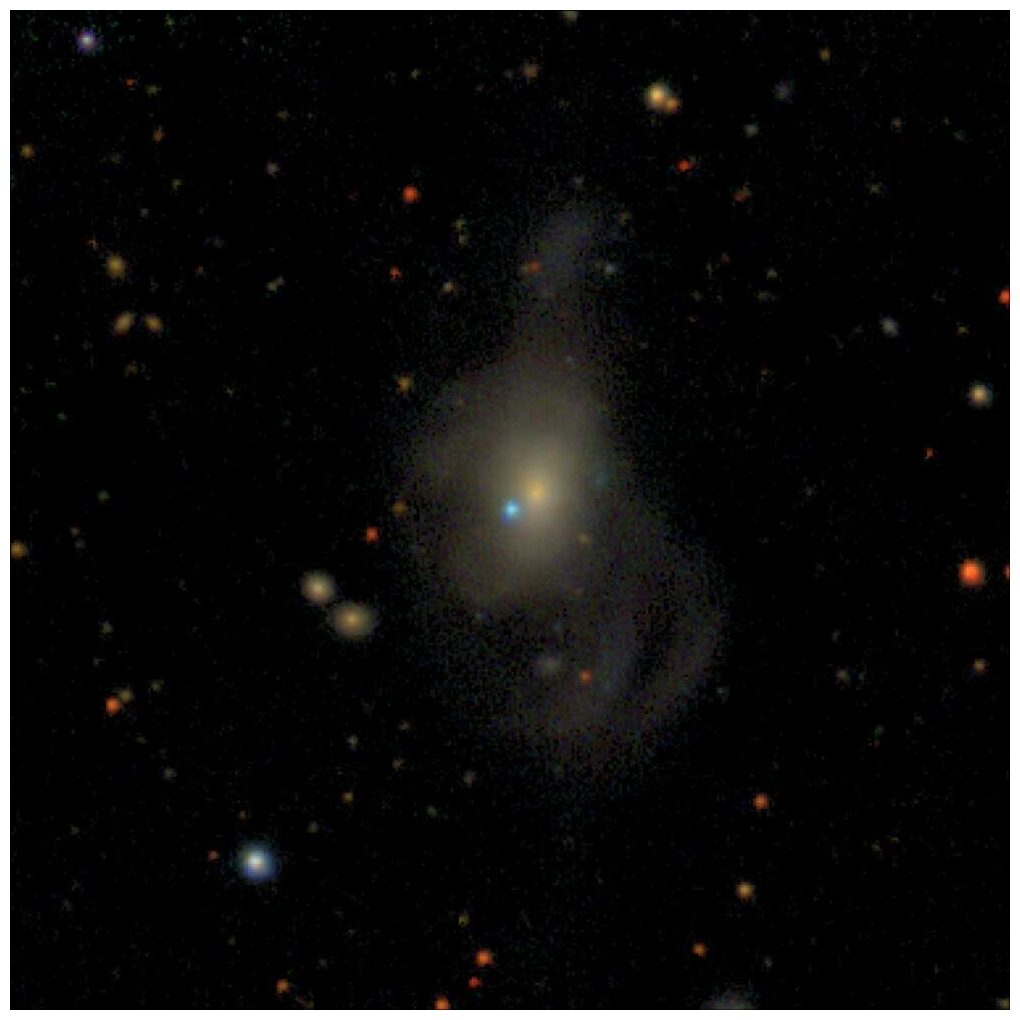
'No one had seen anything like this': Rogue star suspected as scientists see black hole's corona disappear & rebuild in real-time

black hole corona disappear
© NASA/JPL CaltechAstronomers watched a black hole’s corona disappear, then reappear, for first time.
For the first time in human history, astronomers have observed the corona of a black hole at the center of a far-off galaxy disappearing completely, before appearing to rebuild itself, all in real-time.

A black hole's corona is a mass of ultra-hot particles in the periphery of the darkness, which produces an X-ray glow so bright that it can be seen 300 million light-years away on Earth.

These coronas have been known to vary in brightness by a factor of 100 as the black hole feeds, but freshly released research has shown that two years ago the black hole in the center of galaxy 1ES 1927+654 faded by a factor of 10,000 in around 40 days, before becoming 20 times brighter than it had been originally just 100 days later.

Comment: There's been a lot of strange activity in the skies the last two decades:


Cassiopaea

Bright Nova Reticuli 2020 discovered by astronomer

Nova Reticuli 2020
© Remanzacco Blogspot
Following the posting on the CBET 4811 & 4812 about the NOVA RETICULI 2020 we performed some follow-up of this object through a TEL 0.1-m f/3.6 astrograph + CCD located in the Heaven's Mirror Observatory, Australia (MPC code Q56) and operated by Telescope Live network.
On images taken on July 16.82, 2020 we can confirm the presence of an optical counterpart (with R-filtered magnitude about +4.5; B-filtered magn. +5.6; V-filtered magn. +5.6) at coordinates:

R.A. = 03 58 29.61, Decl.= -54 46 39.8

(equinox 2000.0; Gaia DR2 catalogue reference stars for the astrometry).

This transient was discovered by Robert H. McNaught (Coonabarabran, NSW, Australia) as an apparent 5th-magnitude nova on CCD images obtained on July 15.590 UT with a Canon 6D camera and an 8-mm-f.l. f/2.8 lens (at ISO 800). The position is very close to an object listed as "MGAB-V207" in the AAVSO's VSX online database (which gives position R.A. = 3h58m29s.55, Decl. = -54d46'41".2, equinox J2000.0, which calls it a novalike "VY Scl"-type variable with V magnitude range 15.8-18.0).

Spectroscopy by E. Aydi et al. (ATel #13867) using the High Resolution Spectrograph (HRS) mounted on the 11m Southern African Large Telescope as part of the SALT Large Science Program on Transients shows a spectrum that resembles that of a classical nova, likely after optical peak. Also, R. Kaufman (Bright, VIC, Australia) reports a low-resolution spectrum obtained by him on 2020 Jul. 16.62 UT (with a Canon 800D camera + 200-mm-f.l. f/3.5 lens) indicates the object to be a "Fe II-type" classical nova.

Info

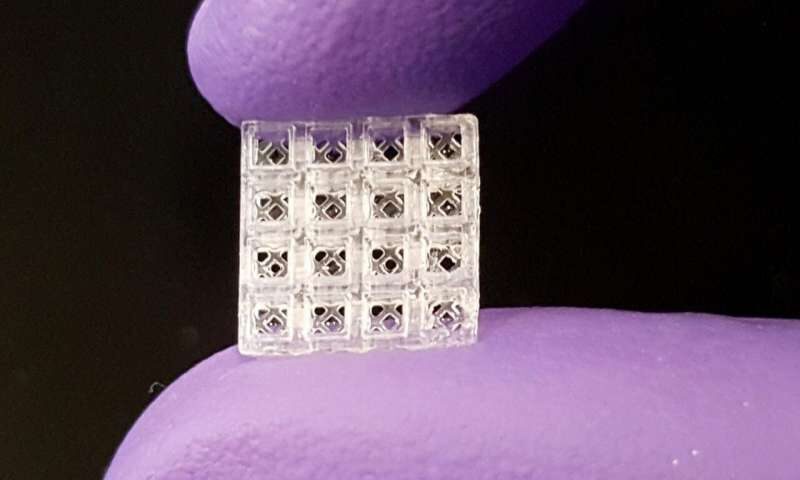
Bacteria with metal diet discovered by microbiologists

manganese oxide nodules
© Hang Yu/CaltechScanning electron micrograph of manganese oxide nodules.
Caltech microbiologists have discovered bacteria that feed on manganese and use the metal as their source of calories. Such microbes were predicted to exist over a century ago, but none had been found or described until now.

"These are the first bacteria found to use manganese as their source of fuel," says Jared Leadbetter, professor of environmental microbiology at Caltech who, in collaboration with postdoctoral scholar Hang Yu, describes the findings in the July 16 issue of the journal Nature. "A wonderful aspect of microbes in nature is that they can metabolize seemingly unlikely materials, like metals, yielding energy useful to the cell."

The study also reveals that the bacteria can use manganese to convert carbon dioxide into biomass, a process called chemosynthesis. Previously, researchers knew of bacteria and fungi that could oxidize manganese, or strip it of electrons, but they had only speculated that yet-to-be-identified microbes might be able to harness the process to drive growth.

Leadbetter found the bacteria serendipitously after performing unrelated experiments using a light, chalk-like form of manganese. He had left a glass jar soiled with the substance to soak in tap water in his Caltech office sink before departing for several months to work off campus. When he returned, the jar was coated with a dark material.

Radar

The Surveillance State: How to disappear

China surveillance room
© UnknownChina surveillance room
With each passing day, supposedly 'free and democratic' western governments are working overtime to emulate the type of surveillance states we see in countries like China and North Korea. The goal is 24/7 digital tracking of every citizen, and this authoritarian agenda is being accelerated during the current manufactured COVID-19 'crisis.' Besides going off-grid to a remote rural area, is it still possible to opt-out? To answer this question, you will first need to audit which lines of tracking are currently in use.

Is it possible for a person to successfully evade this rapidly emerging Orwellian grid of surveillance and social control?

Even when wearing a mask in public, the State and its corporate enablers still have multiple lines of tracking honed on members of the public.

To create effective privacy shields, it is first necessary to deconstruct your current web of digital networks. In addition, there are also a number a new tools at your disposal.

City Lab reports...
If extricating yourself from the electrical grid is, to some degree, a test of moxie and patience, extracting yourself from the web of urban surveillance technology strains the limits of both. If you live in a dense urban environment, you are being watched, in all kinds of ways. A graphic released by the Future of Privacy Forum highlights just how many sensors, CCTCV cameras, RFID readers, and other nodes of observation might be eying you as you maneuver around a city's blocks. As cities race to fit themselves with smart technologies, it's nearly impossible to know precisely how much data they're accumulating, how it's being stored, or what they'll do with it.

Info

First complete assembly of human X chromosome achieved by scientist

The X chromosome
© Illustration from Getty ImagesThe X chromosome is the first human chromosome to be completely sequenced from end to end, with no gaps in the sequence and an unprecedented level of accuracy.
Although the current human reference genome is the most accurate and complete vertebrate genome ever produced, there are still gaps in the DNA sequence, even after two decades of improvements. Now, for the first time, scientists have determined the complete sequence of a human chromosome from one end to the other ('telomere to telomere') with no gaps and an unprecedented level of accuracy.

The publication of the telomere-to-telomere assembly of a complete human X chromosome July 14 in Nature is a landmark achievement for genomics researchers. Lead author Karen Miga, a research scientist at the UC Santa Cruz Genomics Institute, said the project was made possible by new sequencing technologies that enable "ultra-long reads," such as the nanopore sequencing technology pioneered at UC Santa Cruz.

Repetitive DNA sequences are common throughout the genome and have always posed a challenge for sequencing because most technologies produce relatively short "reads" of the sequence, which then have to be pieced together like a jigsaw puzzle to assemble the genome. Repetitive sequences yield lots of short reads that look almost identical, like a large expanse of blue sky in a puzzle, with no clues to how the pieces fit together or how many repeats there are.

"These repeat-rich sequences were once deemed intractable, but now we've made leaps and bounds in sequencing technology," Miga said. "With nanopore sequencing, we get ultra-long reads of hundreds of thousands of base pairs that can span an entire repeat region, so that bypasses some of the challenges."

Filling in the remaining gaps in the human genome sequence opens up new regions of the genome where researchers can search for associations between sequence variations and disease and for other clues to important questions about human biology and evolution.

"We're starting to find that some of these regions where there were gaps in the reference sequence are actually among the richest for variation in human populations, so we've been missing a lot of information that could be important to understanding human biology and disease," Miga said.

Info

Powerful eruptions on the Sun might trigger earthquakes says new research

False Color Composite
© SOHOThis false-color composite of the Sun was created using ultraviolet images taken by the Solar and Heliospheric Observatory (SOHO) satellite.
Through decades of research, scientists have learned that large, powerful earthquakes commonly occur in groups, not in random patterns. But exactly why has so far remained a mystery. Now, new research, published July 13 in Scientific Reviews, asserts the first strong — though still disputed — evidence that powerful eruptions on the Sun can trigger mass earthquake events on Earth.

"Large earthquakes all around the world are not evenly distributed ... there is some correlation among them," says Giuseppe De Natale, research director at the National Institute of Geophysics and Volcanology in Rome and co-author of the new study. "We have tested the hypothesis that solar activity can influence the worldwide [occurrence of earthquakes]."

Info

Scientists restore rejects through cross-circulation to a pig

Human Lung
© Ahmed Hozain and John O'Neill/Columbia EngineeringA human lung that failed on EVLP (left) and then recovered on cross-circulation (right).
Damaged human lungs could be made suitable for use in transplants through cross-circulation to a pig, new research suggests.

In a paper in the journal Nature Medicine, a team from Vanderbilt and Columbia universities in the US describes trials which showed substantial improvements of cell viability, tissue quality, inflammatory responses and respiratory function using the technique.

Transplantation is the only definitive cure for end-stage lung disease, but its use is limited by an insufficient supply of high-quality donor lungs.

Only about 20% are considered to be in suitable condition, says Vanderbilt's Matthew Bacchetta, making lungs the least-used solid organ for transplant

The current standard of care for donor lungs is ex vivo lung perfusion (EVLP), a mechanical support system that can preserve lungs for up to eight hours but has limited means to rehabilitate them.

In previous work, Bacchetta, Columbia's Gordana Vunjak-Novakovic and colleagues found that damaged pig lungs could be reconditioned when connected to the circulation system of another pig.

Rose

Tomato plants send electrical signals to each other through fungi

tomato
© University of Alabama in HuntsvilleDr. Yuri Shtessel and Dr. Alexander Volkov studied electrical signal propagation between tomato plants.
The soil beneath our feet is alive with electrical signals being sent from one plant to another, according to research in which a University of Alabama in Huntsville (UAH) distinguished professor emeritus in the Department of Electrical and Computer Engineering participated.

UAH's Dr. Yuri Shtessel and Dr. Alexander Volkov, a professor of biochemistry at Oakwood University, coauthored a paper that used physical experiments and mathematical modeling to study transmission of electrical signals between tomato plants.

Dr. Shtessel's specialty is control engineering. Control algorithms are widely applicable across disciplines, for instance in aerospace vehicle control.

Comment: It's no wonder our food supply is in danger when modern agricultural techniques break up the soil through tillage and kill fungi - and many other forms of life - through pesticides, herbicides and unsuitable fertilizers: