Science & TechnologyS


Fireball

Astronomers have identified asteroids of interstellar origin inhabiting the solar system

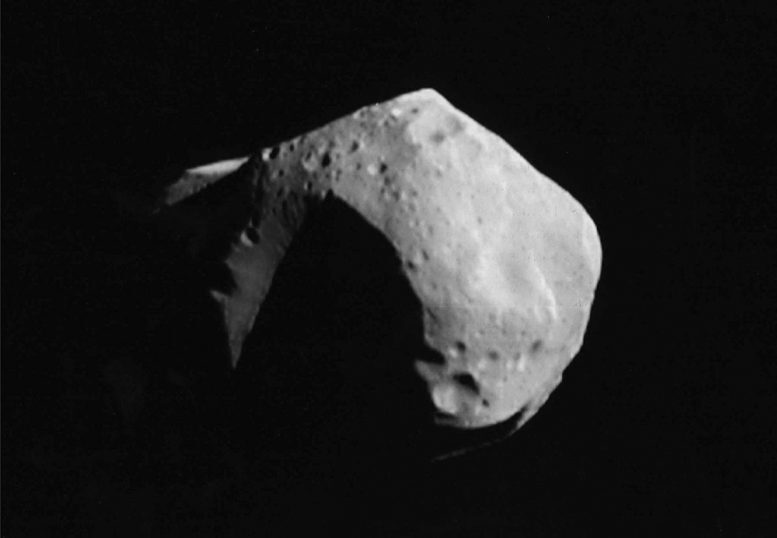
asteroid centaur class
© NASADiscovery by Brazilian researcher reported in Royal Astronomical Society's Monthly Notices provides clues for understanding the star nursery from which the Sun emerged.
A study conducted by scientists at São Paulo State University's Institute of Geosciences and Exact Sciences (IGCE-UNESP) in Rio Claro, Brazil, has identified 19 asteroids of interstellar origin classified as Centaurs, outer Solar System objects that revolve around the Sun in the region between the orbits of Jupiter and Neptune.

An article on the study titled "An interstellar origin for high-inclination Centaurs" is published in the Royal Astronomical Society's Monthly Notices. The study was supported by FAPESP.

"The Solar System formed 4.5 billion years ago in a stellar nursery, with its systems of planets and asteroids. The stars were close enough to each other to foster strong gravitational interactions that led to an exchange of material among the systems. Some objects now in the Solar System must therefore have formed around other stars. Until recently, however, we couldn't distinguish between captured interstellar objects and objects that formed around the Sun. The first identification was made by us in 2018," Maria Helena Moreira Morais, one of the two coauthors, told Agência FAPESP.

Comment: More on the Centaur class of asteroids, which have to potential to become comets:


Better Earth

Biosphere 2: What happens when you seal eight people in a giant bubble?

Biosphere
© Joe Sohm/Visions of America/UIG via Getty ImagesFrom oxygen shortages to divisive factions, Mark Nelson recalls the challenges of two years in the Biosphere 2 ecosystem - and the media circus it spawned
WE "BIOSPHERIANS" knew living together for two years in our enclosed mini-world would be a challenge. Imagine sharing 2193 meals with the same seven people. We entered as friends, but feared the stress of isolation. We hoped for paradise and braced for hell.

Indeed, disaster was never far away. We faced accumulating carbon dioxide and disappearing oxygen. We risked being choked by pollution or starved by crop failures. Some critics thought our experiment would be over within months. But we persevered.

We called our 3-acre ecosystem in the Arizona desert Biosphere 2. It was an attempt to create a new type of laboratory for studying global ecology, by replicating features of Biosphere 1 - better known as Earth.

Comment: See also:


Mars

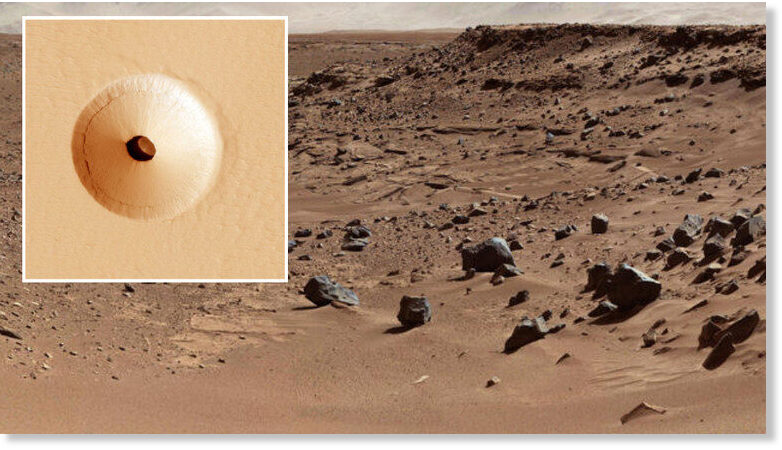
Giant Martian lava caves could be prime location to find alien life and house human colonies

Mars
© NASA/ JPL
Sometimes, there's more to a lava flow than meets the eye. Beneath a fresh, sterile, and steaming hot surface, molten rock can still be chewing its way into the ground, carving caves that can stretch dozens of kilometers. On Earth, such lava tubes (once cooled) are a challenge for spelunkers. On the moon and Mars, these features are piquing the interest of planetary geologists, astrobiologists, and explorers.

Besides providing a window into geological history, lava tubes offer environmental conditions that are relatively stable and likely to be more hospitable than those found on a planet's surface. This may make the tubes appealing to life-forms of all sizes, from microbes to spacefaring colonists from Earth.

If Mars ever hosted life, it may have moved into such refugia as the planet evolved and surface conditions became increasingly harsh. Indeed, some researchers suggest that microbial life may yet hang on in the Red Planet's underground havens. "On Mars and other places, lava tubes have the potential to have made the difference between life and death," says Pascal Lee, a planetary researcher at NASA Ames Research Center in Mountain View, CA.

Wherever lava tubes are found, they'll be scientifically exotic, says Lee. And if a mission to another world is designed to explore such an underground feature as well as the surface, "it'll be like getting two planets for the price of one," he notes.

Control Panel

Best of the Web: "COVID Vaccines" and "Genetically Modified Humans"

altering DNA
Dr. Carrie Madej is an osteopathic-trained internal medicine physician.

In the following video, she questions what it is to be human. Why? Because the so-called "COVID" vaccines deploy recombinant DNA/RNA technology that "rewrites" the genetic code much as Monsanto, for example, rewrites the genetic code of tomato and other seeds.


Comment: Here's a slightly shorter Facebook version with an introduction:


Moon

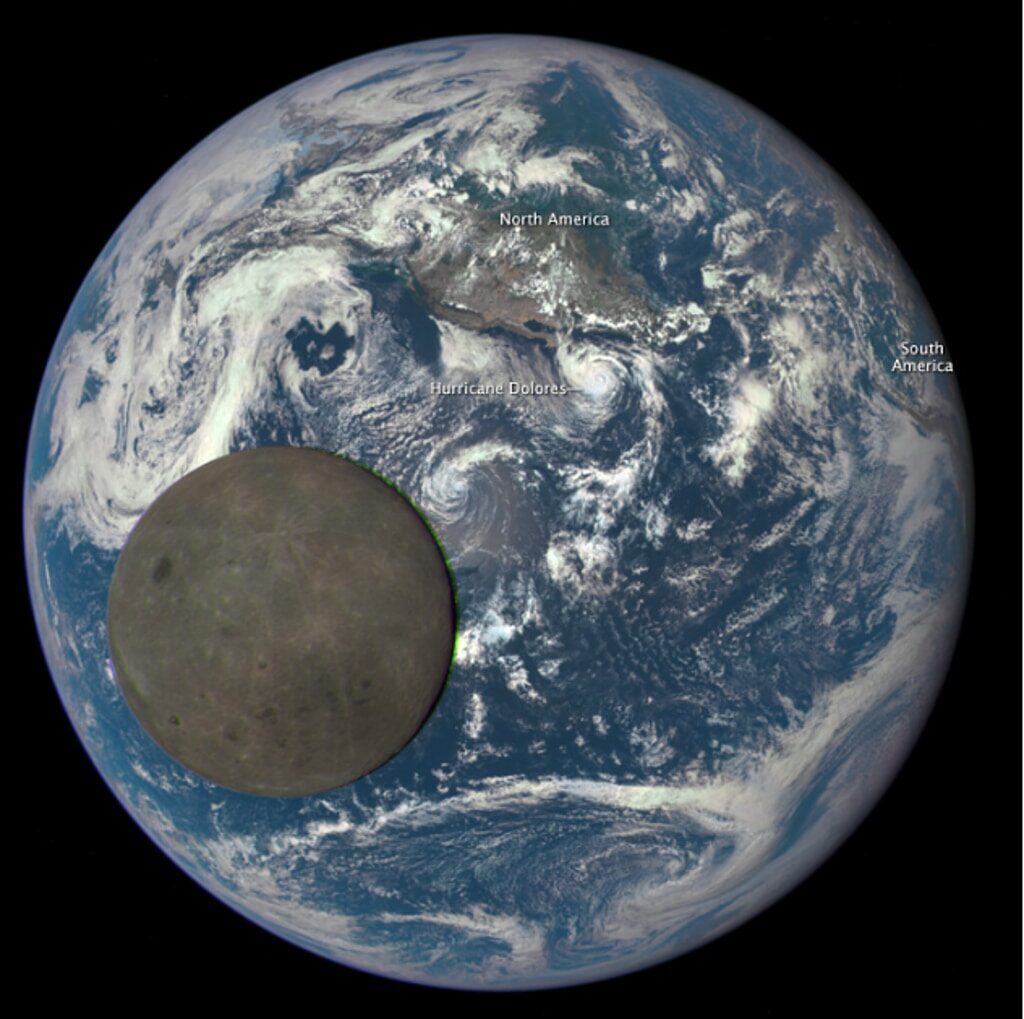
Iconic 'dark side' of the moon photo turns 5 years old

earth moon dark side hurricane delores
© NASAThe Deep Space Climate Observatory captured a unique view of the moon as it passed between the spacecraft and Earth on July 16, 2015.
On July 16, 2015, the Deep Space Climate Observatory (DSCOVR) satellite captured this incredible image of the moon's dark side with Earth shining from behind.

For the past five years, a satellite orbiting nearly 1 million miles from home has been capturing images of the Earth, but early in its mission, it revealed a side of the planet's cosmic partner that goes unseen even to the largest telescopes.

On Feb. 11, 2015, NASA and NOAA launched the Deep Space Climate Observatory (DSCOVR), a satellite that sits around 1 million miles away from the Earth. At this precise spot, the satellite is in what is called a "neutral gravity point" between the Earth and sun, allowing it to continuously monitor the two objects at the same time with little interference.

Info

High iron levels linked to shorter lifespan

Iron Levels and Aging
© Cristian Newmann/Unsplash
A massive new study has found evidence that blood iron levels could play a role in influencing how long you live.

It's always important to take longevity studies with a big grain of salt, but the new research is impressive in its breadth, covering genetic information from well over 1 million people across three public databases. It also focused on three key measures of ageing: lifespan, years lived free of disease (referred to as healthspan), and making it to an extremely old age (AKA longevity).

Throughout the analysis, 10 key regions of the genome were shown to be related to these measures of long life, as were gene sets linked to how the body metabolises iron.

Put simply, having too much iron in the blood appeared to be linked to an increased risk of dying earlier.

"We are very excited by these findings as they strongly suggest that high levels of iron in the blood reduces our healthy years of life, and keeping these levels in check could prevent age-related damage," says data analyst Paul Timmers, from the University of Edinburgh in the UK.

Better Earth

New insight into the origin of water and oil on the earth

organic matter nebula
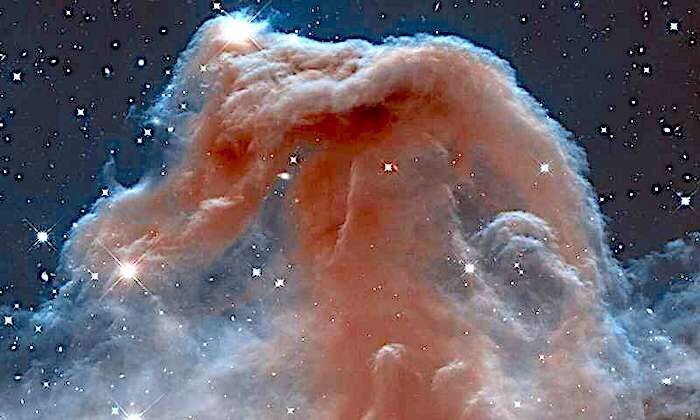
© NASA, ESA, and the Hubble Heritage Team (STScI/AURA)Organic matter in nebula could be the source of terrestrial water.
Scientists have found the interstellar organic matter could produce an abundant supply of water by heating, suggesting that organic matter could be the source of terrestrial water.

There remains a number of mysteries on our planet including the elusive origin of water on the earth. Active studies suggested that terrestrial water had been delivered by icy comets or meteorites containing hydrous silicates that came from outside the "snow line" — the boundary beyond which ice can condense due the low temperatures. More recent studies, however, have provided observations opposing to cometary origin theory, yet still failing to suggest plausible substitutions for the source of terrestrial water. "Until now, much less attention has been paid to organic matter, comparing to ices and silicates, even though there is an abundance inside the snow line" says planetary scientist Akira Kouchi at Hokkaido University.

Arrow Up

UK may have sufficient herd immunity to COVID-19, says Oxford academic's study

University of Oxford professor Sunetra Gupta  covid 19
© zoo.ox.ac.ukUniversity of Oxford professor Sunetra Gupta has led a new Covid-19 study to analyse the Coronavirus pandemic.
The UK population may already have developed sufficient levels of herd immunity required to prevent a feared second wave of the coronavirus pandemic in the country, notes an Oxford University study involving Indian-origin academic Professor Sunetra Gupta.

In a paper titled 'The impact of host resistance on cumulative mortality and the threshold of herd immunity for SARS-CoV-2', Gupta along with three other Oxford University colleagues notes that the herd immunity threshold (HIT) required to prevent a resurgence of the deadly coronavirus may have already been built up due to exposure to seasonal coronaviruses, such as the common cold.

"It is widely believed that the herd immunity threshold (HIT) required to prevent a resurgence of SARS-CoV-2 (COVID-19) is in excess of 50 per cent for any epidemiological setting.

Comment:


Bulb

The COVID-19 panic shows us why science needs skeptics

COVID-19
© CDC
The dumpster fire of COVID predictions has shown exactly why it's important to sustain and nurture skeptics, lest we blunder into scientific monoculture and groupthink. And yet the explosion of "cancel culture" intolerance of any opinion that doesn't fit a shrinking "3 x 5 card" of right-think risks destroying the very tolerance and science that sustains our civilization.

Since World War II, America has suffered two respiratory pandemics comparable to COVID-19: the 1958 "Asian flu," then the 1969 "Hong Kong flu." In neither case did we shut down the economy — people were simply more careful. Not all that careful, of course — Jimi Hendrix was playing at Woodstock in the middle of the 1969 pandemic, and social distancing wasn't really a thing in the "Summer of Love."

And yet COVID-19 was very different thanks to a single "buggy mess" of a computer prediction from one Neil Ferguson, a British epidemiologist given to hysterical overestimates of deaths, from mad cow to bird flu to H1N1.

For COVID-19, Ferguson predicted 3 million deaths in America unless we basically shut down the economy. Panicked policymakers took his prediction as gospel, dressed as it was in the cloak of science.

Now, long after governments plunged half the world into a Great Depression, those panicked revisions are being quietly revised down by an order of magnitude, now suggesting a final tally comparable to 1958 and 1969.

Comet 2

Great Comet? NEOWISE has sprouted synchronic bands

Comet NEOWISE tails
© Chris CookThe blue tail is made of ionized gas; the yellow tail with striations is made of dust.
Comet NEOWISE (C/2020 F3) is doing something usually reserved for Great Comets. It has sprouted synchronic bands. Also known as "striae," these bands divide the comet's dust tail into linear regions of greater and lesser density. Chris Cook of Cape Cod, MA, captured the phenomenon on the evening of July 15th.

"Comet NEOWISE is now in its full glory for northern hemisphere observers," says Cook. "This image is a stack of thirty 25s exposures at ISO1600. It clearly shows the formation of synchronic bands within the dust tail."

Synchronic bands have been seen in comet tails for centuries, yet only recently have astronomers begun to understand what they are. The turning point came in 2007 when European and NASA spacecraft observed the formation of striae in Comet McNaught (C/2006 P1). The process starts when a chunk of comet detaches itself from the nucleus. Boulder-sized chunks fragment into smaller and smaller pieces, a cascade shaped into long streamers by solar radiation pressure.

Comment: Comet NEOWISE has "supersized" nucleus, sprouts another tail