Science & TechnologyS


Info

Cockatoos learn through social interaction

For the first time, a team of international scientists have proven that cockatoos, an iconic Australian bird species, learn from each other a unique skill - lifting garbage bin lids to gather food. The world-first research published today in Science, confirms that cockatoos spread this novel behavior through social learning. Led by Barbara Klump and Lucy Aplin from the Max Planck Institute of Animal Behavior in Konstanz, Germany, along with John Martin (Taronga Conservation Society) and Richard Major (Australian Museum), the team have shown that this behavior by cockatoos is actually learnt, rather than a result of genetics.
Cockatoo Australia
© MPI of Animal Behavior/ B. KlumpCockatoos in Sydney have learned from each other how to open bins to scavange food.
Lead co-author, Barbara Klump, said social learning is the basis of different regional cultures, and some animals, such as primates and birds, appear to learn socially. "Children are masters of social learning. From an early age, they copy skills from other children and adults. However, compared to humans, there are few known examples of animals learning from each other," Klump said. "Demonstrating that food scavenging behavior is not due to genetics is a challenge," Klump added.

However, a few years ago, Richard Major shared a video with senior author Lucy Aplin, showing a sulphur-crested cockatoo opening a closed garbage bin. The cockatoo used its beak and foot to lift the heavy lid then shuffled along the side to flip it over, accessing a rich reward of leftover food. Aplin, who was then researching at Oxford University and has since moved to the Max Planck Institute of Animal Behavior in Germany, and Klump were fascinated by the footage.

"It was so exciting to observe such an ingenious and innovative way to access a food resource, we knew immediately that we had to systematically study this unique foraging behavior," Klump said.

Fish

Sharks' spiral-shaped intestines resemble a Nikola Tesla invention

intestine shark
© Samantha Leigh/California StateA CT scan of the spiral intestine of a Pacific spiny dogfish shark (Squalus suckleyi)
Sharks have spiral-shaped intestines that work in a similar way to an unusual valve designed by Nikola Tesla. Studying their anatomy could help improve industrial fluid-pump technology.

Most animals have tubular intestines that use muscle contractions to push food along like squeezing a tube of toothpaste. But sharks slowly channel their meals through spirals without needing muscles to push the food. Their intestines are also shaped in a way that only allows food to flow one way - like a performance-enhanced Tesla valve, says Samantha Leigh at California State University Dominguez Hills.

"Sharks have all these different little tweaks to the Tesla valve design that could be making them more efficient," she says.

Comment: It seems that with any invention, if the inspiration hasn't knowingly come from nature, it's usually realised later that something similar already exists in nature, and which is operating at an even greater efficiency.

As noted in the Wiki entry for Biomimetics: 'Humans have looked at nature for answers to problems throughout our existence. Nature has solved engineering problems such as self-healing abilities, environmental exposure tolerance and resistance, hydrophobicity, self-assembly, and harnessing solar energy.'

See also: And check out SOTT radio's:


Galaxy

Ancient star likely created from a colossal hypernova explosion

The star SMSS J200322.54-114203.3
© Da Costa/SkyMapperThe star SMSS J200322.54-114203.3 (centre, with crosshairs) in the south-eastern corner of the constellation Aquila is thought to have formed from the remnants of a short-lived, even more ancient star that underwent a magneto-rotational hypernova.
An ancient star lying on the fringes of the Milky Way likely contains the remnants of a colossal hypernova explosion, which took place early on in the galaxy's star-forming period. That's the conclusion of an international team of astronomers, led by David Yong at the Australian National University, who discovered that the star's abundance of heavy elements could have only been synthesized in the highly energetic "r-process". Their findings provide the first evidence for magneto-rotational hypernovae, and uncover their role in the changing chemical makeup of the early universe.

Astronomers predict that around half of all heavy atomic nuclei in the universe must have originated in a succession of rapid neutron captures, named the r-process. The sites where these captures take place are still poorly understood, but according to current theories, mergers between neutron stars are thought to play an important role. In the latest models of chemical evolution in galaxies, however, these mergers alone can't reproduce the abundances of heavy elements that we observe today.

To search for alternative origins, Yong's team looked to the halo of the Milky Way - which contains an abundance of ancient stars born early on in the galaxy's star-forming history. The astronomers made their observations using the European Southern Observatory's Very Large Telescope (VLT) in Chile, and the Australian National University's SkyMapper telescope in New South Wales, which has previously been used to identify thousands of these chemically primitive stars in the halo.

Ice Cube

15,000-year-old viruses discovered in Tibetan glacier ice

Examining Ice Core Sample
© Image courtesy Lonnie ThompsonYao Tandong, left, and Lonnie Thompson, right, process an ice core drilled from the Guliya Ice Cap in the Tibetan Plateau in 2015. The ice held viruses nearly 15,000 years old, a new study has found.
Scientists who study glacier ice have found viruses nearly 15,000 years old in two ice samples taken from the Tibetan Plateau in China. Most of those viruses, which survived because they had remained frozen, are unlike any viruses that have been cataloged to date.

The findings, published today in the journal Microbiome, could help scientists understand how viruses have evolved over centuries. For this study, the scientists also created a new, ultra-clean method of analyzing microbes and viruses in ice without contaminating it.

"These glaciers were formed gradually, and along with dust and gases, many, many viruses were also deposited in that ice," said Zhi-Ping Zhong, lead author of the study and a researcher at The Ohio State University Byrd Polar and Climate Research Center who also focuses on microbiology. "The glaciers in western China are not well-studied, and our goal is to use this information to reflect past environments. And viruses are a part of those environments."

Radar

Coma sighted on megacomet situated beyond Saturn

Comet C/2014 UN271
© LOOK/LCOComet C/2014 UN271 (Bernardinelli-Bernstein), as seen in a synthetic color composite image made with the Las Cumbres Observatory 1-meter telescope at Sutherland, South Africa, on 22 June 2021. The diffuse cloud is the comet's coma.
Spotting the first signs of activity on a record-setting comet of gargantuan size came down to a time-zone advantage.

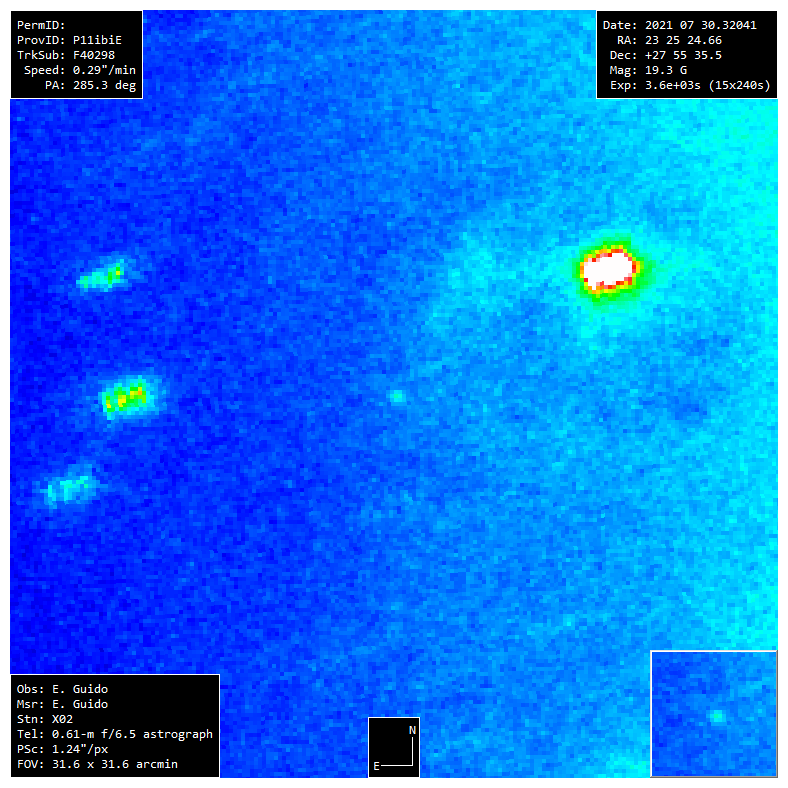
Astronomers in New Zealand were the first to spot a coma, or zone of gas and dust, spreading around the megacomet C/2014 UN271, also known as Bernardinelli-Bernstein, which may be 1,000 times more massive than a typical comet. It could be the most massive comet ever found in all of recorded history.

The team that monitors images captured by the Las Cumbres Observatory (LCO) is spread around the world, and images from one of LCO's 1-meter telescopes hosted at the South African Astronomical Observatory were available on June 23 at midnight EDT (0400 GMT). That happens to be afternoon in New Zealand.

Comment: See also: And check out SOTT radio's:


Info

Chicxulub impact event left evidence of giant ripples under Louisiana

When the Chicxulub impact blasted into the Yucatan Peninsula, it generated massive tsunamis that left their signature thousands of miles away.
Artist Impression of Chicxulub Impact.
Over 800 miles from the impact site, massive ripples buried deep underground record the devastation wrought by an asteroid. The Chicxulub impact, the likely smoking gun for the extinction of the dinosaurs at the end of the Cretaceous, sent tsunamis tearing across the Gulf of Mexico. These giant waves left ripples in the undersea sediments as they passed and a new study has found what might be the largest "megaripples" on the planet.

The darkest dayLet's step back a moment. It has been around 40 years since the Chicxulub impact, located on the northern shores of the Yucatan Peninsula, was identified as the potential cause of the famed Cretaceous-Tertiary extinction (a.k.a., the K-t boundary). Since then, signs of this massive collision have been found across the planet. These include a layer of iridium from the asteroid, droplets of molten rock that rained down after the impact, wave deposits as far away as North Dakota and the charred remains of forest burned by the heat of the blast.

Galaxy

Russia to build $50 million high-tech ultraviolet telescope to be launched into space in October 2025

satellite
© laspace.ru
Russia has allocated around 3.7 billion rubles ($50 million) to build a state-of-the-art space telescope with the ability to observe in ultraviolet, designed to see parts of the cosmos inaccessible to ground-based equipment.

According to RIA Novosti, Russia's space agency Roscosmos and its subsidiary Lavochkin signed a contract to build the Spektr-UV, with work scheduled to be completed by the end of 2025.

The telescope is designed to use ultraviolet observe parts of space inaccessible to ground-based telescopes. It will be launched into space, in a similar way to the US' Hubble, and will allow researchers to study stars, galaxies, and black holes, as well as the atmosphere of planets and exoplanets, and comets.

Comment: See also: And check out SOTT radio's:


Solar Flares

The sun fires off its third 'halo CME' in as many days

Halo CME


On July 16, a powerful 'halo CME' escaped from the farside of the sun — the third such explosion in the last three days
.

Imagine an explosion on the farside of the sun so powerful, we could feel it here on Earth, writes Dr Tony Philips over at spaceweather.com. Well, it just happened — for the third time in as many days.

The debris emerged in a circular cloud known as a 'halo CME':

Comment: See also:


Chalkboard

MIT predicted in 1972 that society will collapse this century. New research shows we're on schedule.

dystopia
A remarkable new study by a director at one of the largest accounting firms in the world has found that a famous, decades-old warning from MIT about the risk of industrial civilization collapsing appears to be accurate based on new empirical data.

As the world looks forward to a rebound in economic growth following the devastation wrought by the pandemic, the research raises urgent questions about the risks of attempting to simply return to the pre-pandemic 'normal.'

In 1972, a team of MIT scientists got together to study the risks of civilizational collapse. Their system dynamics model published by the Club of Rome identified impending 'limits to growth' (LtG) that meant industrial civilization was on track to collapse sometime within the 21st century, due to overexploitation of planetary resources.

The controversial MIT analysis generated heated debate, and was widely derided at the time by pundits who misrepresented its findings and methods. But the analysis has now received stunning vindication from a study written by a senior director at professional services giant KPMG, one of the 'Big Four' accounting firms as measured by global revenue.

Comment: The language Herrington uses to describe the 'solution' to the predicted decline sounds like a page right out of the WEF's plans for a Great Reset.


Headphones

Speaking in tongues: Russia's tech giant Yandex working on AI video translator to allow viewers to watch anything with voiceover

Yandex Russia
© Getty Images / peshkov; (inset) REUTERS / Shamil ZhumatovYandex
What do you want to watch? Well, if the answer is a foreign-language film or TV show, and there's no translated version available, you might be out of luck. Now one of Russia's biggest tech firms is working on a solution.

In a statement released last week, digital services giant Yandex revealed it has been working on a software prototype that would allow users to watch videos in their browser in another language. The program is capable of simultaneously translating the content, and dubbing it with a computer-generated voiceover.