Science & TechnologyS


Microscope 2

Just 7% of our DNA is unique to modern humans, study shows

neanderthal skull
© AP/Frank Franklin IIReconstructed Neanderthal skeleton and a modern human
What makes humans unique? Scientists have taken another step toward solving an enduring mystery with a new tool that may allow for more precise comparisons between the DNA of modern humans and that of our extinct ancestors.

Just 7% of our genome is uniquely shared with other humans, and not shared by other early ancestors, according to a study published Friday in the journal Science Advances.

Nathan Schaefer, a University of California computational biologist and co-author of the new paper, said:
"That's a pretty small percentage. This kind of finding is why scientists are turning away from thinking that we humans are so vastly different from Neanderthals."
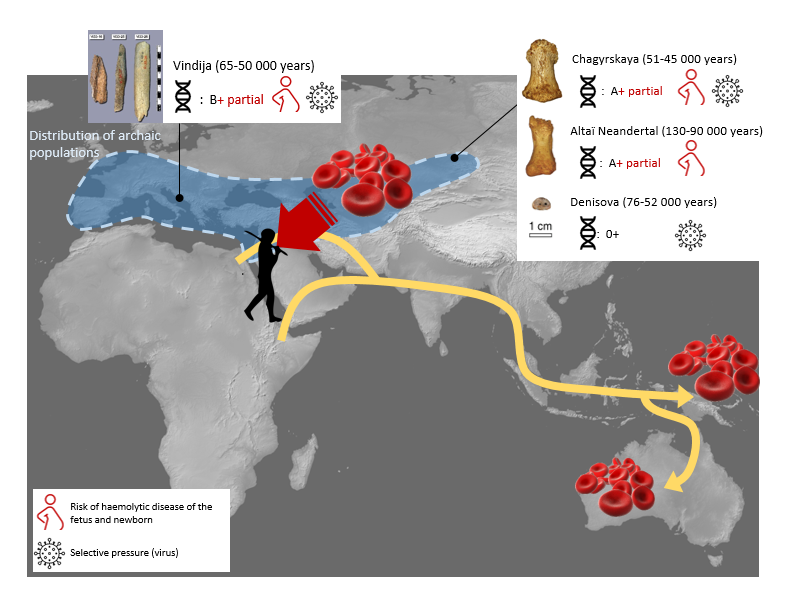
The research draws upon DNA extracted from fossil remains of now-extinct Neanderthals and Denisovans dating back to around 40,000 or 50,000 years ago, as well as from 279 modern people from around the world.

Blackbox

Massive DNA 'Borg' structures perplex scientists

Borgs microorganisms
© Eye of Science/SPLBorgs seem to be associated with single-celled microorganisms known as archaea, shown in this scanning-electron microscopy image.
The Borg have landed — or, at least, researchers have discovered their counterparts here on Earth. Scientists analysing samples from muddy sites in the western United States have found novel DNA structures that seem to scavenge and 'assimilate' genes from microorganisms in their environment, much like the fictional Star Trek 'Borg' aliens who assimilate the knowledge and technology of other species.

These extra-long DNA strands, which the scientists named in honour of the aliens, join a diverse collection of genetic structures — circular plasmids, for example — known as extrachromosomal elements (ECEs). Most microbes have one or two chromosomes that encode their primary genetic blueprint. But they can host, and often share between them, many distinct ECEs. These carry non-essential but useful genes, such as those for antibiotic resistance.

Borgs are a previously unknown, unique and "absolutely fascinating" type of ECE, says Jill Banfield, a geomicrobiologist at the University of California, Berkeley. She and her colleagues describe their discovery of the structures in a preprint posted to the server bioRxiv1. The work is yet to be peer-reviewed.

Better Earth

'Moon wobble' cycle & sea level rise will cause surge in coastal flooding starting in 2030s, NASA claims

High-tide
© Hawaii Sea Grant King Tides ProjectHigh-tide flooding in Honolulu.
In the mid-2030s, every U.S. coast will experience rapidly increasing high-tide floods, when a lunar cycle will amplify rising sea levels caused by climate change.

High-tide floods — also called nuisance floods or sunny day floods — are already a familiar problem in many cities on the U.S. Atlantic and Gulf coasts. The National Oceanic and Atmospheric Administration (NOAA) reported a total of more than 600 such floods in 2019. Starting in the mid-2030s, however, the alignment of rising sea levels with a lunar cycle will cause coastal cities all around the U.S. to begin a decade of dramatic increases in flood numbers, according to the first study that takes into account all known oceanic and astronomical causes for floods.


Comment: Except there doesn't appear to be any solid evidence sea levels are rising: Kiribati and China to develop farm land in Fiji, land had been predicted to 'disappear under a rising ocean'


Led by the members of the NASA Sea Level Change Science Team from the University of Hawaii, the new study shows that high tides will exceed known flooding thresholds around the country more often. What's more, the floods will sometimes occur in clusters lasting a month or longer, depending on the positions of the Moon, Earth, and the Sun. When the Moon and Earth line up in specific ways with each other and the Sun, the resulting gravitational pull and the ocean's corresponding response may leave city dwellers coping with floods every day or two.

Comment: Our planet does appear to be experiencing an increase in various kinds of extreme flooding events, but for rather different reasons than those claimed above: Also check out SOTT radio's: As well as SOTTs monthly SOTT Earth Changes Summary: June 2021: Extreme Weather, Planetary Upheaval, Meteor Fireballs


Info

No ovaries required: viable eggs grown in a dish

Ova created from mice stem cells, that become fully formed creatures - all in the lab.
14 day old rat embryo.
© Clouds Hill Imaging Ltd / Getty Images.14 day old rat embryo.
Scientists have successfully coaxed mouse stem cells to develop into functional eggs in a dish - that then grew into baby mice, according to a study published in Developmental Biology.

This has wide implications for assisted reproductive technologies in the future, because it may provide an alternative to egg donors.

A team of researchers, led by Takashi Yoshino of Kyushu University, Japan, developed culture conditions in a petri dish that imitated ovarian follicles to recreate the process that stem cells normally take to turn into eggs, which resulted in viable eggs. They called the lab-grown cells 'reconstituted Ovarioids' (rOvarioids).

Pluripotent stem cells are immature but have the potential to become almost any type of cell under the right conditions. In the ovary, these cells can become oocytes, which eventually turn in to eggs.

Normally, oocytes are encapsulated by ovarian cells in a fluid-filled follicle structure that help the oocyte undergo a round of meiosis (a type of cell division) and become an ovum (an egg that can be fertilised).

Previously, it was hard to grow the oocytes and ova in a petri dish because the ovarian follicles are essential in the process, so the team developed a culture as an "incubator" for the eggs to grow in, outside of the ovary.

Monkey Wrench

NASA identifies possible fix for Hubble after major glitch put space telescope into safe mode for past month

hubble
NASA images issued in July 2021 shows the Hubble Space Telescope drifting over Earth on May 19 2009
The Hubble Space Telescope is one of NASA's most beloved projects. After over 30 years in service, it's now facing one of its greatest challenges, as a technical glitch has left it in safe mode for over a month. On Wednesday, NASA said it may have tracked down the source of the issue.

The Hubble team had been looking at the payload computer -- hardware dating back to the 1980s -- as the potential source of a memory problem. "A series of multi-day tests, which included attempts to restart and reconfigure the computer and the backup computer, were not successful, but the information gathered from those activities has led the Hubble team to determine that the possible cause of the problem is in the Power Control Unit," NASA said.

Comment: See also:


Blue Planet

Algae species with 3 distinct sexes discovered

algae
© (Kohei Takahashi)
Although we might think of ourselves as far removed from blobby green algae, we're not really that different.


Comment: Maybe some people aren't that different from algae, but most humans generally are.


An algae explosion a few hundred million years ago is thought to have been what allowed all human and animal life to evolve, and all told there's only about one and a half billion years between us in terms of evolution.

Plus, according to a Japanese team of researchers, algae could actually help us to understand how different sex systems - like male and female - evolved in the first place.

Researchers from the University of Tokyo and a number of other Japanese universities have discovered that a type of green algae called Pleodorina starrii has three distinct sexes - 'male', 'female', and a third sex that the team have called 'bisexual'. This is the first time any species of algae has been discovered with three sexes.

Comment: Meanwhile there's a talented slime mold with no brain and that is considered to have '720 sexes'.

See also: And check out SOTT radio's:


Microscope 2

Best of the Web: Top gain-of-function scientist Ralph Baric admitted viruses can be lab engineered 'without a trace'

Professor Ralph Baric
Professor Ralph Baric, University of North Carolina
A top gain-of-function scientist admitted in an interview last September that viruses can be lab engineered without leaving a trace.

Professor Ralph Baric, an epidemiologist at the UNC Gillings School of Global Public Health and professor of immunology and microbiology at the UNC School of Medicine, has been studying coronaviruses for 30 years. In a video interview last year with Italian outlet Presa Diretta, Baric was extremely direct about his controversial work, and the implications for COVID19.

Comment: See also:


Galaxy

New type of stellar grain discovered in ancient mineral aggregates isolated from the Allende meteorite

stellar grains ancient minerals allende meteorite
© CalTechA side view of the Allende meteorite, displaying the white CAl inclusions.
The unusual chemistry of grain could tell scientists more about the origin of Earth's water

Scientists have discovered a new type of star dust whose composition indicates that it formed during a rare form of nucleosynthesis (the process through which new atomic nuclei are created) and could shed new light on the history of water on Earth.

A team led by cosmochemists from Caltech and Victoria University of Wellington in New Zealand studied ancient minerals aggregates within the Allende meteorite (which fell to Earth in 1969) and found that many of them had unusually high amounts of strontium-84, a relatively rare light isotope of the element strontium that is so-named for the 84 neutrons in its nucleus.

"Strontium-84 is part of a family of isotopes produced by a nucleosynthetic process, named the p-process, which remains mysterious," says Caltech's François L. H. Tissot, assistant professor of geochemistry. "Our results points to the survival of grains possibly containing pure strontium-84. This is exciting, as the physical identification of such grains would provide a unique chance to learn more about the p-process."

Info

Human environmental genome recovered in the absence of skeletal remains

Satsurblia cave
© Anna Belfer-CohenOverview of the excavation works of Satsurblia cave in 2017.
Ancient sediments from caves have already proven to preserve DNA for thousands of years. The amount of recovered sequences from environmental sediments, however, is generally low, which difficults the analyses to be performed with these sequences. A study led by Ron Pinhasi and Pere Gelabert of the University of Vienna and published in Current Biology successfully retrieved three mammalian environmental genomes from a single soil sample of 25,000 years bp obtained from the cave of Satsurblia in the Caucasus (Georgia).

The cave of Satsurblia was inhabited by humans in different periods of the Paleolithic: Up to date a single human individual dated from 15,000 years ago has been sequenced from that site. No other human remains have been discovered in the older layers of the cave.

The innovative approach used by the international team led by Prof. Ron Pinhasi and Pere Gelabert with Susanna Sawyer of the University of Vienna in collaboration with Pontus Skoglund and Anders Bergström of the Francis Crick Institute in London permits the identification of DNA in samples of environmental material, by applying extensive sequencing and huge data analysis resources. This technique has allowed the recovery of an environmental human genome from the BIII layer of the cave, which is dated before the Ice Age, about 25,000 years ago.

Cult

Trust 'the science', but how much scientific research is actually fraudulent?

science research fraud
© Photosvit | Dreamstime.com
Fraud may be rampant in biomedical research. My 2016 article "Broken Science" pointed to a variety of factors as explanations for why the results of a huge proportion of scientific studies were apparently generating false-positive results that could not be replicated by other researchers. A false positive in scientific research occurs when there is statistically significant evidence for something that isn't real (e.g., a drug cures an illness when it actually does not). The factors considered included issues like publication bias, and statistical chicanery associated with p-hacking, HARKing, and underpowered studies. My article did not address the possibility that the lack of reproducibility could be because a significant proportion of preclinical and clinical biomedical studies were actually fraudulent.

My subsequent article, "Most Scientific Findings Are False or Useless," which reported the conclusions of Arizona State University's School for the Future of Innovation in Society researcher Daniel Sarewitz's distressing essay, "Saving Science," also did not consider the possibility of extensive scientific dishonesty as an explanation for the massive proliferation of false positives. In his famous 2005 article, "Why Most Published Research Findings Are False," Stanford University biostatistician John Ioannidis cited conflicts of interest as one factor driving the generation of false positives but also did not suggest that actual research fraud was a big problem.

Comment: "Researchers" who engage in fraud should be drummed out of their fields post haste. If that means entire fields such as sociology and other "studies" diminish or vanish entirely, so be it. By promoting false data which leads to false conclusions, they corrupt the essential goal of science: the impartial observation, identification, description, experimental investigation, and theoretical explanation of phenomena.