Extreme Temperatures
S


Snowflake

Early snow stalls western Canadian harvest

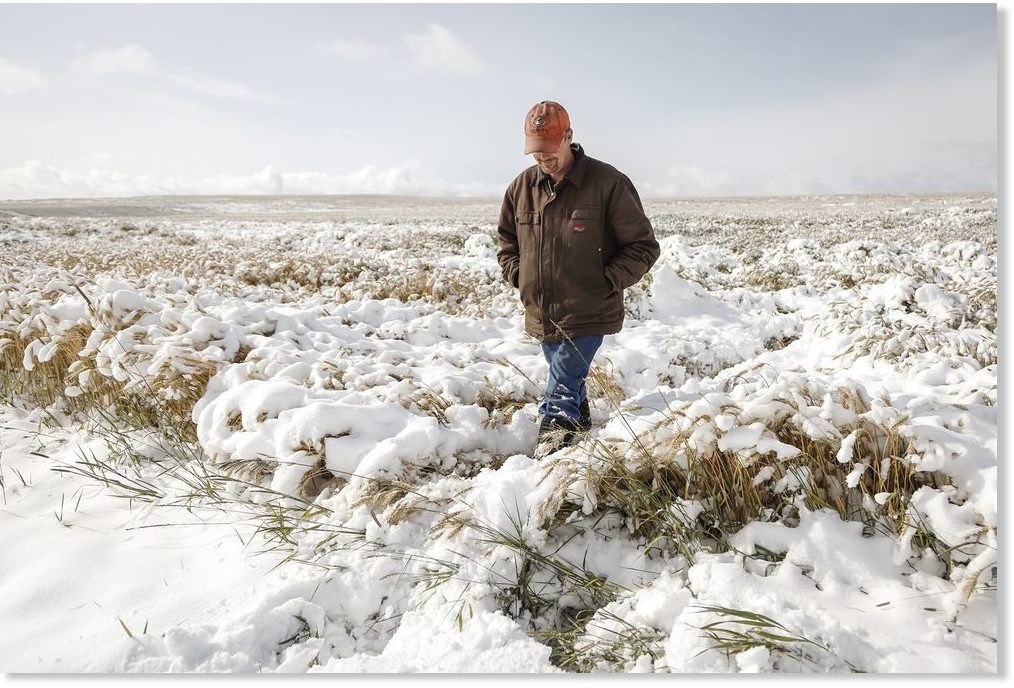
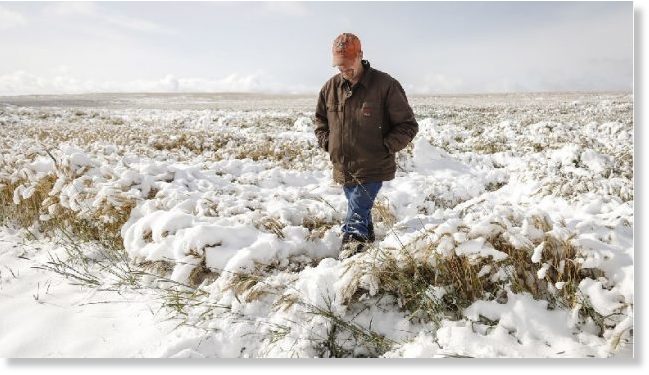
A farmer checks on his wheat crop after snowy weather near Cremona, Alberta, north of Calgary on Sept. 30. Early snow and frost is threatening the harvests across western Canada
© Jeff McIntosh/The Canadian PressA farmer checks on his wheat crop after snowy weather near Cremona, Alberta, north of Calgary on Sept. 30. Early snow and frost is threatening the harvests across western Canada
With crops like wheat, canola, barley, peas and others ready for harvest, an early snow has caused havoc across much of western Canadian farmland.

Farmers have been as busy as possible trying to get as much harvested as possible before frost and snow ruined crops and stalled the process.

An early crop killing frost and snowfall on the last day of summer, dumped anywhere from 10 cm to one metre of snow across various regions of Alberta, basically halting harvesting. In the south, 60 per cent of the canola crop had been harvested, but province-wide less than 16 per cent had been combined. Province wide wheat harvesting was only 35 per cent complete.

Snowflake

Over 500 people rescued from snow-struck Rohtang Pass in India

Himachal: Rohtang pass receives six inches snowfall,
Rohtang pass receives nearly 10 inches snowfall
More than 500 people, including tourists, were rescued from Rohtang Pass Monday morning after being stranded there for a night because of heavy snowfall.

Around 150 buses, tourist taxis, private cars and military vehicles going towards Manali from the Lahaul side on Sunday had got stuck near the pass after the area received over 25cm of snow, Manali sub-divisional magistrate Raman Gharsangi said. "A fleet of four-wheel drive vehicles was deployed to bring back the stranded. All are safe now," he said.


Snowflake

Winter is coming, or is it here? Up to 10 inches of snow at Stevens Pass, Washington

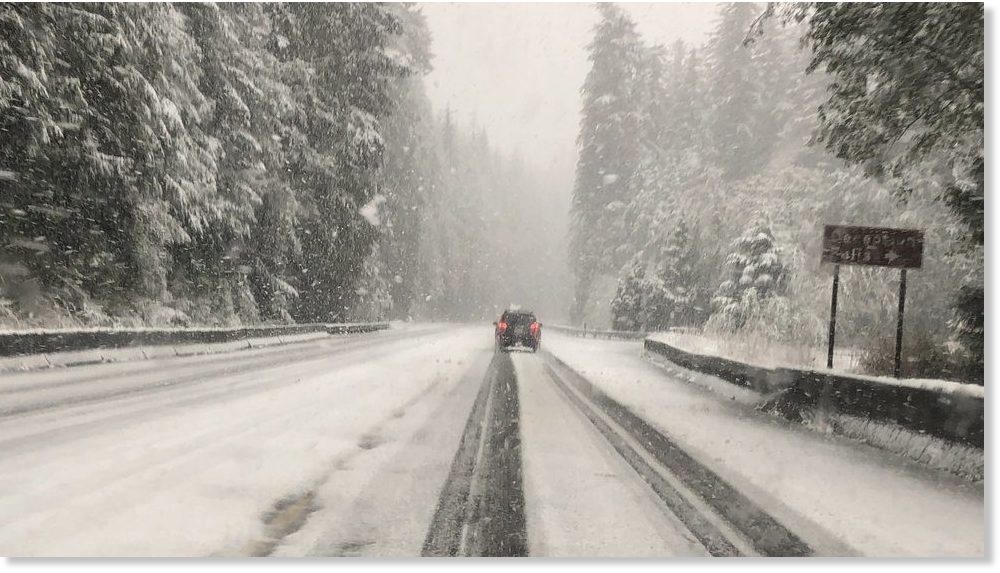
Snow falls along Stevens Pass on Oct. 8, 2019
© Benjamin JurkovichSnow falls along Stevens Pass on Oct. 8, 2019
It was a dark and stormy....day?

Scattered showers moved into the Puget Sound region Tuesday as a potent Puget Sound Convergence Zone slowly moved through the region. Some of these showers brought small hail and a few bolts of lightning.

A small hail storm coated the ground on the Eastside, with photos from the area showing rather wintry scenes.

Hail reports came in from Bellevue, Renton and the Issaquah Highlands.

In Seattle, the rains brought January-like temperatures to those caught outside. The thermometer at Sea-Tac Airport registered 44 degrees at 1 p.m. -- a 10 degree drop in 33 minutes. At that moment, Seattle was 7 degrees warmer than Reykjavik, Iceland despite it being late evening in Iceland.

Meanwhile, it was all snow up in the mountains where 7-10 inches have already fallen at Stevens Pass.


Snowflake

Mount Olympus receives first heavy snowfall for 2019 season in Greece

snow
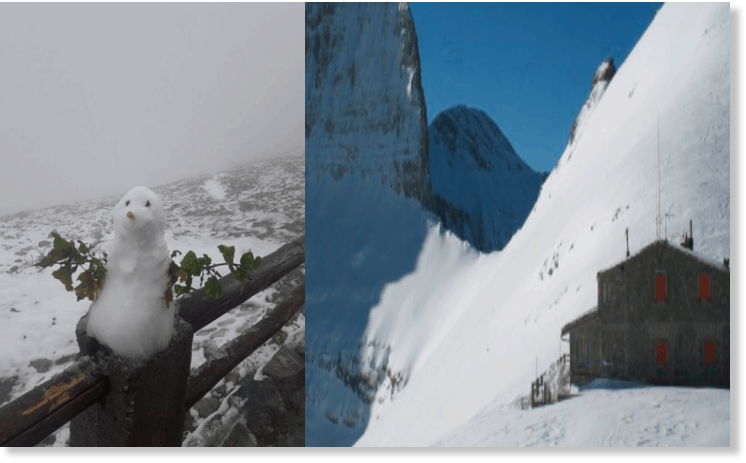
The first heavy snow for the 2019 season fell yesterday morning on Mount Olympus!

Even though in some parts of Greece people are still swimming, up north the temperature dropped to minus four degrees Celsius and the slopes and peaks of Mount Olympus were filled with snow.

A few days ago, the first snowflakes had fallen onto the highest mountain in Greece but yesterday there was a great amount that turned the entire area white!

Snowflake Cold

Ice Age Farmer Report: "Frost Apocalypse" - NoHarvest19 - When Will Feed Shortage 2020 Start? - Grand Solar Minimum

A Foot of Snow Is Forecast to Bury Crops in Great Plains, Canada
A foot of snow is forecast to bury crops in Great Plains, Canada
Say a prayer for the farmers, as a winter storm for the record books is arriving this week, marking the likely end of a very soggy autumn. For many, the worst planting on record (#NoPlant19) has devolved into the worst season in history (#NoHarvest19). Some counties are launching emergency contingency plans for animal feed shortages expected by July 2020. Christian asks: when do you see them beginning? Start growing your own food now.


Sources

Arrow Up

Climate models are unreliable and predictions of warming "absurd" says German professor

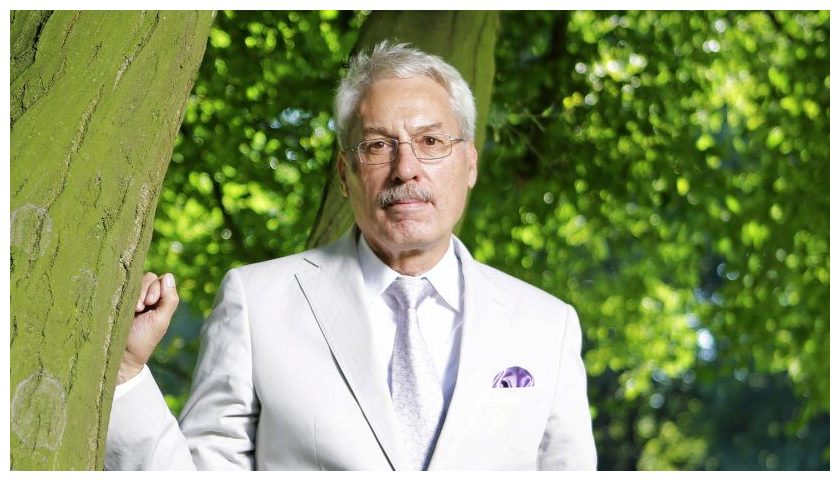
Fritz Vahrenholt
© Marcelo HernandezChairman of the Supervisory Board of Aurubis AG and Member of the Board of the German Wild Animal Foundation: Fritz Vahrenholt was Environmental Senator from 1991 to 1997.
Yesterday the online Hamburg Abendblatt published an interview with Prof. Fritz Vahrenholt on the recent climate demonstrations and alarmism. Vahrenholt calls the demonstrations and demands "over-the-top", and a real threat to the economy. He says the climate models are unreliable and predictions of great warming "absurd".

Vehrenholt is one of founders of Germany's modern environmental movement, the founder of the country's largest renewable energy company, Innogy and a member of Germany's SPD socialist parties. Lately the retired professor has become renegade among his peers by criticizing the "over-the-top climate debate" and warning against "hasty reforms".

Atmosphere of fear and hysteria

Vahrenholt tells the Abendblatt the climate debate has become hysterical and that in fact "we don't have a climate emergency." He adds: "If Greta Thunberg's demands are implemented, global prosperity and development will be massively endangered."

Vahrenholt is one of the more prominent signatories of the letter to the UN: "There is no climate emergency."

In the interview with the Abendblatt, Vahrenholt rejects Thunberg's bleak world view, noting that human society has markedly improved on almost every front over the recent decades.

"The number of hungry people in the world has halved, life expectancy has doubled, and infant mortality has been reduced to tenths. These successes have been largely due to the supply of energy for electricity, heat, transport and nutrition," said Vahrenholt.

When asked why so few German scientists (12) signed letter to the UN, Vahrenholt told the Abendblatt: "People no longer dare to express themselves differently."

The German chemistry professor says spreading panic and fear is "irresponsible" and that we should: "Stop scaring the children - they are already getting delusions."

Snowflake

Nearly a month's worth of snow hits southern Yukon

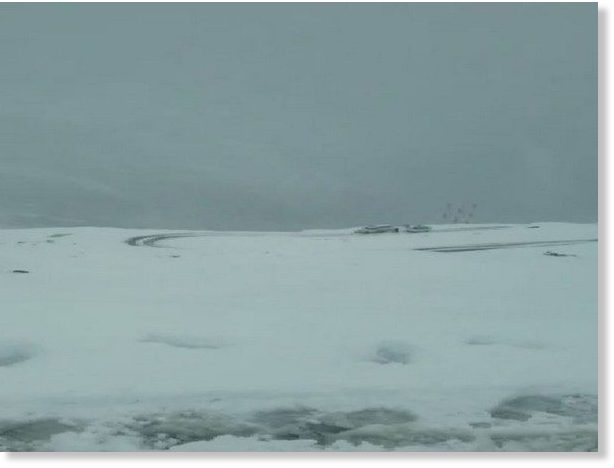
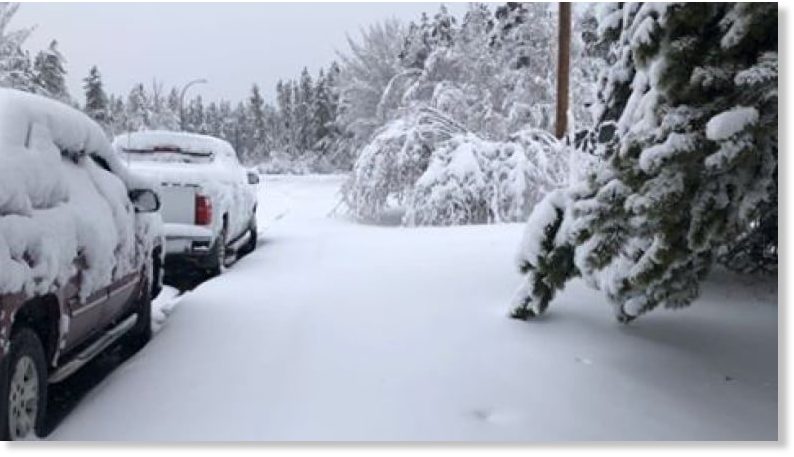
Kerri Scholz woke up to this view in the Porter Creek neighbourhood of Whitehorse Sunday morning.
© Kerri ScholzKerri Scholz woke up to this view in the Porter Creek neighbourhood of Whitehorse Sunday morning.
About 5,500 residents in southern Yukon lost power after a heavy snowfall Saturday night that caused trees to fall on power lines.

Marsh Lake was the hardest hit, but power was out "all over," said Jay Massie, manager of ATCO Electric Yukon, "from Teslin to Tagish, Carcross out to Deep Creek and west towards Haines Junction."

Some people were without power for more than 24 hours. Massie said utility crews worked through the night on Sunday to restore electricity, getting everyone's power restored by about 10 a.m. Monday.


Snowflake

Adapt 2030 Ice Age Report: Opposite of what 'climate experts' told us: Global snow

First snow in Heinävaara, Joensuu, on 4 October
© All Over Press / Ismo PekkarinenFirst snow in Heinävaara, Joensuu, on 4 October 2019
Extended ski season for 3rd year in a row Australia, Unusual heavy snows China, India, Finland, Norway with a revisit of MS Malmo stuck in early sea ice at the end of Summer. Its the opposite of what climate experts have told us was going to happen.


Snowflake

Winter: The White Elephant In The Room

climate cartoon
Summer is over, and it is time to change focus from alarmists nonsense about summer, to alarmist nonsense about winter.

Errata : I attributed a Washington Post reference to the New York Times


Snowflake Cold

Record cold in Sakhalin, Russia

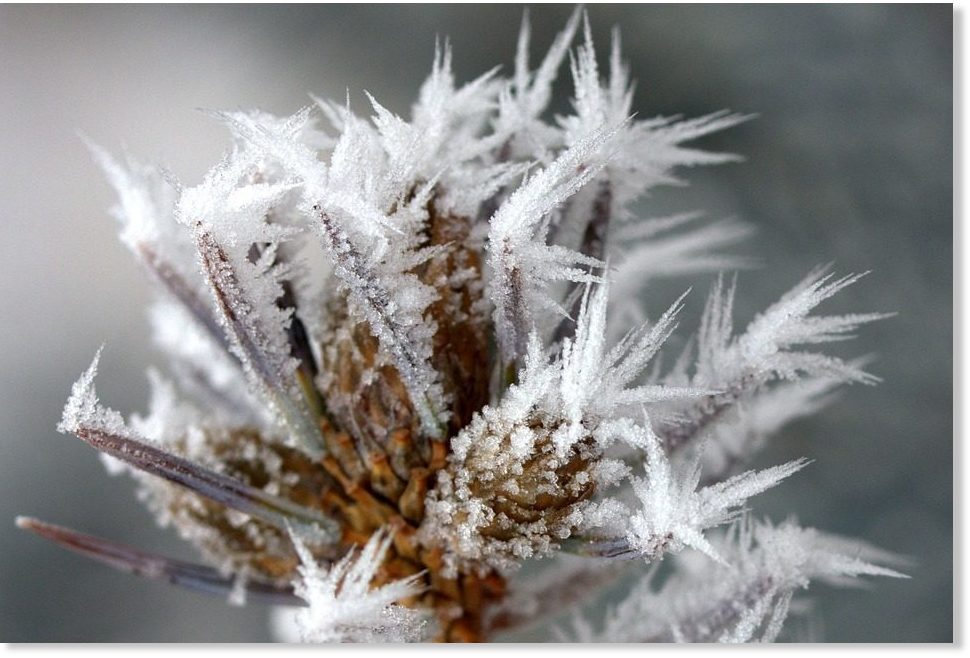
frost
Among the record holders is the settlement of Moskalvo, where the average daily temperature is 3.4 degrees below the climatic norm, and the new absolute maximum for October 5 is now -1.7, one degree lower than the previous record set in 1955.

In Nogliki, the thermometer dropped to -4.6 degrees, the previous record of -2.3 was observed recently, in 2017.

At the beginning of the new week in the valleys of the center and north, the air will catch frost to -5 degrees, and in the valleys of the south to -2.

Thanks to Victor for this link.