Extreme Temperatures
S


Sun

Preparing for the inevitable solar storm

Lagrange Points
© NASA/ WMAP Science Team​Diagram of the Lagrange points associated with the Sun-Earth system.
Let's consider the following scenario - the Earth is at risk for a disruptive event. This event has, conservatively, about a 0.2% chance of happening on any given year. But that is the most conservative estimate, at the high end it could be more like 12% over the next decade. Either way the chance of this type of event happening in the 21st century is quite high, and no matter what it is inevitable.

The result will likely be taking out power grids, possibly world wide in a worst-case scenario. Reasonable recovery will take about a year, with full recovery taking about a decade. Just imagine what would happen if we lost our power grid for a year. No digital banking, no internet, no household power. The most conservative estimate of how much such an event would cost is $2 trillion dollars, but experts are increasingly leaning toward $20 trillion as being a closer estimate (and this figure will only go up in the future).

So here's my question - what do you think we should spend now to avoid a high probability of civilization collapse over the next century costing tens of trillions of dollars and growing? I am not talking about global warming, or environmental degradation, the death of the bees, an asteroid strike, or massive crop failure. I am talking about a coronal mass ejection (CME) - a solar storm.

A CME is actually the greatest threat to civilization that we face, in terms of probability and effect. In fact I think we are underestimating the chaos that a worst-case scenario would cause. Imagine going without power for a year. I know, there are people around the world who live without power, and the residents of Peurto Rico recently experienced something similar. But if this happened on a global scale, there's no one coming with aid. Global infrastructures on which we all depend would collapse. How many people would starve or freeze? How much wood would be burned to keep warm or cook until the power comes back on? There are so many downstream effects that we cannot anticipate.

Snowflake

Blizzard brings more than 2 feet of early snow to North Dakota towns

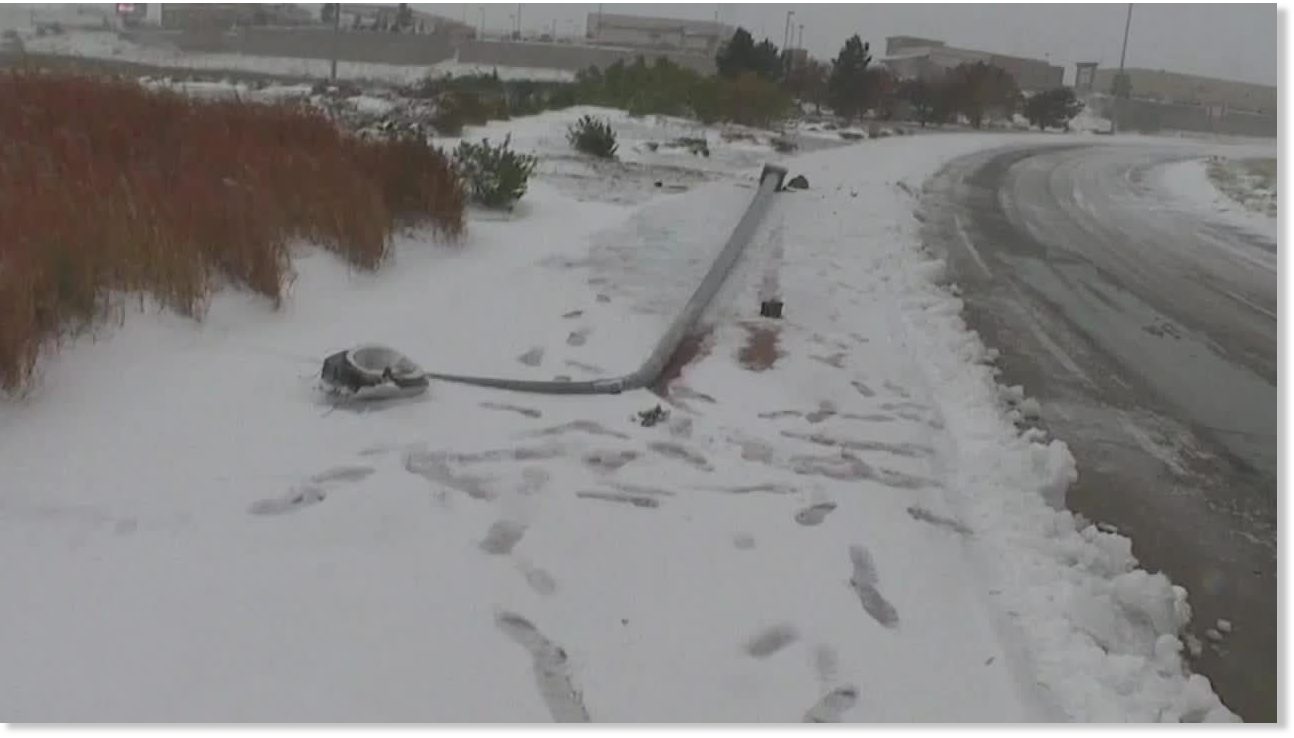
The North Dakota Highway Patrol posted a photo from 8 a.m. Friday showing road conditions on Hwy 20 2 miles south of Devils Lake.
A fall blizzard continued to hammer eastern and central North Dakota late this week and some areas have reported staggering amounts of snowfall.

Snow began accumulating in towns across North Dakota Thursday morning as storm developed over the state. More than 48 hours later, some areas are reporting more than 2 feet of snow.


Cloud Lightning

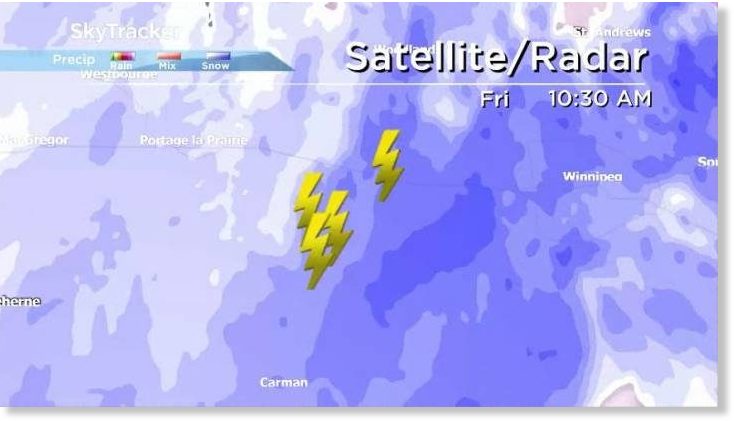
Was that lightning? Rare thundersnow seen in southern Manitoba

Thundersnow Oct. 11 2019.
© Global NewsThundersnow Oct. 11 2019.
Thunderstorms are common in the prairies, but thundersnow? That doesn't happen very often.

But the rare weather phenomenon has been part of the early blast of winter pummeling southern Manitoba.

Thunderstorm activity associated with a Colorado Low's winter storm began Friday morning close to the American border.

Around the Vita area, thunderstorm activity was observed and radar imagery shows thunderstorms taking place in an area of mixed precipitation or ice pellets and snow as well.

These thunderstorms continued and moved further north.


Comment: Also filmed further south recently in Nebraska:


Ice Cube

Record-setting blizzard set to blast American midwest

Blizzard
© Gizmodo Australia
The American midwest is skipping autumn and heading right to winter to end the week.

A potentially record-setting blizzard is bearing down on the region and could dump snow from Colorado to Minnesota. The Dakotas sit near the epicentre of the storm and could see up to three feet of October snow (yes, you read that right).

Add in gusty winds and you have a recipe for life-threatening conditions. For a region that's already dealt with one freak early season snowstorm, the latest blast of winter is hardly welcome.

Snow has already fallen across parts of the Rockies and Front Range as of Thursday late morning. Multiple accidents and pileups have been reported in the Denver metro area. Highways have been shut down as police struggle to respond amid worsening conditions.

After topping out at 27 degrees Celsius on Thursday, Denver will struggle to reach freezing on Friday. As of mid-afternoon local time, temperatures hovered at just -5 degrees Celsius with a wind chill of -10 degrees Celsius.

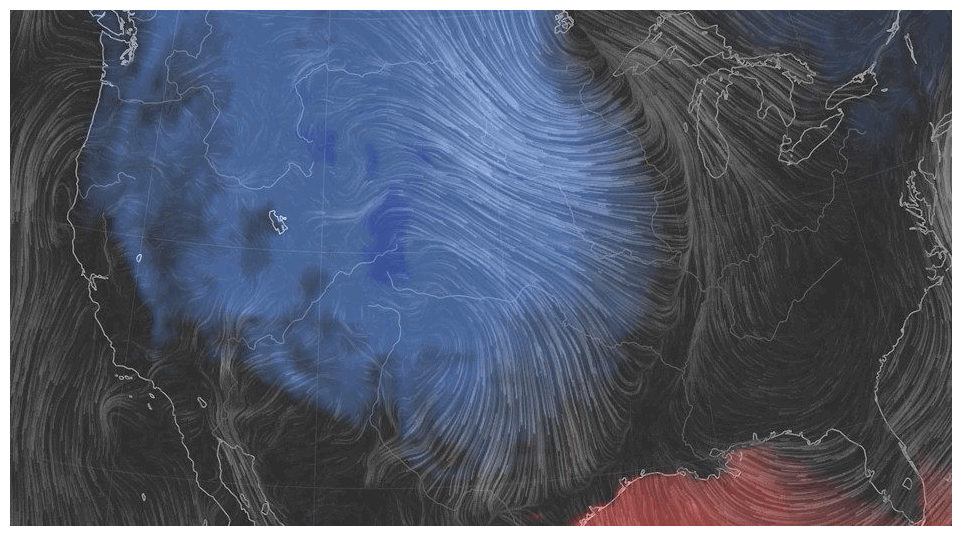
The chaos in Colorado is just a preview of what's to come, though. As the storm pushes eastward, frigid air will continue to drop out of Canada and sweep across the Midwest. Along with rapidly dropping temperatures, the storm will usher in winds upwards of 100km/h and heavy snow.

Snowflake

Over a foot of new snow blankets parts of Alaska

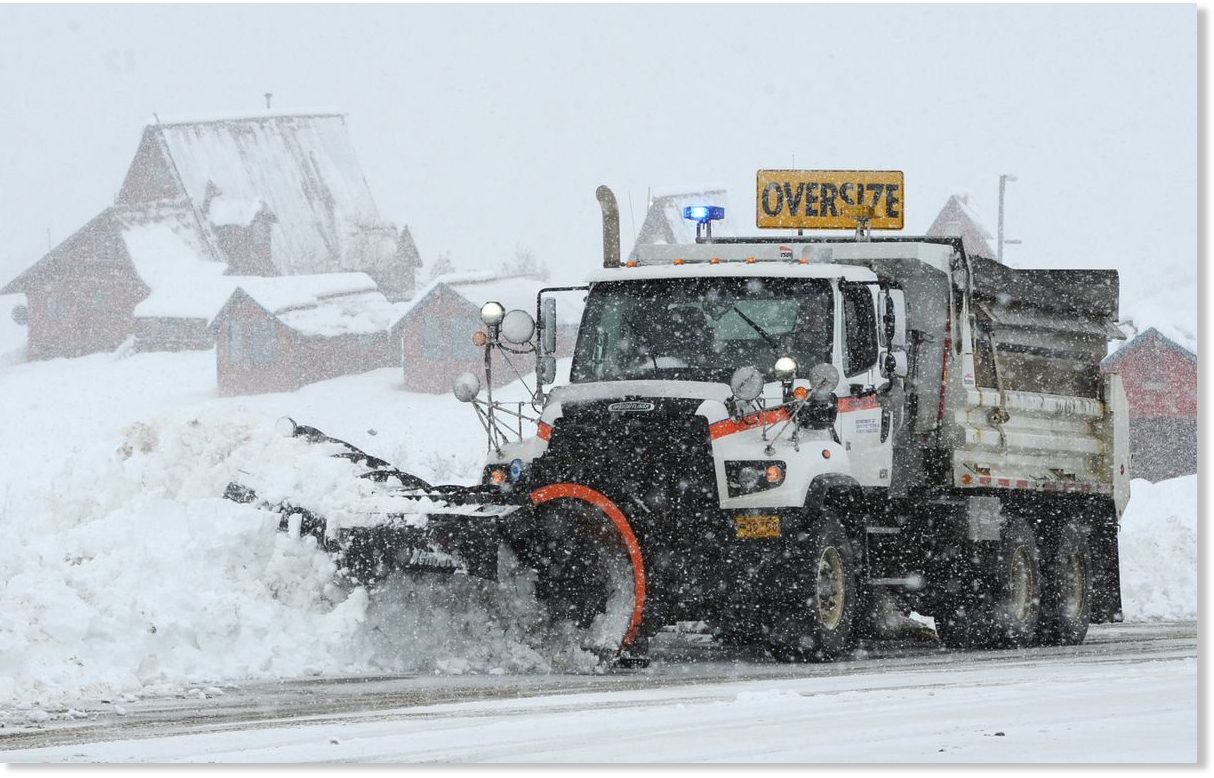
Jim Meehan with state DOT/PF plows
© Bill Roth/ADNJim Meehan with state DOT/PF plows the parking lot between Hatcher Pass Lodge and Independence Mine on Wednesday, Oct. 9, 2019. This area has received more than twenty inches of snow in the past week.
A weather system bringing snow to the Susitna Valley created "very difficult driving conditions" north of Talkeetna overnight into Thursday, according to the Alaska Department of Transportation.

A weather spotter at Chulitna reported snow tapering off as of Thursday morning but about 16 inches on the ground, according to the National Weather Service. Another spotter at Hatcher Pass Lodge said that much new snow had fallen near Independence Mine but it was still coming down heavily as of midmorning.

The National Weather Service canceled a winter weather advisory for the Susitna Valley — including the communities of Talkeetna, Willow and Cantwell — that called for 2 to 4 inches more snow and total storm accumulation of 6 to 16 inches with the highest amounts from Chulitna to Broad Pass at Mile 201 of the Parks Highway.


Snowflake Cold

Vancouver, Canada saw coldest day in 122 years

Vancouver fall day
© Shutterstock
The Metro Vancouver weather forecast calls for another chilly night after temperatures broke a weather record that is over 100 years old.

Today's record was set after the city saw an unusually cold yesterday on Wednesday, Oct. 9. In fact, Vancouver hadn't seen an Oct. 9 this cold since 1935 - a whopping 84 years ago. Back then, temperatures dipped to 1.1°C. Prior to that, temperatures dipped to zero degrees in 1916.

Now, Vancouver saw temperatures dip to a freezing -0.7°C on Oct. 10, and temperatures are expected to fall to 1°C or even lower tonight.

Vancouver Is Awesome spoke to Armel Castellan, Meteorologist, Environment Canada, who explained why the temperatures dipped so low, as well as what we can expect in the days to come.

"Vancouver's previous record for Oct. 10 was set in 1916 when temperatures dipped to -0.6°C," reports Castellan. "So we beat it by -0.1 degrees."

While that may not seem like much, Castellan notes that it is very unusual for temperatures to dip into the minuses in the first two weeks of October. He says that this has only happened 19 times in over 100 years. Further, there hasn't been an Oct. 10 this cold on record since the records began in 1897.

Comment: Meanwhile a "potentially historic" fall snowstorm is set to hit a large stretch of the US.


Arrow Up

East Siberian Sea 'boiling' with methane

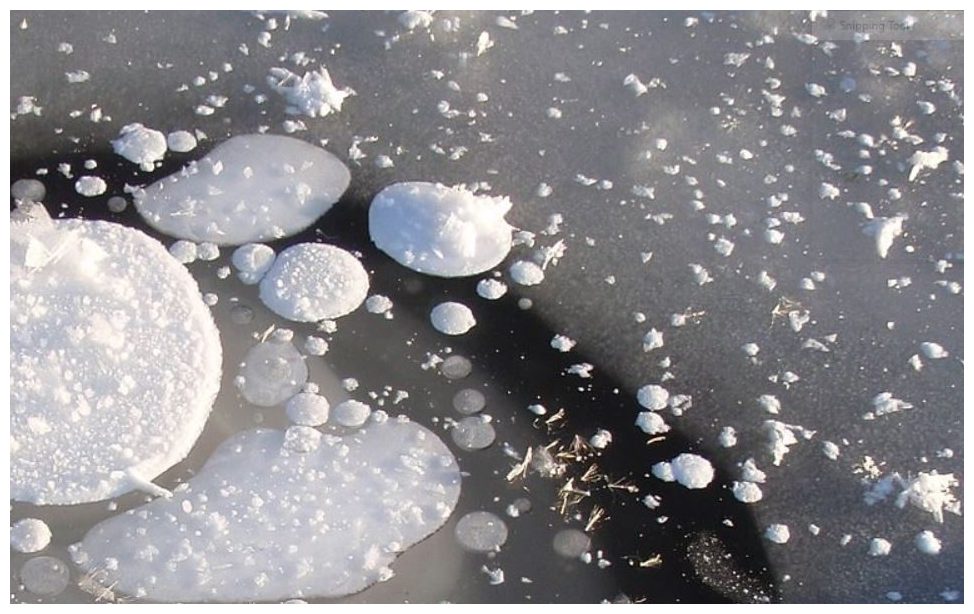
Scientists studying the consequences of methane emissions from underwater permafrost in the Arctic Ocean announced this week that they found a 50-square-foot area of the East Siberian Sea "boiling with methane bubbles."
Frozen methane bubbles
© US Geological SurveyFrozen methane bubbles.
The research team, led by Igor Semiletov, from Tomsk Polytechnic University (TPU) found the methane leak east of Bennett Island in the East Siberian Sea. The methane bubbles, which create a boiling appearance on the surface of the water, spanned an area over 50 feet. The bubbles were so pronounced they could be scooped up in buskets.

"This is the most powerful seep I've ever seen. It is manifested by an increase in methane concentration in the air up to 16 ppm (millionths of a share), which is 9 times more than the average planetary values. No one has ever registered this before," said Semiletov in a TPU statement.

Semiletov, a Russian researcher who has participated in 45 Arctic expeditions, set out on the Academic Mstislav Keldysh last month, accompanied by an international group of scientists representing the United Kingdom, the United States, Italy, the Netherlands, and Sweden, reports Common Dreams.
Russian Research Ship
© Twitter
According to expedition member Sergei Nikiforov, a journalist, "They took samples of bottom sediments, water, and gas, scooping up the extraordinarily large methane bubbles in buckets rather than small plastic capsules and filling several pressurized canisters."

"The next day, the expedition stumbled upon another giant seep of roughly the same size, even though discovering seeps among rough ocean waves is usually harder than finding a 'needle in a haystack,'" Mr. Nikiforov said.

Snowflake Cold

Temperature drops more than 50 degrees as 'all-out blizzard' sets sights on Dakotas

Snow in South Dakota
A "potentially historic" fall snowstorm is set to wallop a large stretch of the country — evolving into an "all-out blizzard" as it passes over the Dakotas and sending an arctic blast into much of the northern US, forecasters predict.

Denver was downright balmy on Wednesday with a high in the lower 80s — but the temperature had already plummeted into the upper 20s by 1 a.m. as snow began to fall, according to Accuweather. From 1 to 3 inches of snow is expected to fall in the Mile High City on Thursday.


Snowflake Cold

Snow, freezing temperatures threaten northern U.S. corn, soybeans

snow crop
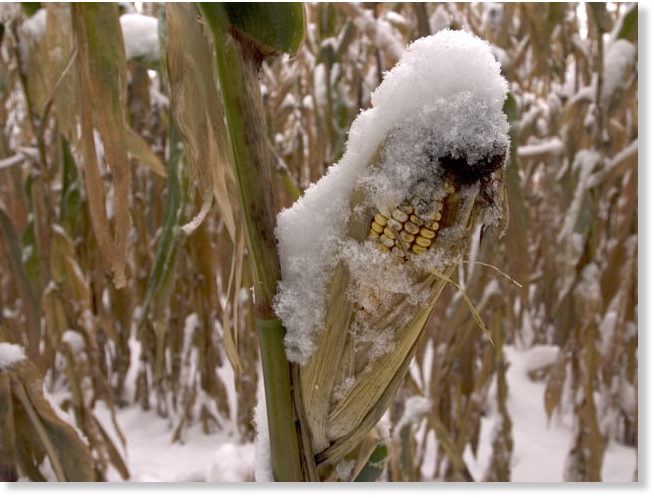
Plunging temperatures and heavy snow forecast for the upper U.S. Plains from Friday to Sunday are likely to damage unharvested corn and soybean crops in parts of North Dakota, South Dakota, Minnesota, Nebraska and Iowa, meteorologists said on Wednesday.

The winter-like blast could dump up to 3 feet of snow in central and eastern North Dakota and send temperatures plunging into the 20s Fahrenheit in Nebraska, western Iowa, southwest Minnesota and the Dakotas, said Kyle Tapley, senior agricultural meteorologist with space technology company Maxar.

The forecast sent corn and soybean futures on the Chicago Board of Trade to multi-month highs this week on concerns that late-planted crops that have not yet reached maturity could be destroyed or damaged by the hard freeze.


Snowflake Cold

Adapt 2030 Ice Age Report: Atmospheric shift: Rare early snow & cold in the N. Hemisphere

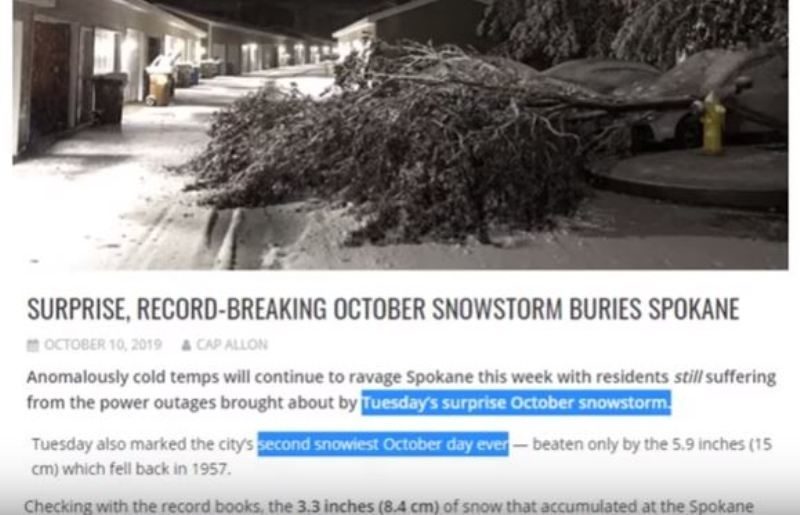
Spokane early snow
© YouTube/Adapt 2030 (screen capture)
Explanations abound why the second Historic snowstorm descends in N. America why record cold sweeps through the Netherlands, Russia, Hungary and the earliest snowfalls on record in Latvia. A million without power in California as inadequate infrastructure is blamed on climate change not poor upkeep all the while crops decimated by winter cold and snow across the USA & Canadian grow zones. Question: Where will the worlds food come from?


Comment: Professor Valentina Zharkova explains and confirms why a "Super" Grand Solar Minimum is upon us