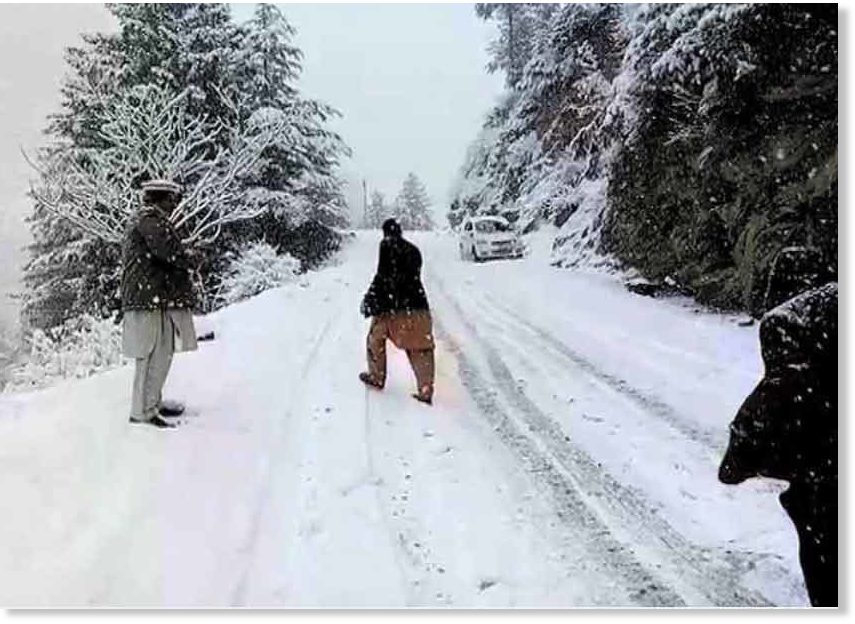
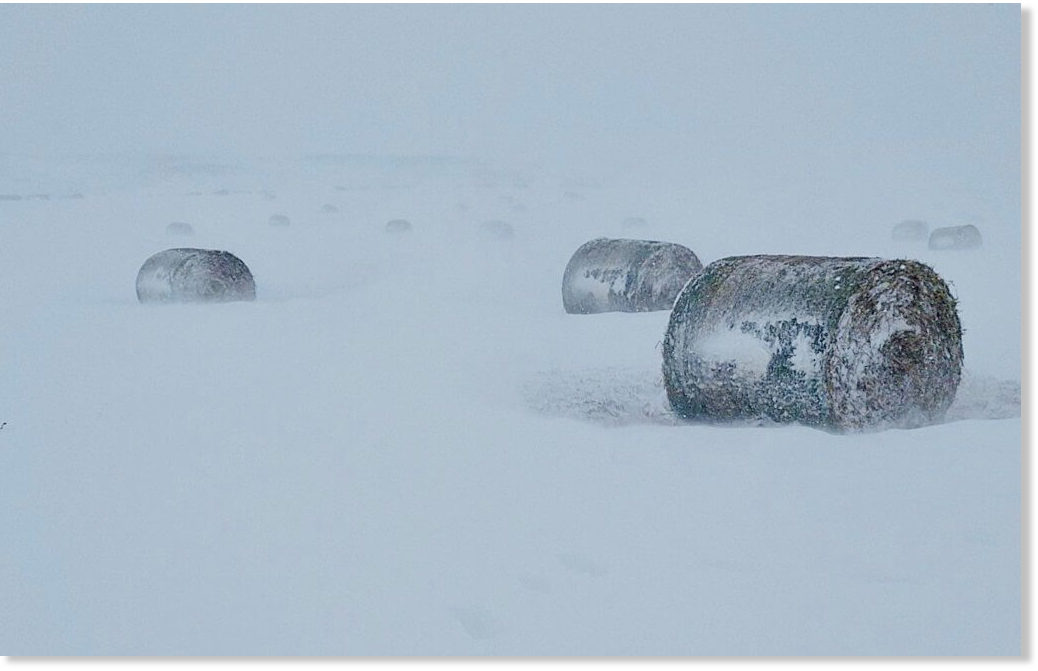
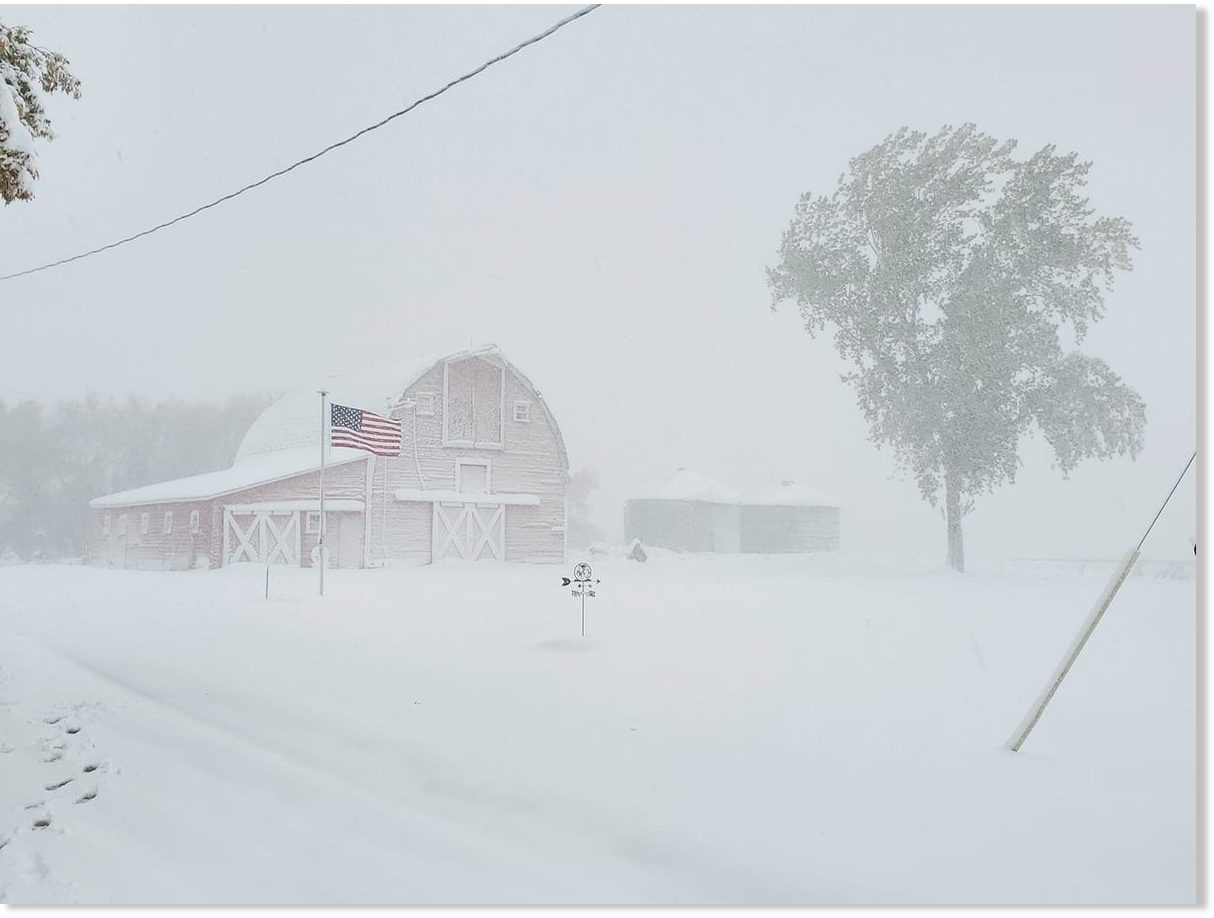
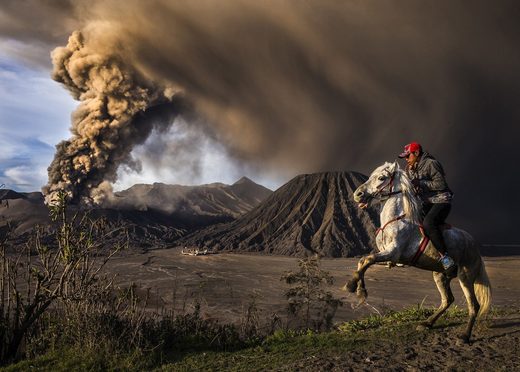
Snowfall over high mountains in northern areas of Pakistan covered the region with white pearls of snow from sky in Kaghan Valley and other areas, ARY News reported on Saturday.
The Naran highway leading to Gilgit has been closed for vehicular traffic as Babusar Top, Chilas, Deosai and Nanga Parbat received first spell of the winter snowfall.
Rain with wind or thunderstorm is expected at isolated places in upper Khyber Pakhtunkhwa, northern Punjab, Islamabad, Gilgit Baltistan and Kashmir today, while hail storm is expected at a few places.
Snowfall over high mountains is also expected in Malakand division and Gilgit Baltistan on today, Pakistan Meteorological Department said in its forecast.
Robert W. Felix Ice Age Now Fri, 18 Oct 2019 14:41 UTC
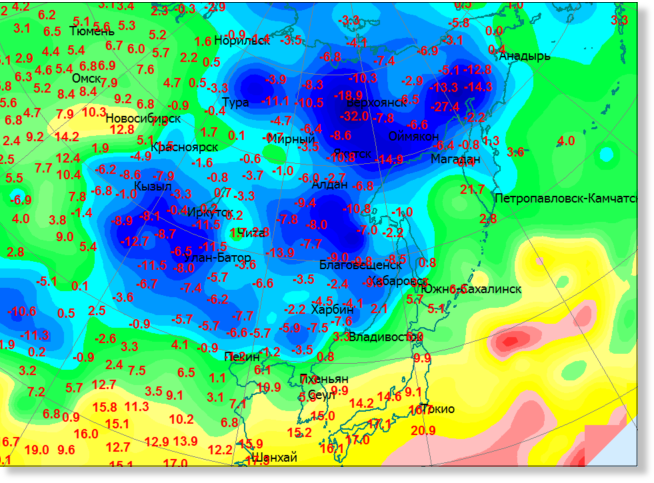
Russian winter is taking its course. As a place for its presentation, the cold chose the central regions of Yakutia. On October 15, at the Iema weather station, the minimum temperature was −32°C.
In addition to severe night frost, in Yakutia there is a large diurnal variation in temperature. At noon the same day, thermometers showed −13°C.
Irina Slav OilPrice.com Thu, 17 Oct 2019 10:36 UTC
TC Energy, formerly known as TransCanada, has declared force majeure on the Keystone oil pipeline after a snow storm in Manitoba disrupted operations, Reuters reports, citing a confirmation from the pipeline operator.
"Due to the recent storm in Manitoba over the weekend, we did declare force majeure as the province declared a state of emergency. We are currently operating at reduced flows," a spokesperson for TC Energy told Reuters in a statement.
The Keystone pipeline has a capacity to carry 590,000 bpd of Canadian crude to the United States refineries. While it is unclear exactly how much TC Energy had reduced the flow of oil through the pipeline, but Western Canadian Select was down on the news, extending a losing streak.
An unprecedented October blizzard that hit just before harvest time has absolutely devastated farms all across the U.S. heartland. As you will see below, one state lawmaker in North Dakota is saying that the crop losses will be "as devastating as we've ever seen". This is the exact scenario that I have been warning about for months, and now it has materialized. Due to endless rain and horrific flooding early in the year, many farmers in the middle of the country faced very serious delays in getting their crops planted. So we really needed good weather at the end of the season so that the crops could mature and be harvested in time, and that did not happen. Instead, the historic blizzard that we just witnessed dumped up to 2 feet of snow from Colorado to Minnesota.In fact, one city in North Dakota actually got 30 inches of snow. In the end, this is going to go down as one of the worst crop disasters that the Midwest has ever seen, and ultimately this crisis is going to affect all of us.
According to the USDA, only 15 percent of all U.S. corn and only 14 percent of all U.S. soybeans had been harvested as of October 6th...
Patrick Thorne Inthesnow.com Wed, 16 Oct 2019 11:29 UTC
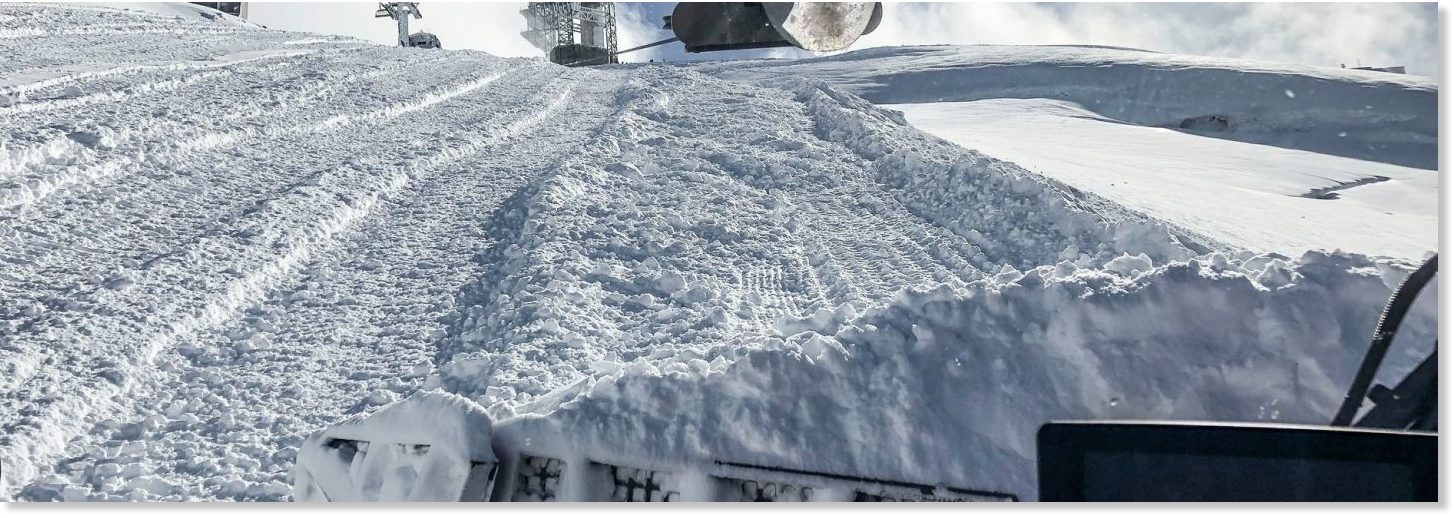
Engelberg in Switzerland has become the first ski resort to issue a powder alarm for more than 20cm of snowfall in 24 hours this morning after 30cm of snowfall was recorded.
The heavy snow was measured on the resort's Titlis glacier which only opened for the 2019-20 ski season last weekend.
Engelberg benefited from heavy snowfall that was widespread across the Alps yesterday, where more than a dozen glacier ski areas have already opened their high slopes for the start of their 2019-20 ski seasons.
Starker Schneefall in den südlichen Walliser Alpen, Saas-Fee - Längfluh Berg -Gletscher, 2870 müM, Temp. 0.3°C ☃️ pic.twitter.com/xn8PiF1ZGs
"The normal temperature (east central North Dakota) on Oct. 11 is 49F, while the observed average temperature the day the storm hit was 31F. This represents an event in the 90th percentile so, temperatures in this range can occur around once per decade. However, the combination of cold with a winter storm is much more rare. The last instance of such a snowstorm this early was Oct. 9, 2005 in North Dakota. Prior to that event, it had been 130 years so, the cold plus snow is something that only happens once or twice a century," said Isaac Hankes, Weather Research Analyst.
"Starting late last Thursday, a historical blizzard enveloped the U.S. Northern Plains and northern portions of the Midwest, leaving 2-20 inches (5-50 cm) of snow covering the eastern half of North Dakota, and the northern halves of South Dakota and Minnesota. Additionally, sustained hard freeze conditions were felt in southern Minnesota, northwestern Iowa and portions of Nebraska.
Robert W. Felix Ice Age Now Mon, 14 Oct 2019 10:15 UTC
Several settlements report record cold.
On the night of October 12, in most settlements of the Trans-Baikal Territory, the temperature dropped below a 10-degree mark.
In the village of Nerchinsky Zavod, located southeast of the regional center of Chita, the temperature dropped to -14.2°C, the previous record, -12.9°C, was noted in 1903.
The early fall blizzard punctuates what has been the worst growing season in American history.
Record late plantings imply crops are too immature to make it through this early winter, as the growing seasons shrink on both sides. Up to 10-20% of the US Corn crop is at risk by some estimates, as the USDA numbers/narrative diverge further from reality, tensions are rising, and efforts to hide the truth are escalating. Things are going to get worse before they get better. Prepare.
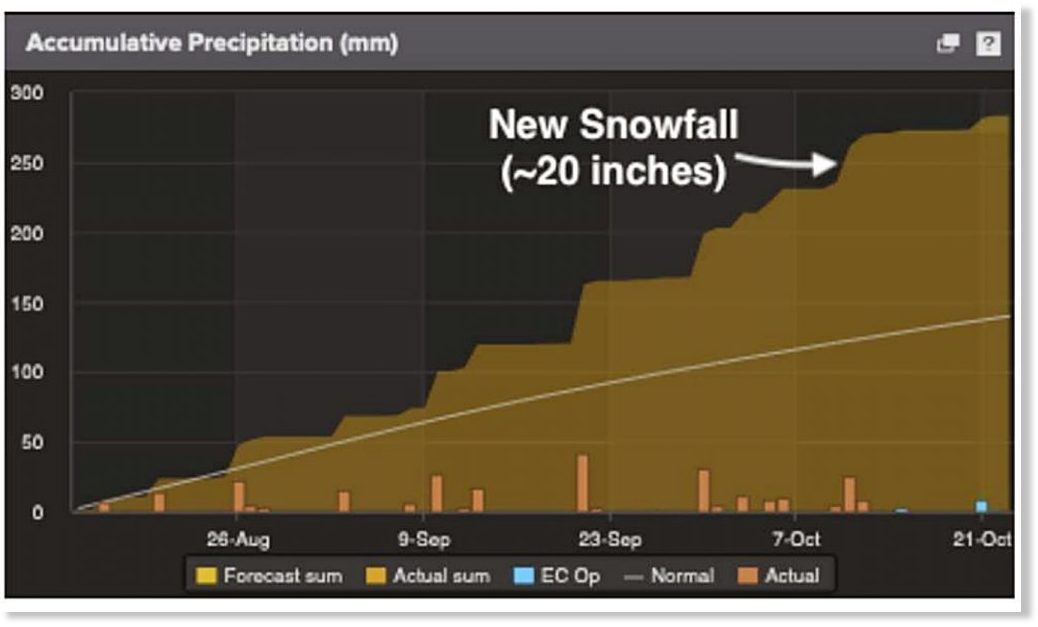
Just three weeks into autumn, a pair of unusually strong early season snowstorms delivered the the snowiest start to the season on record to parts of the northern Rockies and Northern Plains.
By season, we mean that time of year between the first snow of fall and last snow of spring.
Last week's storm, named Winter Storm Aubrey by The Weather Channel, dumped up to 30 inches of snow and brought blizzard conditions to parts of North Dakota.
What is truth anyway? The truth is the essence of something, its natural state, something as it really is. It is really a quest for love, because to truly love something we must know it for what it really is. Perhaps we can sense in an unconscious way that there is a deeper truth to everything and everyone, and we are led to search for the truth about it, so that we can truly love it for what it really is.
- Joe Quinn
”
Recent Comments
Our first reality has shifted into a simulated world already, resulting humans being completely controlled. This realization has a high chance of...