Extreme Temperatures
S


Snowflake

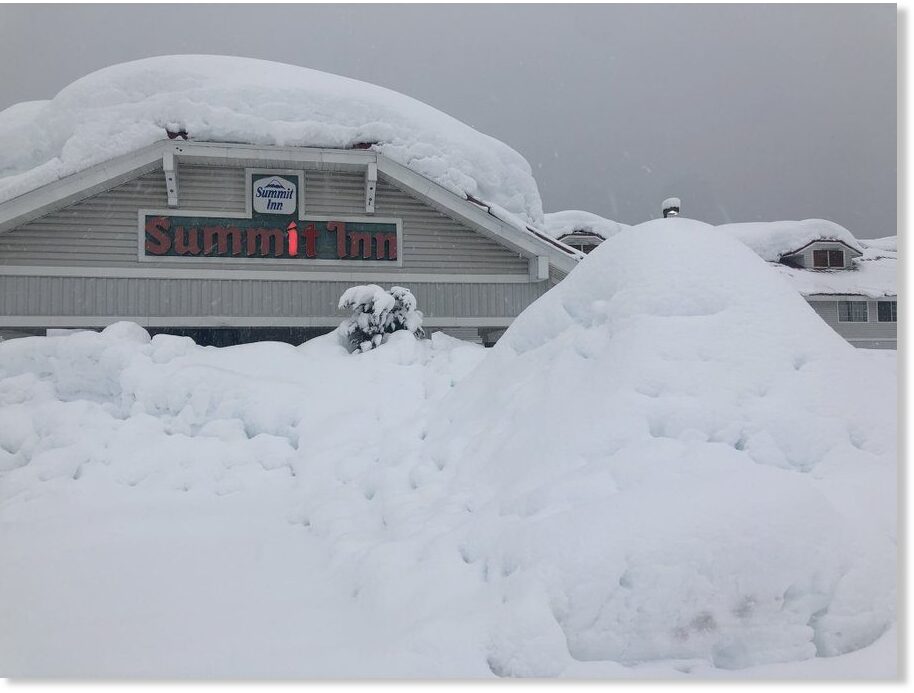
56 inches of snow at Snoqualmie Pass, Washington in last week with more on the way

Just a little bit of snow up at Snoqualmie Pass. That’s a car buried under that mound of snow. 50” of snow and counting in the last week!
Over 4 feet of snow have fallen at Snoqualmie Pass in the past week, and drivers might be warily looking at the forecast that shows more is on the way for the first half of this week as Winter Storm Warnings remain in effect.

Weather spotters with the Washington State Department of Transportation measured 56.5 inches of snow had come down in the pass through Monday morning. For the entire season, the pass was at 190 inches as of Monday morning, and snowpack was running about 115% of normal in the central Cascades.

Stevens Pass wasn't too far behind at 53.5" since Tuesday evening and 219 inches for the year through Sunday morning.

The totals will continue to climb as more snow was falling Monday. A Winter Storm Warning remained in effect until midnight Tuesday morning for an additional 5-15 inches of new snow. Another storm Tuesday will add even more.


Snowflake Cold

Adapt 2030 Ice Age Report: Signs Earth's climate is starting to fall out

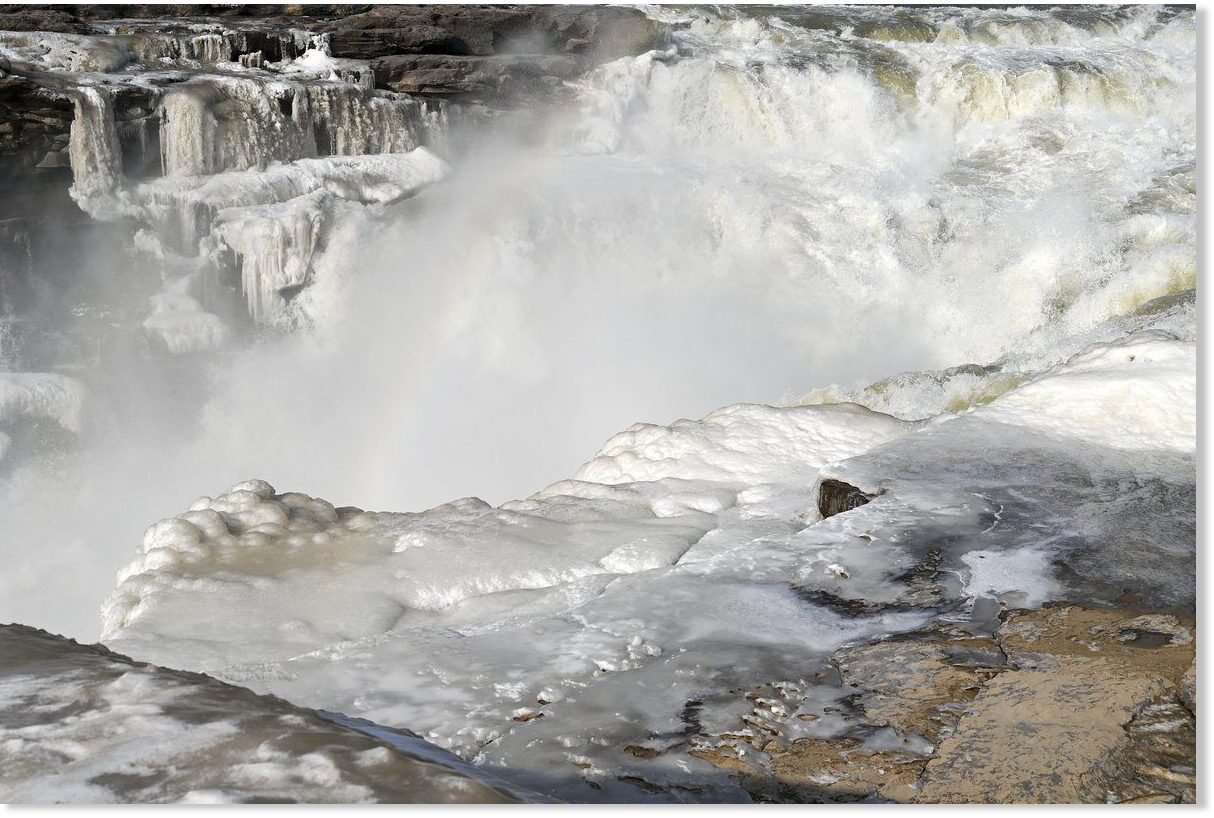
Record cold in China
© YouTube/Adapt 2030 (screen capture)
In the same day the highest barometric pressure reading ever recorded on Earth occurred over Mongolia, but in the N. Pacific the lowest ever recorded barometric pressure in a extratropical storm was recorded bringing five feet of snow to Japan and smashing cold records back to the Ming Dynasty in China.


Comment: See also:


Snowflake Cold

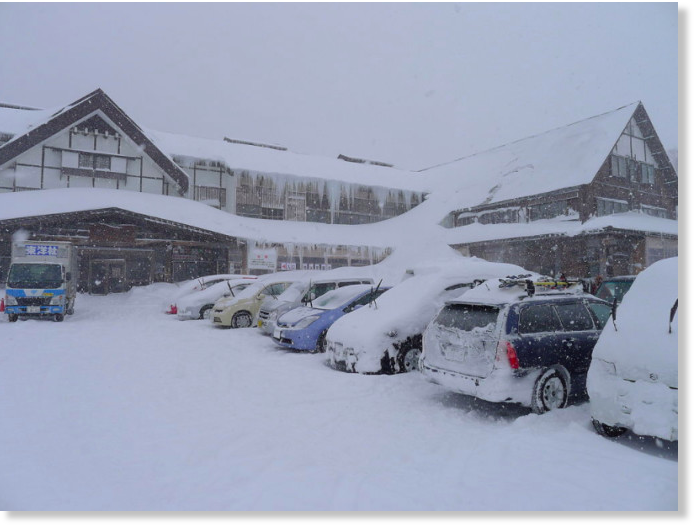
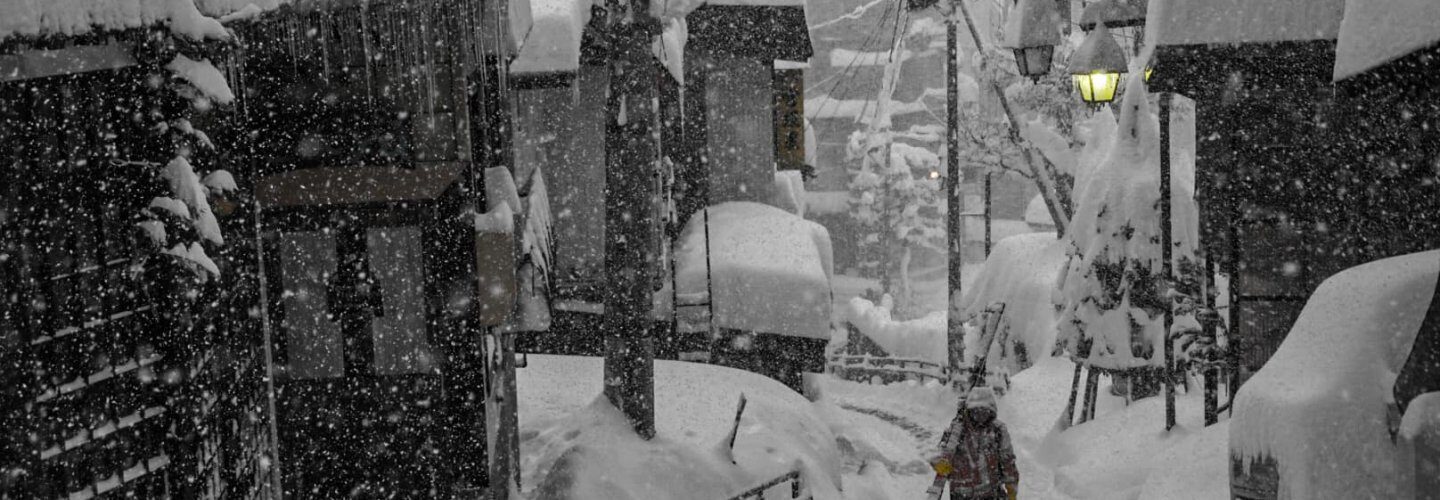
Huge New Year's snowfalls at ski resorts in Japan - one gets over 7 feet in 3 days

snow
Leading ski areas in Japan have reported up to a metre (40 inches) of snowfall in 72 hours to see in the New Year.

However one, Geto Kogen, has reported 220cm (over 7 feet) falling in three days, including 105cm in the past 24 hours alone.

The latest big falls come a fortnight after the country's ski areas reported up to three metres (10 feet) of snowfall in seven days in the lead up to Christmas.

According to SnowJapan.com, which published the Geto Kogen figure above, Nozawa Onsen (Pictured on New Year's Day) reported 76cm (2.5 feet) of snowfall in 48 hours over New Year's Eve and New Year's Day. Niseko to the north reported an identical total as part of 1.2 metres (four feet) more snowfall in the past week. Appi Kogen has had 158cm (over five feet) of snowfall in the same period and other areas have reported similar big falls.


Snowflake Cold

Coldest New Year's Day in Delhi for 15 years

Cold weather in Delhi
© Sandeep SaxenaStaff at a government office being welcomed in a style with drum beats on the first day of New Year even as a severe cold wave swept the capital.
A severe cold wave swept through Delhi on New Year's Day as the mercury plummeted to 1.1 degrees Celsius, the lowest in 15 years, and "very dense" fog lowered visibility to "zero" metres, affecting traffic movement.

On January 8, 2006, the city had recorded a minimum of 0.2 degree Celsius. The all-time record is minus 0.6 degrees Celsius registered in January, 1935.

The lowest minimum temperature recorded in January last year was 2.4 degrees Celsius, the India Meteorological Department (IMD) said.

Kuldeep Srivastava, the head of the IMD's regional forecasting centre, said "very dense" fog lowered visibility to "zero" metres at Safdarjung and Palam at 6 a.m.

According to the IMD, "very dense" fog is when visibility is between 0 and 50 metres. In case of "dense" fog, visibility is between 51 and 200 metres, "moderate" 201 and 500 metres, and "shallow" 501 and 1,000 metres.

The Safdarjung Observatory, which provides representative data for the city, recorded a minimum of 1.1 degrees Celsius, the lowest in January in 15 years.

Comment: 26-year October cold record broken in Delhi, India


Snowflake Cold

20 weather stations in China reach or break lowest temperatures recorded for December, affecting 80% of the country

Cold wave sweeps across China
Many people across China are ending the year on a chilly note.

A strong cold wave from the south has swept the central and eastern parts of the country since Monday, prompting the National Meteorological Center to issue its highest cold wave warning alert for the first time in four years.

Some 20 weather stations across the country have reached or broken the lowest temperatures recorded for December since such record keeping began. Meanwhile, Beijing's Foyeding meteorological station recorded -26.4 degrees Celsius, and Shanghai Pudong recorded -6.2 degrees Celsius late Tuesday night — both lower than the temperatures compared with previous years.


Snowflake Cold

Parts of Japan see record low temperatures, down to -32C° (-25.6F°)

The outside of Sukayu Onsen in late December 2012.
© Nogiuchi via Wikimedia CommonsThe outside of Sukayu Onsen in late December 2012.
Japan is home to the snowiest inhabited place on Earth and has many world-renowned ski resorts.

A record breaking low pressure system, now centred over the Aleutian Archipelago in Western Alaska, is transporting the coldest airmass on the planet from Siberia and over the Pacific Ocean. This system triggered record low temperatures in many locations across northern Japan during the last week of 2020, with Horokanai bottoming out at a bone-chilling -32.6°C and many nearby regions seeing temperatures around -30°C.

This system also brought enormous amounts of snow to Japan that has many winter sport fans around the world impressed.

Comment: View videos here: Heavy snow continues in mountainous areas of Japan - up to 2 meters


Snowflake

Heavy snow continues in mountainous areas of Japan - up to 2 meters

snow
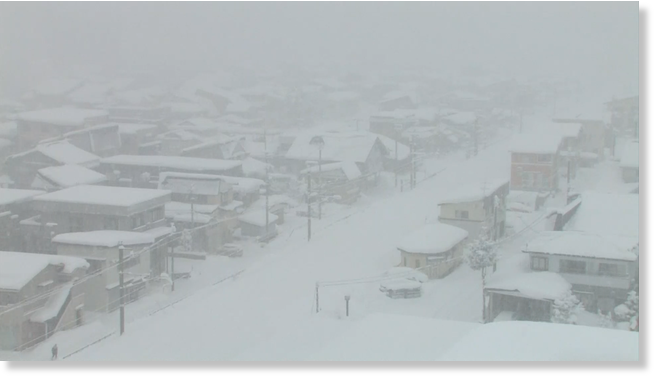
Snow caused by a powerful frigid air mass is intensifying mainly in mountainous areas along the Sea of Japan coast on New Year's Day.

The Meteorological Agency says heavy snow is falling along the Japan Sea side of the Hokuriku and Tohoku regions.

Snow has accumulated in mountainous areas and on lower ground. At 6 a.m. on Friday, there were two meters of snow in Okura Village in Yamagata Prefecture, and 141 centimeters in Uonuma City in Niigata Prefecture.

The snow is expected to continue through Sunday. More snow will likely accumulate on the plains as well.


Snowflake Cold

Provisional world record for high air pressure set in Mongolia as majority of Asia hit by historic cold

Mongolia air pressure record


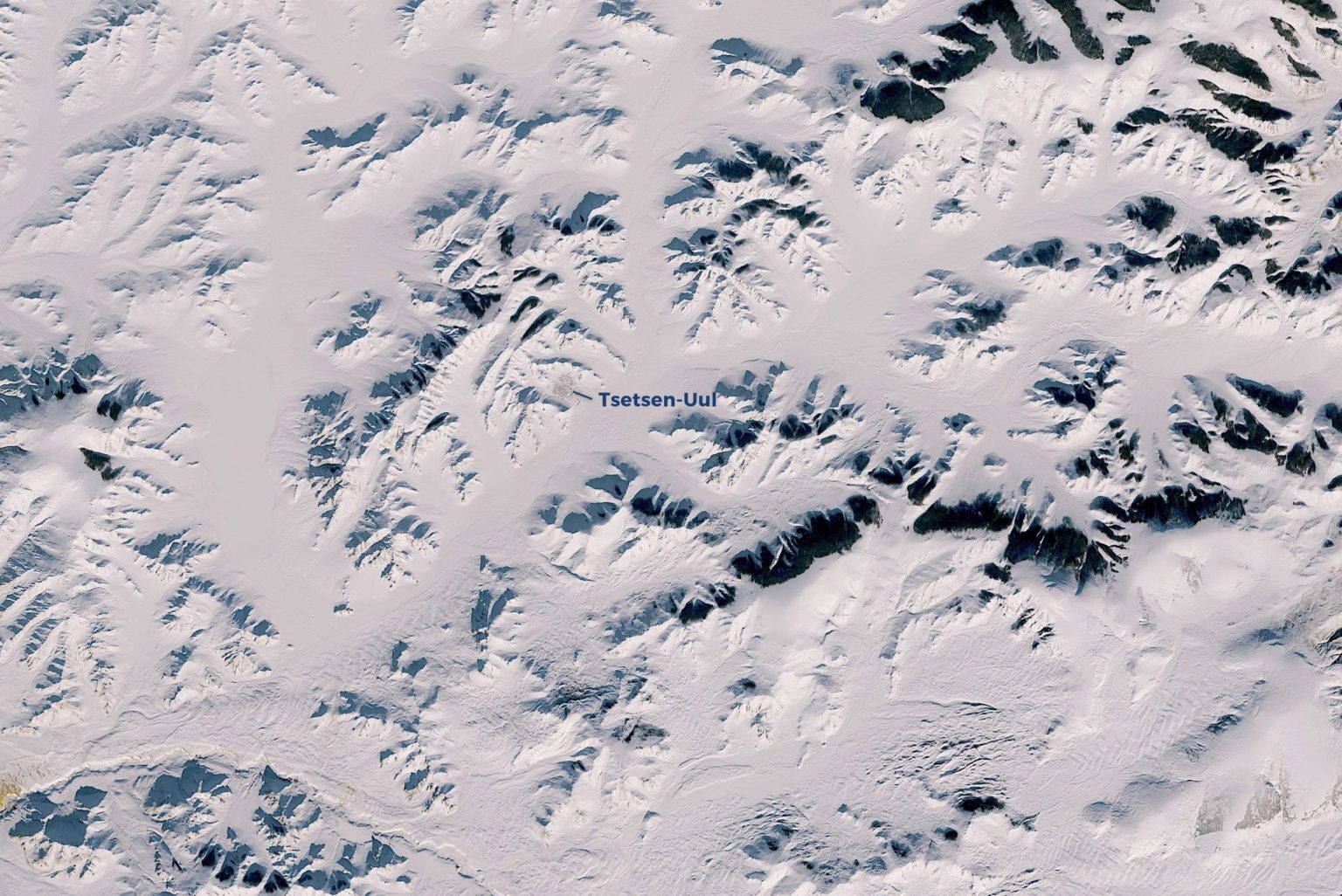
A new world record for high air pressure has provisionally been set in a high mountain valley in Mongolia.


An automatic weather station in Tsetsen-Uul, western Zavkhan province, recorded a mean sea-level pressure of 1,094.3 millibars along with bitter temperatures of -45.5C (50F).

If verified, it will top the previous world record of 1089.4 millibars also set in Mongolia exactly 16 years ago on Dec. 30.

Stephen Burt, a research fellow in meteorology at the University of Reading, told The Independent: "This looks as if it's a genuine record, it's from an official synoptic reporting station.

"There are other stations that are reporting very high pressures as well. So this isn't just a reading error or a transmission error.

Comment: See also:


Snowflake Cold

Coldest December day in 42 years recorded in Beijing

Record cold in Beijing
© Xinhua/Ju HuanzongChina's meteorological authority on Tuesday renewed an orange alert, the second highest in a four-tier warning system, for a cold wave as a strong cold front has been sweeping across most parts of central and east China from Monday.
Apart from the resurgence of the coronavirus that has confined many Beijingers at home, local residents now have another reason to stay indoors - the bitter wind and extreme cold as the city saw its coldest recorded December day in 42 years at -26 C, with residents astonished at the sudden temperature drop.

"The forecast for Beijing is even colder than the North Pole," a netizen on China's Twitter-like Sina Weibo said early on Wednesday, posting screenshots of weather-tracking apps which read -13 C in Beijing and -3 C at the North Pole.

As a cold air mass swept across northern China and Beijing since Tuesday, temperatures plunged from an average daily high of 2 C to maximum highs of -6 C and lows of -13 C, some of the coldest December days in a decade. As high winds accompanied the cold snap, with gusts of between 30-50 kilometers an hour, the wind chill has seen real feel temperatures of -22 C, with residents scurrying to get inside as they hold onto their hats.

Bizarro Earth

Unique and rare phenomenon reported in river in Scotland

It may not be on anyone's festive menu but plummeting temperatures around Dunbeath Strath have whipped up the recipe for a very unique and strange phenomenon - ice pancakes.

Ice Pancakes
© Cath WhittlesIce pancakes are a relatively rare phenomenon that usually occur in very cold oceans and lakes.
Cath Whittles from Roseleigh House in Latheronwheel was taking a stroll along the Strath on Monday when she observed strange circular formations of ice at the side of the river.
She sent across images she took of the frozen discs, resembling pancakes or lily pads, and wrote: "We were delighted to see these on the Dunbeath river yesterday while out for a walk and believe that they are quite unusual - needing the exactly right conditions in order to form. Thought you and your readers might be interested."

The weather warnings from the Met Office of snow and ice across the Highlands have helped concoct the ice pancake recipe.