Health & WellnessS


SOTT Logo Radio

SOTT Focus: The Health & Wellness Show: Pill Poppers: Why are we taking all these supplements again?

vitamins
The FDA defines a supplement as any vitamin, enzyme, botanical, amino acid, or mineral that is not intended to cure or prevent a disease. It's estimated that 50 to 70% of Americans take a dietary supplement and we would venture to guess that most consumers purposely intend to cure or prevent a disease by taking supplements or, at the very least, correct a perceived or actual deficiency. Whether it is a genuine effort to enhance an already healthy lifestyle or a futile attempt to out-supplement a bad diet, the consumption -- or over-consumption in some cases -- of supplements begs the question: Are these pills as efficacious as their proponents would have you believe? Are people treating supplements like magic pills and popping them willy-nilly just because they're "natural"?

There are plenty of supplement haters out there who try to warn people away from supplementing citing their danger or uselessness. So what's a person to do? Join us for this episode of The Health and Wellness Show as we try to balance the anti-supplement hype with legitimate questions that every consumer should consider before randomly shoving pills down their throats.

Stay tuned for Zoya's Pet Health Segment where the topic will be Canine Stress Syndrome.

Running Time: 01:29:57

Download: MP3


Health

Shroom for improvement: FDA lists psilocybin as 'breakthrough therapy' for depression

Mushrooms
© Wikipedia
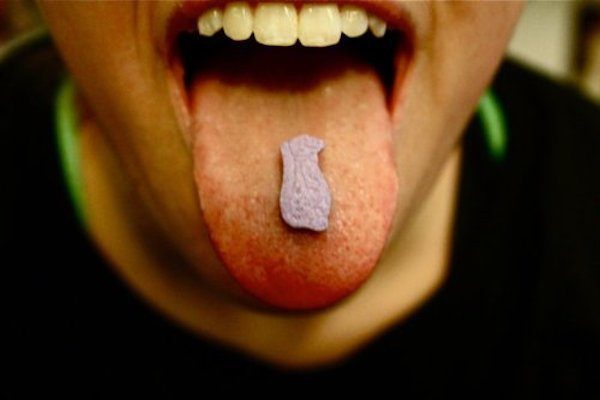
Psychedelic drug researchers can now begin providing psychiatric patients with psilocybin, the active ingredient in magic mushrooms, as part of their therapy in a landmark approval by the US Food and Drug Administration (FDA).

Psilocybin therapy for treatment-resistant depression, which covers roughly 50 percent of patients diagnosed with clinical depression in the US, has been granted a "Breakthrough Therapy designation" by the FDA in a landmark decision, essentially admitting that the drug has shown significant potential in early clinical evidence.

"The Breakthrough Therapy designation is a strong endorsement for the potential of psilocybin therapy," Robin Carhart-Harris, head of the Psychedelic Research Group at Imperial College London said in a press release.

The Breakthrough Therapy designation was created in 2012 to expedite approvals for drugs that display a clear advantage over a currently available alternatives used to treat serious or life-threatening conditions. While it does not necessarily guarantee that a drug will make it to market, it does indicate that the administration believes further research would be beneficial.

Comment: See also: FDA approves psilocybin for treating depression


Syringe

There are 271 new vaccines in Big Pharma's pipeline

new vaccination legislation
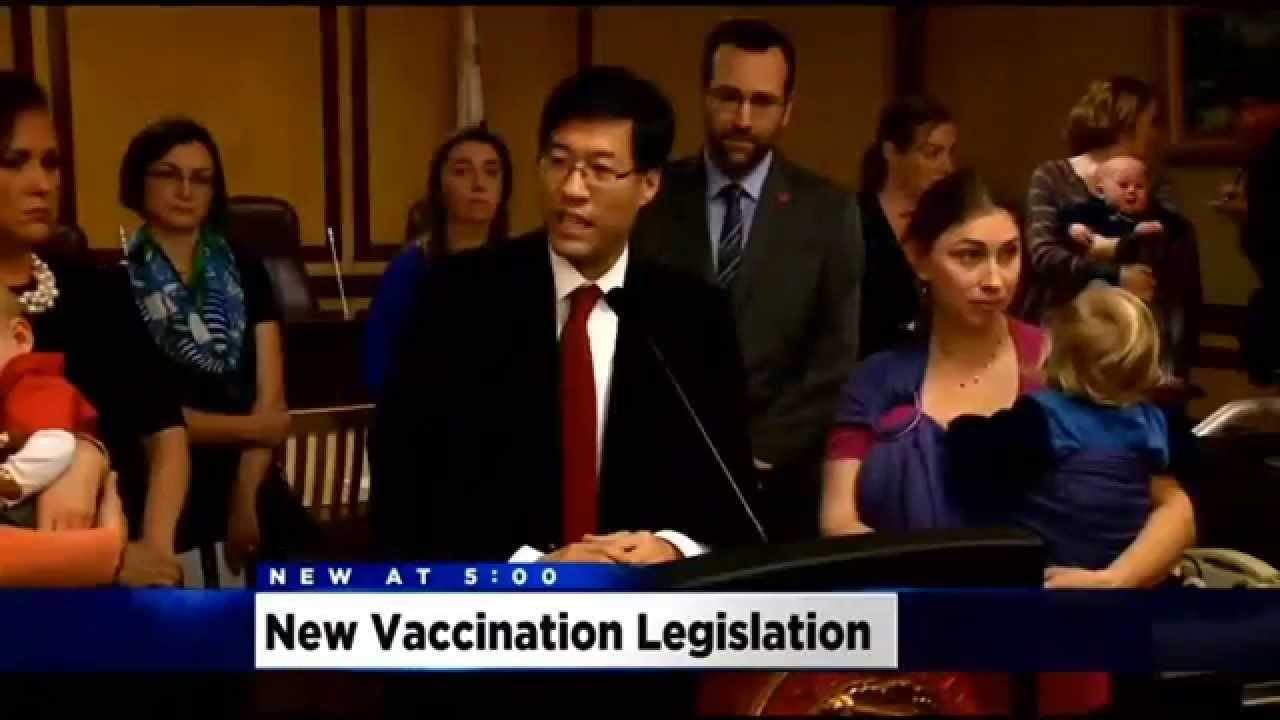
No vaccine manufacturer shall be liable...for damages arising from a vaccine-related injury or death." - President Ronald Wilson Reagan, as he signed The National Childhood Vaccine Injury Act (NCVIA) of 1986, absolving drug companies from all medico-legal liability when children die, become chronically ill with vaccine-induced autoimmune disorders or are otherwise disabled from vaccine injuries. That law has led directly to an expected reckless, liability-free development of scores of new, over-priced, potential block-buster vaccines, now numbering over 250. The question that must be asked of Big Medicine's practitioners: How will the CDC, the AMA, the AAFP and the American Academy of Pediatrics fit any more potentially neurotoxic vaccines into the current well-baby over-vaccination schedule?

Comment: See also:


Cow

Cardiologist: Want a healthier heart? Eat a steak

Tomahawk steak
© Landry's / Landry's
I'm a cardiologist - and I encourage patients to eat red meat.

This advice defies conventional wisdom. For decades, nutritionists and physicians have urged people to limit consumption of red meat and other fatty foods, which were thought to cause heart disease.

But new studies debunk this conventional wisdom. Indeed, it now looks like low-quality carbohydrates - not saturated fats - are driving America's heart disease epidemic. It's time to stop demonizing steak.

Comment: The case against meat in terms of causing health problems has always been on very shaky ground. It remains to be seen if articles like the above, written by credible professionals, will manage to crack the seemingly impenetrable wall of ignorance surrounding the subject. Don't hold your breath.

See also:


Bug

Social engineering: Rebranding edible insects from 'planet-saving' to trendy

insect salad
© Felix Clay for the Guardian‘Even in London, edible insects are seen as nothing more than a gimmick and there are only a handful of restaurants serving them up.’
More people would give up meat for edible bugs if they believed they were tasty and trendy

The thought of rising sea levels and more intense heatwaves are enough to keep you up at night. But while we all know the situation is getting more serious, most of us are preoccupied with work, doctor's appointments and paying bills - and these immediate, visceral worries win every time.

There isn't much time left to figure out how to bring global warming closer to the forefront of people's minds and persuade us to reduce our carbon footprints. In fact, we have just 12 years left to keep global warming to 1.5C, according to last week's landmark UN report. Anything beyond this will massively worsen the risks of drought, floods, extreme heat and poverty for hundreds of millions of people.


Reducing our meat intake is crucial to avoiding climate breakdown, since food production accounts for about a quarter of all human-related greenhouse gas emissions, and is predicted to rise. In western countries, this means eating 90% less beef and five times as many beans and pulses.

Comment: When one recognizes that the push for insect eating, as with veganism, is all predicated on the BS notion that eating meat is uncompromisingly bad for the environment, all reason for engaging in it, other than a sense of curiosity or overcoming the ick factor, completely disappears. Despite the fact that much of the population seems to be rather easily programmed via ideology, it's likely the insect farmer start-ups are in for a rather crushing disappointment on this one.

See also:


Recycle

Microplastics found in human stools for the first time, from Europe to Asia

microplastics finger
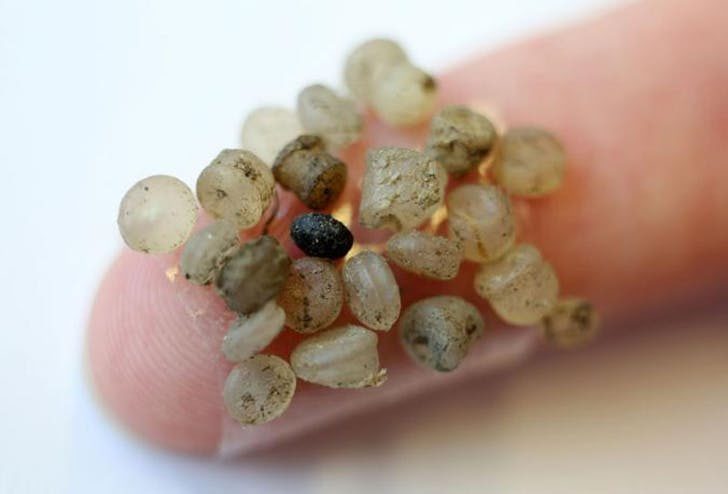
© BERND WÜSTNECK/ PICTURE-ALLIANCE/ DPA/ AP IMAGESPieces of microplastic, which were found on the banks of the Warnow in Rostock, Germany, on 17 March 2015, attached to a piece of sticky tape on a finger, at the Leibniz Institute for Baltic Sea Research (IOW) in Warnemuende, Germany, 9 February 2016.
Microplastics have been found in human stools for the first time, according to a study suggesting the tiny particles may be widespread in the human food chain.

The small study examined eight participants from Europe, Japan and Russia. All of their stool samples were found to contain microplastic particles.

Up to nine different plastics were found out of 10 varieties tested for, in particles of sizes ranging from 50 to 500 micrometres. Polypropylene and polyethylene terephthalate were the plastics most commonly found.

On average, 20 particles of microplastic were found in each 10g of excreta. Microplastics are defined as particles of less than 5mm, with some created for use in products such as cosmetics but also by the breaking down of larger pieces of plastic, often in the sea.

Comment: Unsurprisingly, banning plastics straws isn't going to solve the problem. The world needs to come together with sensible and practicable solutions to minimize waste of all kinds, to recycle where possible or to dispose of it where there will be a minimum impact to our environment. However, the likelihood of that coming together anytime in the future is low.

See:


Water

Why you shouldn't give a baby water

baby drinking water
Did you know that babies shouldn't drink water before they are at least six months old? That's because, while human adults are composed of 55-60% water, babies are made up of 75% water - and too much water can be a big problem.

Comment: See also:


Syringe

Flashback Dr. Russell Blaylock warns: Don't get the flu shot - it promotes Alzheimer's

flu shot
The government is ratcheting up its efforts to convince Americans to get flu shots. "You can't walk into a pharmacy without seeing lines, and the government is now telling preachers to tell their congregations to get flu shots," says Dr. Russell Blaylock, renowned neurosurgeon and editor of the Blaylock Wellness Report. "I've never seen anything like it.

The incidence of flu across the United States is extremely low - there are virtually no outbreaks - and not a single child has died. Yet, the flu vaccine is being pushed as if it's the greatest health advance ever discovered.

"The vaccine is completely worthless, and the government knows it," says Dr. Blaylock. "There are three reasons the government tells the elderly why they should get flu shots: secondary pneumonia, hospitalization, and death. Yet a study by the Cochrane group studied hundreds of thousands of people and found it offered zero protection for those three things in the general community. It offered people in nursing homes some immunity against the flu - at best one-third - but that was only if they picked the right vaccine."

Popcorn

A credibility crisis in food science

popcorn

The fall of a prominent behavioral scientist tells of a system where research is judged not on merit, but on the attention it gets.


Your life has almost certainly been affected by Brian Wansink.

Wansink is a professor at Cornell University-for nine more months, before he is to retire, as he described it to me Sunday evening, "sooner and under different circumstances than I expected."

Others describe it as disgrace, an abrupt fall from a position of great prestige that casts a shadow on a highly consequential but already widely distrusted area of science: how food affects our health.

Biohazard

'No need to panic': Mad cow disease found on farm in Aberdeenshire, Scotland

cow field
Inspectors work to establish source of fatal disease, which has not been seen in Scotland for a decade
More cows will need to be destroyed after a new case of BSE, commonly known as mad cow disease, was detected on a farm in Scotland.

Scotland's chief veterinary officer has insisted there is "no need to panic" after the disease was identified at the unnamed farm in Aberdeenshire.

A quarantine area has been put in place around the farm while inspectors work to establish the source of the fatal disease, known in full as Bovine Spongiform Encephalopathy.

Medical experts have stressed that the case poses no harm to human health. Any farmers with concerns have been advised to seek immediate veterinary advice.

Comment: It would appear that viruses and diseases are on the increase: For more on the possible causes, see: And check out SOTT radio's: The Health & Wellness Show: Syphilitic Superpower: The rise of STDs