Health & WellnessS


SOTT Logo Radio

SOTT Focus: The Health & Wellness Show: The Assault on Salt

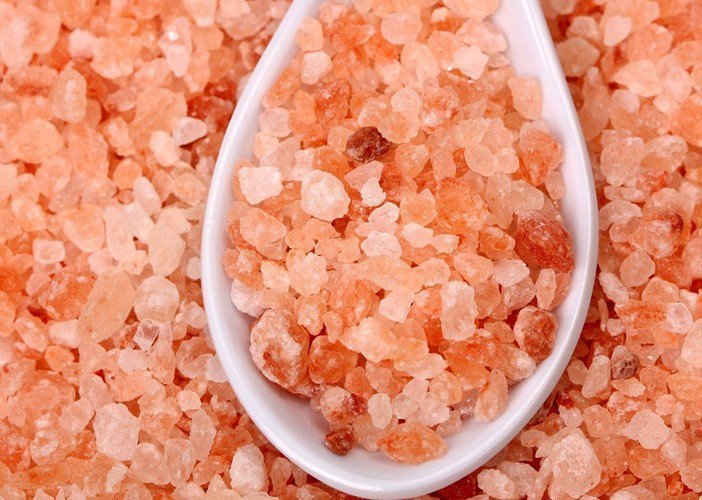
pink salt
Salt has been an essential part of civilization since as far back as 6000 B.C. It has been the subject of stories, fables and fairy tales, served as currency and has been the focal point of warfare. In the human body, salt is needed for numerous functions from blood sugar regulation to nerve communication to bone density to circulatory health. If that weren't enough, salt tastes great. Humans have an innate craving for salt and it is an integral part of food seasoning. No pantry is complete without it. Despite such an illustrious history of use, salt is the most maligned and misunderstood mineral on Earth. It's blamed for high blood pressure, diabetes, heart attacks, strokes and kidney disease and we're constantly being told to curb its use or die a horrible death.

Is this simply a case of mistaken identity? Is salt serving as the fall guy for other dietary substances? Will salt ever receive the apology it deserves?
Join us for this episode of The Health and Wellness Show as we discuss one of our favorite crystalline compounds.

Running Time: 01:00:21

Download: MP3


Microscope 1

CDC investigating cases of rare neurological 'mystery illness' in kids

CDC Center for Disease Control
© James Leynse/Corbis/Getty Images
A rare condition causing weakness in the arms or legs - and sometimes paralysis - has been confirmed in 62 children so far this year, the Centers for Disease Control and Prevention said Tuesday.

One child has died of the condition, called acute flaccid myelitis, or AFM.

At least 65 more cases are under investigation, said Dr. Nancy Messonnier, director of the CDC's National Center for Immunization and Respiratory Diseases. So far, a common cause linking these illnesses has not been found.

Biohazard

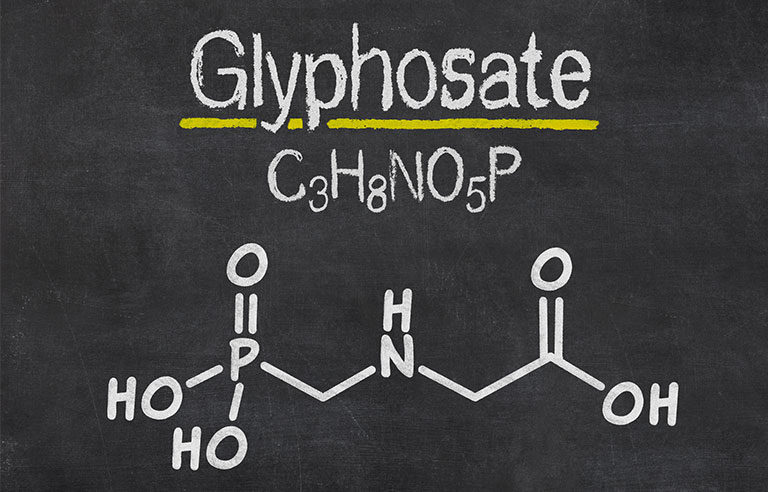
Human hair testing finds high levels of glyphosate

glyphosate
© Natural News
A new testing program organized by The Detox Project in coordination with Kudzu Science, has released the first ever results for glyphosate levels in human hair, in an extraordinary announcement on Wednesday.

The unique project, which began in July 2018, has already discovered the world's most used herbicide, glyphosate, in a number of hair samples at over 66 parts per billion (ppb), which is a much higher level than the average urine level of 3 ppb reported by the University of California San Francisco in 2016. The main metabolite of glyphosate, AMPA, was also found in some of the hair samples at even higher levels than glyphosate itself.

Comment: Glyphosate continues to be a mounting concern. As the world becomes more and more saturated, and people become sicker and sicker, the ability to avoid exposure gets more and more difficult. Having a test to measure exposure accurately could be a way to assess odd symptoms that have evaded diagnosis.

See also:


Attention

CDC: 127 cases of child paralysis in 22 US states under investigation; acute flaccid myelitis confirmed in 62 cases

acute flaccid myelitis
There's new information tonight on the current rise in cases of AFM - the mysterious illness that can cause paralysis in young children.

The Centers for Disease Control and Prevention says it's now investigating 127 cases of AFM, or acute flaccid myelitis, in 22 states.

62 have been officially confirmed.

Comment: This is quite scary, but the prevention precautions at the end of the article are a total joke (especially considering they don't know how it's caused or spread).

See also: Acute flaccid myelitis: A mysterious polio-like illness


Health

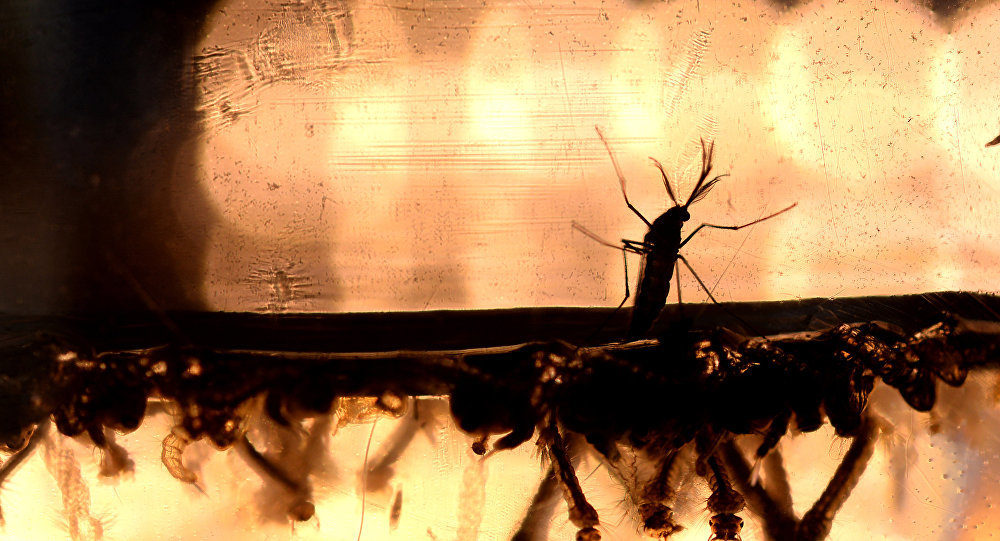
India tackles new outbreak of Zika virus infecting up to 80 people

larvae
© AFP 2018 / Marvin Recinos
Medical teams have been pressed into service to conduct door to door surveys in the affected areas of Rajasthan to detect any person with symptoms. Fines have been imposed on households with larvae breeding wastewater contamination.

With detected cases mounting to 80, the provincial and federal governments in India have stepped up their response to the spread of the Zika virus, especially in the northern state of Rajasthan.

The federal government's Health Ministry on Tuesday directed the National Centre for Disease Control (NCDC) to monitor Zika cases on a daily basis, while urging the people not to panic. Health Minister J.P. Nadda chaired a meeting of the concerned officials to review the situation.

Brain

Mad squirrel disease? Man dies from rare disease after eating fluffy rodent brains

squirrel
© Robert F. Bukaty/ APResearchers say a New York man may have been infected with Creutzfeldt-Jakob Disease after eating squirrel brains from hunting. The disease is similar to mad cow disease and leads to dementia and death.
A new report says a Rochester, NY., hunter may have developed an ultra-rare brain infection after eating the brains of squirrels he killed, according LiveScience.

The report was presented at the ID (infectious disease) week conference as an abstract called "Towards Earlier Diagnosis of Transmissible Spongiform Encephalopathies (TSEs): A Case Series, Including One Associated with Squirrel Brain Consumption."

The report identified a 61-year-old male who was diagnosed with the rare brain infection called variant Creutzfeldt-Jakob Disease after eating squirrel brains. He arrived at a hospital after suffering thinking problems and an impaired walk, according to the report. He died about five months after being diagnosed with the infection in 2015.

Ambulance

CDC warns rare polio-like spinal disease spreading across 22 US states

CDC rare disease AFM
© AFP/Marco BertorelloCDC has warned about the symptoms of acute flaccid myelitis (AFM) after doctors recorded a jump in cases this year. Authorities confirmed 62 instances of the disease - which causes limb weakness and can paralyse sufferers.
US health officials have issued a warning about a rare condition which attacks the nervous system and spinal cord after 62 new cases of the little-known disease were confirmed across 22 states.

The Centers for Disease Control and Prevention (CDC) took steps to warn about the symptoms of acute flaccid myelitis (AFM) after doctors recorded a jump in cases this year. In 2018, the federal health watchdog confirmed 62 instances of the disease - which causes limb weakness and can paralyse sufferers. The illness has been compared to the polio and West Nile viruses.

The number is nearly double the amount observed in 2017, when 33 AFM cases were found in the US. In the CDC's health warning the organisation said at least 65 other patients are being assessed after they displayed symptoms of the malady.

The rare AFM condition mostly presents in children but so far a cause or consistent patient pathogen has alluded doctors.

Comment: The fact that the disease presents mostly in children and has a sudden onset sounds suspiciously like a vaccine reaction. Evidence has been mounting and even scientists are admitting that vaccines are causing both viral and bacterial mutations - but such speculations are verboten in corporate controlled medicine, thus the disease causes remain 'mysterious'.

Acute flaccid myelitis: A mysterious polio-like illness
The biggest issue remains: what causes the disease. And maybe also, why are they calling it polio "like" instead of polio? If it walks like a duck...(the last dose of polio vaccine is given to children between the ages of 4-6 and the average age for a child to come down with AFM is 7- viruses change and mutate- especially RNA viruses, of which polio is one).
See also:


Life Preserver

Low copper levels are linked to fatter fat cells

copper element
In studies of mouse cells, Johns Hopkins researchers have found that low levels of cellular copper appear to make fat cells fatter by altering how cells process their main metabolic fuels, such as fat and sugar.

The discovery, they say, adds to evidence that copper homeostasis could one day be a therapeutic target for metabolic disorders, including obesity. The researchers caution that although links between copper and obesity in humans have been reported, more work needs to be done to better understand the connection. In the western world, dietary copper deficiency is not common, except in pregnancy, and the main health risks are associated with genetic disorders of copper misbalance. A diet incorporating vegetables, nuts and even chocolate usually contains enough copper to maintain healthy copper levels.


Comment: Actually, in Nutrition Data's ranked list of copper containing foods, the top 12 sources are animal based (mollusks and liver from veal, beef, lamb and goose. In fact, chocolate doesn't even appear until number 43, after many other animal products. The highest copper containing nut, cashews, don't appear until number 413! Why would the authors choose to highlight rather meager copper sources from the vegetable kingdom and leave animal foods out of their list?


Copper is essential to human biology and helps to facilitate many processes, from the formation of pigments in hair and eye color to new blood vessels. The mineral is also important to cognition. Copper imbalances have been associated with several neurological disorders, and altered copper levels were linked to depression and changes in sleep pattern, according to Svetlana Lutsenko, Ph.D., professor of physiology at the Johns Hopkins University School of Medicine and a senior researcher on the study.

Arrow Down

Diet supplements spiked with hidden pharmaceuticals

Dietary supplements
© Blend Images - Tanya Constantine/Getty Images
Hundreds of dietary supplements available for sale in America between 2007 and 2016 contained "active pharmaceuticals" - drugs - that can have serious adverse affects, according to a review of data from the US Food and Drug Administration (FDA).

The tainted supplements "have the potential to cause serious adverse health effects," wrote the authors, led by Jenna Tucker, a research scientist with the California Department of Food and Agriculture.

Some supplements included the chemical compounds in prescription erectile dysfunction meds such Viagra or Cialis, while others contained unapproved anti-depressants, ephedrine - a stimulant banned in weight-loss pills - and "undeclared anabolic steroids or steroid-like substances".

In 757 of 776 of the examples logged, the pharmaceutical ingredients were not shown on the product label.

Dietary supplements are classified as food in the US and are not subject to the same rigorous testing protocols applied to drugs. They are available over the counter, and more than half of Americans use them, according to the study.

Arrow Down

Food Fraud - Farmers caught selling conventional crops as organic

Organic Food
© Food Revolution Org
Comedy is an excellent tool for pointing out the absurdities of society.

Several years ago, Penn & Teller did an episode of Bullsh**! that examined the claims made by organic food enthusiasts. (See a clip here.) Though they didn't conduct a publication quality scientific experiment, they showed (rather convincingly and quite hilariously) that the average food snob simply can't tell the difference between conventionally grown food and organic food.

Their prank has been replicated by others. In one video, two guys attended a foodie convention and presented guests with a new "organic" alternative to fast food. The guests went on and on about how wonderful it was, completely oblivious to the fact that they were eating chicken nuggets and other food from McDonald's.

At the very end of the video, they presented their conclusion (translated from Dutch): "If you tell people that something is organic, they'll automatically believe it's organic." Indeed.