Health & WellnessS


Biohazard

"Mass murder and plunder": Philippines rejects vaccines following dengue fever scandal

mosquito
© Thomson ReutersEastern equine encephalitis is a potential deadly but rare disease that causes brain damage.
The suspension of a dengue vaccine programme in the Philippines has caused trust in vaccinations to dramatically drop across the island nation, a study has found.

In 2015, over 80 per cent of people in the Philipines strongly agreed that vaccines were safe and effective. The latest polling, published in Human Vaccines & Immunotherapeutics, found that just 20 per cent of people agreed in 2018.

"We were surprised by how dramatic the drop was," said Professor Heidi Larson, director of the Vaccine Confidence Project at the London School of Tropical Medicine and Hygiene. "The whole political saga has spilled over to question vaccines and science more broadly."

The Philipines has a high incidence of dengue and, in 2016, it became one of the first countries to launch a mass vaccination of children using the drug Dengvazia, made by the French drugs giant Sanofi.

However, in November 2017, Sanofi released new data which showed that the vaccine - while protective for children who had previously been exposed to the virus - increased the long term risk of hospitalisation in those who had not.


Comment: Which suggests any protection children had came from previous exposure, not from the vaccine, because those who hadn't already been exposed were likely to suffer because of the vaccine.


Comment: It seems for many countries it takes the death of their children to become wise to the dangers of the corrupt vaccination industry:


Wine

The Antioxidant Myth

antioxidant foods
Do you choose colorful vegetables, fruits and fruit juices in hopes that their antioxidants will destroy free radicals and fight inflammation?

Do you take expensive antioxidant supplements or plant extracts because they promise to help you ward off cancer and slow aging?

Antioxidant business is booming. What was already a 2.9 billion dollar industry in 2015 is expected to soar to 4.5 billion by 2022. This wild economic growth is fueled by the understandable human hope that we can improve our health simply by adding something magical to our diet. We humans desperately want to believe in the power of these potent little plant products, so we bite. Even if we're not sure how well they work or what they actually do, why not take them? What do we have to lose?

Pills

The dangerous substances in weight loss and libido supplements

pills on a table
Dietary supplements promising enhanced sexual pleasure, weight loss, and muscle gain secretly contain dangerous pharmaceuticals, researchers warn. The FDA has failed to crack down on offenders, they say, placing Americans at risk.

Researchers from the California Department of Public Health found 776 tainted supplements listed by the Food and Drug Administration (FDA) between 2007 and 2016.

Supplements promising enhanced sexual pleasure accounted for 46 percent of the offending products, with weight loss supplements coming in at 40.9 percent and muscle building products at 11.9 percent, the study reveals.

The products contained a number of pharmaceuticals, including the active ingredient in Viagra (sildenafil), as well as sibutramine - an appetite suppressant that was taken off the market because of links to strokes and heart attacks. Meanwhile, muscle building supplements were found to contain synthetic steroids.

Alarm Clock

Time-restricted feeding is critical for weight loss

There have been two main changes in dietary habits from the 1970s (before the obesity epidemic) until today. First, there was the change is what we were recommended to eat. Prior to 1970, there was no official government sanctioned dietary advice. You ate what your mother told you to eat. With the publication of the Dietary Guidelines for Americans, we were told to cut the fat in our diets way down and replace that with carbohydrates, which might have been OK if it was all broccoli and kale, but might not be OK if it was all white bread and sugar.
meal graph
But the other major change was in when we eat. There were no official recommendations on this, but nevertheless, eating patterns changed significantly, and I believe contributed equally to the obesity crisis. From the NHANES study in 1977, most people ate was 3 times per day - breakfast, lunch and dinner. I grew up in the 1970s. There were no snacks. If you wanted an after school snack, your mom said "No, you'll ruin your dinner". If you wanted an bedtime snack, she just said "No". Snacking was not considered either necessary or healthy. It was a treat, to be taken only very occasionally.

Comment: More on time-restricted eating:


Evil Rays

Why adding fluoride to water should be halted immediately

dental equipment
As a Registered Dental Hygienist of 25 years, I have always questioned and disagreed with artificial water fluoridation, despite the fact it is promoted as being "safe and effective."

I feel it is unethical to medicate the population through the water supply for the purpose of preventing tooth decay. The majority of Europe has ruled against it, many cities in Canada are removing it or have never added it, and only 30% of Canada has artificial water fluoridation.

In my research, the question no one could answer satisfactorily - not even the Royal College of Dental Surgeons or Lambton Public Health - is: "What is the proper dose?"

Comment: What gives municipal governments the right to medicate their citizens without consent? In no other area is this considered acceptable. And given the abundant evidence of fluoride's toxicity, it's long past time to remove this hazardous chemical from the water supply.

See also:


Biohazard

Herbicides cause bacteria to develop antibiotic resistance 100,000 times faster

farm spray industrial
© CC0 Public Domain
A new study finds that bacteria develop antibiotic resistance up to 100,000 times faster when exposed to the world's most widely used herbicides, Roundup (glyphosate) and Kamba (dicamba) and antibiotics compared to without the herbicide.

This study adds to a growing body of evidence that herbicides used on a mass industrial scale, but not intended to be antibiotics, can have profound effects on bacteria, with potentially negative implications for medicine's ability to treat infectious diseases caused by bacteria, says University of Canterbury scientist Professor Jack Heinemann, one of the study's authors.

"The combination of chemicals to which bacteria are exposed in the modern environment should be addressed alongside antibiotic use if we are to preserve antibiotics in the long-term," he says.

Comment: Our reliance on industrial farming is not only destroying life as we know it, but in ways we couldn't have imagined:

See:


Die

Game-changing research reveals: Epigenetic memories are passed down 14 successive generations

memories

The past of our ancestors lives on through us: Groundbreaking research illustrates how parental experience is not only epigenetically imprinted onto offspring, but onto an unprecedented number of future generations. Rather than occurring over the elongated time scale of millions of years, genetic change can transpire in real biological time through nanoparticles known as exosomes.


Until recently, it was believed that our genes dictate our destiny. That we are slated for the diseases that will ultimately beset us based upon the pre-wired indecipherable code written in stone in our genetic material. The burgeoning field of epigenetics, however, is overturning these tenets, and ushering in a school of thought where nurture, not nature, is seen to be the predominant influence when it comes to genetic expression and our freedom from or affliction by chronic disease.

Health

The strength and endurance benefits of three 13 minute weight training sessions a week

weight training deadlift
In recent years, sports fitness research has repeatedly demonstrated the superiority of high intensity interval training (HIIT) exercises, and this applies not only to walking, sprinting, bicycling and swimming, but also to strength training workouts.

The key to turning a weightlifting session into a high-intensity exercise is to ramp up the intensity by slowing down your movements. The effectiveness and efficiency of HIIT was recently demonstrated in yet another study, which found you can reap results in just 13 minutes a day, three times a week, provided the intensity of your exertion is high enough.

Single Weight Training Set Can Provide as Much Benefit as Five Sets

The study,1,2,3 published in the journal Medicine & Science in Sports & Exercise, concluded that:
"Marked increases in strength and endurance can be attained by resistance-trained individuals with just three, 13-minute weekly sessions over an eight-week period, and these gains are similar to that achieved with a substantially greater time commitment."
Many weightlifting routines call for doing a certain number of sets - typically three to five - of any given exercise, with each set consisting of eight to 12 repetitions. The goal is to "lift to failure," which means using enough weight that by the end of the set, you're unable to complete another repetition. Needless to say, all of these repetitions take time, necessitating spending an hour or so in the gym.

However, as this and many other studies show, an effective workout does not have to be an enormous time drain. Here, 34 young, healthy men who had previously engaged in a regular resistance training routine were recruited and randomly assigned to a standard weight training routine performed at varying dosages.

Arrow Down

"Big Pasta" cooks up self-interested nutrition science

Barilla
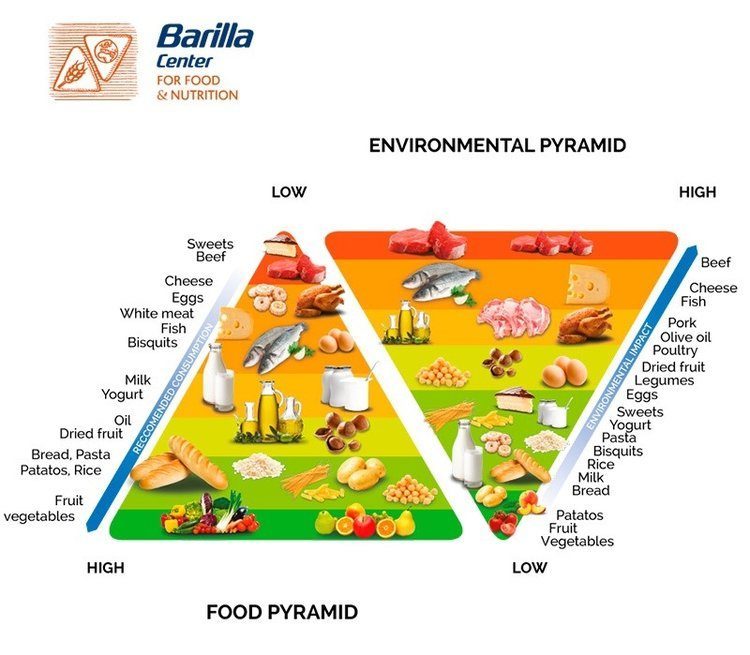
A new book by the global advocacy arm of the world's largest pasta maker argues for a plant-based diet, rich in fruits, vegetables and grains - including pasta - to improve both health and environmental sustainability. The publication, Nourished Planet: Sustainability in the Global Food System (Island Press, June, 2018), is authored by the Barilla Center for Food and Nutrition Foundation (BCFN). While these claims lack a basis in sound science, the publication provides a compelling illustration of Barilla's expansive, ongoing campaign to depict the consumption of grains as central to the company's mission to be "Good for you and good for the planet.

The book project is the latest in an array of initiatives aimed to influence nutrition science and policy, undertaken by the Parma, Italy-based Barilla Group since the founding of BCFN in 2009. The editor of Nourished Planet, Danielle Nierenberg, is the president of the U.S.-based FoodTank, a nonprofit dedicated to "environmentally sustainable ways of alleviating hunger, obesity and poverty." The group lists both Barilla and the Barilla-sponsored "Passion for Pasta Advisory Council" among its corporate partners.

Barilla is a global behemoth that listed worldwide revenues of nearly 3.5 billion euros² ($4 billion dollars) in 2017. As the food maker recently told Buzzfeed News, in 2016, it spent $400,000 on external research to influence global nutrition policy. Although hard figures are unavailable, it likely spent a great deal more on BCFN activities, given the 40 million euros ($46 million dollars) ear-marked for implementation of its nutrition-policy objectives according to its 2017 Report³ - not to mention the BCFN Foundation's considerable roster of activities.

Comment: This is what happens when corporate interests team up with vegetarian advocacy groups to promote a plant-diet that has been already catastrophic for people's health.


Syringe

Cui Bono?: More fake flu news from the CDC

CDC flu casualty estimates
The Centers for Disease Control and Prevention estimated that the 2017-2018 flu season killed 80,000 and hospitalized 900,000 Americans. Of course, the mainstream media reported this as fact as shown in this September 27, 2018 article in the Washington Post:

The Powers-That-Be, including the CDC and the mainstream media, are using these estimates to promote the flu shot for the upcoming flu season.

Keep in mind, the 80,000 deaths and 900,000 hospitalizations are ESTIMATES. And, I can state, with authority, that they are very poor estimates.

Comment: See also: