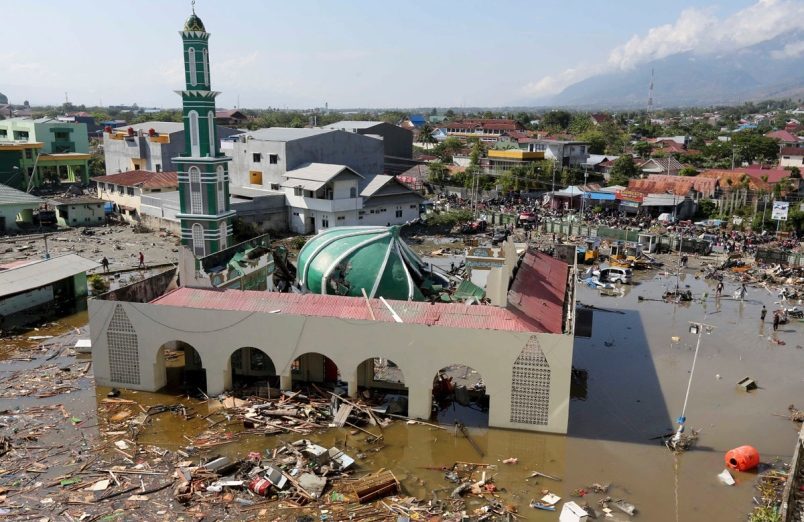
Muhammad Siadi had the vacant stare of someone who might have just returned from a war zone. His shirtless, wiry frame was covered in injuries: a large gash in his neck, a shaved circle around a few bumps on his head and a spray of grazes from his shoulder to his back.
On Friday night he had been at home in Sigi, Palu, on the Indonesian island of Sulawesi, changing the gas for his wife when the 7.5 magnitude earthquake struck. The quake caused a wall to collapse on his back and a piece of corrugated iron gouged into his neck.
As the house caught on fire, Siadi made the harrowing decision to leave his dying wife, trapped under the rubble, so that he and his son could get out alive. They tried to pull her out but there wasn't time.
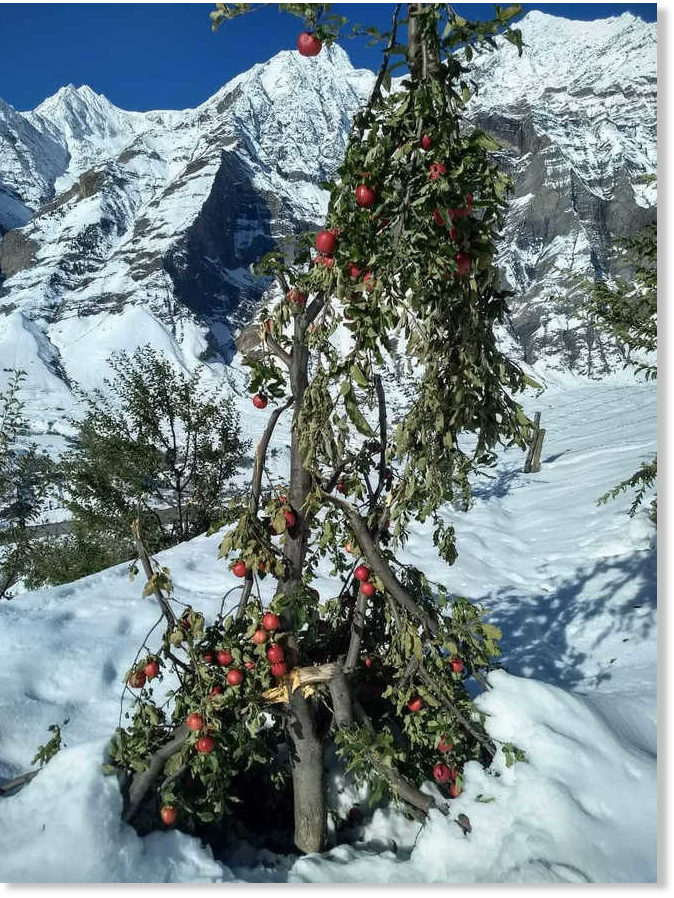
The untimely heavy spell of snow has caused a huge loss to apple trees and fruit and vegetable crops in Lahaul-Spiti district, leaving farmers in despair.
"A big chunk of apple trees, broccoli, cauliflowers, iceberg lettuce and potatoes have perished in snow", said Suresh Vidyarthi, a farmer from Udaipur in the lower Pattan valley, the first area to start apple cultivation in Lahaul in the 1990s.
"Due to climate change, we have been facing freak spells of snow round the year", said Amar Singh, another farmer.
According to the preliminary estimate, more than 95 per cent of apple trees and crop have perished in the recent untimely snow, said Ashwani Chaudhary, DC, Lahaul-Spiti.
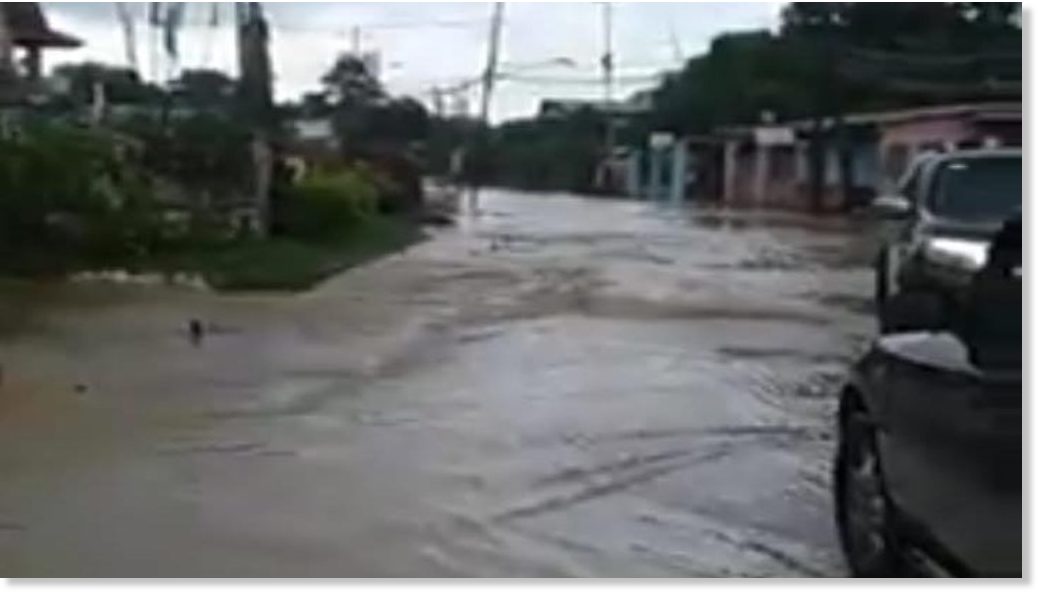
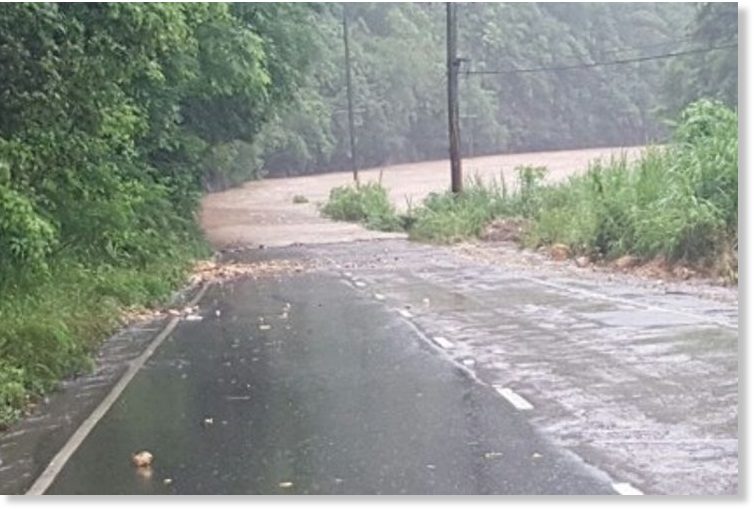
Flooding reported in the Prince Town region, Trinidad
Tropical Storm Kirk has been wreaking havoc on several Caribbean countries causing flooding and disruption to telecommunication services.
There have been reports of heavy showers and thunderstorms in St. Lucia, Dominica, Trinidad and Tobago as well as St. Vincent and Grenadines and Barbados.
However, the Caribbean Disaster Emergency Management Agency (CDEMA) has not received any adverse reports with regards to life and property.
Ronald Jackson, head of CDEMA, said he anticipates that there will be at least damage to infrastructure including roadways, based on reports from the affected countries.
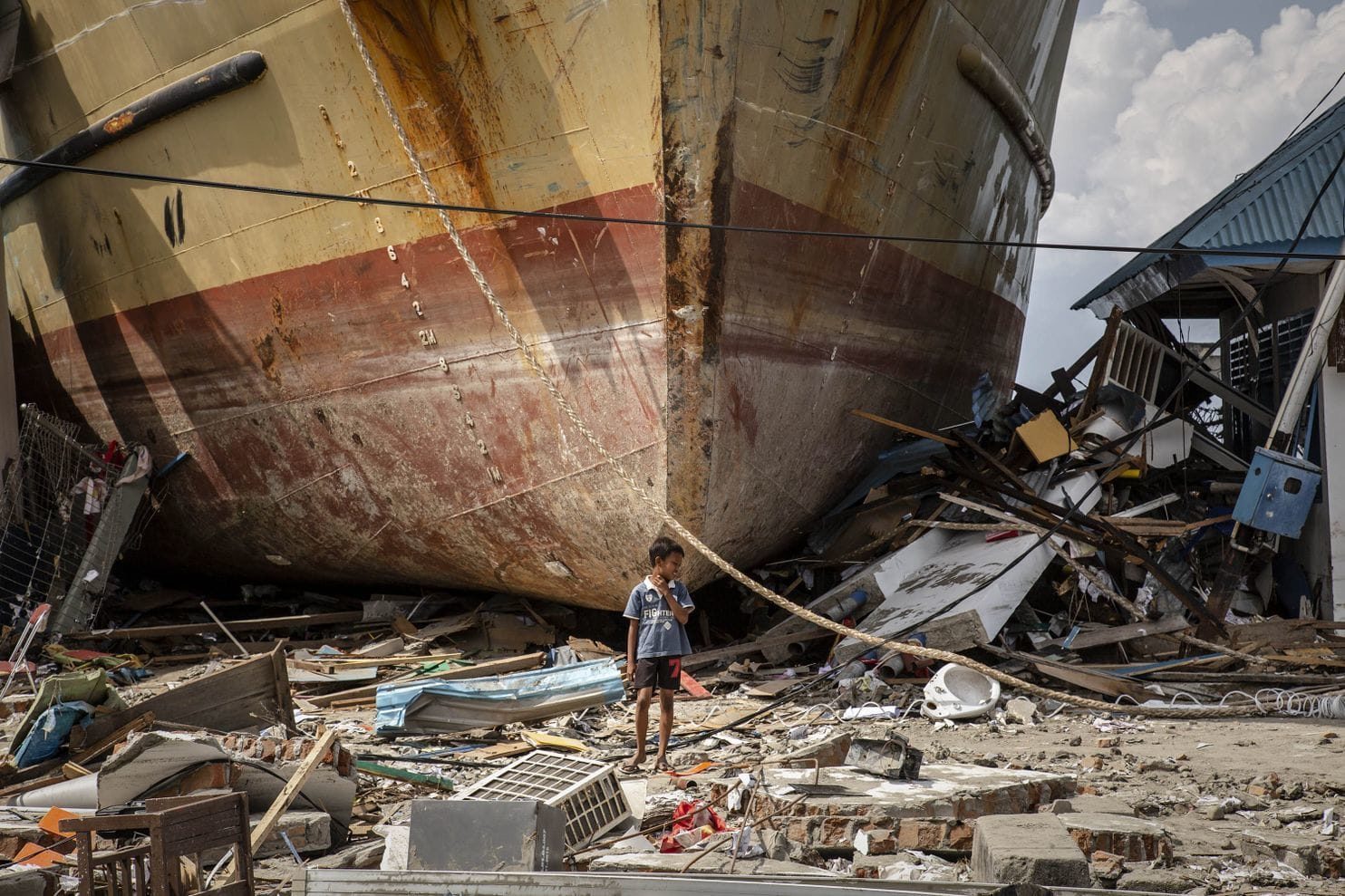
Dramatic footage has emerged from the city of Palu on the Indonesian island of Sulawesi, with buildings collapsing as the ground slides beneath them.
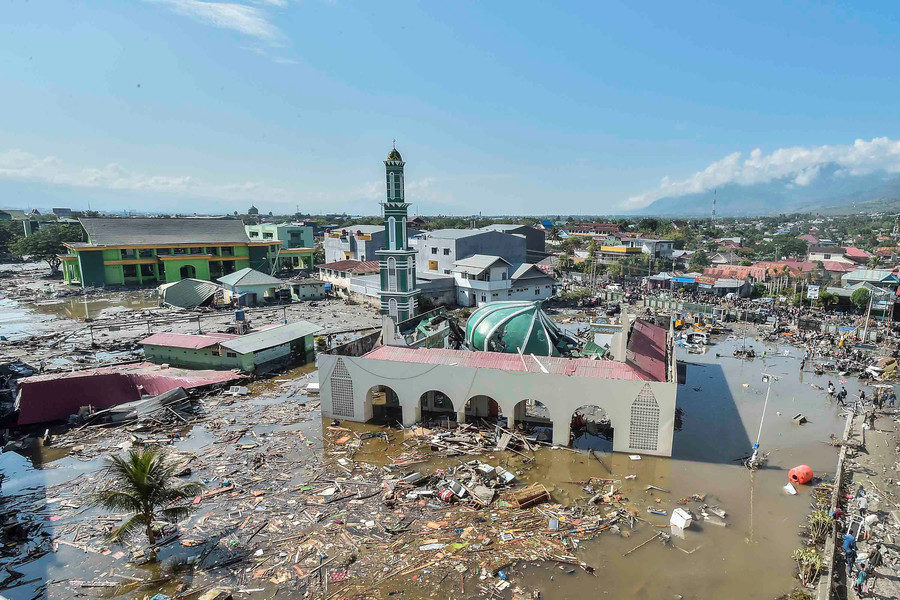
The phenomenon, known as soil liquefaction, is thought to have occurred as a result of the recent 7.5 magnitude earthquake, which also triggered a devastating tsunami. The death toll has already passed 1,200 and is expected to rise further.
Soil liquefaction can occur in saturated loose soil that is suddenly shaken - for example by an earthquake.
"When soil is saturated, the space between individual particles is completely filled with water," said Dr Stavroula Kontoe of Imperial College London. "Seismic shaking increases the water pressure between the soil particles; the particles can lose contact with each other which in turn leads to an overall loss of soil strength and stiffness."
Comment: Two more videos have emerged that appear to show lateral spreads occurring during, or immediately after, the 2018 Sulawesi earthquake. These are remarkable, and truly terrifying, recordings.
The first is somewhat shaky, but remarkable for showing large structures in motion, including a transmission tower:
It seems reasonably likely that this is a lateral spread type landslide, perhaps associated with a quick clay or dynamic liquefaction process.
The second video is perhaps more clear in terms of process, and is equally dramatic. The absolute terror of those involved is obvious.
This second video captures the aftermath of the earthquake well, and in particular the stunned disbelief of those involved in the 2018 Sulawesi earthquake.
The Guardian has published a second video with new footage of the tsunami hitting and the liquefaction process, including video footage of that process produced from satellite imagery:
For more on the deadly Sulawesi earthquake, tsunami and - as if that wasn't enough - the volcanic eruption that followed, see:
The police have now recovered the body of six-year-old Dajahne Pennant of Oliver Gardens, May Pen, Clarendon who died yesterday after being swept away by flood waters in the Mount Claire area of Clarendon.
Heavy rains yesterday dumped huge amounts of water on the town leaving streets and cars inundated.
The May Pen Police say about 3:00 p.m., Dejahne was on the way home with a 13-year-old cousin.
They reportedly attempted to cross a flooded channel and were swept away by the water.
The teen managed to pull herself from the water, however, Dejahne was swept further downstream by the strong current.
A deafening thunderstorm that accompanied a heavy rainfall recorded in some communities in Ekiti State, has killed 23 cows.
The incident, which occurred at Okeowa Eluju, a farmstead in Iloro-Ekiti, Ijero Local Government Area, it was gathered yesterday, is causing panic among residents.
Residents of the community, who spoke on condition of anonymity for fear of reprisals, said a deadly lightning from a thunderstorm killed the cows.
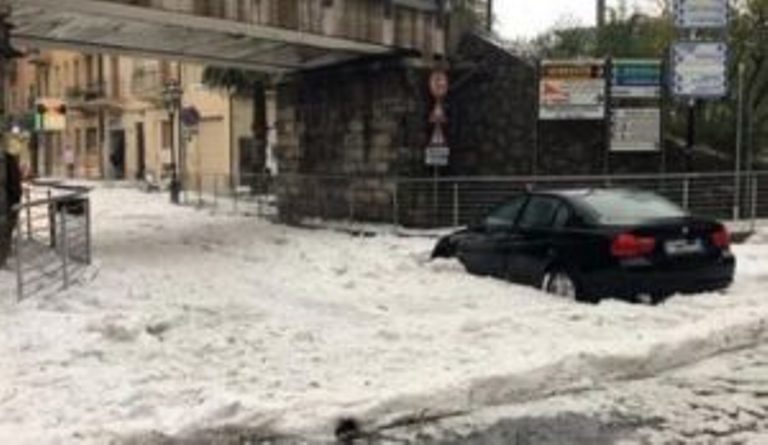
A violent hailstorm hit Alassio and surrounding areas in Liguria, Northern Italy, on October 1, 2018. The storm left some roads covered with accumulations of over 30 cm of ice reports Centro Meteo Italiano (translated by google) causing traffic chaos and severe agricultural damage.
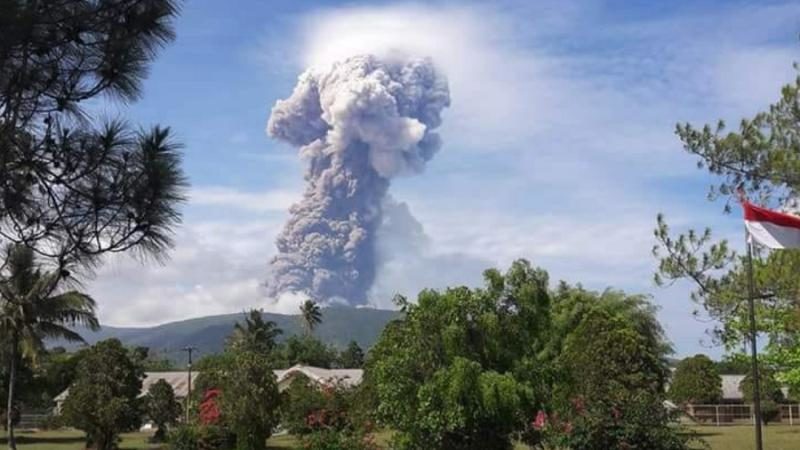
Natural disasters continue to plague Indonesia, with the Mount Soputan volcano erupting on the island of Sulawesi just days after a devastating tsunami, triggered by a massive earthquake, struck the island, killing hundreds.
After months of increased seismic activity, the Soputan volcano finally blew off steam on Wednesday morning, sending an ash column as high as 4,000 meters into the air. Ash plumes are now moving in the west and northwest direction, with an alert level III issued for the active volcano.
Communities residing within a 6.5 km radius of the summit are being advised to stay clear of the area due to potential threats of lava flow and dangers from the ash clouds. Locals who chose to stay in the vicinity of Soputan are being instructed to wear face masks to cover the nose and mouth, in order to avoid respiratory problems.
So far there have been no reports of casualties or damage on the island, already heavily devastated by last Friday's quake and tsunami which claimed the lives of over 1,300 people.
Eruption and ash emission are continuing while the Volcano Observatory Notice for Aviation (VONA) has, meanwhile, been updated to the color code Orange by the Ministry of Energy and Mineral Resources.
Richard Davies Floodlist Tue, 02 Oct 2018 19:42 UTC
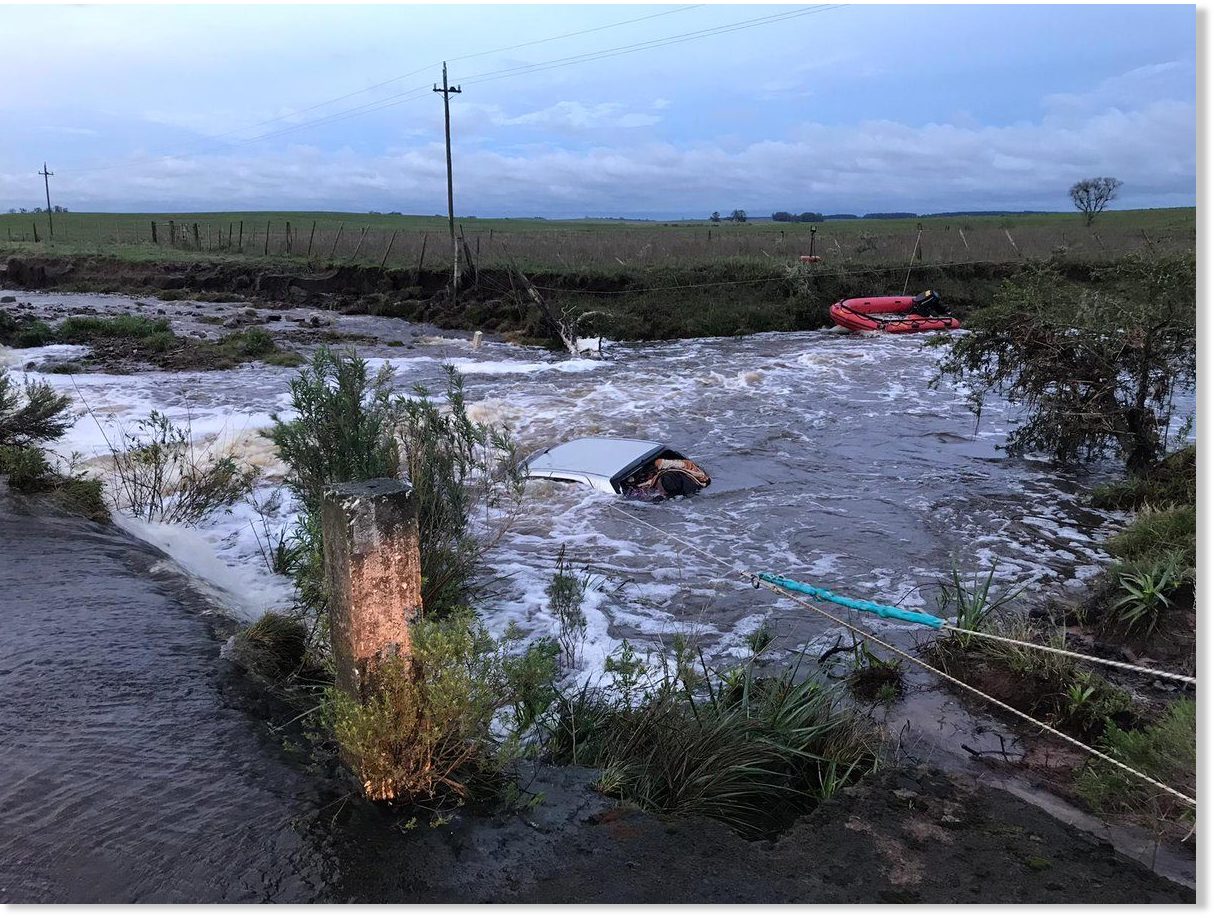
Severe weather in Uruguay over the last few days has left 4 people dead, 1 injured and dozens displaced.
The country's disaster management authority, Sistema Nacional de Emergencias (SINAE), reported that intense rain and storms from 29 September, 2018, caused damage to homes, and downed power lines and trees. Almost 50,000 people were left without power. Roads were blocked or damage, including 7 national highways. Some water courses overflowed as a result of the heavy rain.
Four people died in Rivera when their vehicle was swept away by the overflowing La Calera stream near Minas de Corrales. A further 4 passengers survived.
SINAE reported that at least 42 people had evacuated their homes across 4 departments of Cerro Largo (15 evacuated), Salto (11), Tacuarembó (8) and Treinta y Tres (8).
Rescue teams yet to reach many affected areas, leading to fears of rising casualties
Desperation exploded into anger on Tuesday in the town closest to the epicentre of the massive earthquake and tsunami that hit parts of Sulawesi island four days ago, with residents of Palu begging Indonesia's president to help them as hungry survivors crawled into stores and grabbed boxes of food.
"Pay attention to Donggala, Mr Jokowi. Pay attention to Donggala," yelled one resident in footage broadcast on local television, referring to President Joko "Jokowi" Widodo. "There are still a lot of unattended villages here."
Most of the attention so far has focused on Palu, the biggest affected city, which is home to 380,000 people and sustained considerable damage.
The confirmed death toll was raised to 1,234 on Tuesday afternoon, but national disaster agency spokesman Sutopo Purwo Nugroho said at a news conference in Jakarta that the communities of Sigi and Balaroa have not been counted yet, meaning the toll is likely to rise.
Donggala and other outlying areas have received little help largely because of impassable roads.
Donggala's administration head Kasman Lassa said residents should take only food staples from shops.












Comment: Also see: Indonesia earthquake, 7.5 - terrifying footage shows huge wave crash into island - UPDATE