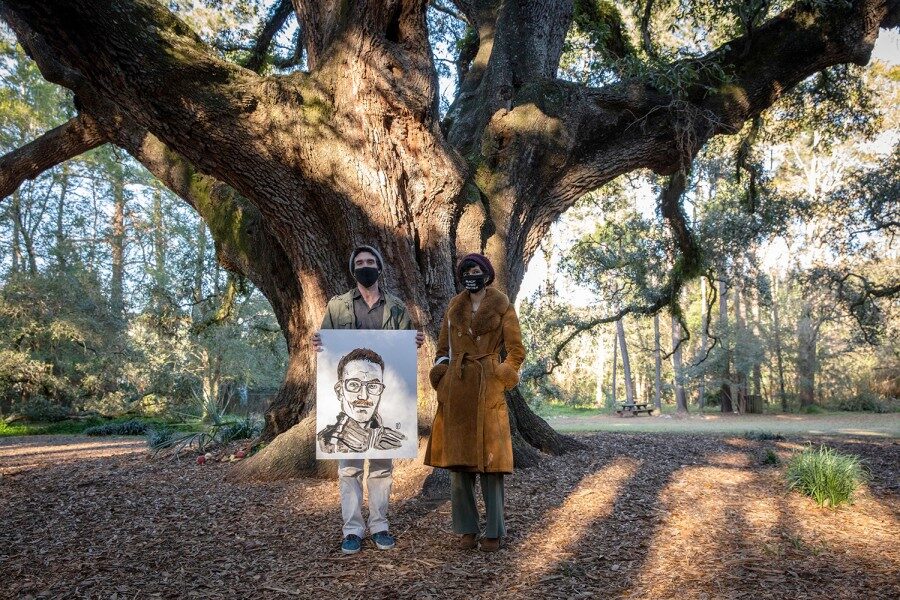
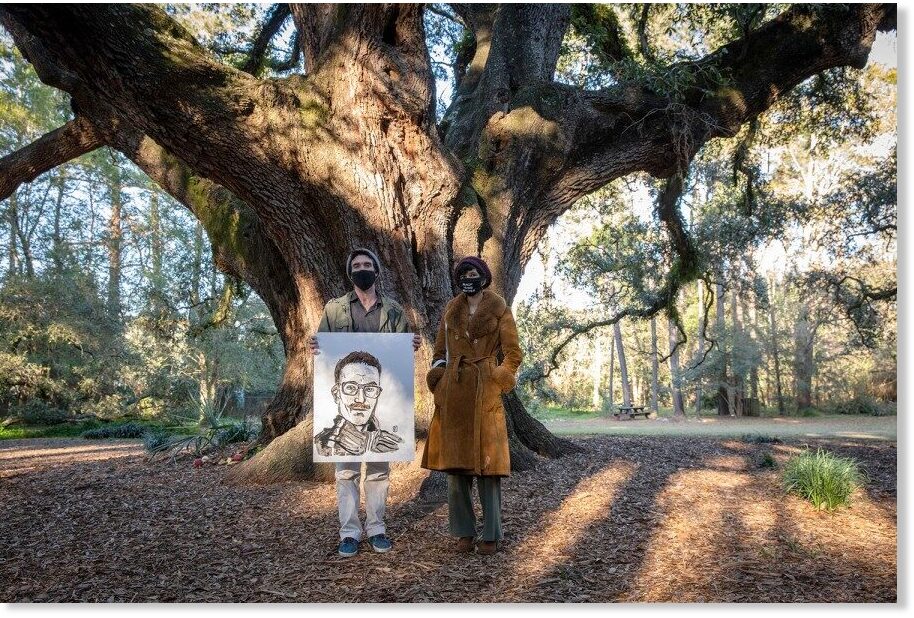
© CHARLOTTE KESL/FOR THE WASHINGTON POSTEric Champagne, 34, holding a portrait he made of Daniel Baker, is shown with Jack Fox Keen, 30, in Tallahassee's Lichgate Park on Jan. 29.
Shortly after sunrise on Jan. 15, FBI agents descended with guns drawn on a squat, red-brick apartment complex here, broke open the door of one of the units and threw in a stun grenade, prompting the frightened property manager to call 911.
Inside the apartment, furnished with little besides books and a sign declaring "THE REVOLUTION IS NOT A PARTY," the agents found their target: a 33-year-old U.S. Army veteran and self-described "hardcore leftist" who had posted a flier on social media threatening to attack "armed racist mobs WITH EVERY CALIBER AVAILABLE."
The man, Daniel Baker, hardly fit the profile of those who had been expected to cause trouble in the run-up to President Joe Biden's inauguration. After a mob of Donald Trump supporters invaded the U.S. Capitol on Jan. 6 in hopes of preventing Biden from taking office, the FBI had warned that far-right extremists were plotting armed marches in Tallahassee and other state capitals, as well as in Washington, D.C.
But Baker represents the flip side of that threat: As a far-right extremist movement wages an assault on American government and institutions, experts say an unpredictable battle is brewing, fueling potentially legitimate threats of violence from the opposite fringe of the political spectrum.
"It is ratcheting up and then getting a response and a back-and-forth," said Steven Chermak, a professor of criminal justice at Michigan State University.














Comment: