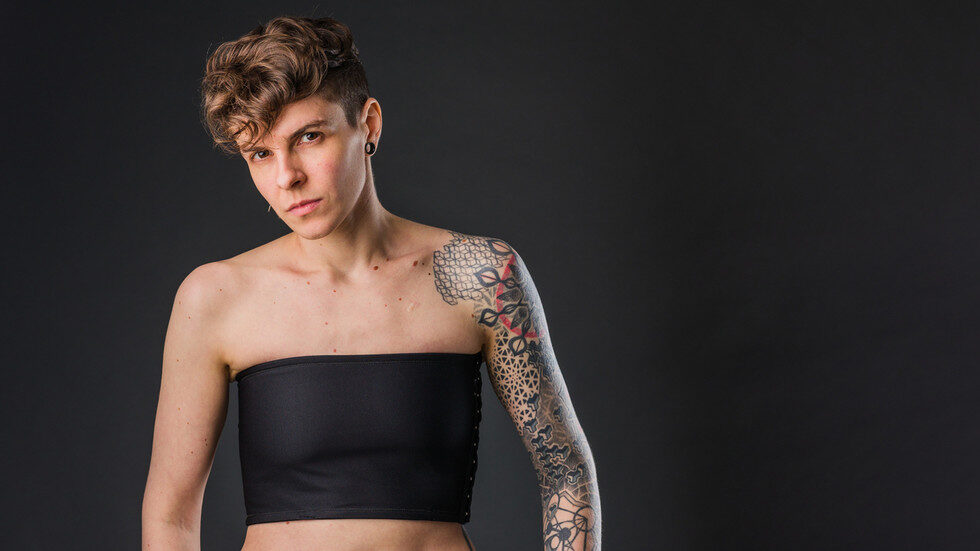
© Getty Images / Alfonso Sangiao
A clueless partnership with a trans outreach organisation sees UK cosmetics retailer Lush promote painful chest binders for young girls,
exploiting its core customers for woke brownie points and the benefit of the gender gestapo.Retailer
Lush has made a huge success of its business model, selling funky handmade soap, bath bombs and body products to a predominantly young female consumer, and it's always had an ethical vibe to its marketing. And that smell! The unmistakable scent that drifts from its shops fills your nasal passages from down the street.
But, this time, the feelgood purveyor of smellies has overreached itself, and it's causing an unholy stink.
Why a store that sells products designed to make you sigh 'aaaaaah' as you sink into a hot bath would consider venturing into the world of woke is a question that's hard to answer. Answers are needed, however.
Can it be right that the brains behind the bubbles have decided that, as well as foaming, fizzing fun products with quirky names, pushing
self-harming chest binders should be a business imperative? Because that's what Lush is doing in London as part of a super-creepy hook-up with a trans outreach organisation.
That said, it's not as if young girls can just walk into the Lush branch in central London that's promoting this scheme and pick up a chest binder like they would a pair of socks. They have to order it online from trans outfit, G(end)er Swap - the secret's in the parenthesis - before dropping by to pick up their new prize from Lush, but not until they've made a 'donation' of at least £7. In my neck of the woods, we don't call that sort of requisite payment a donation, we call it a price. But what do I know?










Comment: The 'publish or perish' ethos of science produces such farces, along with the enormous pressure to garner funding for one's research. The pressure to publish only what is acceptable to those funders or to the political power can be crushing. It is a ubiquitous problem infesting all branches of research. How can proper decisions be made personally, or societally, when those relied on to produce accurate data cannot be trusted?