Puppet MastersS


Question

Iran military suggests US disruption of radar caused downing of Ukraine airliner

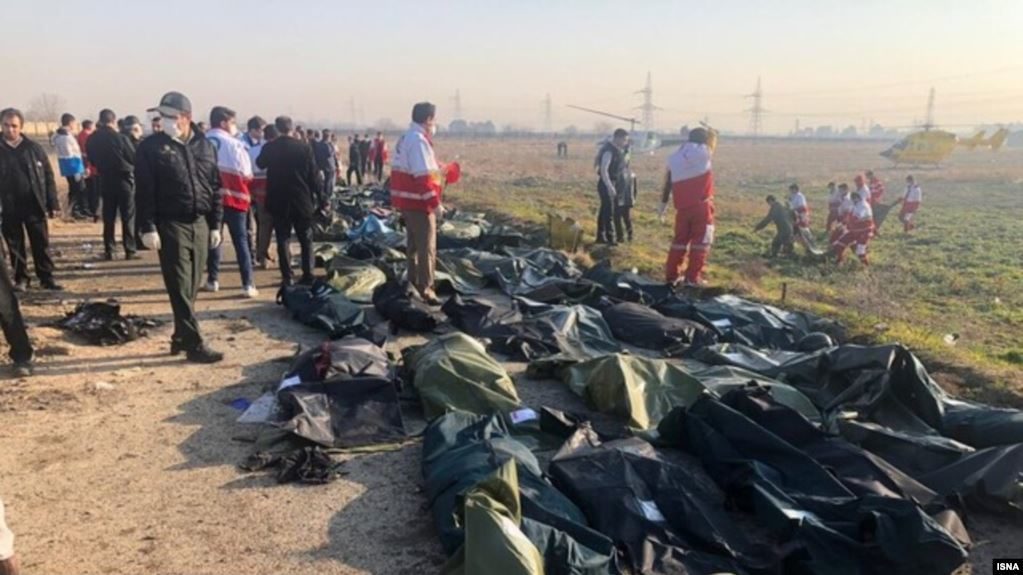
Ukraine plane crash Iran body bags
© ISNABody bags after Ukrainian plane crash outside Tehran. January 8, 2020
Several high-ranking officials have made statements about possible American "disruption of Iran's radar network" and "cyberattacks" that appear to be in preparation of a new official scenario to explain the missile attack on a Ukrainian airliner on January 8.

Ahmad Jannati, the hardliner Chairman of the Guardian Council on Wednesday said the possibility of "enemy sabotage" is being investigated by authorities.

Brigadier General Ali Abdollahi, the Coordinating Deputy Commander of the Armed Forces General Headquarters, on Wednesday said a team has been formed to probe the possibility of an American cyberattack that could have disabled the Iranian radar system.

Comment: Let it be noted that Radio Farha is affiliated with the US mouthpiece RFE/RL and therefore toes the Western line in amplifying its propagandists, such as the New York Times. The article contains no links, assuming that most readers will not bother to check its assertions.

As to the claim by Rouhani that the crash could have been caused by interference with, and 'spoofing' of transponder communications, that is a valid question. The technology has existed for quite some time. Nine planes had previously taken off (however unadvisedly) from Tehran's airport. Why would THIS one be different?


Newspaper

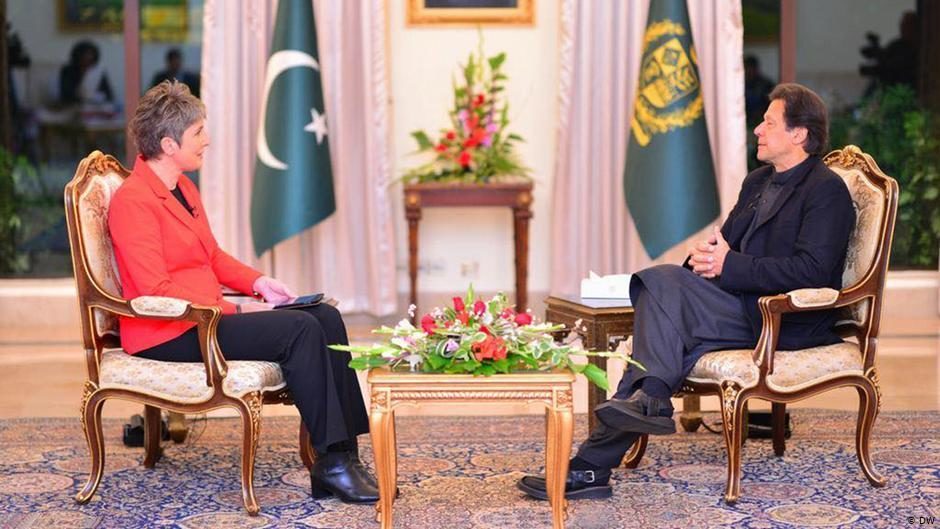
Pakistan's PM Khan says escalation of Iran conflict would be "disastrous" in exclusive interview with Deutsche Welle

Pohl Khan
DW Editor-in-Chief Ines Pohl interviews Pakistani Prime Minister Imran Khan
In an exclusive interview with DW Editor-in-Chief Ines Pohl, Pakistani Prime Minister Imran Khan talks about the Iran crisis and the international community's "lukewarm" response to the Kashmir dispute.

Ines Pohl: Mr. Khan, you probably have one of the most difficult jobs in the world. Your country has to balance ties with the United States and China. Beijing wants to invest in Pakistan, but that, of course, strains your relationship with Washington. Your country also shares a border with conflict-ridden countries like Afghanistan and Iran. How are you managing all that?

Imran Khan: I joined politics because I felt that Pakistan has tremendous potential. When I was growing up, Pakistan had the fastest growing economy in Asia, which served as a model for development in the 1960s. But we lost our way. My objective for coming into politics was to regain that potential.

Black Cat

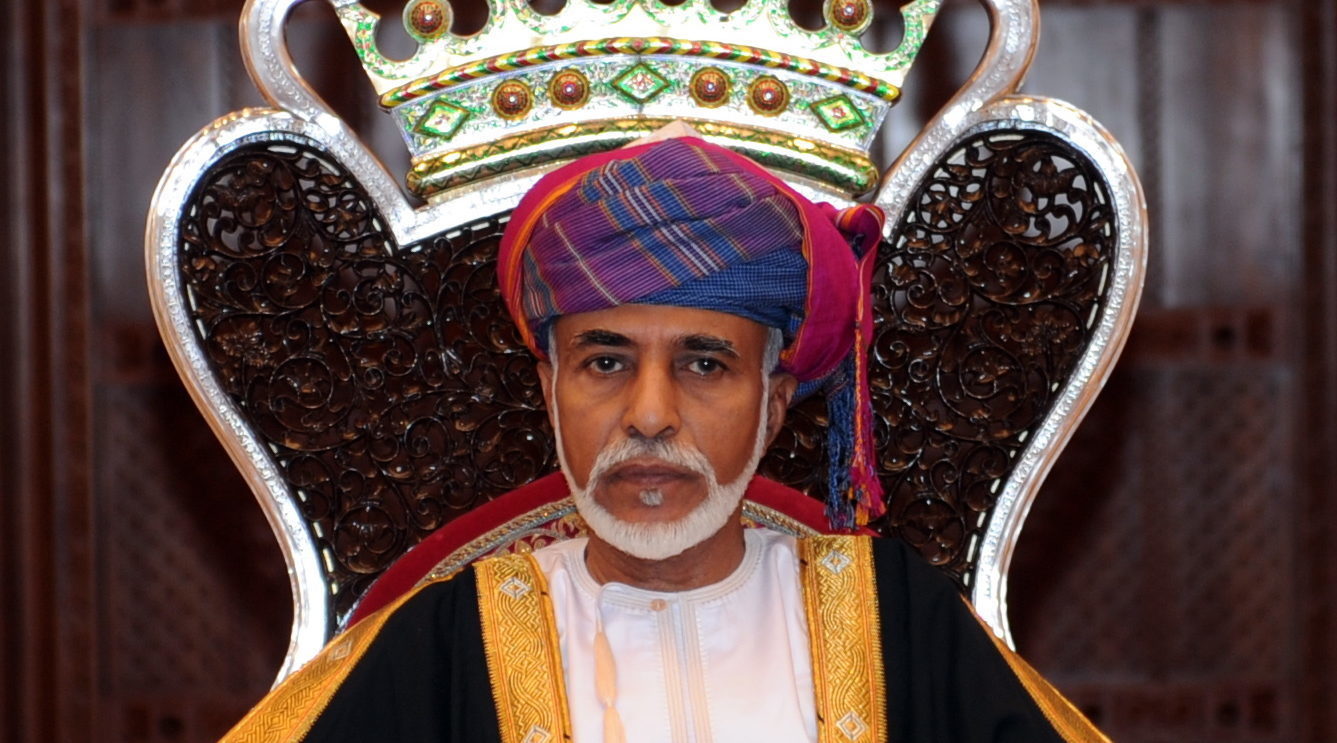
Best of the Web: Britain in mourning for its favourite Middle Eastern dictator, Oman's Sultan Qaboos

Sultan Qaboos Oman
© EPA-EFE/Hamid al-Qasmi/FileSultan Qaboos bin Said, Sultan of Oman, holds the opening session of the annual Council Meeting in Muscat, Oman, 31 October 2011.
Not one UK national newspaper has described Sultan Qaboos as a dictator, despite his being the Middle East's longest-serving autocrat, having taken power in 1970. Qaboos' half century in power was more than twice as long as Saddam Hussein's 24-year-rule in Iraq and even surpassed Muammar Gaddafi's 42 years in Libya.

Qaboos acted as Oman's prime minister, defence minister, finance minister, foreign minister and head of the judiciary. If the Sultan had been as popular as some commentators claim, then he could have successfully run for office. Yet he was never elected by the people of Oman and instead ruled by decree with absolute power for 50 years, suppressing all opposition.

Political parties were banned, independent media muzzled and it was a criminal offence to insult the sultan.

Comment: It seems Oman has been quietly sidling up to the West for some time. It's playing a dangerous game of attempting to steer a middle ground in the Middle East as the Great Powers jockey for hegemony.


Dominoes

Best of the Web: Unintended consequences of the Soleimani assassination: Did Trump just gift the Middle East to China and Russia?

china iraq oil deal
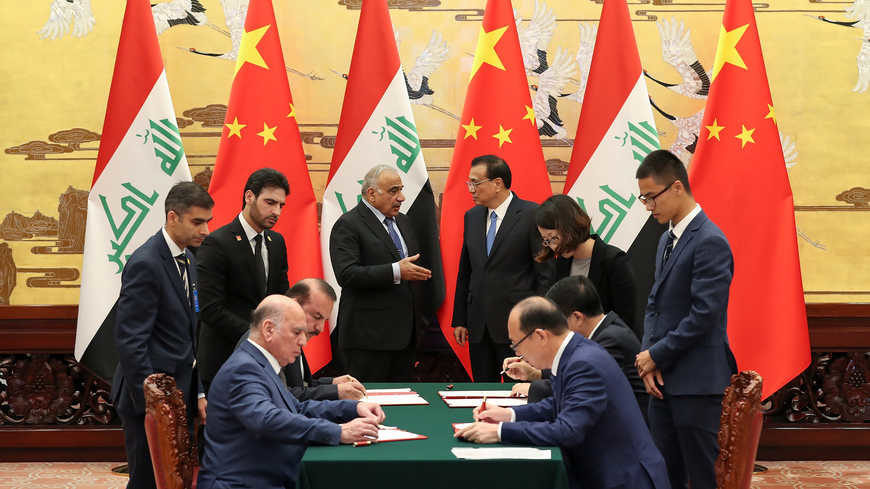
After waiting 15 years too long, Iraqi PM Abdul-Mahdi signs over his country's reconstruction to China, October 2019
By the series of actions in recent months in Iraq and across the Middle East, Washington has forced a strategic shift towards China, and to an extent Russia, and away from the United States. If events continue on their present trajectory it could well be that a main reason why Washington backed the destabilization of Assad in Syria - to block a planned Iran-Iraq-Syria gas pipeline - will now happen, unless Washington initiates full scorched-earth politics in the region. This is what we can call unintended consequences.

If nature abhors a vacuum, so too does geopolitics. When President Trump months ago announced plans to pull US troops out of Syria and the Middle East generally, Russia and especially China began quietly intensifying contacts with key states in the region.

Chinese involvement with Iraqi oil development and other infrastructure projects, though large, was significantly disrupted by the ISIS occupation of some one third of Iraqi territory. In September, 2019 Washington demanded that Iraq pay for completion of key infrastructure projects destroyed by the ISIS war - a war where Washington as well as Ankara, Israel and Saudi Arabia played the key hidden role — by giving the US government 50% of Iraqi oil revenues, an outrageous demand, to put it politely.

Jet2

Flashback Iranian Air Force commander fired for concealing violation of Iranian airspace by multiple Israeli F-35s - Kuwaiti daily

Israeli F-35
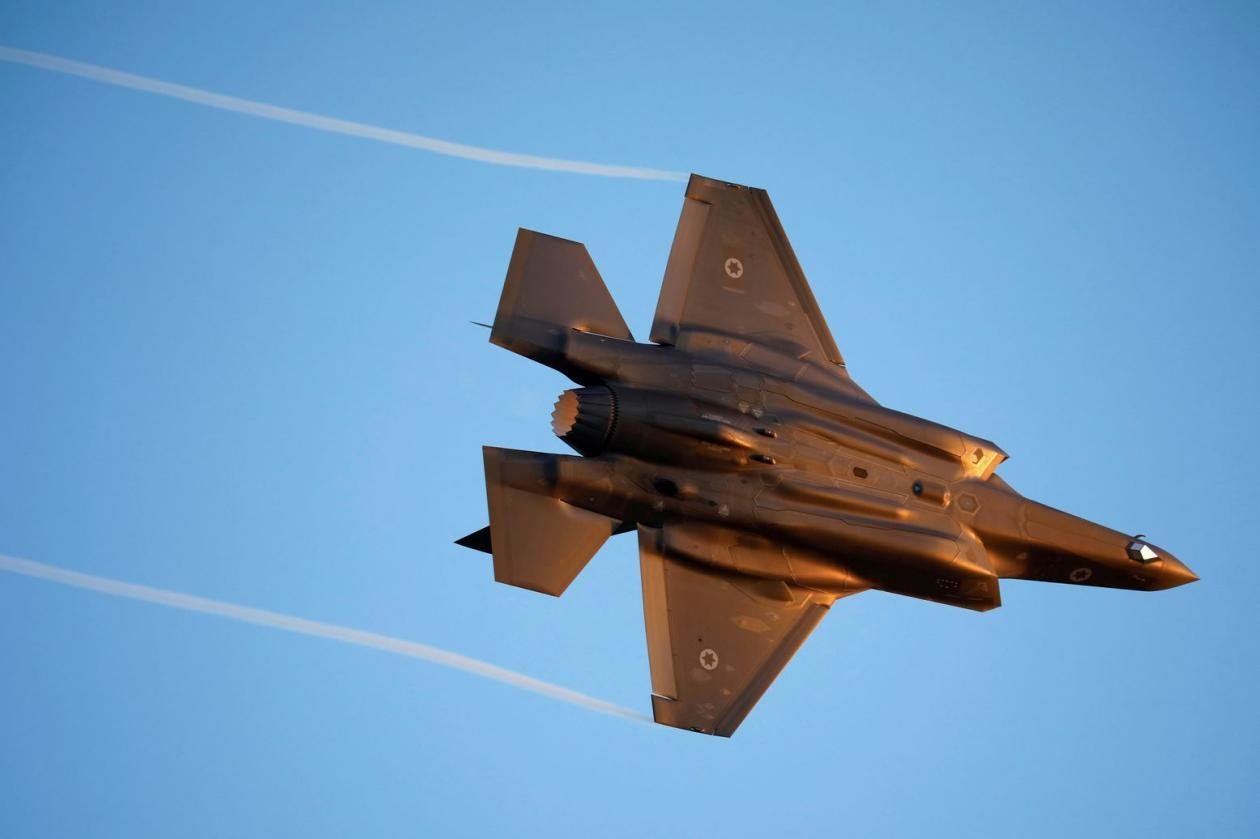
An Israeli F-35
Islamic Republic of Iran Air Force (IRIAF) commander Brigadier General Farzad Ismaili, who had been in office since 2010, has been fired by Iran's Supreme Leader Ayatollah Ali Khamenei after he kept secret that Israeli Air Force (IAF) F-35 stealth fighters had violated Iran's airspace, the Kuwaiti daily Al Jarida reported on Saturday.


Comment: This article was originally published on 13 March 2019, so the Arabic-language Al Jarida report was published sometime in early March last year.


The newspaper emphasized that it was the original media source that exposed the Israeli raids, which had taken place in March 2018. Al Jarida cited senior Iranian military who said that only following its March report did the intelligence services of the Revolutionary Guards and the Iranian intelligence ministry begin to investigate the case, under Khamenei's direct orders.

According to the newspaper's investigation, "the IAF F-35 "Adir" planes penetrated Iran's airspace, circled high above Tehran, Karajrak, Isfahan, Shiraz and Bandar Abbas - and photographed Iran's air defense system."

One of the sources reported that Iran's air defense system, including its Russian radar, did not detect the entry and exit of the fighter planes, and that Ismaili hid this information from the supreme leader to cover his service failure. However Iranian intelligence discovered that the Israeli fighter jets had carried out this sortie as a test of the possibility of an undetected attack on Iranian outposts and bases, during which they photographed those sensitive bases, evading the Russian S-300 missile system's radar.

Comment: If true, this would be another indication of how advanced the covert Israel-Iran war is.

Does the US really want to get caught up in the middle of that?

Is this what Trump was referring to when he said he wanted to "stop another war"?

See also:


Network

Best of the Web: Assassination of Soleimani Just One Shot in Battle of The Ages to Stop Eurasian Integration

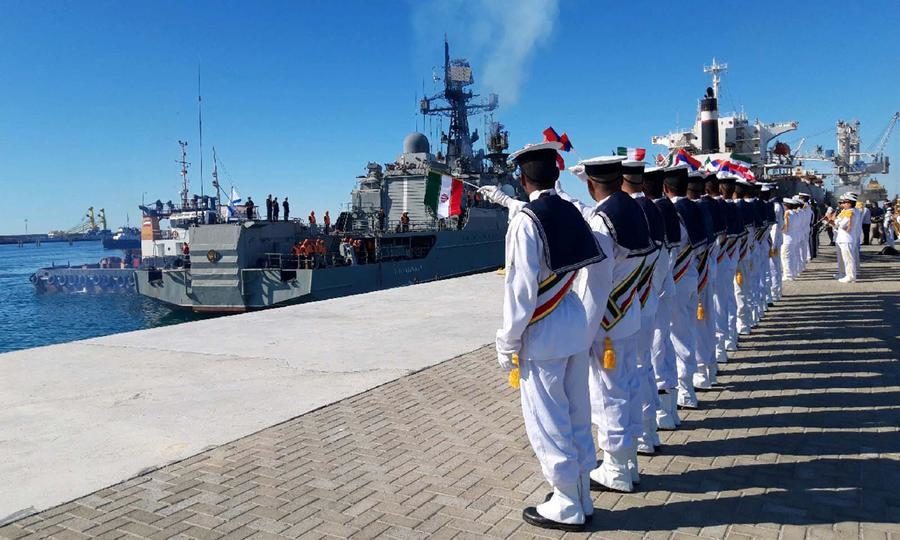
naval drills
© AFP / HO / Iranian Army officeIranian seamen salute the Russian Navy frigate Yaroslav Mudry while moored at Chabahar on the Gulf of Oman during Iran-Russia-China joint naval drills. The photo was provided by the Iranian Army office on December 27, 2019.
The Raging Twenties started with a bang with the targeted assassination of Iran's General Qasem Soleimani.

Yet a bigger bang awaits us throughout the decade: the myriad declinations of the New Great Game in Eurasia, which pits the US against Russia, China and Iran, the three major nodes of Eurasia integration.

Every game-changing act in geopolitics and geoeconomics in the coming decade will have to be analyzed in connection to this epic clash.

The Deep State and crucial sectors of the US ruling class are absolutely terrified that China is already outpacing the "indispensable nation" economically and that Russia has outpaced it militarily. The Pentagon officially designates the three Eurasian nodes as "threats."

Comment: See also:


Newspaper

Libya ceasefire holding, Greece proposes sending troops to protect its oil & gas interests in Meditarranean

Libya army
© REUTERS/Esam Omran Al-FetoriA member of Libyan National Army (LNA) takes reast near Tripoli
The warring sides in Libya are sticking to their truce, though their leaders haven't yet begun direct talks, Sergey Lavrov confirmed. It's crucial, he added, that they don't set additional demands after a peace summit in Berlin.

The ceasefire between the Libyan National Army (LNA) and the UN-backed Government of National Accord (GNA) "is nevertheless respected," Russian Foreign Minister Sergey Lavrov told a news conference in Moscow, describing it as "a definite step forward."

General Khalifa Haftar, who leads the LNA, and Fayez al-Sarraj, the GNA prime minister, failed to reach an agreement at recent talks in Moscow. The next peace summit on Libya is set to take place in Berlin this Sunday.

Comment: Putin is expected to attend the peace talks in Berlin on Sunday:
The Berlin summit will become the continuation of the peace effort that started in Moscow earlier this month when the warring parties set behind the table for the first time.

The Sunday's conference will bring together the Government of National Accord (GNA) of Prime Minister Fayez al-Sarraj and the Libyan National Army (LNA), headed by general Khalifa Haftar, as well as representatives of Germany, Algeria, Great Britain, Egypt, UAE, China, Turkey and France.

During his stay in the German capital, President Putin will discuss ways of bringing calm to the North African state after almost a decade of turmoil, including the possibility of swift cessation of hostilities, reconciliation of the warring parties and launch a broad political dialogue under the UN supervision, the Kremlin said.

The key agreements reached by the sides will be recorded in the final statement after the talks.

However, the talks are still viewed as a breakthrough with both sides upholding the ceasefire since, despite no deal being officially signed.

On Friday, Haftar wrote a letter to Vladimir Putin, thanking the Russian leader for his efforts to settle the Libyan conflict and expressing readiness to come back to Moscow to continue the peace talks.

Once prosperous, Libya remains divided since 2011 when a popular uprising, backed by a NATO's bombing campaign, led to the overthrow and murder of longtime leader Muammar Gaddafi.
Greece has offered to send in its forces to assist claiming to want to assist with aiding the ceasefire, notably providing support to the side opposing Turkey:
Just days after Turkey vowed "to teach a lesson" to Libya's strongman General Haftar, Greece - still at odds with Ankara - told him that it could send in some "forces," tasked with observing a truce and "removal of mercenaries."

Nikos Dendias, Greece's Foreign Minister, had "a long conversation" with General Khalifa Haftar, who paid a low-key visit to Athens ahead of a Libya peace conference in Berlin. "We want a ceasefire, the removal of mercenaries and the cancellation of illegal agreements," Dendias said without elaborating.

The chief diplomat told Haftar, who leads the Libyan National Army (LNA), that Greece was ready to help "with [deploying] forces" that would monitor the ceasefire with the rival Tripoli-based Government of National Accord (GNA).

"All of this is a contribution to the future of the Libyan people. We want it to be a modern democratic country," Dendias proclaimed.


Ankara already sent troops to support the internationally-recognized Tripoli government. Upping the ante, President Recep Tayyip Erdogan has vowed to teach "putschist" Haftar a "lesson" if he doesn't hold up his offensive against the GNA.

At this stage, both Libyan rivals are sticking to a ceasefire jointly brokered by Turkey and Russia, although they continue to blame each other for violating its terms. Although carefully worded and evasive, the Greek minister's remarks may add some geopolitical flavor to the Libyan conflict and beyond.

Turkey has a number of territorial disputes with its NATO neighbor Greece, and both countries consistently engage in close-call encounters both at sea and in the air, not to mention historic grievances over Cyprus and other issues.

Greece has been remarkably pro-active on the diplomatic front, threatening that it will veto any European peace deal on Libya unless a Turkey-GNA agreement on maritime borders is annulled.

Athens maintains that the deal, which sets out oil and gas exploration areas in the Mediterranean between Libya and Turkey, is "unacceptable and illegal" because it ignores Greece's own claims in the area, as Prime Minister Kyriakos Mitsotakis put it.

Greek involvement empowers Haftar, weakens Germany's stance at Berlin talks

Greece will still affect the negotiating process despite not being at the peace summit in Berlin, Grigory Lukyanov, senior lecturer at the Moscow-based Higher School of Economics, told RT. And Athens shouldn't complain about not being invited since "showed absolutely no interest in Libya until recently.

"But now Athens' involvement in the crisis sees "the number of countries, who actively oppose any Turkish actions in Libya increasing and, because of that, support for Haftar is growing." Greece has already expanded its contacts with UAE, Jordan and Egypt, with Lebanon, which is also interested in gas exploration in the Mediterranean, likely to join the pack too, he said.

"For the conference it means that Haftar will feel a lot more confident, and the positions of Germany, which wants some kind of agreement achieved between the warring sides in Libya, will be weakened."

EU has been unable to form a unified stance on the Libyan crisis, and that will be even harder to do with the Greek-Turkish strife added to the mix, Lukyanov pointed out.

Relations between Athens and Ankara, both NATO states, have always been "very difficult," but they're "especially bad now after Greece refused to hand back the Turkish officers, who fled the country after a failed military coup attempt in 2016."

Lukyanov says it's understandable that Athens treated the military cooperation and maritime boundaries deal between Ankara and GNA as a "hostile move," since it threatens its economic security and affects national pride.
More on Greece's possible entrance into fray:
Greece could find itself in an "indirect" conflict with Turkey if Ankara pursues drilling off the coast of Crete, Chrysanthopoulos told RT, noting that newly inked economic agreements between Turkey and the GNA affect Athens' own economic zone. He predicted that, while Greece's presence in Libya might escalate tensions, a potential standoff between Athens and Ankara wouldn't necessarily happen in Libyan territory.

Greece isn't trying to provoke a standoff with Turkey by making a harsh statement on Libya, Aleskey Khlebnikov, Middle East expert for the Carnegie Moscow Center, told RT.

It's only trying to "attract more attention from other European countries" to the conflict and persuade major EU players, like Germany and France, "to make some decisive moves in order to balance the warring sides in Libya," he said.

Athens won't send its troops to Libya because it is an EU member, and the bloc isn't interested in any escalation. The other reason is that Greece does not have "enough military capabilities" to carry out such an operation. Even if it is provided, "Greek support won't be enough to give Haftar a decisive advantage over GNA's Prime Minister, Fayez al-Sarraj," Khlebnikov added.

Journalist Abdel Bari Atwan thinks that Greek troops in Libya could be the "first step" towards a proxy war between Ankara and Athens, as Turkey has already sent troops to support Tripoli. He noted that the conflict in North Africa could potentially escalate and "divide" NATO, as well as end up dragging "superpowers" into the fray.
See also:


Newspaper

Iranian FM Zarif urges Delhi to defy US sanctions & resume buying Iranian oil

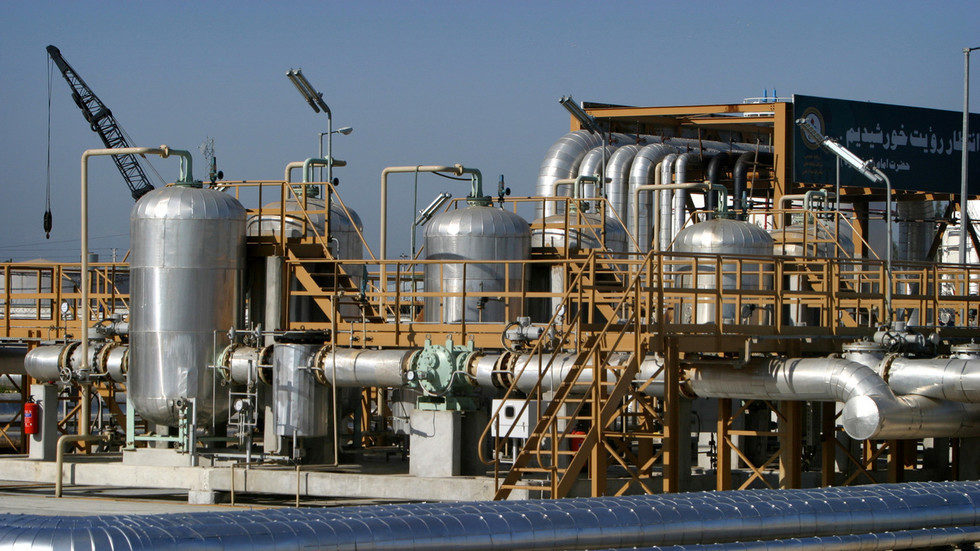
Neka oil terminal
© Reuters / Morteza NikoubazlA general view of the Neka oil terminal near Tehran, Iran.
Iranian Foreign Minister Mohammad Javad Zarif has called on India to shirk Washington's "maximum pressure" sanctions campaign and continue sourcing its energy from the Islamic Republic, arguing it's in the country's best interest.

While on a four-day visit to India, Zarif insisted Iran could best meet New Delhi's oil needs, assuring that his country would keep politics out of its business dealings and remain a reliable partner.

"For India's economic growth you need more and more energy and energy security, which has been an area of concern," Zarif said at a meeting of the Federation of Indian Export Organizations (FIEO) on Thursday. "I can assure you that you can't find an energy partner which is more stable, more reliable than Iran."
We never involved politics in our energy relations. And if we did, we don't have political problems with India. We are the secured source of energy for India.

Newspaper

'We need to strike terrorists like the US does' - India's new Chief of Defense Staff on the War on Terror

General Bipin Rawat has called for a crackdown on terrorism and said the war on terror is going to continue.
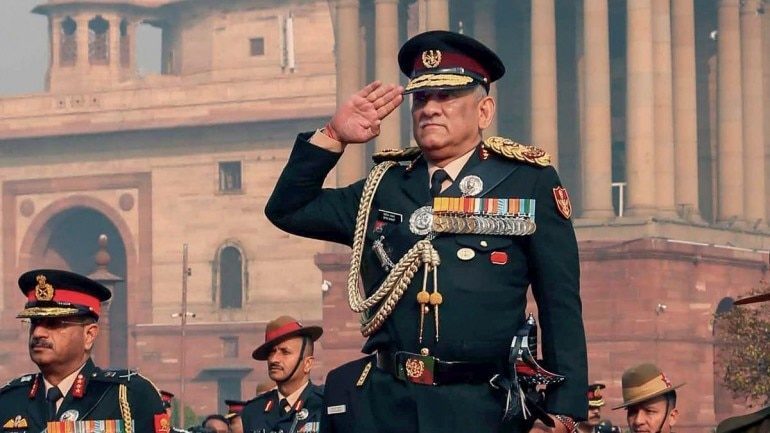
India Bipin Rawat
© PTICDS Gen Bipin Rawat has called for a crackdown on terror.
Chief of Defence Staff (CDS) General Bipin Rawat has said the war on terror is nowhere near an end and in order to put an end to it, the roots of terrorism need to be understood.

Speaking at an event in Delhi on Thursday, General Bipin Rawat said, "The war on terror is not ending, it is something which is going to continue, we will have to live with it, until we understand and get to the roots of terrorism."

Comment: Meanwhile, General Rawat has stirred a hornest's nest for suggesting de-radicalization camps for radicalized Muslim youth. Muslim and leftist opposition leaders have accused him of stepping into politics - namely, their domain!


Propaganda

'Mendacity & lies': After 19 years US admits to itself that it never could have won war in Afghanistan

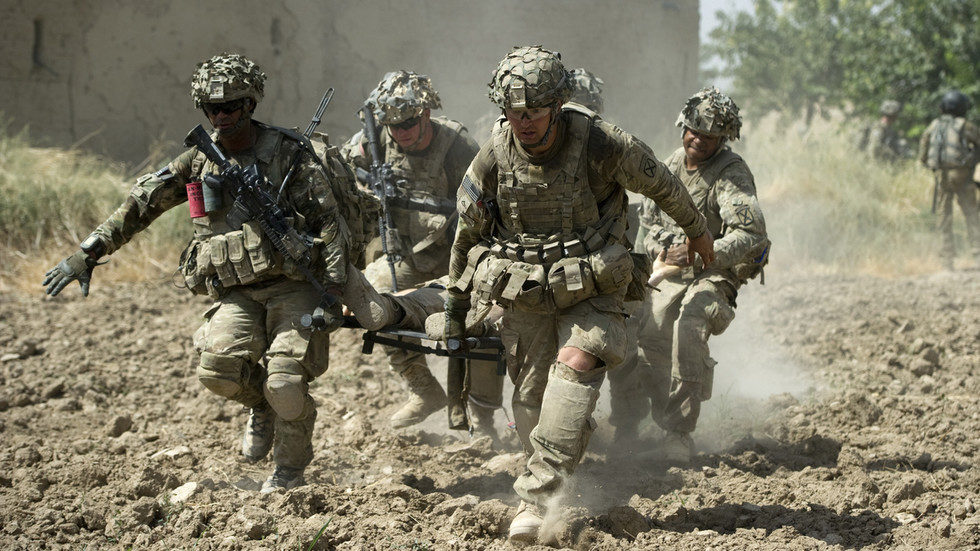
US Army in Afghanistan
© AFP / JOHANNES EISELE
John F. Sopko, the Special Inspector for Afghanistan Reconstruction, testified before Congress this week that America's Afghan War was plagued by "mendacity and lies." But all honesty in the world couldn't have won it for the US.Lessons learned?

The recent publication by the Washington Post of more than 2,000 pages of "Lessons Learned" interviews, conducted by the Office of the Special Inspector General for Afghanistan Reconstruction (SIGAR), provided much-needed insight into the reality of that country's war in Afghanistan, which is entering its nineteenth year.

The documents paint an unflattering picture of America at war, with the combined military and civilian leadership lacking a viable strategy for victory, leaving successive waves of American service men and women to deploy, fight, and return home, having achieved nothing. The publication of these documents prompted Sopko's congressional testimony, which furthered an already damning indictment of perfidy and corruption.

Comment: See also: