Puppet MastersS


Arrow Up

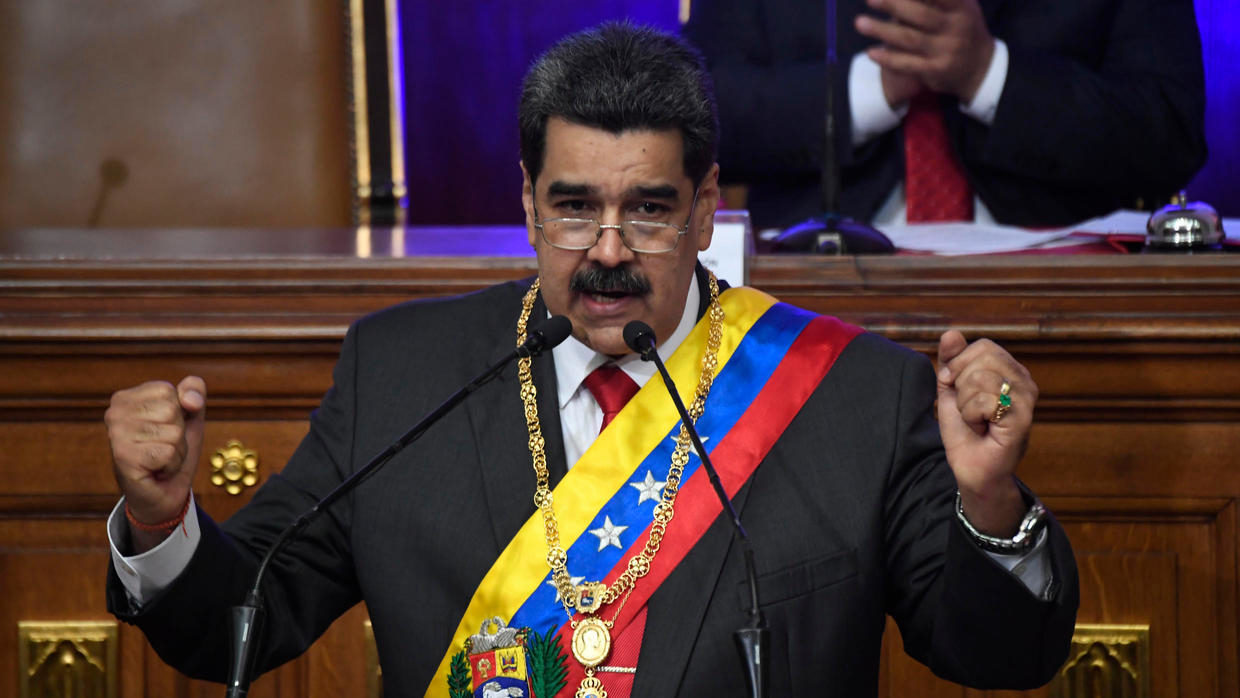
Maduro says still 'comfortably in charge', open to talks with US

Maduro
Venezuelan President Nicolas Maduro
Venezuelan President Nicolas Maduro said he was still comfortably in charge and open to direct negotiations with the US, in an interview published Saturday by The Washington Post.

The interview was Maduro's first with a major US outlet since February of last year, when he abruptly ejected all Univision journalists from Venezuela.

"If there's respect between governments, no matter how big the United States is, and if there's a dialogue, an exchange of truthful information, then be sure we can create a new type of relationship," Maduro told the Post.

The socialist leader said he was ready to hold talks with the US to negotiate an end to sanctions imposed by President Donald Trump intended to throttle the South American country's oil industry and force Maduro from power.

Comment: There may be future talks, there may not. Maduro in the meantime, as legitimate president of Venezuela, will try his best to mitigate the damage punitive US sanctions are still doing to his country's people.


Vader

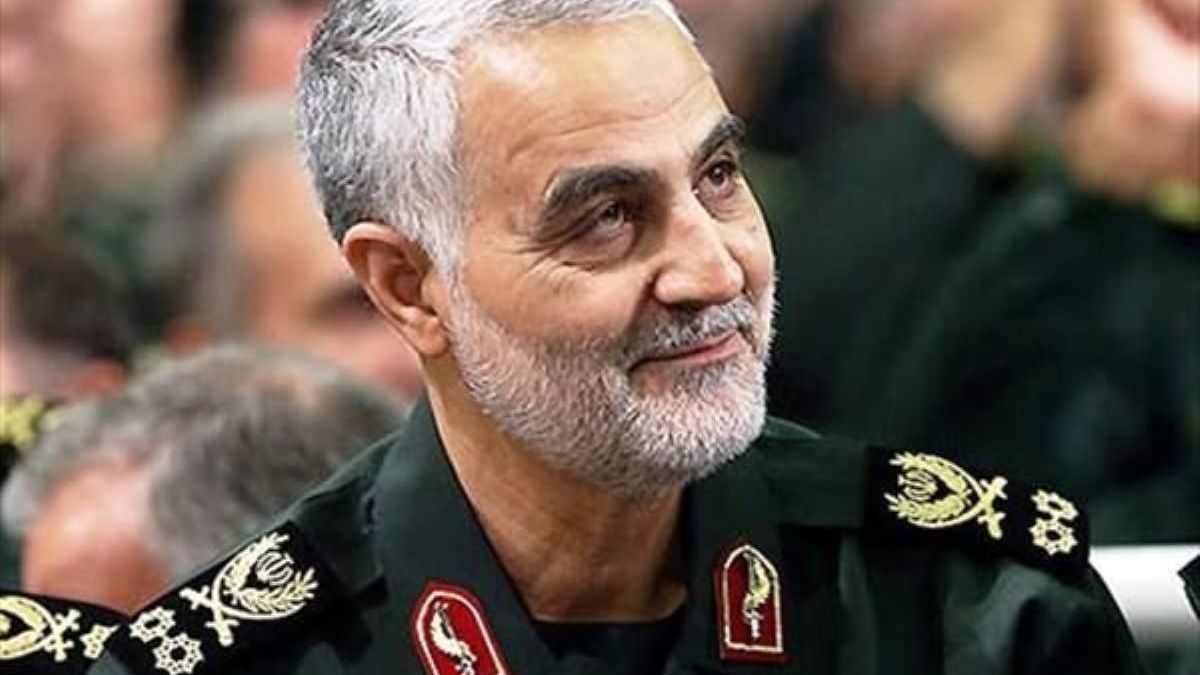
Syriana Analysis: Why the US hated General Soleimani

Qassem Soleimani
© Associated PressQassem Soleimani
I'm sure you have heard a lot about General Soleimani from the mainstream media and his alleged crimes against the Americans in the Middle East. In the video below, I will tell you the real story behind the US hatred towards Soleimani and why he was assassinated.

First of all, the allegation made by the MSM that Soleimani is responsible for killing more than 600 soldiers in Iraq is completely fake news. The source of this allegation is the Pentagon; the same source that lied on Iraq's WMD wants you to believe that Soleimani supported groups in Iraq that killed American soldiers after the illegal occupation of Iraq in 2003. So, firstly, the US occupation of Iraq was illegal according to international law and any agreement with successive Iraqi government after the occupation should be considered null and void. And secondly, the Pentagon is made up this allegation to demonize Iran during the era of George W. Bush and put Tehran in Washington's "axis of evil" list, despite the fact Iran and Soleimani were cooperating with the US back then in order to fight Al-Qaeda in Afghanistan.

Comment: Washington of course, sings a completely different tune:
President Trump told Republican donors Friday evening that Qasem Soleimani, the top Iranian commander that was assassinated on POTUS' orders in a drone attack in Baghdad, was "saying bad things" about the US before his death, as follows from an audio of his remarks obtained by CNN.

At a fundraiser at Mar-a-Lago, Trump recounted in detail what happened in the Iraqi capital earlier this month, before querying emotionally:

"How much of this shit do we have to listen to? How much are we going to listen to?"

Trump said Soleimani, who had earlier been portrayed by the American side as "an imminent threat" to US personnel abroad, was "a noted terrorist" who "was down on our list" and "was supposed to be in his country" before going to Iraq.

"He was supposed to be invincible", Trump said of Soleimani, understood to be the second most powerful man in Iran after Supreme Leader Ayatollah Ali Khamenei, pointing to his purported role as Tehran's puppet master behind proxy wars in the region.

The US also holds Soleimani responsible for the deaths of hundreds of US troops in Iraq at the hands of Iran-backed forces, while also citing his alleged plans to launch new attacks against US military personnel in the Middle East and beyond.

Earlier, on his soon-to-be-formally-started campaign trail, Trump also praised the Soleimani assassination, which closely followed an early January raid on the US Embassy in Baghdad, along with an operation conducted late last year that killed Daesh leader Abu Bakr al-Baghdadi.

Iran retaliated for the Soleimani assassination by launching missiles at two Iraqi bases that housed US soldiers, though no service members were seriously injured or killed and despite further intensified tensions, both sides made it clear they would rather de-escalate the conflict.


Camera

Overbearing government officials meddling in every aspect of people's life

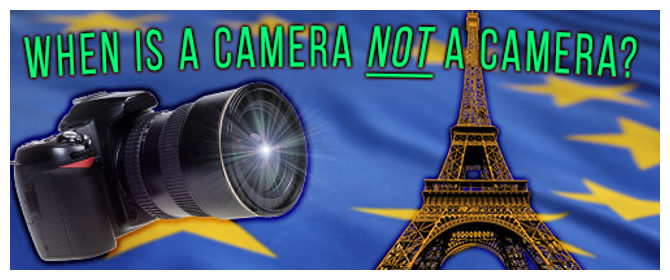
Camera not Camera
© Corbert Report
Here's a riddle for you: When is a camera not a camera?

It may not sound as important as The Riddle of the Sphinx, but let me assure you it speaks to the very nature of the reality we live in. And it has a simple answer: When is a camera not a camera? When the EU says it isn't.

That's right. Back in 2007, "EU trade experts decided [. . .] that to be classified as a digital camera, equipment must not be able to record at least 30 minutes of a single sequence of video in a quality of 800 x 600 pixels or higher at 23 frames per second or higher."

Yes, "EU trade experts." That's literally how Rothschild Reuters described them. As if there is such a thing as a "trade expert," let alone a level of expertise that would allow you to decide precisely how many minutes of continuous shooting transforms a recording device into a "digital camera." As a result of these vaunted trade experts' proclamation, any device capable of recording at least 30 minutes of continuous video at the above-mentioned resolution is slapped with a customs duty of 5-12% as soon as it enters the borders of the European Union.

But while this may seem like a trivial distinction, it has some very real consequences. The upshot of this "digital camera" duty is that DSLR cameras (almost all of them, no matter where you purchase them) will record precisely 29 minutes and 59 seconds of continuous video before promptly turning themselves off. (I notice it every time I'm recording one of my band's gigs, as this generally means our main camera stops dead just as we get into the heart of the set.)

Please note: This is completely and utterly arbitrary. There is no technical reason for this limitation whatsoever. There are limitations to the size of a single video file on the FAT32 file system that such cameras use to store the videos, but there's an easy workaround: The camera will just split the resulting video into multiple, seamlessly connected files. It makes no difference whatsoever to the final result.

But want to record 30 minutes and 1 second of something without having to physically restart the camera? Sorry, bub, the Eurocrat "trade experts" have decided that you'll have to pay a good deal extra for that privilege, and the manufacturers have responded by simply eliminating that option from their cameras . . . I mean, their "recording devices."

I invite you to pause a second and really think about what that means. Manufacturers are inserting completely arbitrary limits into their own hardware — limits that deliberately impair the function of that hardware — for no other reason than to conform to the arbitrary classifications of overbearing technocrats.

Sheriff

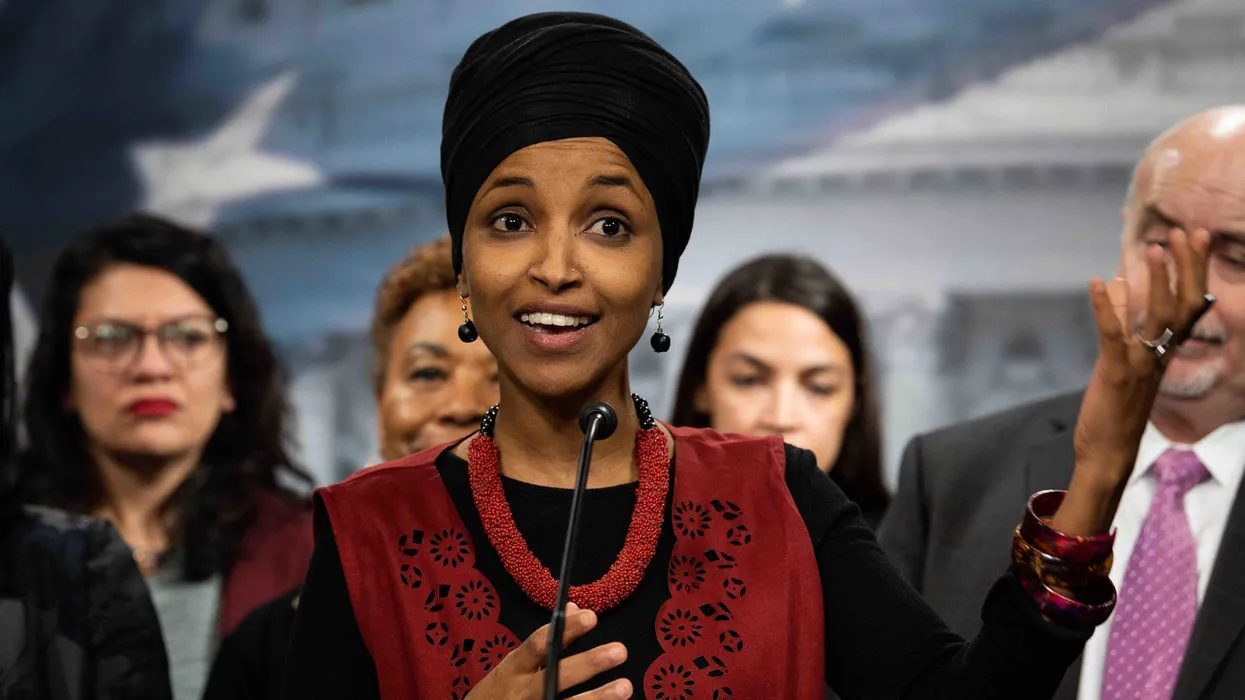
The Feds - including ICE - appear to be investigating Rep. Ilhan Omar

ilhan omar
© Michael Brochstein/Echoes Wire/Barcroft Media via Getty ImagesRep. Ilhan Omar
At least three departments are reviewing what could be the worst-ever crime spree by an elected US official

On Oct. 30, I reported that the Department of Justice had assigned an FBI Special Agent in Charge, or SAC, to review Rep. Ilhan Omar's apparent, astonishing spree of felonies from 2009 to 2017.

Minnesota state Rep. Steve Drazkowski (R) had previously filed a complaint on the matter with the Minnesota District of the Department of Justice. That office — headed by U.S. Attorney Erica MacDonald, a 2018 Donald Trump appointee — directed the FBI to review the complaint. An FBI SAC formally met with Rep. Drazkowski, and others, in mid-October to receive a prepared file of evidence and related information.

I can confirm that the FBI has taken additional steps since this October meeting.

Comment: See also:


Syringe

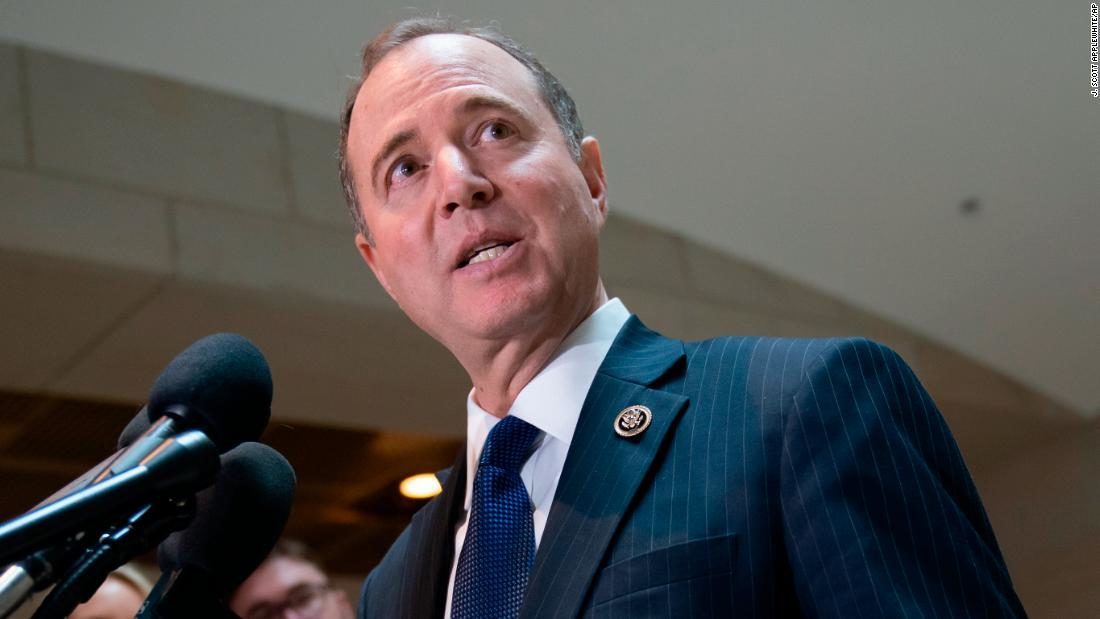
Rep. Adam Schiff sued by physicians for censoring vaccine debate

adam schiff
On Jan 15, 2020, the Association of American Physicians and Surgeons, along with Katarina Verrelli, on behalf of herself and others who seek access to vaccine information, filed suit in the U.S. District Court for the District of Columbia. Plaintiffs allege that Defendant Adam Schiff has abused government power and infringed on their free-speech rights.

"Who appointed Congressman Adam Schiff as Censor-in-Chief?" asks AAPS General Counsel. "No one did, and he should not be misusing his position to censor speech on the internet."

In February and March 2019, Rep. Schiff contacted Google, Facebook, and Amazon, to encourage them to de-platform or discredit what Schiff asserted to be inaccurate information on vaccines. He then posted the letters and press release on the House.gov website.

Eye 2

Pentagon insists US troops are 'force for good' in Iraq after its parliament votes to expel them

Iraq soldiers
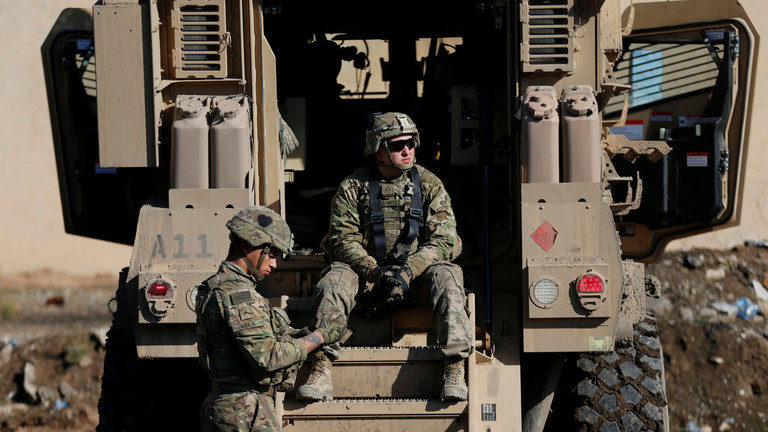
© Ammar Awad / ReutersUS soldiers in the town of Bartella, Iraq, on December 2016.
The US Defense Department has claimed that its military presence makes Iraq more secure and "prosperous," despite calls by Iraqi lawmakers for the removal of all foreign troops from the country and growing tensions with Iran.

"At this time, there are no plans by the US military to withdraw from Iraq," Assistant to the Secretary of Defense Jonathan Rath Hoffman told reporters at a press briefing.

"And I think it's been obvious... that the consensus in Iraq seems to be that the United States forces there are a force for good."

Comment: This kind of pathological thinking by those overseeing one of the most powerful institutions in the US, despite all evidence to the contrary, meaning that some in the Pentagon must be lying and others dangerously oblivious, goes in some way to explaining why the the country is in such a dire state: Also check out SOTT radio's:


Sherlock

6 F-35 jets reportedly on Iran's borders at time of plane crash - Lavrov

Lavrov
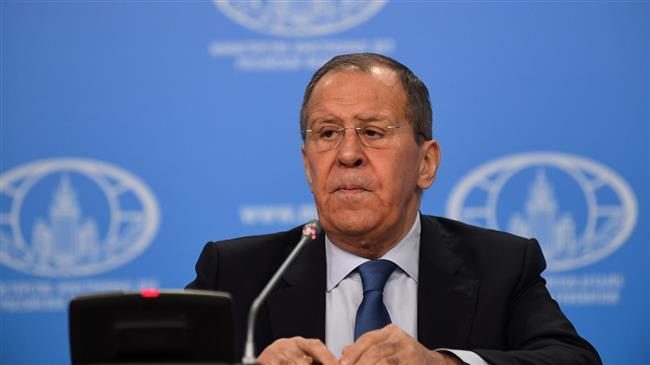
© AFPActing Russian Foreign Minister Sergei Lavrov gives a press conference, in Moscow, Russia, on January 17, 2020.
Acting Russian Foreign Minister Sergei Lavrov says there is unverified information that at least six American F-35 jets were "in the Iranian border area" at the time when Iran accidentally downed Ukraine International Airlines flight PS752 last week.

"This information has yet to be verified, but I'd like to underline the edginess that always accompanies such situations," he said on Friday.

Lavrov stressed that it was important to understand the context of the incident, which occurred as Iran was on very high alert after retaliating against Washington's assassination of Lieutenant General Qassem Soleimani.

"There is information that the Iranians were expecting another attack from the United States after the strike but did not know what form it might take," Lavrov said.

Comment: See also:


Book 2

Putin on Western attempts to rewrite history: We need to do everything possible to preserve truth

USSR WWII
© Sputnik / Vladimir Grebnev
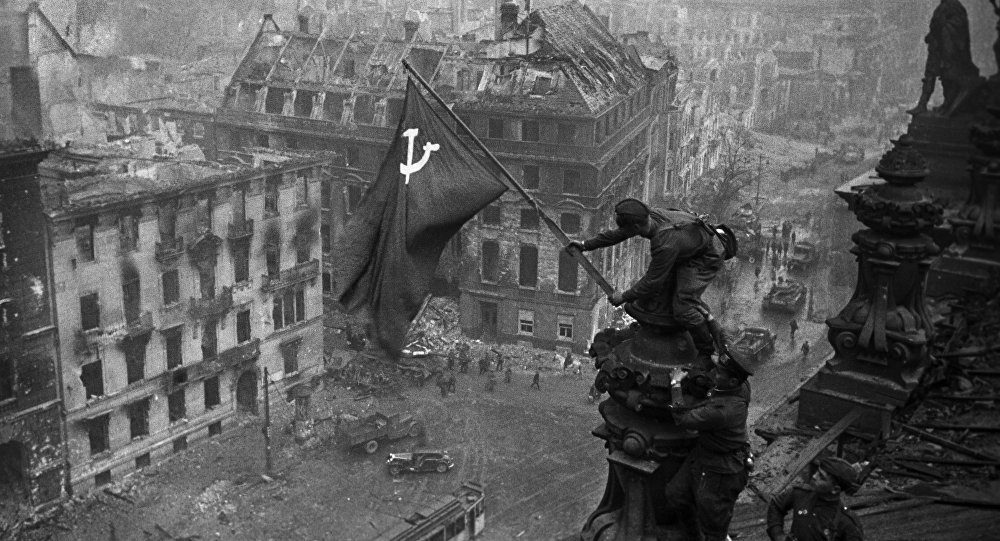
Earlier in January, the Polish parliament adopted a resolution declaring that the Soviet Union carries equal responsibility with Nazi Germany for the beginning of World War II.

Russian President Vladimir Putin has commented on Western attempts to rewrite the history of World War II, saying that Russia doesn't have to prove anything to anyone, and "we have to do everything so that we preserve the truth".
"We don't have to prove anything to anyone and we should do something else. We must do everything so that this truth is not forgotten. We must contrast this with objective information, which we have enough of", he said in an interview with the channel Rossiya 1.

Comment: See also: A History Lesson For Westerners Parrotting The Lie That Stalin 'Colluded With Hitler to Start WW2'


Sheriff

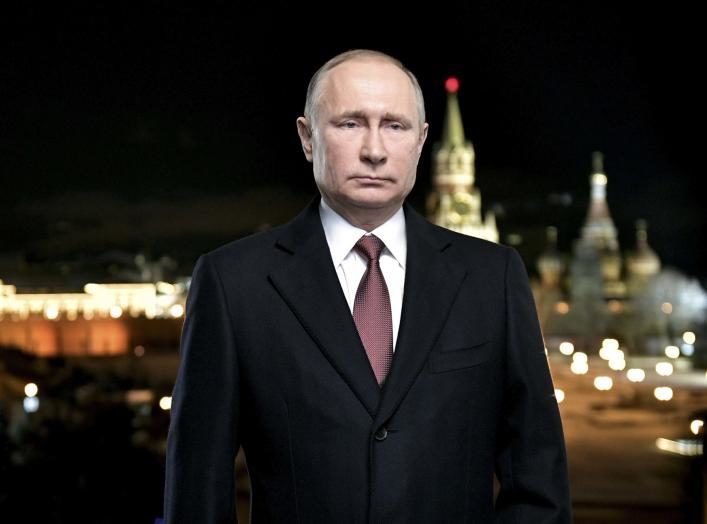
Putin prepares his succession, the West is purged from the Kremlin

putin kremlin
January 15, 2020 will be remembered as the start of the transition to a new political configuration in Russia that Vladimir Putin will leave behind when his term in office ends four years hence. The prospective changes were announced in the last third of Putin's 75-minute annual Address to the Federal Assembly, Russia's bicameral legislature. The seriousness and immediacy of the changes were confirmed by the announcement several hours later that Premier Dimitri Medvedev and the entire Russian cabinet had tendered their resignations so as to free the President's hands to proceed with implementation of the intent of the announced constitutional changes at once, even before the Working Group on those changes was formed, not to mention the drafting of laws framing their implementation or the planned referendum on the changes to follow before their promulgation, which was also mentioned in the Address.

The result of these various developments was shock and awe in the broad community of Russia Watchers. But the commentators soon found their feet and speculation on what was pending came back with a roar.

Nearly all political commentaries that I have read over the past 24 hours have evaluated the intent of the announced changes in terms of the political fortunes of one man, Vladimir Putin. The searchlights have been pointed here and there to determine where in the new organogram Mr. Putin may sit after 2024. This is quite understandable if one considers the speculation over Putin's alleged ambition to rule Russia for life.

Comment: Comment: Tom Luongo writes:
[...]

While this came on suddenly it also shouldn't be a surprise. These changes have been discussed for months leading up to Putin's speech. And it's been clear for the past few years that Putin has been engaged in the second phase of his long-term plan to first rebuild and then remake Russia during his time in office.

The first phase was rescuing Russia from economic, societal and demographic collapse. It was in serious danger of this when Putin took over from Boris Yeltsin.

It meant regaining control over strategic state resources, rebuilding Russia's economy and defense, stabilizing its population, getting some semblance of political control within the Kremlin and bringing hope back to a country in desperate need of it.

Hostile analysts, both domestic and foreign, criticized Putin constantly for his tactics. Russia's reliance on its base commodities sectors to revive its economy was seen as a structural weakness. But, an honest assessment of the situation begs the question, "How else was Putin going to back Russia away from the edge of that abyss?"

These same experts never seem to have an answer.

And when those critics were able to answer, since they were people connected to monied interests in the West who Putin stymied from continuing to loot Russia's natural wealth, their answer was usually to keep doing that.

Don't kid yourself, most of the so-called Russia experts out there are deeply tied back to Wall St. through one William Browder and his partner-in-crime Mikhail Khordokovsky.

Nearly all of them in the U.S. Senate are severely compromised or just garden variety neocons still hell-bent on subjugating Russia to their hegemonic plans.

Their voices should be discounted heavily since they are the same criminals actively destroying U.S. and European politics today.

In the West these events were spun to suggest Putin is consolidating power. The initial reports were that he would remove the restraint on Presidential service of two consecutive terms. And that this would pave the way to his staying in office after his current term expires in 2024.

That, as always when regarding Russia, is the opposite of the truth. Putin's recommendation is to remove the word "consecutive" from the Constitution making it clear that a President can only ever serve two terms. Moreover, that president will have had to have lived in Russia for the previous 25 years.

No one will be allowed to rule Russia like he has after he departs the office. Because Putin understands that the Russian presidency under the current constitution is far to powerful and leaves the country vulnerable to a man who isn't a patriot being corrupted by that power.

There are a number of issues that most commentators and analysts in the West do not understand about Putin. Their insistence on presenting Putin only in the worst possible terms is tired and nonsensical to anyone who spends even a cursory amount of time studying him.

These events of the past couple of days in Russia are the end result of years of work on Putin's part to purge the Russian government and the Kremlin of what The Saker calls The Atlanticist Fifth Column.

And they have been dug in like ticks in a corrupt bureaucracy that has taken Putin the better part of twenty years to tame.

It's been a long and difficult road that even I only understand the surface details of. But it's clear that beginning in 2012 or so, Putin began making the shift towards the next phase of Russia's strategic comeback.

And that second phase is about taking a stable Russia and elevating its institutions to a more sustainable model.

Once birth rates improved and demographic collapse averted the next thing to do was to reform an economy rightly criticized for being too heavily dependent on oil and gas revenues.

And that is a much tougher task. It meant getting control over the Russian central bank and the financial sector. Putin was given that opportunity during the downturn in oil prices in 2014.

Using the crisis as an opportunity Putin began the decoupling of Russia's economy from the West. During the early boom years of his Presidency oil revenue strengthened both the Russian state coffers and the so-called oligarchs who Putin was actively fighting for control.

He warned the CEO's of Gazprom, Rosneft and Sberbank that they were too heavily exposed to the U.S. dollar this way in the years leading up to the crash in oil prices in 2014-16.

And when the U.S. sanctioned Russia in 2014 over the reunification with Crimea these firms all had to come to Putin for a bailout. Their dollar-denominated debt was swapped out for euro and ruble debt through the Bank of Russia and he instructed the central bank to allow the ruble to fall, to stop defending it.

Taking the inflationary hit was dangerous but necessary if Russia was to become a truly independent economic force.

Since then it's been a tug of war with the IMF-trained bureaucracy within the Bank of Russia to set monetary policy in accordance with Russia's needs not what the international community demanded.

That strong Presidency was a huge boon. But, now that the job is mostly done, it can be an albatross.

Putin understands that a Russia flush with too much oil money is a Russia ruled by that money and becomes lazy because of that money. Contrary to popular opinion, Putin doesn't want to see oil prices back near $100 per barrel.

Because Russia's comparative advantage in oil and gas is so high relative to everyone else on the world stage and to other domestic industries that money retards innovation and investment in new technologies and a broadening of the Russian domestic economy.

And this has been Putin's focus for a while now. Oil and gas are geostrategic assets used to shore up Russia's position as a regional power, building connections with its new partners while opening up new markets for Russian businesses.

But it isn't the end of the Russian story of the future, rather the beginning.

And the slow privatization of those industries is happening, with companies like Gazprom and Rosneft selling off excess treasury shares to raise capital and put a larger share of them into public hands.

Again, this is all part of the next stage of Russia's development and democratizing some of the President's power has to happen if Russia is going to survive him leaving the stage.

Because it is one thing to have a man of uncommon ability and patriotism wielding that power responsibly. It's another to believe Russia can get another man like Putin to take his place.

So, Putin is again showing his foresight and prudence in pushing for these changes now. It shows that he feels comfortable that this new structure will insulate Russia from external threats while strengthening the domestic political scene.

Gilbert Doctorow has an excellent early reaction to this dramatic turn by Putin which I encourage everyone to read in full.

[...]

The end result of this move to devolve the cabinet appointments to the whole of the Duma is to ensure that a strong President which Putin believes is best for Russia is tempered by a cabinet drawn from the whole of the electorate, including the Prime Minister.

That neither opens the door to dysfunctional European parliamentary systems nor closes it from a strong President leading Russia during crisis periods.

Once the amendments to the constitution are finalized Putin will put the whole package to a public vote.

This is the early stage of this much-needed overhaul of Russia's constitutional order and the neocons in the West are likely stunned into silence knowing that they can no longer just wait Putin out and sink their hooks into his most likely successor.

Sometimes the most important changes occur right under our noses, right out in the open. Contrast that with the skullduggery and open hostility of the political circus in D.C. and you can which direction the two countries are headed.
Join My Patreon if you want light shed into the corners of the emerging multi-polar world.

Install the Brave Browser if you want to empower all of us to continue having that conversation.
See also:


Oil Well

Libyan National Oil Corporation declares "state of emergency" after Haftar's forces close eastern oil ports

Ras Lanuf Oil
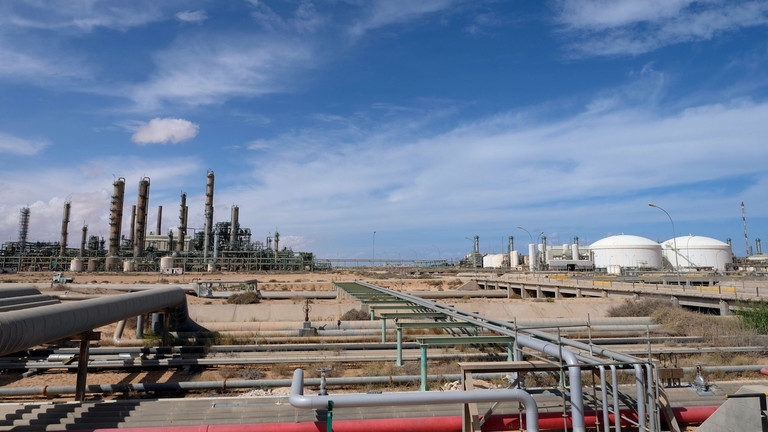
© Reuters / Esam Omran Al-FetoriFILE PHOTO: A view shows Ras Lanuf Oil and Gas Processing Company in Ras Lanuf, Libya, on October 19, 2019.
Libya's national oil company has declared a "state of emergency" after exports of its oil from the ports in the eastern part of the country were blocked by forces loyal to the Libyan National Army's General Khalifa Haftar.

The Petroleum Facilities Guard - a militia that controls major export terminals in eastern Libya - has ordered local subsidiaries of the National Oil Corporation (NOC), who run them, to cease all operations, the firm said in a statement.

The move makes any export of oil from Libya impossible, the company then warned, adding that it would lead to losses in crude oil production amounting to 800,000 barrels per day, as well as daily financial losses estimated at about $55 million.

Comment: Erdogan, unsurprisingly, states that Europe should be supporting Turkey's proposed campaign in the region:
Erdogan Says Europe Should Support Turkish Effort If It Wants To End Libyan Conflict

Turkish President Tayyip Erdogan has called on Europe to support his country's efforts in Libya, where it is providing military support to the internationally-recognized government, if it wants to end the conflict there.


The GNA government may be 'internationally recognized' but it is apparently very unpopular with the vast majority of Libyans.


Erdogan made his remarks in a column published on the Politico website on January 18, one day ahead of a UN-sponsored summit in Berlin that will try to stabilize the country.

Representatives of more than 10 countries, including Erdogan, U.S. Secretary of State Mike Pompeo, Russian President Vladimir Putin, and others are expected to attend the January 19 conference. China, the United Kingdom, Italy, France, Egypt, Algeria, and the United Arab Emirates are expected to send representatives as well.

The European Union and the Arab League will also participate.

At the meeting, Germany and the United Nations will push rival Libyan camps fighting over the capital, Tripoli, to agree to a truce and monitoring mechanism as first steps toward peace, diplomats and a draft communique said.

Turkey supports the government of Fayez al-Serraj in Tripoli and describes Khalifa Haftar, who heads the eastern Libyan National Army (LNA), as a coup plotter.

"Keeping in mind that Europe is less interested in providing military support to Libya, the obvious choice is to work with Turkey, which has already promised military assistance," Erdogan wrote.

"We will train Libya's security forces and help them combat terrorism, human trafficking, and other serious threats against international security," he added.

In an article published in Tripoli on January 18, the UN's special envoy for Libya, Ghassan Salame, called for "all foreign fighters" to leave Libya.

Salame also said ending illegal weapons smuggling into the country will be on the agenda in Berlin.

The summit on January 19 will put pressure on Haftar and the LNA to halt a nine-month offensive against Tripoli after a week-long lull in fighting. But it will not try to broker power-sharing between the two sides, said diplomats briefed on preparations.

Haftar and Serraj are both due in Berlin -- along with Erdogan and the leaders of Russia, Egypt and other Western and Arab powers. Libya has been in turmoil since the fall of Muammar Qaddafi in 2011.

Erdogan said that, if Libya's legitimate government were to fall, Islamist militant groups such as Islamic State and Al Qaeda "will find a fertile ground to get back on their feet".

Haftar is backed by the United Arab Emirates, Egypt, Jordan, Sudanese and Chadian fighters, and most recently Russian mercenaries. France has also given some support.
Haftar thanks Putin and backs Russia's peace initiatve for Libya:
"I thank you and express full support for the Russian initiative for holding peace talks in Moscow, which should lead to peace in Libya. I confirm that we are ready to accept your invitation to visit the Russian Federation to continue the dialogue that has begun, "the letter says.

In addition, the Libyan military leader expressed personal gratitude and appreciation for Russia's efforts to establish peace in the North African country.

Recall that Haftar, who had previously left Moscow without signing a ceasefire agreement with the PNS Saraj, said that the proposed version of the document ignored a number of demands put forward by the LNA. "The project (cessation of hostilities. - Ed .) Ignores many of the demands of the Libyan (national) army," Al-Arabiya television quoted Haftar as saying.

Faiz Saraj on January 13 signed a ceasefire agreement following the six-hour talks in Moscow. In the evening of the same day, Khalifa Haftar asked for time until Tuesday morning to make a decision, but did not sign the document and left the Russian capital in the early morning. After his departure south of Tripoli, clashes between the LNA and PNS formations resumed.

In Libya, after nine months of fighting, the LNA under the command of Marshal Khalifa Haftar and the GNA, led by Faiz Saraj, previously agreed to a truce, which formally entered into force at midnight on Sunday, January 12. Following the results of negotiations in Istanbul on January 8, the presidents of Russia and Turkey, Vladimir Putin and Recep Tayyip Erdogan, adopted a joint statement, which, in particular, called on the warring parties in Libya to declare a truce.
Greece's FM says the army are willing to provide support to Haftar:
During his meeting with Khalifa Haftar, Nikos Dendias expressed Greece's intention to contribute to the protection of the truce in Libya.

In every possible way - to ensure truce - Greece is ready to support Libya according to Nikos Dendias. The initial report on our country's involvement with "forces" in the protection of the ceasefire, caused a lot of discussion and was followed by clarifications by the Foreign Ministry.

Specific sources in the Ministry of Foreign Affairs stress that the phrase "Greece is ready to help the next day in Libya, either by joining those forces needed to bring the truce", refers exclusively to observers under a possible international monitoring mechanism. truce.

The Foreign Minister, following his meeting with General Khalifa Haftar , emphasized, inter alia: " I told him that Greece was ready to help the next day, either by joining those forces needed to bring the truce. , or with the participation of Greek forces in the European arms embargo and the transfer of mercenaries to Libya. "

All of this is a contribution to the future of the Libyan people. We want it to be a modern democratic country. Greece is not a member of the Berlin process, which we know Greece has not participated in since 2015, but we continue to believe that the hostess would see our participation as something positive. "

In detail his statements

"For our part, we encouraged the army to engage in a constructive spirit in the Berlin process and to try, within the framework of the Treaties, to achieve a ceasefire and restore security in Libya, the removal of mercenaries, recognition. the invalidity of the unlawful memorandums between Turkey and the government of Saraj, "Dendias stressed, adding:

"I have to say with great pleasure that General Haftar agreed with all our comments above." "Europe has a clear position, expressed by the last European Council," Mr Dendias said. "Our common European position recognizes the nullity and non-existence of the memorandums signed by the government of Saraj and Turkey. We therefore expect Europeans from Germany to impose and express the European position in the Berlin process. We expect the same from other EU member states involved in this process. "

Asked whether Greece will veto a Libyan political solution if the agreement with Turkey is not revoked, Dendias said: "We want to be constructive in making the Berlin process a success. We are helping the UN processes. On the other hand, however, we are trying to help in this process not only as Greece but also as a European country. The framework for the participation of all European countries in this process has been determined by the decision of the European Council. "

And Mr Dendias continued: 'The very decision of the European Council, our common European position, provides for the nullity and non-existence of the two Memorandums. Therefore, every EU country, not just Greece, has the self-evident obligation to support the common position, the position that we have all taken unanimously in the Council. So I don't want to see things in the form of a veto, I see them as an attempt by our common European position. Of course, if this is not respected, then every European country has an obligation to defend this position. And Greece, on which Prime Minister Kyriakos Mitsotakis made a clear position yesterday, will defend our common European position. "

According to reports, the Foreign Minister's reference to Greece's involvement in the truce efforts has to do with the participation in the European Sophia Mechanism by air and floating means of surveillance of the arms embargo (already on paper) and readiness to participate as observers on an international ceasefire monitoring mechanism, if so decided.

Haftar: We are pacifists

General Haftar, at the end of the meeting and shortly before the meeting with Prime Minister Kyriakos Mitsotakis, said:

"We are peacemakers. We came here to discuss peace and to strengthen the two countries' co-operation."

The background of the meeting

The meetings are in view of the Berlin initiative on Libya. Prime Minister Kyriakos Mitsotakis will also contact German Chancellor Angela Merkel today and warn that he will veto the EU summit if any solution to Libya does not include a cancellation of the agreement with Turkey.

It is recalled that Greece had requested to attend the conference in Berlin on Sunday , but Turkey blocked the Greek request as one of the founding members of the initiative.

Haftar had recently wondered why Greece was not invited to the Berlin initiative.

Although Greece will not be present in Berlin on Sunday, it counts on France's support, as Emmanuel Macron does not support the Sharjah regime and has clashed with Turkey over a deal with Libya.

"The Turkey-Libya Memorandum does not comply with the Law of the Sea and calls into question the sovereign rights of Greece and Cyprus," the French Foreign Ministry spokesman said yesterday, continuing support movements in Athens and Nicosia.

Mr Mitsotakis will visit France on January 29, where he will meet with Macron and will be at the World Economic Forum in Davos from 22 to 24 May, where Recep Tayyip Erdogan will also be present.
See also: Libya ceasefire holding, Greece proposes sending troops to protect its oil & gas interests in Meditarranean