
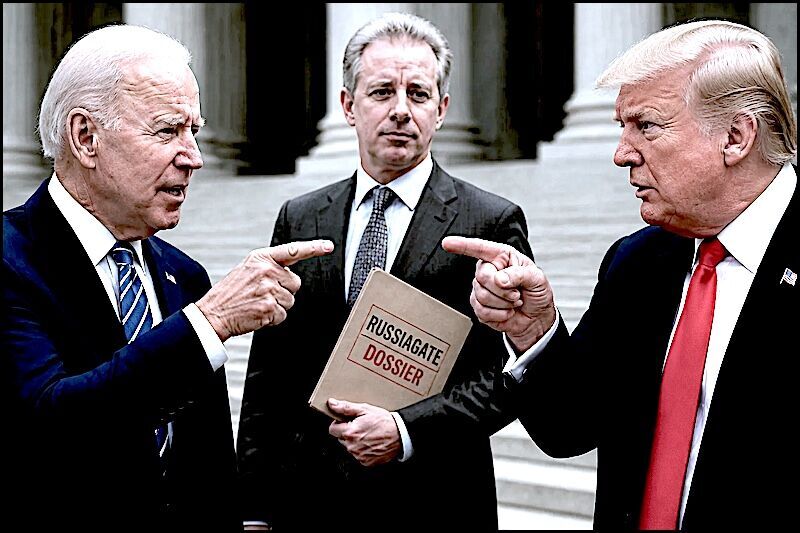
© UnknownUS Presidents Trump and Biden making points
I. Austin: words that do things
To understand what is at stake, it helps to return briefly to the philosopher J. L. Austin and his celebrated distinction between statements that merely describe reality and statements that perform an action:
When a judge pronounces a couple married, the words do not simply describe a situation — under the right conditions, they bring it into being. Austin called such utterances performatives.
But performatives only work because they are underwritten by institutions, conventions, and a shared world of recognition. Their force depends on what Austin called felicity conditions: the speaker must be authorized, the procedure must be recognized, the context must be appropriate. Strip these away, and the utterance is not false. It simply fails. It becomes infelicitous.
This is why political language is never merely linguistic.
It presupposes a symbolic order.
II. Trump: words that perforate
The contemporary American crisis reveals something more troubling still.
Many of Trump's statements fail as performatives. Declaring an election stolen does not make it stolen. Calling unfavorable information "fake news" does not refute it. Announcing victory does not create victory.
On the institutional level, these utterances often remain empty: no court, no recognized procedure, and no shared authority validate them.
And yet they produce effects.
They mobilize supporters. They seize public attention. They generate loyalty, outrage, suspicion, and political energy. More than that, they erode the common framework through which reality can be collectively assessed. This is the perlocutionary register: the effect a word actually produces, regardless of whether the act itself was institutionally valid.
We might call this phenomenon perforative speech.
A performative act creates reality within a shared symbolic order.
A perforative act damages the symbolic order itself.
It targets not a particular fact, but the framework that makes facts assessable. It contests not a particular institution, but the legitimacy that lets institutions mediate reality at all. It does not merely advance an argument — it corrodes the possibility of a common world in which arguments still mean anything.
Seen this way, Trump looks less like an anomaly than a symptom.
III. From Bush to Trump: the manufacture of reality as imperial logic
The roots of this phenomenon reach well beyond Trump himself.
In 2004, journalist Ron Suskind reported a conversation with a senior Bush administration official — later widely, though never officially, attributed to Karl Rove. The official dismissed what he called the "reality-based community" and offered a line that has since become emblematic:
"We're an empire now, and when we act, we create our own reality. And while you're studying that reality — judiciously, as you will — we'll act again, creating other new realities, which you can study too, and that's how things will sort out. We're history's actors... and you, all of you, will be left to just study what we do."An imperial system eventually grows accustomed to producing realities rather than negotiating them. Military interventions, regime changes, sanctions, information campaigns, and media narratives all follow a similar logic: act first, then force everyone else to adapt to the newly created situation.
The Iraq War remains the starkest illustration: weapons of mass destruction that did not exist, but a diplomatic and media performance — from Colin Powell's presentation at the UN to the invasion itself — powerful enough to manufacture a shared reality solid enough to launch a war, well before that reality collapsed under scrutiny.
Trump, then, is not the origin of this crisis. He is its most visible expression.
The Russiagate affair had already shown how accusations, intelligence-linked narratives, leaked dossiers, and media amplification could destabilize a political reality before it ever had the chance to settle — and, crucially, keep producing effects long after the original claims collapsed or remained unresolved.
The Steele dossier, compiled by Christopher Steele, a former MI6 officer who had headed the agency's Russia desk, was commissioned through opposition-research channels ultimately funded by a rival political campaign. It was never conclusively verified. The FBI reportedly offered Steele one million dollars to corroborate his central allegations, and he could not do so. The Justice Department's own inspector general later found that the Bureau had relied on the dossier to obtain and renew a FISA warrant without adequate corroboration.
Special counsel John Durham spent years investigating these origins, yet his most prominent prosecutions — including one against Steele's primary sub-source — ended in acquittal. In other words, the uncorroborated claims were never established as true, nor were they conclusively settled in a courtroom in any way proportionate to their political impact.
That is precisely the point. The dossier's effects on the political system never depended on resolving that question. It shaped headlines, a surveillance warrant, two years of congressional hearings, and the opening narrative of a presidency — before, during, and largely independent of any final verdict on what was actually true.
Whether in Washington, London, the press, or the intelligence world, the pattern is the same: political reality is increasingly shaped by mediated operations of suspicion, accusation, and reputational destruction, running on a timetable the justice system can never match.Trump did not invent this logic. He internalized it — and then turned it inward. What had once been aimed outward, at the international system, came home to American society itself. The techniques once used to shape foreign realities became instruments for shaping the domestic one.
This is why Trump's political style feels at once shocking and strangely familiar: not a rupture with American power, but one of its internal consequences.
IV. Algorithms and financial markets
The digital age has accelerated this process.
Political speech is no longer received only by citizens, journalists, or institutions. It is increasingly processed by machines.
Financial algorithms scan statements in real time; markets react before human analysis can even occur; political communication becomes automated signal transmission.This is documented, not speculative. Academic studies of Trump's 2018-2019 trade-war tweets found measurable market declines, spikes in trading volume, and rising uncertainty within minutes — with Chinese markets and safe-haven assets such as gold moving in the opposite direction. In 2019, JPMorgan even built a "Volfefe Index" to measure the impact of Trump's tweets on bond-market volatility.
On April 9, 2025, hours before announcing a ninety-day pause on his own tariffs — a decision that sent the Nasdaq up 12.2% in a single session — Trump posted on Truth Social: "THIS IS A GREAT TIME TO BUY!!! DJT." The line could be read equally as a personal signature and as a reference to the stock ticker of his own media company. Several senators called for an investigation into possible market manipulation. Nothing, at this stage, establishes that any law was actually broken. But the structural point stands regardless of any legal outcome: the words of power have become an asset. Knowing what will be said, and when, can itself become exploitable financial information.
Words become data.
Data becomes transactions.
Transactions become market movements.
Market movements become news.
The news then confirms, after the fact, the importance of the original statement — a self-reinforcing loop in which an utterance no longer needs to be true to produce consequences.
It only needs to trigger a reaction.
V. What this reveals about the Western system
This development reaches far beyond Trump, and far beyond the United States.
Institutions no longer command universal trust. The media no longer provide a shared interpretive frame. Political language increasingly functions as a marker of tribal belonging rather than a tool of collective reasoning.
And this pattern is visible well beyond American borders — in the erosion of shared factual ground across European public spheres, in disinformation campaigns that treat entire electorates as targets for engineered ambiguity, in the very same algorithmic markets that reprice European or Asian assets on the strength of a single American post.
The result is not simply polarization. It is the gradual erosion of the symbolic mechanisms through which societies — not only American society — sustain a common reality.
This may be the deeper significance of Trump. He represents the moment when a system built on the manufacture of realities begins to lose control of its own machinery.
The methods once used to manage external environments now destabilize the internal one. The instruments of empire have turned back toward their own center — and in doing so, they expose a fragility that was never uniquely American.
What looks like a crisis of political communication may, in the end, reveal something larger: a crisis of symbolic mediation itself, running through the institutions of the Western order as a whole.
And when the mediations that sustain a common world begin to fail, the question is no longer merely political.
It becomes civilizational.
About the Author:
Olivier Roynard, French essayist and independent researcher on the relationship between geopolitics and the transformation of political and intellectual forms in the modern world.


Comment: Excellent distillation of the structure and evolution of political communications - the erosion of source, cause and understanding.