
© Alex Krainer's Substack
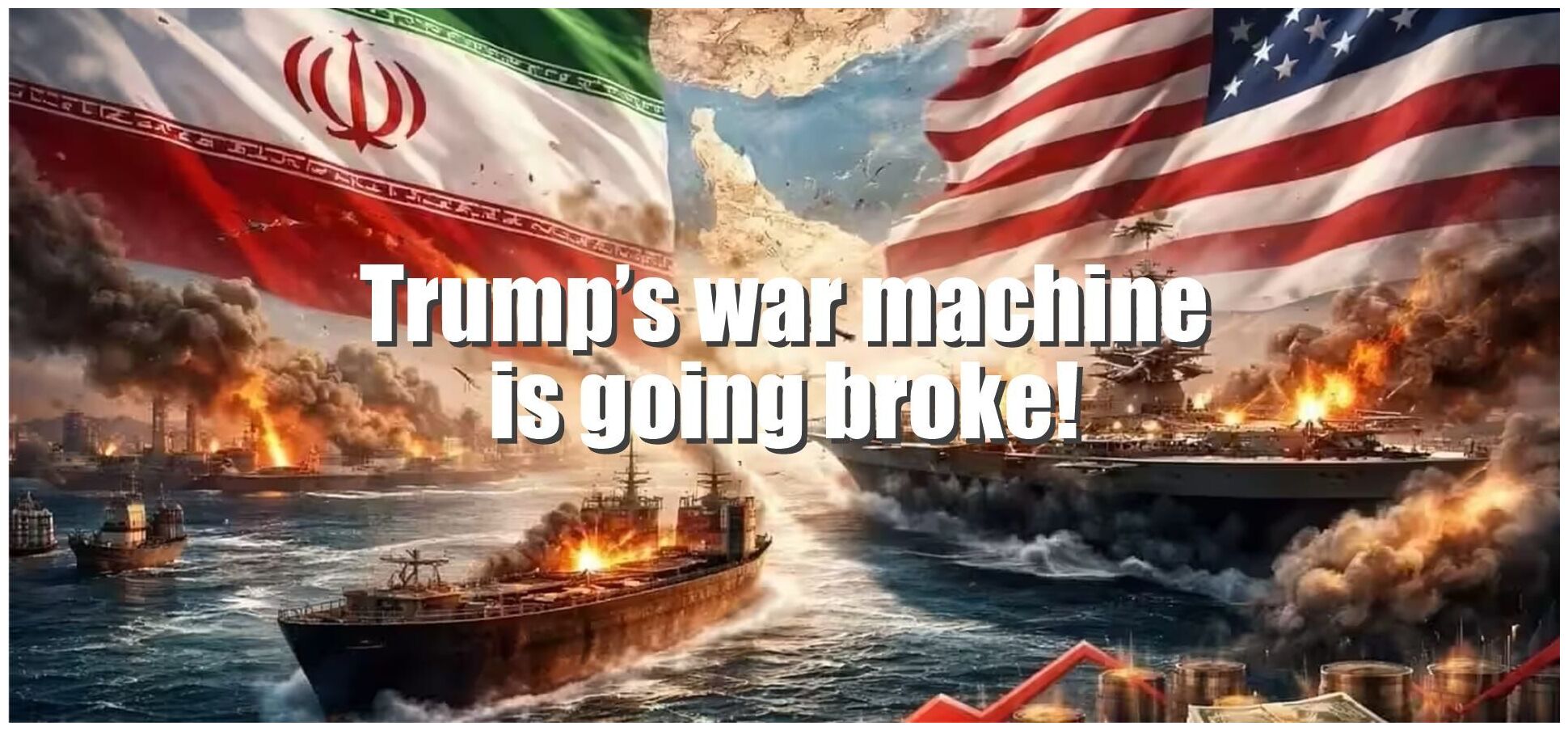
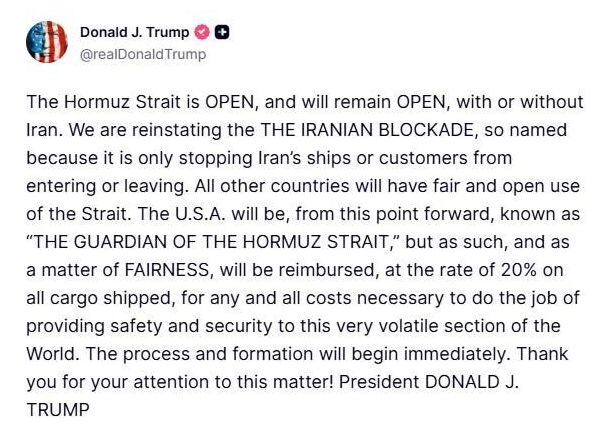
Perhaps the most important purpose of Trump's story was to create the impression that the 11-hour meeting really did take place and the Iranians agreed to stuff they had to backtrack from. Therefore, they are weak and desperate and not only will the Strait of Hormuz be fully open for maritime traffic business, it will remain so under US, and not Iranian control. Oh, and all this trouble comes at a steep cost that the US will have to recuperate somehow:
© Alex Krainer's Substack
Why lie about matters of war?
The obvious question is, why? If you're struggling on the battlefield, what could possibly be the point of lying about it and pretending that you're in control and winning? For anyone paying attention to the last four+ years of war in Ukraine, we've witnessed the same consistent, strong push for bullish narratives in that war:
- Ukraine is winning
- Russians are running out of missiles
- The XYZ weapons system is a game-changer
- Ukrainians are very resourceful and resilient
- Russians are mostly drunk and demoralized
- Zelensky is Churchill
- Putin is Hitler, etc.
Narrative warfare and narrative economics
Indeed, this whole approach is reminiscent of Robert Schiller's "narrative economics" hypothesis. Schiller first published it as a speech on the occasion of his 2017 American Economic Association (AEA) presidential address (published later that same year as an NBER working paper). Two years later, he expanded on the hypothesis in a 2019 book titled, "Narrative Economics: How Stories Go Viral and Drive Major Economic Events."
In essence, Schiller argued that popular economic narratives - contagious, often simplified and emotionally charged stories - can spread virally, just like epidemics. In doing so, these narratives can significantly influence individual and collective behavior including investing, spending, saving, or policy support, thereby amplifying major economic developments like mass adoption of certain products or services, substitution of others, and even macro events like booms, asset bubbles, busts or recessions.
Once more, we are converging on phenomena of collective human psychology and how it can be influenced through narratives. Once narratives take hold, they can impact real-world outcomes, and perhaps Trump's rhetoric about the control of the Hormuz Strait should be understood in this way: not as the US President truthfully informing the public about the progress of a war in which he involved his country, but as a way to affect his audience's belief in certain outcomes and their willingness to commit blood and treasure to achieve such outcomes. If this is so, we shouldn't expect truth from our leaders at any point.
The Pentagon's running out of money
Furthermore, taking all this into account, Trump's bizarre rhetoric is also quite revealing and there's much to read into it. The wording of his TruthSocial post about the USA becoming "THE GUARDIAN OF THE HORMUZ STRAIT" reads like a foreshadowing of his intent to shake down the Gulf sheikdoms to help pay for the Iran war, in the amount of 20% of the value of cargoes passing through the strait. That may be a bit aggressive, but since the allies' money is sitting in Western financial institutions, they would have no choice about any "fair" deductions from their balances. After all, the charges would be for their own protection and security.
This will inevitably alienate US Middle Eastern allies, so why did Trump use that language, and why now? As it turns out, US Defense Department appears to be rapidly running out of cash while the costs of war are mounting relentlessly. The DOD received a base discretionary budget of roughly $839 billion for this year, but its officials warned Congress that the Pentagon is running out of cash, obliging them to request a supplemental infusion of more than $67 billion to cover shortfalls until the next budget cycle.
The funding shortfall is apparently due to rising operational costs associated with "Project Iran," including naval operations, munitions use, and other related expenses. Some services, like the Army, have already had to implement spending cuts, such as reduced training, to manage internal shortfalls of several billion dollars. In the final analysis, Trump's deceptive bravado reveals ominous cracks in the hegemon's armor, one that its enemies won't fail to spot and pounce on.
Who could have guessed that there are limitations even to a superpower's ability to project force and pay for perpetual warfare on multiple fronts. In squeezing his allies, Trump made it quite plain — not only that limitations exist, but that we're getting there fast.
The markets no longer believe
One of Trump's successful uses of narrative warfare has been in bringing down the price of oil and maintaining the equity markets levitating in the bubble territory. Someone counted, and apparently, Trump announced fully 23 times that he "had a deal" with the Iranians and that the Strait of Hormuz would remain open for traffic, so the happy days are here again! But you can fool the markets only 23 consecutive times, it seems.
Yesterday's announcement didn't have the desired effect and the oil price soared nearly 9%. In today's pre-open session, it's up another 3.5%, fully $10/bbl higher than Friday's close, which translates into about $0.24/gallon at the pump. Another, "Iranians are desperate to make a deal" announcement might become necessary soon. It remains to be seen if the markets will buy it the 24th time.


When you borrow money to make the interest portion of your payment, a Bank calls that Negative Amortization.
Historically, widespread negative amortization was a key indicator of lax lending standards and contributed significantly to the 2008 financial crisis, leading to stricter federal regulations like the Dodd-Frank Act and Qualified Mortgage rules that now restrict or prohibit these features in most mainstream lending.