Science & TechnologyS


Moon

Russian space agency chief Rogozin: US may use moon landing for 'shady operations'

Lunar walk
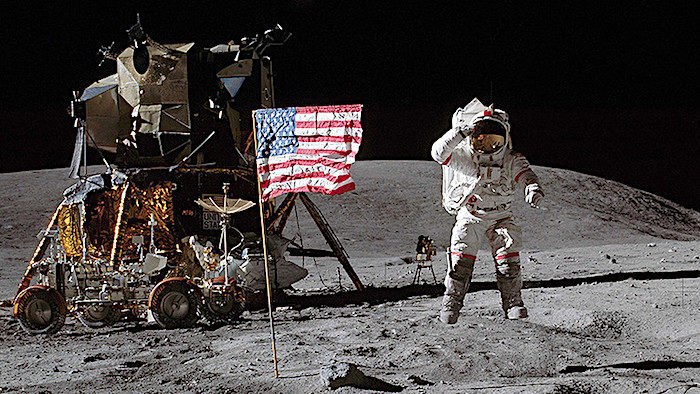
© Global Look Press/ZUMAPRESS.com/NASAUS astronaut John Young on the Moon
US plans to launch a manned mission to the moon isn't just a political goal, but a cover for "secret operations," according to Roscosmos head Dmitry Rogozin.

"Why do they want to get there again? What is the gain?" Rogozin asked in an interview with Russian media, during which he discussed NASA's lunar program. "Like in previous decades, such actions are cover-ups for some shady operations. Space isn't just for peaceful purposes."

Rogozin believes the US doesn't have military interests on the moon, but US experts could conduct experiments in conditions of increased radiation and low gravity. Such experiments could be of "military interest," he explained.

Earlier in March, US Vice President Mike Pence announced that the Trump administration had directed NASA to speed up the timeline for its already-planned moon landing in 2028 to 2024 in the face of competition from Russia and China.

In 2018, Roscosmos announced its space research program for the next decade, which included a program of lunar exploration. As part of the lunar mission, Moscow is considering placing at least two observatories on the moon. In January, Rogozin announced that the Luna-25 lander would be sent to the moon in 2021 to search for ice at its south pole, and will also test soft-landing technology.

Comment: See also:


Moon

Israel's attempted moon landing failed as comm with spacecraft was lost

Israeli space shot Earth
© AFP/SpaceIL and Israel Aerospace IndustriesA picture of the Earth taken by the camera of the Israel Beresheet spacecraft.
Israel's private spacecraft Beresheet crashed into the Moon on Thursday after being hit with problems during descent, denying the Jewish state a place in the elite club of nations that mastered a lunar landing.

"Small country, big dreams," the engraving on the spacecraft's body read, but those dreams weren't destined to come true.

Beresheet's engine stopped working around 10 kilometers from the surface, with the vehicle crashing into the Moon at a speed of over 130 meters per second.


Comment: UPDATE: 4/12/2019 Why it crashed...
The Israeli team behind the Beresheet spacecraft's failed moon landing has explained that a "technical glitch" shut down one of the craft's engines, which sent it flying to its doom at 500kph...after failing to adequately slow its descent.

The SpaceIL team explained on Friday that the first technical issue occurred 14km above the moon's surface. By the time the team lost contact with the craft at 150 meters, it was moving at 500kph, "making a collision inevitable."

"Our engineers think that a technical glitch in one of the components caused the main engine to shut down - making it impossible to slow the spacecraft's descent," SpaceIL explained. "By the time the engine was restarted, its velocity was too high to land properly."

The team will receive a $1 million 'Moonshot Award' from California-based XPRIZE foundation, "in honor of their achievements and their milestone as the first privately funded entity to orbit the moon."


Network

'Simulation theory' goes mainstream - strangely compatible with Intelligent Design

Virtual reality
© Kim Kyung-Hoon / Reuters
An MIT computer scientist, Rizwan Virk, has a new book out, The Simulation Hypothesis, making the case again that we live not in a "base reality" (a real world) but, more likely, in a computer simulation. What are the odds, in his view? "I would say it's somewhere between 50 and 100 percent. I think it's more likely that we're in simulation than not."

Scott Adams, a favorite commentator of mine, thinks so as well and concedes that this is amounts to a form of ID, albeit not the kind advocated by our more familiar design proponents. Says Adams, "The odds of us having an intelligent design, meaning we're created by another species of humans, are pretty close to 100 percent."

Alternative Versions of Simulation Theory

In an interview, Virk points out interestingly that the thesis comes in two forms.
The basic idea is that everything we see around us, including the Earth and the universe, is part of a very sophisticated MMORPG (a massively multiplayer online roleplaying game) and that we are players in this game. The hypothesis itself comes in different forms.

In one version, we're all A.I. within a simulation that's running on somebody else's computer. In another version, we are "player characters," conscious things that exist outside the simulation and we inhabit characters, just like you might take on the character of an elf or dwarf in a fantasy RPG.

Comment: It's too bad Klinghoffer doesn't go into more depth on the second option. He's right about the first: a purely computational universe can't account for mind or thought. But what if we are more like avatars for what in 'reality' are other, or even 'higher', consciousnesses? If our visible reality is somehow representative of a deeper, more fundamental layer, many odd things about our reality make a kind of sense, including the seemingly symbolic nature of many of the things we ordinarily consider coincidence. But if that's the case, what is the nature of this other level of reality? Think away!


Microscope 1

Innocuous gut dweller to deadly blood infection: When gut bacteria betray their hosts

gut bacteria
© CDC / Pete WardellFalse color micrograph of Enterococcus faecalis, which is usually innocuous.
Decades after a deadly outbreak, a researcher found a key clue to its cause inside frozen microbes.

For three decades, the deadly bacteria sat in cold storage. Normally, Enterococcus faecalis lives harmlessly in the human gut. One particular strain, however, caused a series of strangely persistent infections at the University of Wisconsin Hospital and Clinics in the 1980s. The E. faecalis found its way into patients' blood and grew resistant to antibiotics. Patients started to die.

The outbreak ran its course, but its origins remained a mystery. How do bacteria that live without causing distress in the gut-that probably are living in your gut right now-turn lethal? Fortunately, Mark Huycke, then a doctor at the University of Wisconsin, thought to save E. faecalis samples from the 1980s outbreak.

"It's great that sometimes microbiologists don't throw things away," says Daria Van Tyne, an infectious-disease researcher now at the University of Pittsburgh and the lead author of a new paper on the 1980s outbreak. Three decades later, Van Tyne's colleagues were able to sequence 62 frozen samples from the outbreak. Antibiotic-resistant E. faecalis still causes trouble in hospitals here and there. This study is one of the most detailed reconstructions yet of how E. faecalis can mutate inside patients' bodies, going from innocuous gut dweller to deadly blood infection.

Mars

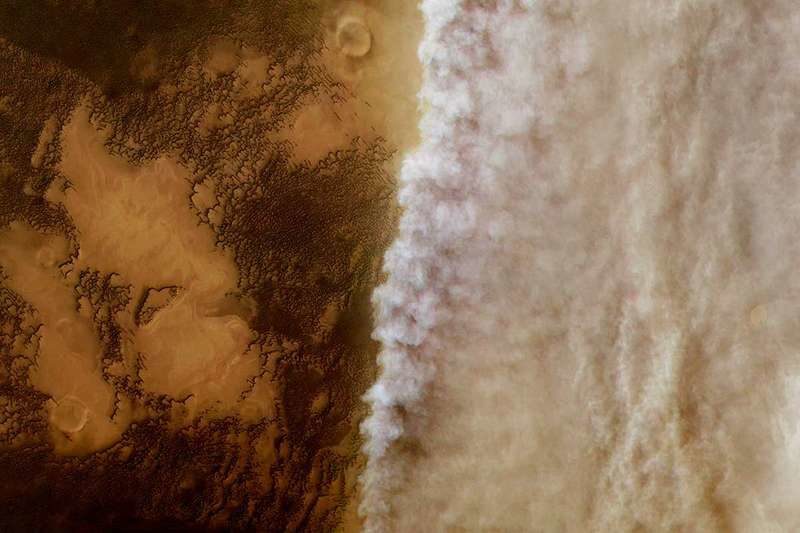
Largest dust storm on Mars ever recorded may reveal why it's so dry

A dust storm on Mars
© SA/Roscosmos/CaSSIS, CC BY-SA 3.0 IGOA dust storm on Mars photographed by the European Space Agency’s Mars Express
Dust storms on Mars aren't all about dust - they're also full of water. A satellite orbiting Mars has taken the most detailed measurements yet of how these rare events trap water at lower altitudes, which may help reveal what happened to the water that used to be abundant on the Red Planet.

In 2018, the largest recorded dust storm circled the entire Martian globe, so thick that it hid the surface from the sun and killed the Opportunity rover. The ExoMars Trace Gas Orbiter watched this cataclysmic storm from orbit. Just before sunset and just after sunrise on Mars, it examined the atmosphere to determine how the dust storm absorbed sunlight.

Ann Carine Vandaele at the Royal Belgian Institute for Space Aeronomy and her colleagues used this data to determine how water was behaving in the storm. They found that just before the storm, there were water ice clouds in the atmosphere, but no water vapour more than 40 kilometres above the surface. This changed a few days later when water vapour appeared at altitudes of 40 and 80 kilometres, seemingly replacing the water ice clouds.

Comment: Epic dust storm on Mars now engulfs entire planet

And it's not just on Mars epic storms are taking place, on Earth we're seeing the same kinds of extreme weather and similar is also occurring on other planets; it's solar system wide climate change.

Also check out SOTT radio's:


Info

'Morphospace' governs recovery after mass extinction

Mass Extinction Event
© MARK GARLICK/SCIENCE PHOTO LIBRARY/Getty ImagesThe re-establishment of species diversity following an extinction event is consistently slower than evolutionary theory predicts.
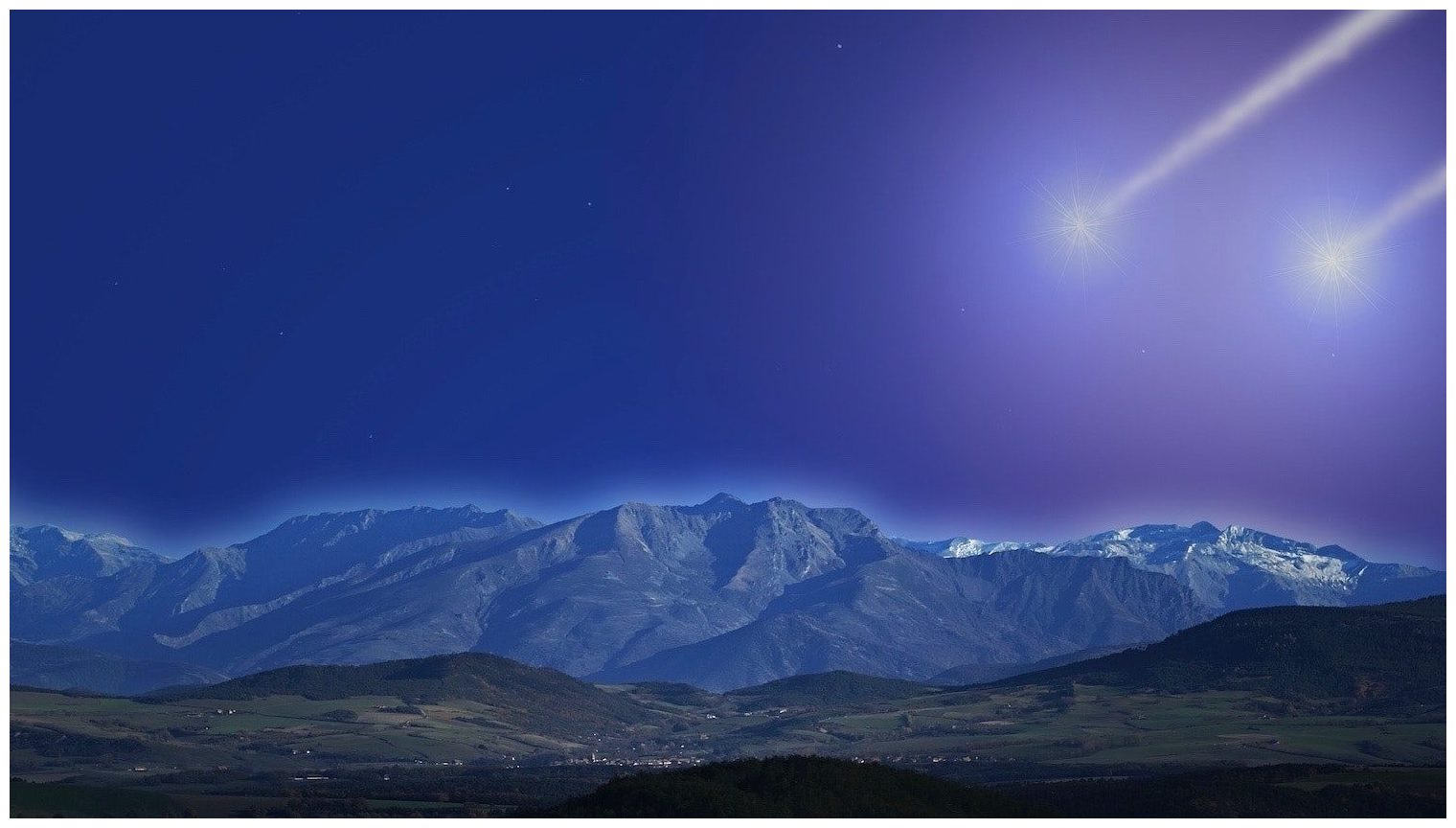
Theory tells us that after a mass extinction, an event where the diversity of species is drastically reduced, nature should rebound with a flurry of creativity. Species should quickly proliferate to refill desolate ecosystems, something called adaptive radiation.

Yet, the paleontological record suggests that this doesn't happen at anywhere near the expected pace. Now, research published in the journal Nature Ecology and Evolution argues that understanding something called "morphospace" might help us find the cause.

Extinction events happen with alarming regularity: there's the "big five", but a host of slightly smaller, yet still devastating extinctions have peppered the planet's history.

Scientists now worry that we might be in the middle of one of our own making, so this makes it all the more important to understand how the natural world bounces back from such catastrophes.

Perhaps the most well-known of the earth's mass extinctions is the Cretaceous-Paleogene (K-Pg) extinction event. This took place 66 million years ago when an asteroid smacked into the earth next to what is now the Yucatán Peninsula, creating the nearly 200-kilometre-wide depression known as the Chicxulub crater. This impact drove the extinction of all the non-avian dinosaurs, and much else besides.

Info

Baby born using DNA from 3 people

IVF Technique
© DANIEL LEAL-OLIVAS, AFP/FileThe case is the first time an IVF technique using DNA from three people has been deployed to allow a mother otherwise unable to conceive to have a child.
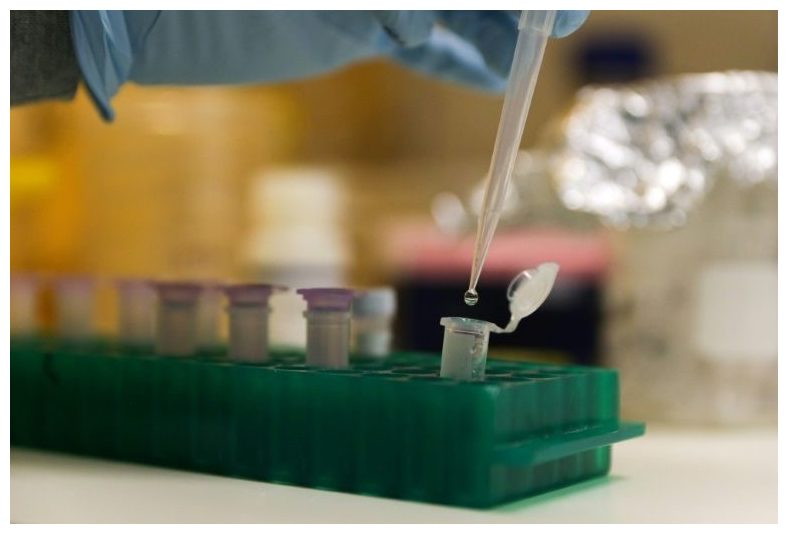
A team of Greek and Spanish doctors announced Thursday the birth of a baby using DNA from three people after a controversial fertility treatment that has provoked intense ethical debate.

The team used an egg from the infertile mother, the father's sperm and another woman's egg to conceive the baby boy, transferring genetic material with chromosomes from the mother to the egg of a donor whose own genetic material had been removed in a process its creators hailed as a medical "revolution".

A similar DNA-switching technique was used in Mexico in 2016 to avoid transmission of a mother's hereditary illness to her child.

But the case in Greece is the first time an IVF (in vitro fertilisation) technique using DNA from three people has been deployed to allow a mother otherwise unable to conceive to have a child.

The baby, born Thursday and weighing in at 2.96 kilos (6.5 pounds), was delivered by a 32-year-old Greek woman who had undergone several unsuccessful attempts at in vitro fertilisation, Greece's Institute of Life said in a statement.

Institute of Life president Dr Panagiotis Psathas, stated: "Today, for the first time in the world, a woman's inalienable right to become a mother with her own genetic material became a reality.

"As Greek scientists, we are very proud to announce an international innovation in assisted reproduction, and we are now in a position to make it possible for women with multiple IVF failures or rare mitochondrial genetic diseases to have a healthy child."

Dr Psathas added: "Our commitment is to continue to help even more couples facing fertility issues to have children with their own DNA, without having recourse to egg donors.

2 + 2 = 4

Fine-tuning in physics really is a problem

equilibrium
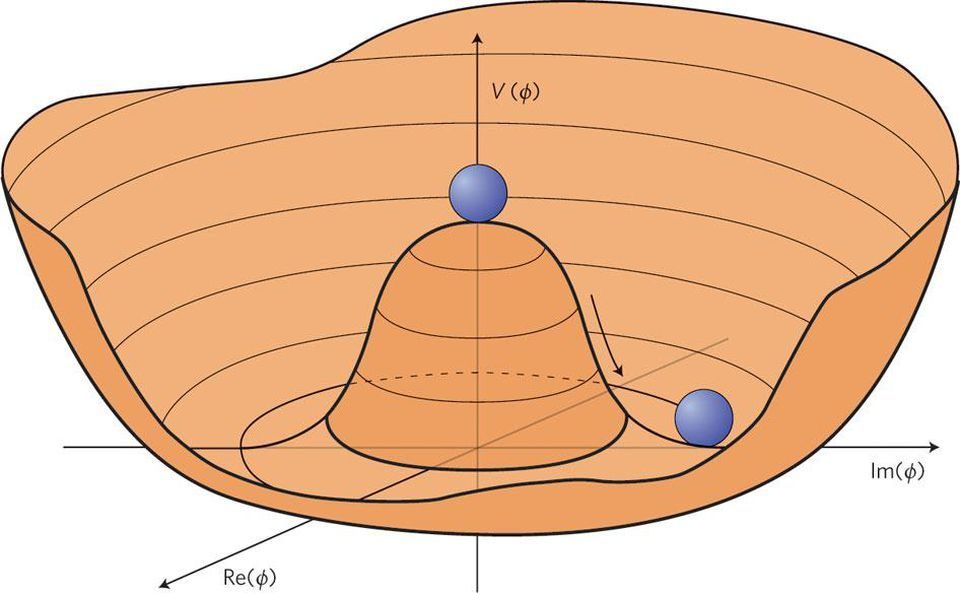
© LUIS ÁLVAREZ-GAUMÉ & JOHN ELLIS, NATURE PHYSICS 7, 2–3 (2011)When we see something like a ball balanced precariously atop a hill, this appears to be what we call a finely-tuned state, or a state of unstable equilibrium. A much more stable position is for the ball to be down somewhere at the bottom of the valley. Whenever we encounter a finely-tuned physical situation, there are good reasons to seek a physically-motivated explanation for it.


Comment: Note the last sentence in the caption above. What are the 'good' reasons? And there possibly good reasons for seeking a non-physically-motivated explanation, too?


When you approach the world scientifically, you seek to gain knowledge about how it works by asking it questions about itself. You observe its behavior; you perform experiments on it; you measure specific quantities that you're interested in. If you ask the right questions in the right ways, you can begin to gain information about what physical phenomena govern the behavior that was revealed in each and every one of your investigations.

Most of the time, your results will teach you something specific about the Universe. But every once in a while, you'll find something that seems too good to be true. You'll measure something that will confuse you in one of two ways: either two things that appear unrelated are perfectly (or almost perfectly) identical, or two things that appear related are extraordinarily different. This is known as fine-tuning, and it really is a problem in physics.

Ice Cube

Why Behe is right about polar bears: Conclusion - Darwinist double standards and deception

Polar bear
© Sputnik / Vera Kostamo
This concludes our seminar on polar bears in light of Michael Behe's discussion of them in Darwin Devolves. The book is important, extending the frontiers of the argument for intelligent design, otherwise it wouldn't justify this extended treatment. Answering Behe's critics is important too, for the additional reason that their criticisms are almost all ill-founded, and have failed in seeking to besmirch Behe's scholarship. With opponents of ID, this experience is all too familiar.

As noted in the first post in this series, there is one justified allegation of a very small error in Behe's book. Biologists Nathan Lents and Arthur Hunt identify it in their blog post. Look again at the paragraphs from Darwin Devolves quoted at the beginning of the series. Behe writes there that in polar bears, the "most strongly selected mutations" are found in the gene APOB. This is not quite correct. From Table 1 in Liu et al. (2014), of the 20 genes they evaluated, APOB had the second most strongly selected mutations, not the "most strongly selected" mutations. Lents and Hunt note this but they concede that the mistake is trivial:
First of all, as shown in Table 1 of the paper, APOB harbors the second most strongly-selected set of variants, not the first, but we can let that one slide.
The gracious attitude is appreciated. Though it makes no difference to Behe's arguments, he acknowledges the mistake, as he told us:
I mistakenly wrote in Darwin Devolves that APOB was the most highly selected gene in the evolution of polar bears from brown bears. In fact, as was pointed out by Nathan Lents and Arthur Hunt, it is actually the second most highly selected gene. I appreciate the correction.

Comment: See also:


Robot

Chinese team makes step forward in bio-mimicking machines

Artificial DNA
© KTSDESIGN/SCIENCE PHOTO LIBRARY/Getty ImagesArtificial DNA is a hot focus for roboticists.
It's long been a dream of many to build robots that look and act like humans. After all, there's a reason that the most beloved robots from entertainment and culture - C3PO from Star Wars, or Data from Star Trek, for instance - are so humanlike.

But rather than build them out of batteries, central processing units, servos and hydraulic joints, what if artificial lifeforms could be made using technologies that mimic the biochemical processes of life itself?

A team at Shanghai Jiao Tong University in China might have just taken the first step, using DNA-based materials that undergo cycles or growth and decay by mimicking processes found in biological metabolism.

In a paper published in the journal Science Robotics, Shogo Hamada and colleagues report the invention of a system they dub DNA-based Assembly and Synthesis of Hierarchical materials, or DASH. They describe it as a "bottom-up construction of dynamic biomaterials representing a combination of irreversible biosynthesis and dissipative assembly processes".