Science & TechnologyS


2 + 2 = 4

Fine-tuning in physics really is a problem

equilibrium
© LUIS ÁLVAREZ-GAUMÉ & JOHN ELLIS, NATURE PHYSICS 7, 2–3 (2011)When we see something like a ball balanced precariously atop a hill, this appears to be what we call a finely-tuned state, or a state of unstable equilibrium. A much more stable position is for the ball to be down somewhere at the bottom of the valley. Whenever we encounter a finely-tuned physical situation, there are good reasons to seek a physically-motivated explanation for it.


Comment: Note the last sentence in the caption above. What are the 'good' reasons? And there possibly good reasons for seeking a non-physically-motivated explanation, too?


When you approach the world scientifically, you seek to gain knowledge about how it works by asking it questions about itself. You observe its behavior; you perform experiments on it; you measure specific quantities that you're interested in. If you ask the right questions in the right ways, you can begin to gain information about what physical phenomena govern the behavior that was revealed in each and every one of your investigations.

Most of the time, your results will teach you something specific about the Universe. But every once in a while, you'll find something that seems too good to be true. You'll measure something that will confuse you in one of two ways: either two things that appear unrelated are perfectly (or almost perfectly) identical, or two things that appear related are extraordinarily different. This is known as fine-tuning, and it really is a problem in physics.

Ice Cube

Why Behe is right about polar bears: Conclusion - Darwinist double standards and deception

Polar bear
© Sputnik / Vera Kostamo
This concludes our seminar on polar bears in light of Michael Behe's discussion of them in Darwin Devolves. The book is important, extending the frontiers of the argument for intelligent design, otherwise it wouldn't justify this extended treatment. Answering Behe's critics is important too, for the additional reason that their criticisms are almost all ill-founded, and have failed in seeking to besmirch Behe's scholarship. With opponents of ID, this experience is all too familiar.

As noted in the first post in this series, there is one justified allegation of a very small error in Behe's book. Biologists Nathan Lents and Arthur Hunt identify it in their blog post. Look again at the paragraphs from Darwin Devolves quoted at the beginning of the series. Behe writes there that in polar bears, the "most strongly selected mutations" are found in the gene APOB. This is not quite correct. From Table 1 in Liu et al. (2014), of the 20 genes they evaluated, APOB had the second most strongly selected mutations, not the "most strongly selected" mutations. Lents and Hunt note this but they concede that the mistake is trivial:
First of all, as shown in Table 1 of the paper, APOB harbors the second most strongly-selected set of variants, not the first, but we can let that one slide.
The gracious attitude is appreciated. Though it makes no difference to Behe's arguments, he acknowledges the mistake, as he told us:
I mistakenly wrote in Darwin Devolves that APOB was the most highly selected gene in the evolution of polar bears from brown bears. In fact, as was pointed out by Nathan Lents and Arthur Hunt, it is actually the second most highly selected gene. I appreciate the correction.

Comment: See also:


Robot

Chinese team makes step forward in bio-mimicking machines

Artificial DNA
© KTSDESIGN/SCIENCE PHOTO LIBRARY/Getty ImagesArtificial DNA is a hot focus for roboticists.
It's long been a dream of many to build robots that look and act like humans. After all, there's a reason that the most beloved robots from entertainment and culture - C3PO from Star Wars, or Data from Star Trek, for instance - are so humanlike.

But rather than build them out of batteries, central processing units, servos and hydraulic joints, what if artificial lifeforms could be made using technologies that mimic the biochemical processes of life itself?

A team at Shanghai Jiao Tong University in China might have just taken the first step, using DNA-based materials that undergo cycles or growth and decay by mimicking processes found in biological metabolism.

In a paper published in the journal Science Robotics, Shogo Hamada and colleagues report the invention of a system they dub DNA-based Assembly and Synthesis of Hierarchical materials, or DASH. They describe it as a "bottom-up construction of dynamic biomaterials representing a combination of irreversible biosynthesis and dissipative assembly processes".

Galaxy

First ever black hole image has been released

Black Hole photograph image
© Event Horizon Telescope CollaborationThe first ever picture of a black hole. It's surrounded by a halo of bright gas pulled in by the hole's gravity.
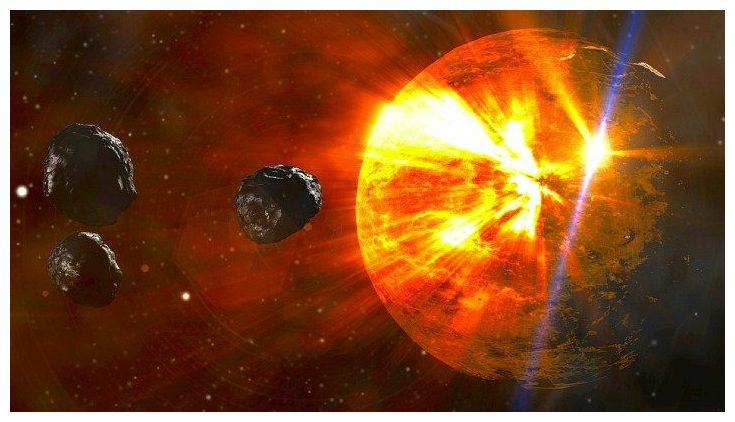
Astronomers have taken the first ever image of a black hole, which is located in a distant galaxy. It measures 40 billion km across - three million times the size of the Earth - and has been described by scientists as "a monster".

The black hole is 500 million trillion km away and was photographed by a network of eight telescopes across the world. Details have been published today in Astrophysical Journal Letters.

Prof Heino Falcke, of Radboud University in the Netherlands, who proposed the experiment, told BBC News that the black hole was found in a galaxy called M87.

"What we see is larger than the size of our entire Solar System," he said. "It has a mass 6.5 billion times that of the Sun. And it is one of the heaviest black holes that we think exists. It is an absolute monster, the heavyweight champion of black holes in the Universe."
M-87 galaxy
© DR JEAN LORRE/SCIENCE PHOTO LIBRARYAstronomers have suspected that the M87 galaxy has a supermassive black hole at its heart from false colour images such as this one. The dark centre is not a black hole but indicates that stars are densely packed and fast moving.

2 + 2 = 4

Why Behe is right about polar bears: Part 4 - The fake mutation chart scandal

polar bear
© Annie Spratt on Unsplash
After Nathan Lents and Arthur Hunt published their objections to Michael Behe on damaging mutations in polar bear genes, Jerry Coyne wrote his own blog post promoting their arguments, stating:
But when you examine the paper supposedly supporting Behe's claim, you find, argue Lents and Hunt, that about half of them don't seem to have any damaging mutations, and that perhaps "none of the 17 most positively selected genes in polar bears are 'damaged'."
After replying to two objections from Lents and Hunt, we now know it's quite a stretch for Coyne, Lents, or Hunt to suggest that "none" of the polar bear genes may have been damaged, especially when Behe's authority, Liu et al. (2014), concluded that "a large proportion (ca. 50%) of mutations were predicted to be functionally damaging," and given that Lents and Hunt themselves admitted at least seven genes were "unequivocally predicted to possess at least one 'damaging' mutation."

Behe also wrote his own rebuttal to Coyne, Lents, and Hunt where he provided the data that he relied upon in Darwin Devolves to conclude that 14 out of the 17 genes had experienced mutations that were probably damaging. Behe listed all of the mutations in Table S7 of Liu et al. (2014) that were predicted to be damaging, as well as the genes they occurred in, and stated, "Below is the relevant information from Liu et al.'s Table S7. Those who can understand the table will see that it supports every actual, undistorted claim I made about the polar bear." However, Behe did not print Table S7 in its entirety; he only printed the data needed to respond to the question at hand and show those 14 genes experienced degradative mutations. He did, though, link to the full article so people could view the entire table.

Comment:


Microscope 1

5 non-coding RNAs stepping out of DNA's shadow

RNA molecules health roles
© James ProvostThese molecules play crucial roles in human health and disease
These molecules play crucial roles in human health and disease

DNA is the glamour molecule of the genetics world. Its instructions are credited with defining appearance, personality and health. And the proteins that result from DNA's directives get credit for doing most of the work in our cells. RNA, if mentioned at all, is considered a mere messenger, a go-between - easy to ignore. Until now.

RNAs, composed of strings of genetic letters called nucleotides, are best known for ferrying instructions from the genes in our DNA to ribosomes, the machines in cells that build proteins. But in the last decade or so, researchers have realized just how much more RNAs can do - how much they control, even. In particular, scientists are finding RNAs that influence health and disease yet have nothing to do with being messengers.

The sheer number and variety of noncoding RNAs, those that don't ferry protein-building instructions, give some clues to their importance. So far, researchers have cataloged more than 25,000 genes with instructions for noncoding RNAs in the human genome, or genetic instruction book (SN: 10/13/18, p. 5). That's more than the estimated 21,000 or so genes that code for proteins.

Water

Scientists discover an edible mushroom that eats plastic and could potentially clean landfills

plastic eating mushroom
Whether we like it or not, our society has become completely reliant on plastic. From food preservation to water transportation, computer technology to healthcare and medicine, plastic can be found in nearly every facet of the human experience.

But as we well know, plastic is a double-edged sword, with massive amounts of plastic waste not only piling up in landfills, but floating in the most remote depths of our oceans and water supplies. And despite our knowledge of plastic's harmful effects on the environment, we've become so reliant on plastic that there seems to be no end in sight. In fact, plastic production is growing on a yearly basis - and posing a potentially mortal threat to us all.

However, a newly-discovered type of mushroom could not only play a crucial role in slashing plastic pollution, but could have myriad other uses in addressing the environmental crises the planet faces.

Discovered in 2012 by Yale University students, Pestalotiopsis microspora is a rare species of mushroom from the Amazon rainforest that's capable of subsisting on a diet of pure plastic, or more accurately, the main ingredient in plastic - polyurethane - before converting the human-made ingredient into purely organic matter.

Comment: Hardly a month goes by that someone doesn't discover an excellent application for some form of mushroom!


Info

New state of matter: Elements can be solid and liquid at same time

Potassium
© Aleksander/Fotolia
Scientists have discovered a new state of physical matter in which atoms can exist as both solid and liquid simultaneously.

Until now, the atoms in physical material were understood to exist typically in one of three states - solid, liquid or gas.

Researchers have found, however, that some elements can, when subjected to extreme conditions, take on the properties of both solid and liquid states.

Novel structure

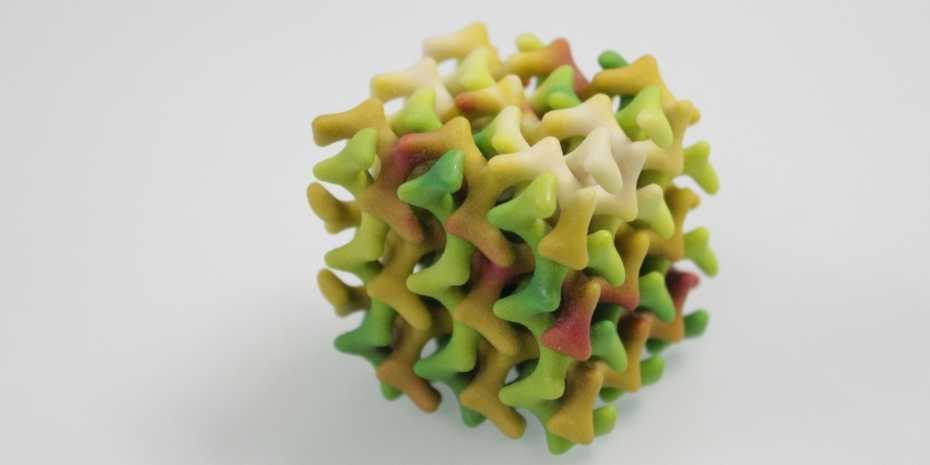
Applying high pressures and temperatures to potassium - a simple metal - creates a state in which most of the element's atoms form a solid lattice structure, the findings show.

However, the structure also contains a second set of potassium atoms that are in a fluid arrangement.

Under the right conditions, over half a dozen elements - including sodium and bismuth - are thought to be capable of existing in the newly discovered state, researchers say.

Until now, it was unclear if the unusual structures represented a distinct state of matter, or existed as transition stages between two distinct states.

X

Poverty's mark on our genes

DNA strand
© ken/Fotolia
A new Northwestern University study challenges prevailing understandings of genes as immutable features of biology that are fixed at conception.

Previous research has shown that socioeconomic status (SES) is a powerful determinant of human health and disease, and social inequality is a ubiquitous stressor for human populations globally. Lower educational attainment and/or income predict increased risk for heart disease, diabetes, many cancers and infectious diseases, for example. Furthermore, lower SES is associated with physiological processes that contribute to the development of disease, including chronic inflammation, insulin resistance and cortisol dysregulation.

In this study, researchers found evidence that poverty can become embedded across wide swaths of the genome. They discovered that lower socioeconomic status is associated with levels of DNA methylation (DNAm) -- a key epigenetic mark that has the potential to shape gene expression -- at more than 2,500 sites, across more than 1,500 genes.

In other words, poverty leaves a mark on nearly 10 percent of the genes in the genome.

Igloo

Why Behe is right about polar bears: Part 3 - Unacknowledged discrepancies, inconsistent standards

polar bear
© Eva Blue via Unsplash
In their second objection to Michael Behe's case in Darwin Devolves, Nathan Lents and Arthur Hunt argue that Behe exaggerates the number of positively selected genes in polar bears that are estimated to have suffered at least one damaging mutation. Or to be more precise, they think Behe's lower limit is overstated, while agreeing with his upper limit. Let's evaluate their claims. Here's what they write:
Now it's getting harder to excuse Behe's exaggeration. Specifically, using one specific predictive algorithm, the authors found that only 7 of the 17 genes with the strongest signatures for positive selection are unequivocally predicted to possess at least one "damaging" mutation. Even Behe's "about half" is just 41%, which means that the lower limit on Behe's estimation is also wrong. It's not 65-83%, it's 41-83%. The range is so wide because computational predictions invariably involve uncertainty.
It's worth noting that they accept the PolyPhen-2 program used by Liu et al. (2014), recognizing it as capable of finding that a protein's function was probably damaged by a mutation. This contradicts objections made by other critics of Behe, answered here in the preceding post.

A Matter of Methodology

Now, everyone knows statistics are easily manipulated. What matters is whether the methodology behind the statistics is sound. Presumably, the closer your method is to that used by authorities published in peer-reviewed papers, the better. Much like we saw in considering the previous objection, Lents and Hunt in their own treatment of Darwin Devolves come up with different numbers from Behe only by using a different methodology than the one used by the paper itself. When you follow the methodology employed by Liu et al., you get numbers like what Behe provides in his book.

Comment: Previous instalments: