
© University of ExeterThe study has uncovered parts of our genetic code that could be responsible for causing poor sleep quality
The largest genetic study of its kind ever to use accelerometer data to examine how we slumber
has uncovered a number of parts of our genetic code that could be responsible for causing poor sleep quality and duration.The international collaboration, led by the University of Exeter and published in
Nature Communications, has found 47 links between our genetic code and the quality, quantity and timing of how we sleep. They include ten new genetic links with sleep duration and 26 with sleep quality.
The Medical Research Council-funded study looked at data from 85,670 participants of UK Biobank and 5,819 individuals from three other studies, who wore accelerometers - wrist-worn devices (similar to a Fitbit) which record activity levels continuously. They wore the accelerometers continuously for seven days, giving more detailed sleep data than previous studies, which have relied on people accurately reporting their own sleep habits.
Among the genomic regions uncovered is a gene called PDE11A. The research team discovered than an uncommon variant of this gene affects not only how long you sleep but your quality of sleep too. The gene has previously been identified as a possible drug target for treatment of people with neuropsychiatric disorders associated with mood stability and social behaviours.
The study also found that among people with the same hip circumference, a higher waist circumference resulted in less time sleeping, although the effect was very small - around 4 seconds less sleep per 1cm waist increase in someone with the average hip circumference of around 100cm.




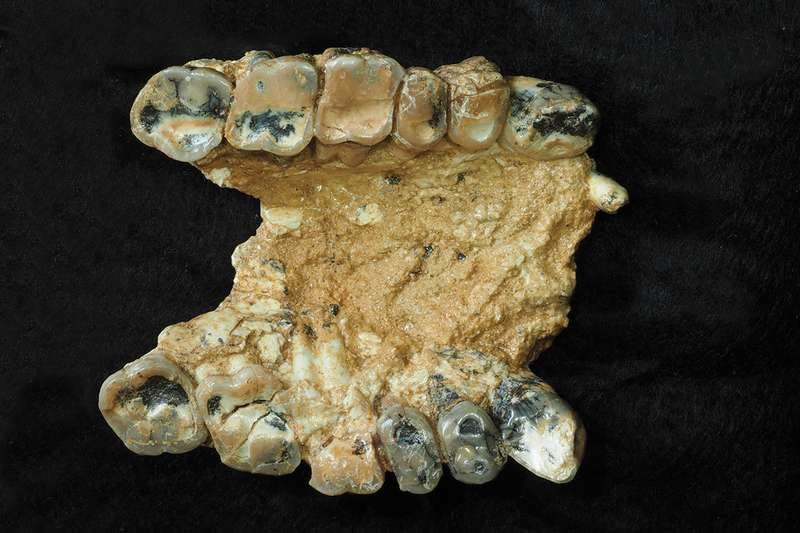













Comment: In the article Ancient teeth point to mysterious human relative they report on some interesting specualtion that may add more detail to the puzzle: See also:
- Out of Europe, Not Africa? 5.2 Million years old pre-human footprint found in Greece
- Homo luzonensis: New human species discovered in the Philippines
- A new look at archaic DNA tells a different story of human evolution
- Human footprints fossil estimated at 5.7 million years old may challenge history of human evolution
- Ancient teeth point to mysterious human relative
Also check out SOTT radio's: The Truth Perspective: Mind the Gaps: Locating the Intelligence in Evolution and Design