Science & TechnologyS


Question

What makes jellyfish mobile?

medusa jellyfish
© CC0 / Pexels
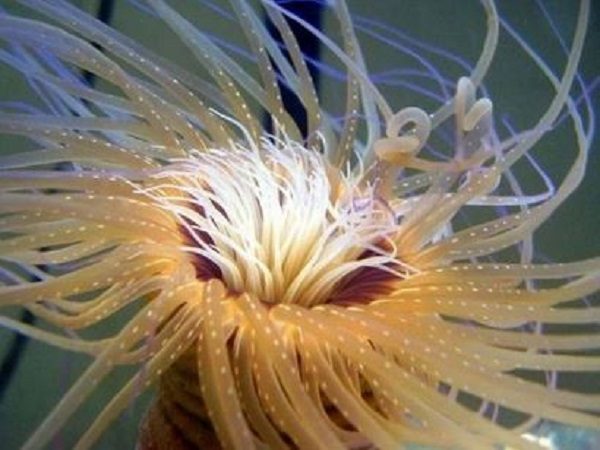
Translucent jellyfish, colorful corals and waving sea anemones have very different bodies but all fall on the same big branch in the animal family tree. Jellyfish actually start out anchored to the sea floor, just like corals and anemones. Researchers at the Okinawa Institute of Science and Technology Graduate University (OIST) recently uncovered which genes allow jellyfish to graduate from this stationary stage and swim off into the sea.

Early in their life cycles, jellyfish develop from larvae into polyps -- immobile, stalk-like structures rooted into the sediment. Anemones and coral live out their lives in this state, which earned them the name anthozoa or "flower animals" in Greek. Jellyfish set themselves apart from anthozoans by being able to develop from the polyp stage to the medusa stage, blossoming into the luminous, bell-like creatures we know and love.

The new study, published in April 16, 2019 in Nature Ecology & Evolution, reports the genomes of two jellyfish species and investigated why some creatures can enter the medusa stage while others remain frozen as polyps. The genomes can be browsed online and compared to other species on the OIST BLAST server.

Monkey Wrench

Powerful CRISPR cousin accidentally mutates RNA while editing DNA target

CRISPR
© NOBEASTSOFIERCE SCIENCE/ALAMY STOCK PHOTOThe enzyme that gives a powerful tool known as a “base editor” the ability to change DNA also has an off-target effect on RNA (above).
When researchers first reported 3 years ago that they had created base editors, a version of the powerful genome-editing tool CRISPR, excitement swirled around their distinct powers to more subtly alter DNA compared with CRISPR itself. But the weaknesses of base editors have become increasingly apparent, and a new study shows they can also accidentally mutate the strands of RNA that help build proteins or perform other key cellular tasks. Researchers say this could complicate developing safe therapies with the technology and hamper other research applications.

Brain

Scientists predict the human brain could be connected to the internet in 'next few decades'

mind physics
© Getty Images
A new research study suggests that human brains could be merged with technology significantly sooner than many expect, perhaps "within decades."

Known as the "Human Brain/Cloud Interface" (B/CI), researchers at the Institute for Molecular Manufacturing in California have suggested that nanorobots could be implanted into the human body and connect to a network in real-time.

"These devices would navigate the human vasculature, cross the blood-brain barrier, and precisely autoposition themselves among, or even within brain cells," the study's senior author, Robert Freitas, Jr., said in a statement. "They would then wirelessly transmit encoded information to and from a cloud-based supercomputer network for real-time brain-state monitoring and data extraction."

Comment: It seems lost on materialists that many of the phenomena they're chasing after can be explored in the human condition.


Galaxy

HeH+: Universe's first molecule finally detected in space

universe
1 / 1
Within 100,000 years of the Big Bang the very first molecule emerged, an improbable marriage of helium and hydrogen known as a helium hydride ion, or HeH+

In the beginning, more than 13 billion years ago, the Universe was an undifferentiated soup of three simple, single-atom elements.

Stars would not form for another 100 million years.

But within 100,000 years of the Big Bang, the very first molecule emerged, an improbable marriage of helium and hydrogen known as a helium hydride ion, or HeH+.

Comment: See also: Also check out SOTT radio's: The Truth Perspective: Unlocking the Secrets of Consciousness, Hyperdimensional Attractors and Frog Brains


Info

Researchers restore partial brain function in pig brains hours after death

Reanimated Pig
© Monika Skolimowska/Picture alliance via Getty ImagesThere is no threat of reanimated dead pigs terrifying passers-by, at least yet, but porcine brain function has been revived hours after death and decapitation.
Neuroscientists have succeeded in restoring partial function to the brains of decapitated pigs, hours after they were killed.

In a paper published in the journal Nature, researchers led by Zvonimir Vrselja from the Yale School of Medicine in the US report "the restoration and maintenance of microcirculation and molecular and cellular functions of the intact pig brain" up to four hours after death.

The findings, they write, "demonstrate that under appropriate conditions the isolated, intact large mammalian brain possesses an underappreciated capacity" for restoration. The results are at once extraordinary and, legal experts and bioethicists say, deeply concerning.

In effect, Vrselja and colleagues have created the world's first zombie pigs.

They did so by first making a fluid, dubbed BrainEx, which was fed into the vascular system of the brains of the pigs. The animals had earlier been slaughtered for meat production.

The fluid is haemoglobin-based, but contains no cells and does not coagulate. It is propelled through brain veins, arteries and capillaries in a way that mimics the pulsation of proper blood at standard body temperature.

The researchers say BrainEx promotes tissue recovery from anoxia - a lack of oxygen - reduces vascular injury, prevents fluid build-up and "metabolically supports the energy requirements of the brain".

Microscope 2

Testing Behe's Principle that Darwin Devolves

undergrads
© Robin Davies, via University of Wisconsin-MadisonDid these three undergrads, working with postdoc Steven Bruckbauer, watch “evolution happen in real time”?
As Michael Behe has explained in these pages and in ID the Future podcasts, natural selection can appear to produce benefits to an organism, but at a cost. Most often, organisms carry on by breaking existing genes and proteins. This is the overriding message of his new book, Darwin Devolves. The tendency for existing complex functions to degrade in order to allow an organism to survive swamps any beneficial mutations that might arise de novo.

Occasionally, excited headline writers proclaim that scientists are watching evolution happen in real time. Let's scrutinize some of these claims to see what really happened. Did a new, innovative function arise by a beneficial mutation? Or did something break that provided a benefit in special circumstances?

Attention

Scientists to clone 'Ice Age foal' after finding liquid blood preserved inside its 42,000yo body

ice age foal
© North-Eastern Federal UniversityLiquid blood in Ice Age foal
Semyon Grigoryev, head of the Mammoth Museum in Yakutsk, said today: 'The autopsy shows beautifully preserved internal organs.

'Samples of liquid blood were taken from heart vessels - it was preserved in the liquid state for 42,000 years thanks to favourable burial conditions and permafrost.

'The muscle tissues preserved their natural reddish colour.

'We can now claim that this is the best preserved Ice Age animal ever found in the world.'

Fireball 2

SpaceX contracted by NASA to attempt to 'redirect' asteroid

Asteroids
© Pixabay

Despite an admission last year that it may be impossible to stop the 8.8 ton asteroid
Bennu from annihilating life on Earth, the perennial optimists at NASA have nevertheless granted SpaceX a $69 million contract to assist in the Double Asteroid Redirection Test (DART), intended to save Earth from interstellar armageddon. The test, tentatively scheduled for June 2021, will have Elon's Musketeers crashing a kinetic impactor - in this case, a spacecraft equipped with cameras and solar panels - into a small moonlet accompanying Didymos, an 800-meter-long near-Earth asteroid. NASA notes that the moonlet, dubbed "Didymoon" by scientists, "is more typical of the size of asteroids that could pose a more common hazard to Earth" than its massive chaperone.

The goal, NASA says, is to launch the DART spacecraft atop a SpaceX Falcon 9 rocket that will then make its way to Didymos and Didymoon to attempt to alter the latter's trajectory in a rehearsal for what could one day be a high-stakes game of cosmic bumper cars. "By using solar electric propulsion," NASA says, "DART will intercept the asteroid Didymos' small moon in October 2022, when the asteroid will be within 11 million kilometers of Earth." Meanwhile, Earthlings will watch with bated breath.

"The collision will change the speed of the moonlet in its orbit around the main body by a fraction of one percent," NASA promises, "enough to be measured using telescopes on Earth."

Snowflake

New device creates electricity from snowfall

Falling Snow
© Thom Holmes/Unsplash
UCLA researchers and colleagues have designed a new device that creates electricity from falling snow. The first of its kind, this device is inexpensive, small, thin and flexible like a sheet of plastic.

"The device can work in remote areas because it provides its own power and does not need batteries," said senior author Richard Kaner, who holds UCLA's Dr. Myung Ki Hong Endowed Chair in Materials Innovation. "It's a very clever device - a weather station that can tell you how much snow is falling, the direction the snow is falling, and the direction and speed of the wind."

The researchers call it a snow-based triboelectric nanogenerator, or snow TENG. A triboelectric nanogenerator, which generates charge through static electricity, produces energy from the exchange of electrons.

Findings about the device are published in the journal Nano Energy.

"Static electricity occurs from the interaction of one material that captures electrons and another that gives up electrons," said Kaner, who is also a distinguished professor of chemistry and biochemistry, and of materials science and engineering, and a member of the California NanoSystems Institute at UCLA. "You separate the charges and create electricity out of essentially nothing."

Robot

Bot-enabled interface between human brains and cloud storage is likely within decades

Cyborg
© DONALD IAIN SMITH/GETTY IMAGESIn not too many decades, where humans stop and the information superhighway begins will be impossible to determine.
Before the century is out, advances in nanotechnology, nanomedicine, AI, and computation will result in the development of a "Human Brain/Cloud Interface" (B/CI), that connects neurons and synapses in the brain to vast cloud-computing networks in real time.

That's the prediction of a large international team of neurosurgeons, roboticists, and nanotechnologists, writingin the journal Frontiers in Neuroscience.

A Human Brain/Cloud Interface, sometimes dubbed the "internet of thoughts", theoretically links brains and cloud-based data storage through the intercession of nanobots positioned at strategically useful neuronal junctions.

Instant access to information thus becomes possible without the need for external architecture such as computers and internet cables. Search and retrieval exercises will be initiated by thought patterns alone.

If ever fully realised the B/CI will far exceed the imaginative limits of early cyberpunk science fiction authors such as William Gibson, and lead to the realisation of many of the aims of the so-called post-human and cyborg movements.