Science & TechnologyS


Water

Water that never freezes

lipid mesophase
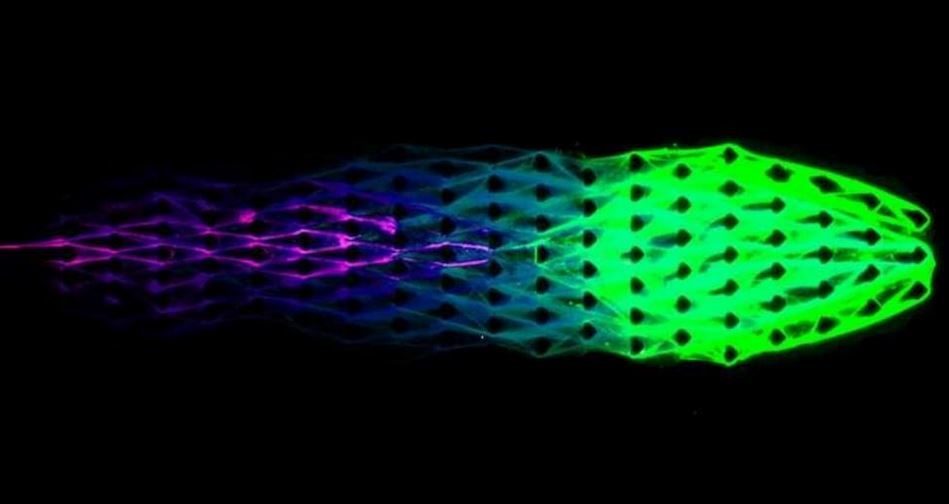
© Peter Rüegg / ETH ZurichThree-dimensional model of the novel lipid mesophase: This cubic motif is repeated regularly in the material.
Can water reach minus 263 degrees Celsius without turning into ice? Yes it can, say researchers from ETH Zurich and the University of Zurich, if it is confined in nanometre-scale lipid channels.

Making ice cubes is a simple process: you take a plastic ice-cube tray like you'd find in most households, fill it with water and put it in the freezer. Before long, the water crystallises and turns to ice.

If you were to analyse the structure of ice crystals, you'd see that the water molecules are arranged in regular 3-dimensional lattice structures. In water, by contrast, the molecules are unorganised, which is the reason that water flows.

Glassy water

Led by Professors Raffaele Mezzenga and Ehud Landau, a group of physicists and chemists from ETH Zurich and the University of Zurich have now identified an unusual way to prevent water from forming ice crystals, so even at extreme sub-zero temperatures it retains the amorphous characteristics of a liquid.

Hardhat

Elon Musk-linked scientists working on brain probes for DARPA

Musk brain probes
Last month a team of scientists affiliated with Elon Musk's Neuralink project published a paper identifying a new technique for inserting probes into brains. The study was published in a journal called BioRxiv, and according to Bloomberg, all five of its authors have been associated with Nueralink. It was noted at the end of the study that the research was funded through a DARPA Contract.

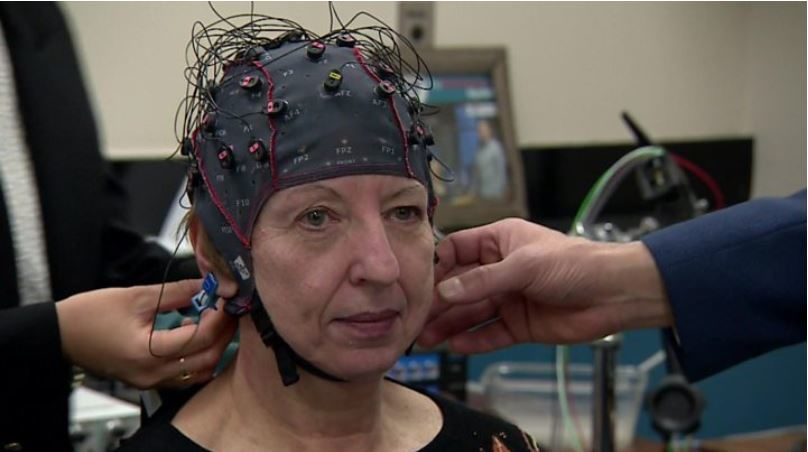
The team is developing this technique in hopes of building technology that is capable of monitoring brain activity. The study has been deemed "the 'sewing machine' for minimally invasive neural recording," since the technique works sort of like a sewing machine.

"Here, we demonstrate the feasibility and scalability of this approach with a system incorporating fine and flexible thin-film polymer probes, a fine and stiff insertion needle, and a robotic insertion machine. Together the system permits rapid and precise implantation of probes, each individually targeted to avoid observable vasculature and to attain diverse anatomical targets," the study says.

Comment: See also:


Ice Cube

Russia's Arctic drone sub to swim 10,000km under ice during trials

ice sky
© Global Look Press / Andrey Nekrasov
A secret Russian drone designed for long patrols of its Arctic waters will be ready for the first phase of sea trials in 2021, a top defense research official said. The non-nuclear sub is meant to stay underwater up to 3 months.

The Sarma project, which is overseen by Russia's state-owned Foundation for Advanced Research, was first confirmed to be in the works in 2018. Little is known about the future drone, except that it has been touted as an element of security for the Northern Sea Route - the 14,000km long maritime connection between northern Europe and the Pacific along Russia's Arctic coast.

Igor Denisov, the deputy head of the foundation responsible for physical and technical research, reported that the construction of the first demonstrator for the Sarma project will start in July this year while the first sea trials of the drone are planned in the White Sea in 2021.

Comment: If any country can do it, Russia likely can:


Info

Scientists in China add human gene to Rhesus monkey DNA, making them smarter

Smart Apes
© Composite adapted from Pixabay images
The 2011 film Rise of the Planet of the Apes begins with concerned scientists attempting to cure Alzheimer's Disease with an experimental drug that they're testing on chimpanzees. Naturally, things spiral out of control, eventually leading to a super-intelligent chimps, a pandemic, and two sequels that deal with the dystopia that follows. Given that film made $481.8 million at the box office, you'd think that scientists in China - a country that has already given the world its first set of genetically-altered twins and at least 86 cases of testing CRISPR technology on humans, despite warnings from the global scientific community - would know that perhaps it's not a good idea to monkey about with primate brains.

Well, if you thought that, you're wrong. Scientists in China have successfully added Microcephalin (MCPH1) - a human gene responsible for fetal brain development - to the genome of 11 rhesus monkeys and it seems to be making them smarter. Yes, you read that correctly. According to the scientists, whose research was published in National Science Review, "the transgenic monkeys exhibited better short-term memory and shorter reaction time compared to the wild type controls in the delayed matching to sample task. The presented data represents the first attempt to experimentally interrogate the genetic basis of human brain origin using a transgenic monkey model, and it values the use of nonhuman primates in understanding human unique traits." According to MIT Technology Review, 11 embryonic monkeys were exposed to a virus carrying human MCPH1. The five that survived ended up with between two and five copies of the gene.

Galaxy

NASA shares stunning video showing the raw vastness and scale of space

Galaxy night sky
© REUTERS / Amr Abdallah Dalsh
NASA has clocked up numerous amazing technological feats of engineering and ingenuity for decades, but a recent video from the space agency shows just how much work they have cut out for them.

In just the last few years, NASA has provided some incredible perspectives on our own planet, including stunning images of some of the Earth's most majesticnatural phenomena.

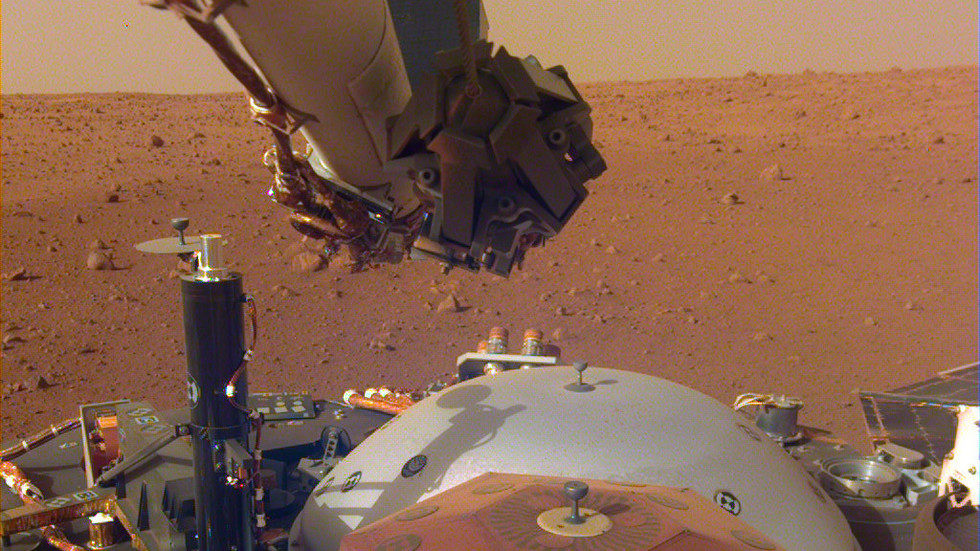
Not content with studying our own backyard, the agency has beamed back photos and videos from Mars thanks to its now-deceased rover, not to mention orbiting far-flung asteroids to try and understand the origins of the universe itself.

In an attempt to explain the vastness of their field of study, NASA helpfully put together a short explainer video showcasing the mindblowing scale of the Milky Way galaxy.


Magnet

The weakening of Earth's magnetic field has greatly accelerated, and it could have catastrophic implications for entire planet

planet Earth
Earth's magnetic field is getting significantly weaker, the magnetic north pole is shifting at an accelerating pace, and scientists readily admit that a sudden pole shift could potentially cause "trillions of dollars" in damage. Today, most of us take the protection provided by Earth's magnetic field completely for granted. It is essentially a colossal force field which surrounds our planet and makes life possible. And even with such protection, a giant solar storm could still potentially hit our planet and completely fry our power grid. But as our magnetic field continues to get weaker and weaker, even much smaller solar storms will have the potential to be cataclysmic. And once the magnetic field gets weak enough, we will be facing much bigger problems. As you will see below, if enough solar radiation starts reaching our planet none of us will survive.

Previously, scientists had told us that the magnetic field was weakening by about 5 percent every 100 years.

But now we are being told that data collected from the SWARM satellite indicate that the rate of decay is now 5 percent per decade...
It's well established that in modern times, the axial dipole component of Earth's main magnetic field is decreasing by approximately 5% per century. Recently, scientists using the SWARM satellite announced that their data indicate a decay rate ten times faster, or 5% per decade.

Comment: See also:


Heart

Israeli scientists print the world's first 3D heart

Heart
© Medical Xpress
A team of Israeli researchers has "printed" the world's first 3-D vascularized, engineered heart.

On Monday, a team of Tel Aviv University researchers revealed the heart, which was made using a patient's own cells and biological material. Until now, scientists have successfully printed only simple tissues without blood vessels.

"This is the first time anyone anywhere has successfully engineered and printed an entire heart replete with cells, blood vessels, ventricles and chambers," said Prof. Tal Dvir of TAU's School of Molecular Cell Biology and Biotechnology, Department of Materials Science and Engineering in the Center for Nanoscience and Nanotechnology, and the Sagol Center for Regenerative Biotechnology, who was the lead researcher for the study.

He worked with Prof. Assaf Shapira of TAU's Faculty of Life Sciences, and Nadav Moor, a doctoral student. Their research was published in Advanced Science.

Heart disease is the leading cause of death among both men and women in the United States. In Israel, it is the second largest cause of death (after cancer). In 2013, heart disease accounted for about 16% of the total number of deaths in Israel, according to the Health Ministry.

Comment:


Brain

Flashback The Brain's Drain: Neuroscientists discover cranial cleansing system

brain
Fluids coursing through the nervous system could help clear the brain of toxic detritus that leads to Alzheimer's and Huntington's disorders

The brain can be a messy place. Thankfully, it has good plumbing: Scientists have just discovered a cleansing river inside the brain, a fluid stream that might be enlisted to flush away the buildup of proteins associated with Alzheimer's, Huntington's and other neurodegenerative disorders.

The researchers, based at the University of Rochester (U.R.), University of Oslo and Stony Brook University, describe this new system in the journal Science Translational Medicine today. The study adds to the evidence that the star-shaped cells called astrocytes play a leading role in keeping the nervous system in good working order.

Comment: Study reveals brain 'takes out the trash' while we sleep


Jet5

'Stratolaunch', world's largest plane, takes to the skies for first time: Aerial launch pad, or something else?

Stratolaunch
© Stratolaunch Systems Corp.Stratolaunch will be able to launch rockets from a high altitude, presenting an alternative to conventional ground launches.
After years of development, Stratolaunch Systems' gigantic rocket launching plane, weighing 500,000 pounds and with a wingspan of 385-feet, lifted off shortly after 10 AM ET from Mojave Air and Space Port in Mojave, California on its first test flight.

Founded in 2011 by the late Paul G. Allen, a co-founder of Microsoft, the company has from the very start been working to develop the gigantic flying launch pad. The plane has been designed to carry satellites into low-Earth orbit - achieved by launching vehicles to a cruising altitude of 36,000 feet (11,000 meters), reports Geek Wire.


Comment: Or so they say. There are far less expensive projects already way ahead of the curve on this.


At this point, the aircraft - called Roc - becomes a mobile launch pad, and it will release the satellites and their launchers into orbit. On completing the task, the aircraft is designed to land back on Earth. The plane needs a runway at least 3,700 meters (12,000 ft) long to take off and land.

Comment: Note all those useless wind turbines pockmarking the landscape in the background as this 'cheaper, more fuel-efficient means of space delivery' took off...

The investment in this project is so odd that some are wondering if the real pay-off is that it's part of a black op program, perhaps for targeting 'enemy' satellites...


Microscope 1

Behe responds to Lenski: Changes in protein function are not 'new' functions

From Richard Lenski’s terrific LTEE
© Brian Baer and Neerja Hajela [CC BY-SA 1.0] / Wikimedia Commons.From Richard Lenski’s terrific LTEE
This is the fourth in a series of posts responding to the extended critique of Darwin Devolves by Richard Lenski at his blog, Telliamed Revisited. Professor Lenski is perhaps the most qualified scientist in the world to analyze the arguments of my book. He is the Hannah Distinguished Professor of Microbial Ecology at Michigan State University, a MacArthur ("Genius Award") Fellow, and a member of the National Academy of Sciences with hundreds of publications. He also has a strong interest in the history and philosophy of science. His own laboratory evolution work is a central focus of the book. I am very grateful to Professor Lenski for taking time to assess Darwin Devolves. His comments will allow interested readers to quickly gauge the relative strength of arguments against the book's thesis.

"Solid and Interesting"

In his fourth post, "Evolution goes viral! (And how real science works)," Professor Lenski revisits a series of experiments on the bacteriophage lambda begun by his lab around 2012. Briefly, bacteriophages are viruses that invade and eat bacterial cells. Lambda specializes in eating E. coli cells. In order to invade the cell, lambda has to bind to a specific bacterial membrane protein, dubbed LamB, to gain a foothold. The Michigan lab grew a strain of E. coli that had lost much (but not all) of its ability to make LamB, together in a culture with bacteriophage lambda. The lambda had a much more difficult time invading those bacterial cells than normal ones, since its docking site was much rarer.

Over time, however, lambda acquired mutations in the protein (called "J") that is responsible for binding LamB of E. coli. The mutations allowed it to bind to a second E. coli membrane protein, OmpF. Mutant phages could then invade cells that were unavailable to unmutated phages, so they prospered. When Lenski's then-student Justin Meyer investigated, he saw that at least four specific amino acid changes had occurred, and all of them were necessary for the new ability to bind OmpF. Lenski's current post emphasizes that requirement for multiple mutations, so the new interaction seems to him to be irreducibly complex and beyond the "edge of evolution." What's more, nothing was broken, so that contradicts the main argument of Darwin Devolves, he thinks.

Comment: Previous responses to Lenski from Behe: