Strange Skies
S


Attention

Over 450 previously unknown objects discovered in our Solar System

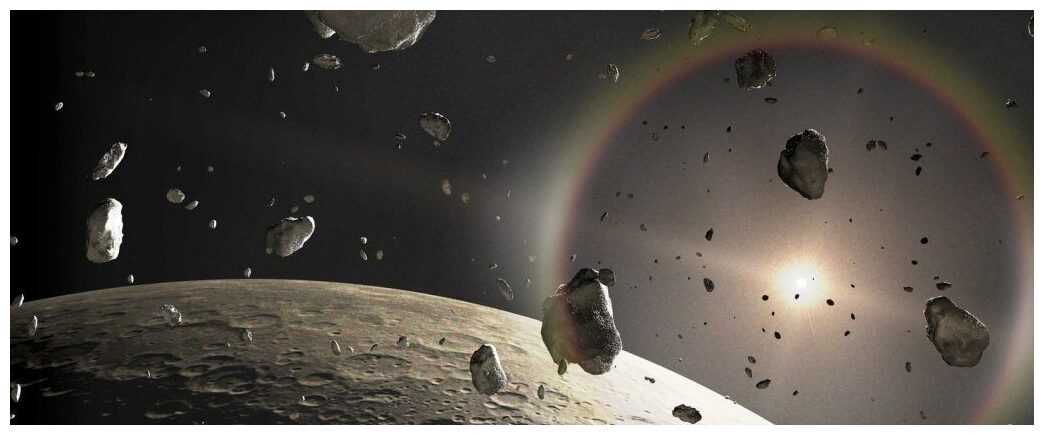
Large Kuiper Belt objects
© Mark Garlick/Science Photo Library/Getty ImagesArtist's impression of a large Kuiper Belt objects.
The outer reaches of the Solar System constitute a strange and mysterious place. Out past the orbit of Neptune, where it's cold and dark, a swarm of icy objects called the Kuiper Belt orbits the Sun, thought to be more or less unchanged since the Solar System was born.

Because it's so dark and far away, and the objects so small, it's hard for astronomers to discern what exactly is out there. This makes the results of a recent search quite marvelous. Using data from the Dark Energy Survey, astronomers identified 815 trans-Neptunian objects (TNOs), of which 461 are newly discovered.

This is a significant bump to the 3,000 or so known TNOs in the outer Solar System, information that could help us better model how the Solar System formed, and maybe even search for the elusive Planet Nine.

The new catalog has been submitted for publication, and is available on preprint server arXiv.

"This catalog has 817 confirmed objects (461 first discovered in this work)," the researchers wrote in their paper.

"This is the second largest TNO catalog from a single survey to date, as well as the largest catalog with multi-band photometry."

Info

Scientists solve mystery of icy plumes that may foretell deadly supercell storms

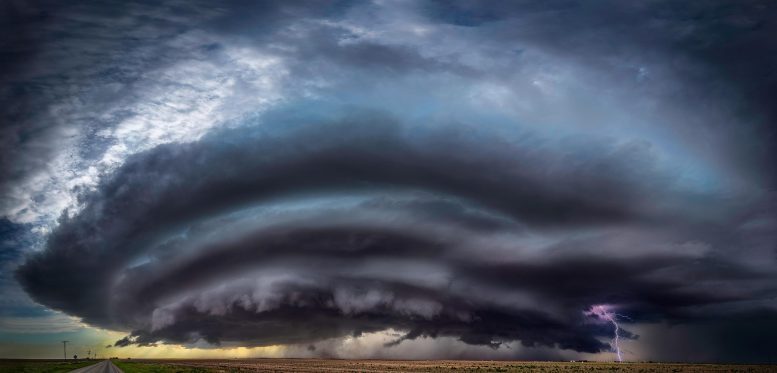
The most devastating tornadoes are often preceded by a cloudy plume of ice and water vapor billowing above a severe thunderstorm. New research reveals the mechanism for these plumes could be tied to "hydraulic jumps" - a phenomenon Leonardo Da Vinci observed more than 500 years ago.
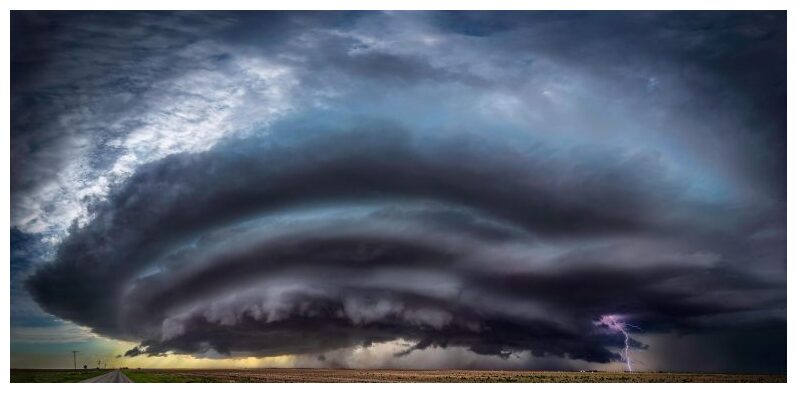
Super Storm Cell
© Sci-Tech Daily
When a cloudy plume of ice and water vapor billows up above the top of a severe thunderstorm, there's a good chance a violent tornado, high winds or hailstones bigger than golf balls will soon pelt the Earth below.

A new Stanford University-led study, published Sept. 10 in Science, reveals the physical mechanism for these plumes, which form above most of the world's most damaging tornadoes.

Previous research has shown they're easy to spot in satellite imagery, often 30 minutes or more before severe weather reaches the ground. "The question is, why is this plume associated with the worst conditions, and how does it exist in the first place? That's the gap that we are starting to fill," said atmospheric scientist Morgan O'Neill, lead author of the new study.

The research comes just over a week after supercell thunderstorms and tornadoes spun up among the remnants of Hurricane Ida as they barreled into the U.S. Northeast, compounding devastation wrought across the region by record-breaking rainfall and flash floods.

Understanding how and why plumes take shape above powerful thunderstorms could help forecasters recognize similar impending dangers and issue more accurate warnings without relying on Doppler radar systems, which can be knocked out by wind and hail - and have blind spots even on good days. In many parts of the world, Doppler radar coverage is nonexistent.

"If there's going to be a terrible hurricane, we can see it from space. We can't see tornadoes because they're hidden below thunderstorm tops. We need to understand the tops better," said O'Neill, who is an assistant professor of Earth system science at Stanford's School of Earth, Energy & Environmental Sciences (Stanford Earth).

Galaxy

Rare blue lightning captured over Mexico, Perseid meteor smoke photographed, giant solar prominence seen for 4th day

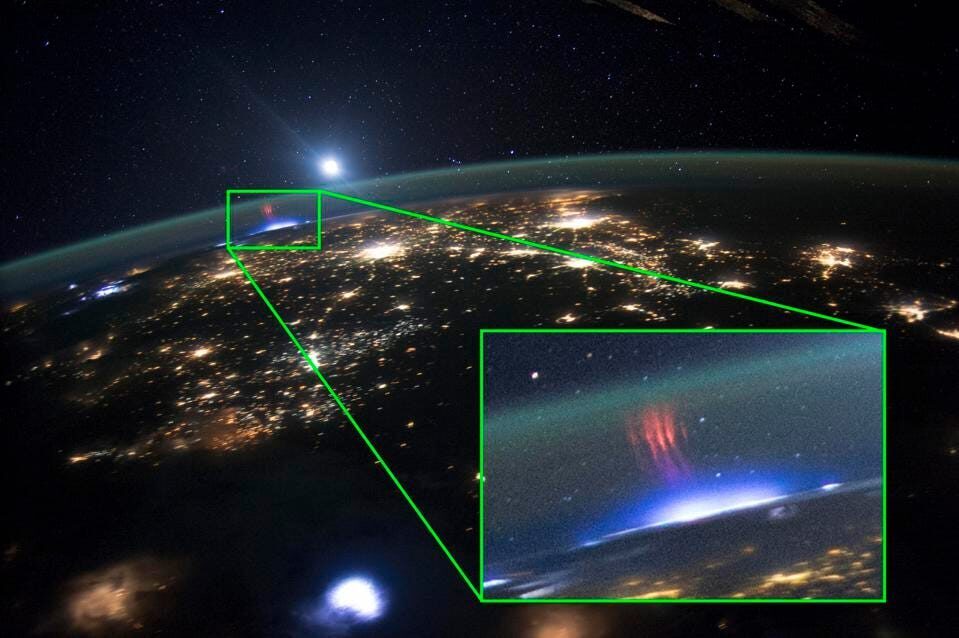
blue lightning red sprite
FILE PHOTO: This photograph shows a red sprite appearing over a lightning strike at night, from space. This picture was taken in early 2015 from astronauts aboard the International Space Station during Expedition 44, and includes a multi-tendriled red sprite: an example of a transient lightning event.
Aug. 15, 2021

Rain. Clouds. Thunder. The stratosphere has none of those things. Weather up there is pretty dull. Except when the lightning starts....

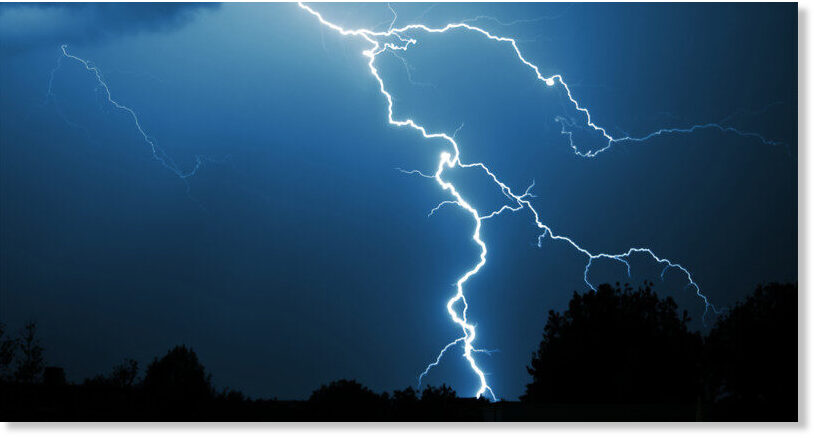
Researchers call them "blue jets." The elusive discharges leap into the stratosphere from thunderstorms far below. They are rarely seen, but storm chaser Rob Neep was able to capture some over Sonora, Mexico, on August 3rd:

Comment: The signs that a great shift is occurring on our planet, and beyond, is undeniable: And check out SOTT radio's:


Galaxy

Adapt 2030 Ice Age Report: Angels in the skies

Angels in the skies
© YouTube/Adapt 2030 (screen capture)
A video surfaced of what appeared to be an angel shifting state from an airplane window. This can be explained by voltage input to a plasma medium, which makes me think of ancient religions and plasma petroglyphs.


Comment: See also: It looks like we are beginning to observe what the ancients recorded at times of global upheaval/climate shift. See: Symbols of Transition: Shifting sands unveil 'stick man' petroglyphs on Hawaii beach

petroglyphs plasma
© thunderbolts.info


Cloud Lightning

Scientists stunned by rare Arctic lightning storms north of Alaska

arctic lightning rare
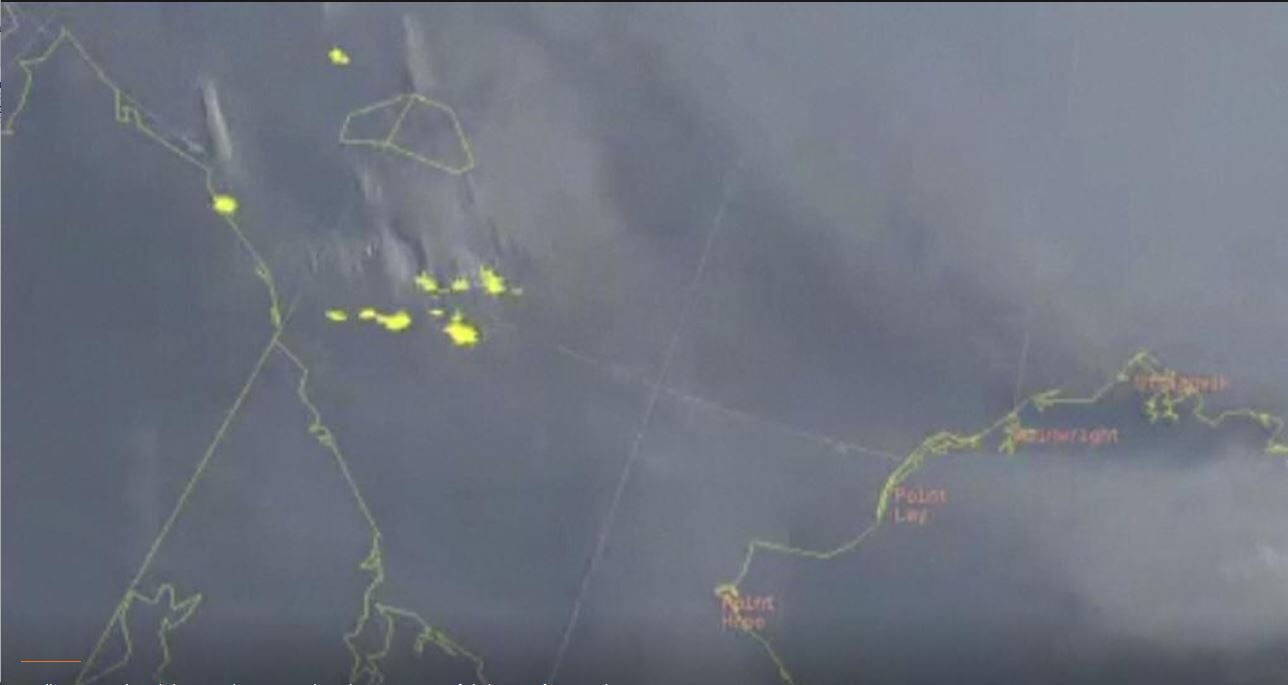
© NOAA Handout via REUTERSSatellite imagery shows lightning strikes occuring above the Arctic regions of Alaska, United States, July 12, 2021.
Meteorologists were stunned this week when three successive thunderstorms swept across the icy Arctic from Siberia to north of Alaska, unleashing lightning bolts in an unusual phenomenon that scientists say will become less rare with global warming.

"Forecasters hadn't seen anything like that before," said Ed Plumb, a National Weather Service meteorologist in Fairbanks, speaking about the storms that started on Saturday.

Typically, the air over the Arctic Ocean, especially when the water is covered with ice, lacks the convective heat needed to generate lightning storms.

Comment: Instead of running to the canard of "global warming", perhaps scientists should be asking why the atmosphere is becoming more conductive to lower strength lightning bolts? And not only on Earth, but on other planets, too.


Cloud Lightning

Best of the Web: 34% rise in lightning strikes across India in 2020-21 over previous years, leaving 1,697 dead

lightning
The number and frequency of lightning strikes is increasing globally. The proverbial bolts from the blue are killing more people every subsequent year. Between April 2020 and March 2021, 18.5 million lightning strikes were recorded in India. This was a 34 per cent increase from the 13.8 million strikes between April 2019 and March 2020.

These statistics were shared at a webinar on lightning strikes here today, organised by Centre for Science and Environment (CSE) and Down To Earth magazine. The webinar attempted to understand why lightning strikes were increasing in numbers, and their connection to climate change and growing urbanisation.

Some of the states that have been at the receiving end of these strikes are Punjab, Bihar, Uttar Pradesh, Jharkhand, Madhya Pradesh, Haryana, Puducherry, Himachal Pradesh and West Bengal. In Punjab, the increase in number of lightning strikes has been a staggering 331 per cent annually, while in Bihar — where 401 people lost their lives to lightning strikes during the year — there was a 168 per cent rise. Overall, 1,697 people were struck down dead by lightning in India between March 2020 and April 2021.

(Read more here)

Cloud Grey

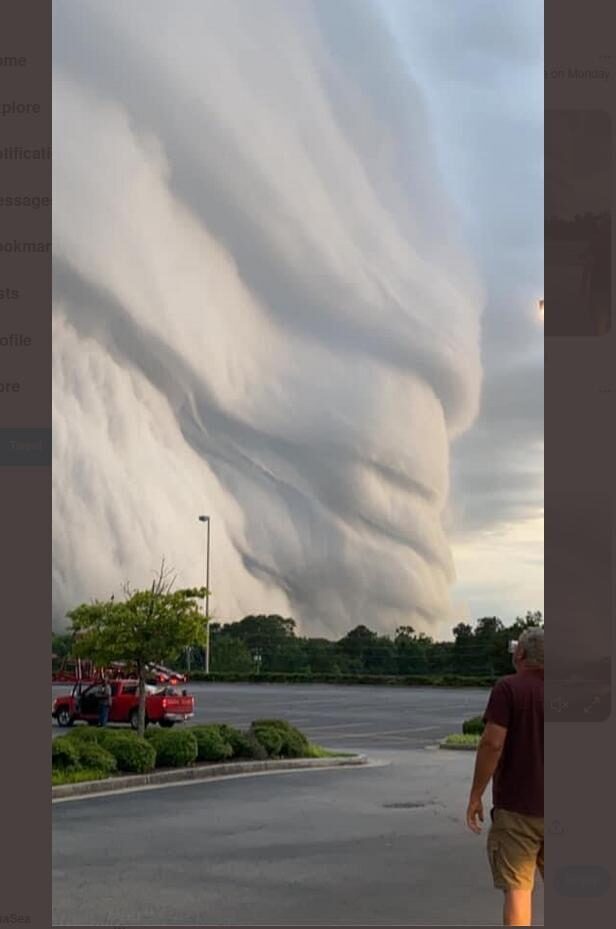
Unusual shelf cloud photographed over Georgia explained by meteorologist

shelf cloud georgia
© CodyAlcorn/Twitter
They were all in my social media feeds on July 12th, 2021. Pictures and videos of ominous looking clouds rolling into parts of North Georgia. People scurried from ball fields or homes and grabbed their phones to capture the moment. Jane Worley is a colleague of mine at the University of Georgia. The Northeast Georgia resident sent the picture below from River of Life Church in Nicholson, Georgia with the message, "Thought you would enjoy." Little did she know, I was taking a picture of a shelf cloud rolling through my own subdivision 40 miles away. What are these clouds anyhow?

Comment: See also:


Tornado2

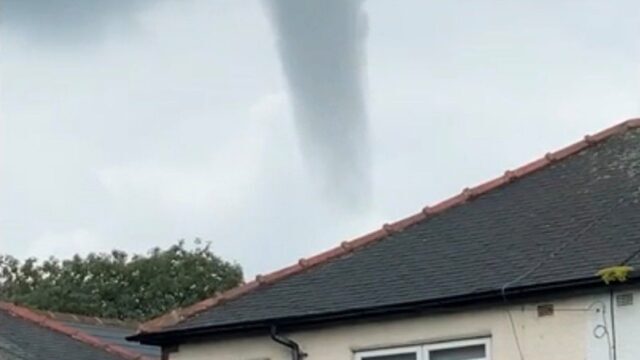
Rare 'tornado' cloud spotted above County Durham, UK

A funnel cloud snapped over a house in Darlington
© Mark Emmerson /via REUTERSA funnel cloud snapped over a house in Darlington on Friday afternoon
Residents in County Durham were left "amazed" after a rare 'tornado' cloud appeared in the sky.

The funnel cloud emerged just after midday on Friday and people rushed to take photos and video to share on social media.

More were spotted across the region as BBC Look North's Jen Bartram tweeted: "What I would say is that there are a LOT of funnel clouds around - and the thunderstorms likely to get going a bit more across the North East this afternoon."

Speaking to the Northern Echo, one local said: "This was the first time I have seen something like this.

Cloud Grey

Noctilucent clouds sweep across Europe AGAIN

Noctilucent clouds taken on July 4, 2021 @ Zákamenné, Slovakia
© Matej SekerášNoctilucent clouds taken on July 4, 2021 @ Zákamenné, Slovakia
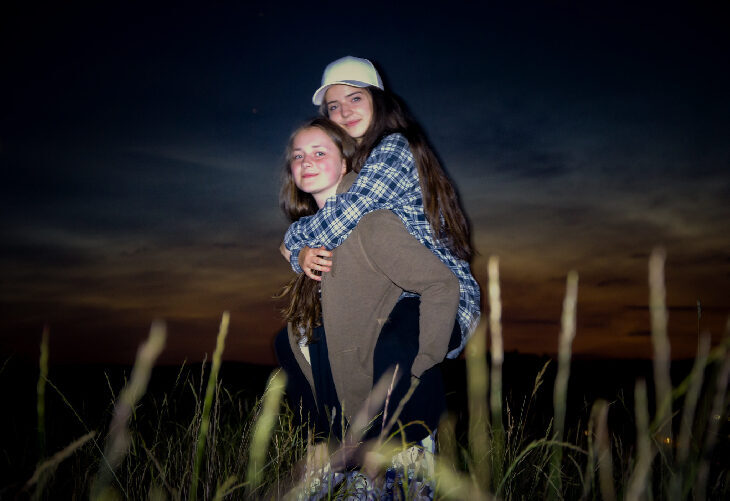
It has happened so often this summer, it hardly feels like news anymore. But it is. On July 4th, noctilucent clouds (NLCs) swept across Europe. There was "a large display" in Belgium, and a "stunning, amazing" show in Germany. In Slovakia, the clouds lingered so long that photographer Matej Sekeráš had time to pose his nieces in front of them.

"It was the first time we witnessed these incredible clouds," says Sekeráš. "The electric-blue ripples were visible for nearly an hour."

At the apex of the display, NLCs descended all the way to northern Italy. "I saw them from Sumirago at latitude +45N," reports Paolo Bardelli. "Another emotional night!"

NLCs are Earth's highest clouds. They form when summertime wisps of water vapor rise up to the edge of space (~83 km high) and crystalize around disintegrated meteoroids. When you see one, you're literally seeing a cloud of frosted meteor smoke. The best time to look is during the hours before dawn or just after sunset.

Comment: New NASA study: Satellites see cooling in the upper atmosphere

These articles on noctilucent clouds are from just last month: As explained in Pierre Lescaudron's book, Earth Changes and the Human-Cosmic Connection:
The increase in noctilucent clouds is one of the effects - among others - of increased dust concentration in the atmosphere in general, and in the upper atmosphere in particular. We suspect that most of this atmospheric dust is of cometary origin, while some of it may be due to the recent increase in volcanic activity.
See also: Chemtrails? Contrails? Strange skies


Satellite

New NASA study: Satellites see cooling in the upper atmosphere

NLCs

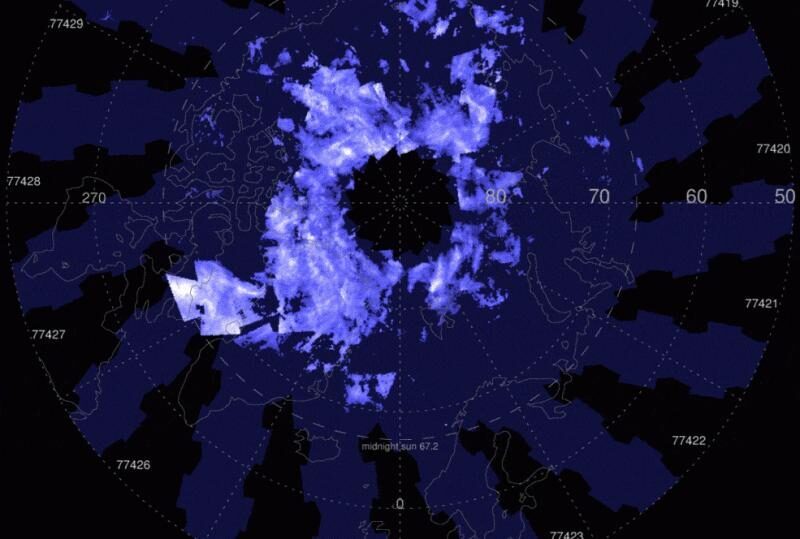
NASA satellites have revealed that the mesosphere -the layer of the atmosphere some 30-50 miles above our heads- is COOLING and contracting
.

Using decades of data and a number of satallites, a team at NASA have identified a cooling mesosphere.

"We had to put together three satellites' worth of data," said Scott Bailey, atmospheric scientist at Virginia Tech in Blacksburg, head of the new research, published in the Journal of Atmospheric and Solar-Terrestrial Physics.

"You need several decades to get a handle on these trends and isolate what's happening," continued Bailey, who goes on to blame the usual "greenhouse gas emissions" for the observed changes -well how else would they have obtained funding- however, Bailey also mentions "solar cycle changes, and other effects".

Together, the satellites provided about 30 years of observations, indicating that the summer mesosphere over Earth's poles is cooling four to five degrees Fahrenheit and contracting 500 to 650 feet per decade.

Comment: These SOTT articles on noctilucent clouds are from just last month: As explained in Pierre Lescaudron's book, Earth Changes and the Human-Cosmic Connection:
The increase in noctilucent clouds is one of the effects - among others - of increased dust concentration in the atmosphere in general, and in the upper atmosphere in particular. We suspect that most of this atmospheric dust is of cometary origin, while some of it may be due to the recent increase in volcanic activity.
See also: Chemtrails? Contrails? Strange skies