Strange Skies
S


Cloud Grey

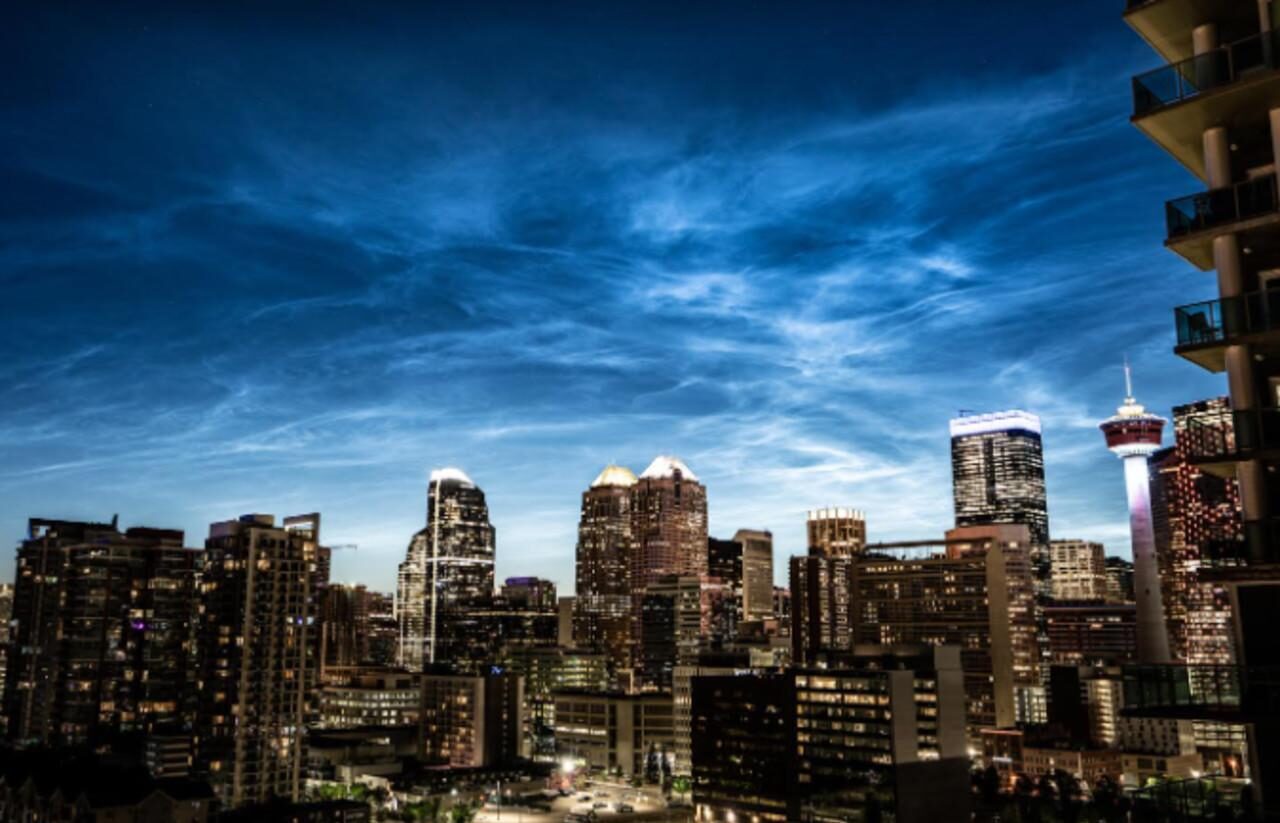
Rare 'night shining' clouds put on a dazzling display across Calgary, Alberta

Noctilucent clouds Calgary Alberta
© The Weather Network
A beautiful display of noctilucent or "night shining" clouds lit up the skies across Calgary on Wednesday night. It's a rare, but dazzling atmospheric phenomenon that is only visible under certain very specific conditions at this time of year.

"They are the highest clouds in the atmosphere, forming from ice crystals about 80 km above the earth's surface in the mesosphere," explains Michael Carter, a meteorologist at The Weather Network. "For comparison, the top of a typical tall thunderstorm cloud is about 12-15 km above the surface."

The ice particles are also 1/1000 the width of a human hair.

According to Carter, they are usually much too faint to be seen, but they can become visible during the twilight hours, as was the case in the Calgary area Wednesday night. This occurs when the setting sun is still illuminating the high atmosphere, while to an observer on the surface the sun is already below the horizon.

"Just unbelievable noctilucent clouds this evening...only seen around this time of year!," tweeted The Weather Network's Kyle Brittain who captured the rare phenomenon in Calgary.

Camera

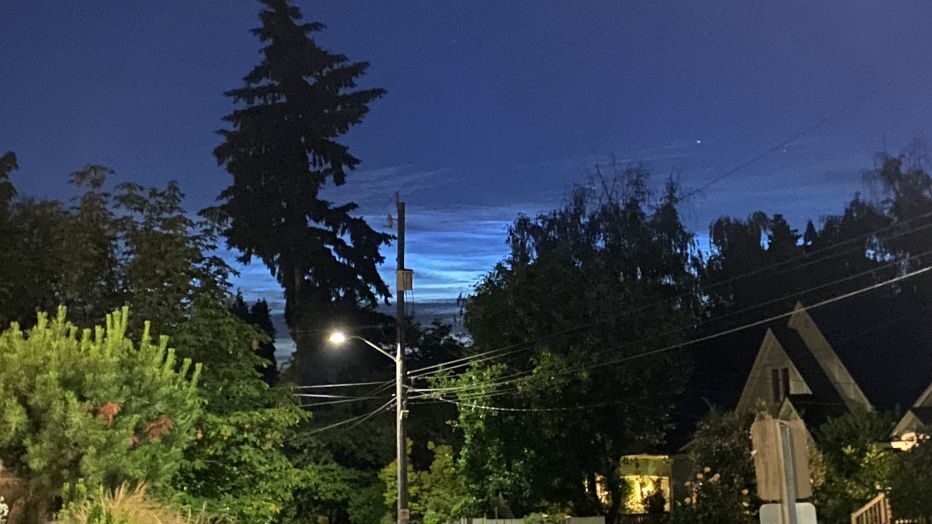
Night shining 'noctilucent' clouds make mesmerizing appearance over Seattle, Washington

Noctilucent clouds over Seattle
© Travis Mayfield
If you happened to be up before the sun Thursday -- which is REALLY early now that we're just a few days from the summer solstice -- you would have been treated to a rare and awesome sight of noctilucent clouds.

Also informally known as "night shining" clouds, these clouds are not the typical ones that portend rain, but instead are in the highest reaches of the atmosphere some 50 miles up.


"They form when summertime wisps of water vapor rise to the edge of space and crystallize around disintegrated meteoroids," says Dr. Tony Phillips with SpacevWeather.com. "When you see a (noctilucent cloud), you're literally seeing a cloud of frosted meteor smoke."


How cool is that?!?

Camcorder

Skier in Washington captures incredible sun dog

Sun dog WA
© Via Twitter @StrictlyChristo
A skier who was in the right place at the right time was able to photograph an astonishing weather phenomenon known as a sun dog.

When conditions are ideal, the rare sight is known as a mock sun and appears at 22 degrees in the sky.

The man, who goes by the handle Strictly Christo, posted the video to Twitter on Sunday but didn't say where it was shot.

"A solar parhelion," he captioned the video. It belongs to the family of halos formed by ice crystals in the atmosphere refracting sunlight.

"Cirrus or cirrostratus clouds have the required ice crystals. The appearance of the parhelion is determined by the presence and placement of these clouds. A 'sun dog' is a term used to describe this phenomena.


Info

Boundary between the heliosphere and interstellar space mapped for the first time

Los Alamos, N.M. - For the first time, the boundary of the heliosphere has been mapped, giving scientists a better understanding of how solar and interstellar winds interact.
Heliosphere
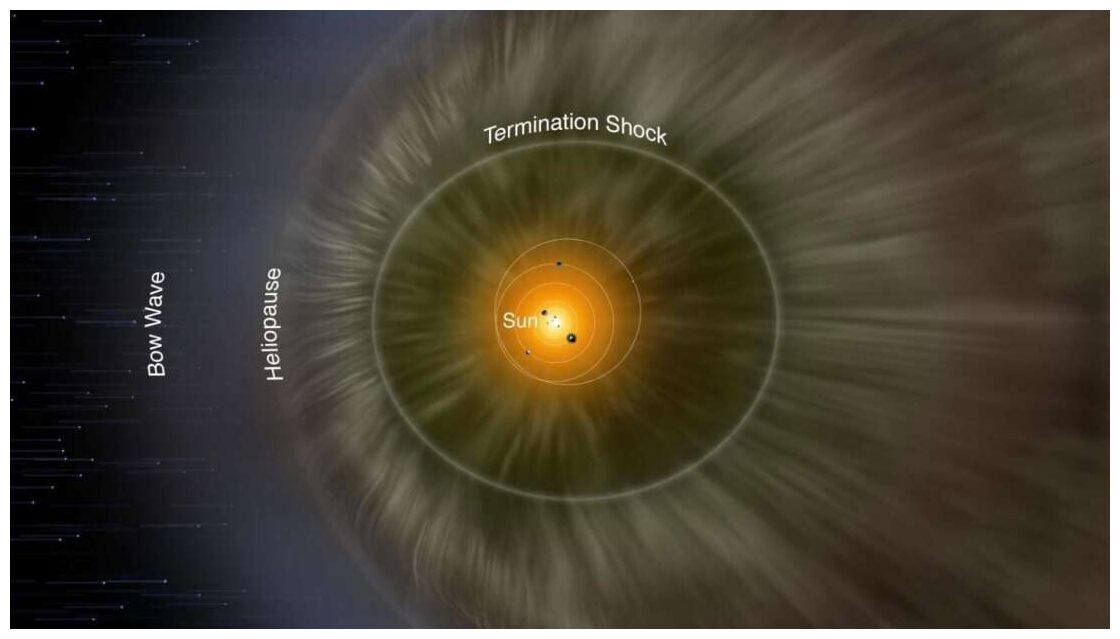
© NASA/IBEX/Adler PlanetariumA diagram of our heliosphere. For the first time, scientists have mapped the heliopause, which is the boundary between the heliosphere (brown) and interstellar space (dark blue).
"Physics models have theorized this boundary for years," said Dan Reisenfeld, a scientist at Los Alamos National Laboratory and lead author on the paper, which was published in the Astrophysical Journal today. "But this is the first time we've actually been able to measure it and make a three-dimensional map of it."

The heliosphere is a bubble created by the solar wind, a stream of mostly protons, electrons, and alpha particles that extends from the Sun into interstellar space and protects the Earth from harmful interstellar radiation.

Reisenfeld and a team of other scientists used data from NASA's Earth-orbiting Interstellar Boundary Explorer (IBEX) satellite, which detects particles that come from the heliosheath, the boundary layer between the solar system and interstellar space. The team was able to map the edge of this zone -- a region called the heliopause. Here, the solar wind, which pushes out toward interstellar space, collides with the interstellar wind, which pushes in towards the Sun.

Cassiopaea

Bright Nova in Hercules

Following the posting on the Central Bureau's Transient Object Confirmation Page about a possible Nova in Her (TOCP Designation: TCP J18573095+1653396) we performed some follow-up of this object through a TEL 0.32-m f/8.0 reflector + CCD located in Nerpio, Spain and operated by iTelescope network (MPC Code I89).

On images taken on June 13.15, 2021 we can confirm the presence of an optical counterpart with R-filtered CCD magnitude +6.2 at coordinates:

R.A. = 18 57 30.98, Decl.= +16 53 39.6

(equinox 2000.0; Gaia DR2 catalogue reference stars for the astrometry).

According to ATel #14704, a spectrum obtained by Munari et al. "has an overall blue shape and shows very pronounced broad absorptions (FWHM about 3000 km/s) compatible with P-Cyg components for Halpha, Hbeta and Hgamma blue-shifted by about 3100 km/s [...] Overall, the spectrum could be compatible with a nova of unusual large velocity".

Our confirmation image (made with TYCHO software by D. Parrott):
Nova in Her
© Remanzacco Blogspot

Info

White dwarf measured before it exploded as a Supernova

Type Ia Supernova
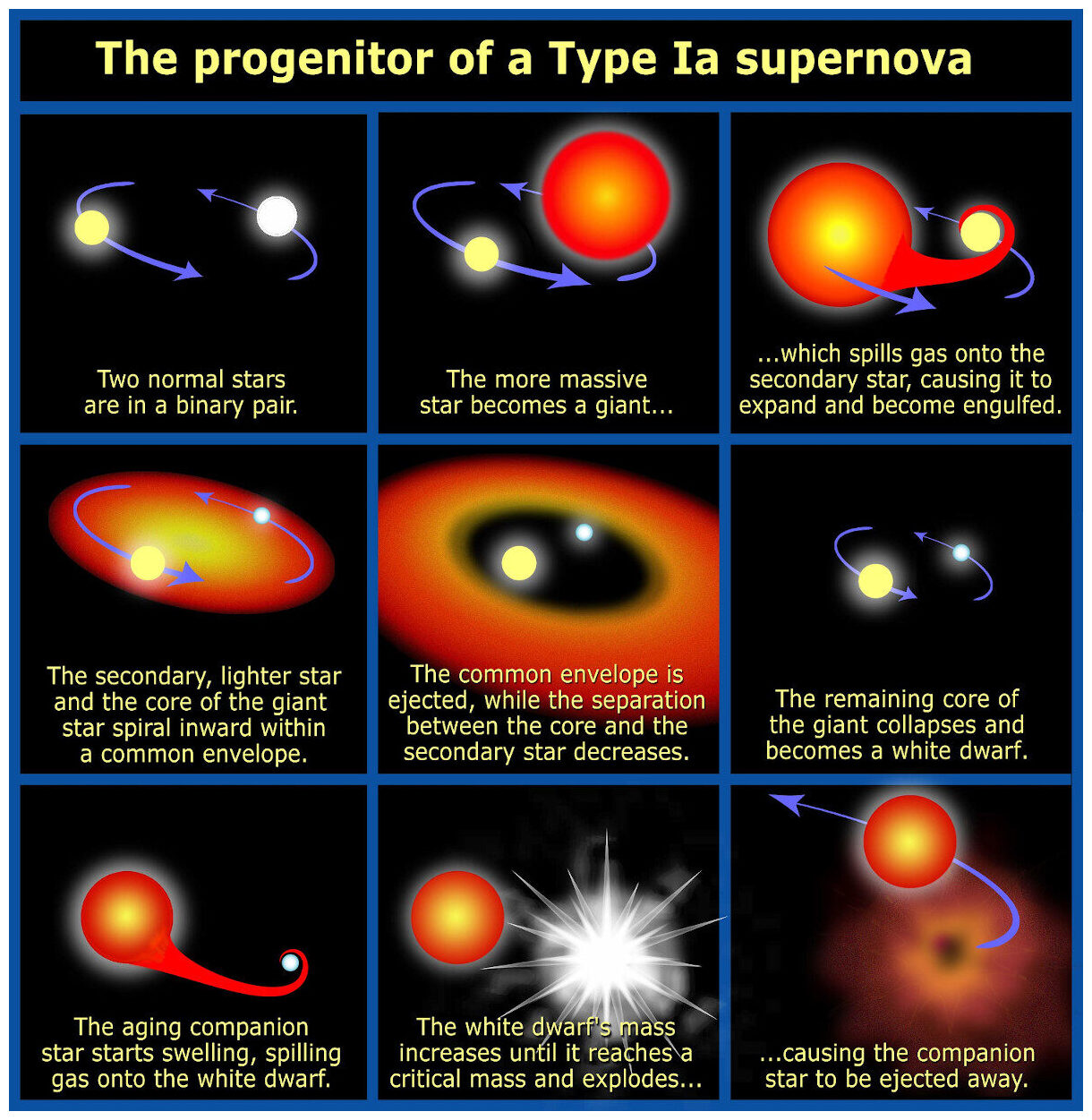
© NASA, ESA, and A. Field (STScI)The progenitor of a Type Ia Supernova.
Type Ia supernovae are an important tool for modern astronomy. They are thought to occur when a white dwarf star captures mass beyond the Chandrasekhar limit, triggering a cataclysmic explosion. Because that limit is the same for all white dwarfs, Type Ia supernovae all have about the same maximum brightness. Thus, they can be used as standard candles to determine galactic distances. Observations of Type Ia supernova led to the discovery of dark energy and that cosmic expansion is accelerating.

While these supernovae have revolutionized our understanding of the universe, they aren't quite as standard as we first proposed. Some, such as SN 1991T are much brighter, while others, such as SN 1991bg are much dimmer. There is also a variation known as Type Iax, where the white dwarf isn't completely destroyed by the explosion. We can generally take these variations into account when calculating stellar distances, but it would be good to have a better understanding of the mechanism behind their maximum brightness.

According to theoretical models, the maximum brightness of a Type Ia supernova depends upon the mass and central density of the white dwarf before it explodes. But how could these values be measured? After all, we typically only discover these stars after they explode. Fortunately, a new study in The Astrophysical Journal Letters shows how it can be done.

Info

Rare 1181 supernova left behind a 'zombie star' remnant

1181 Supernova
© Universe Today
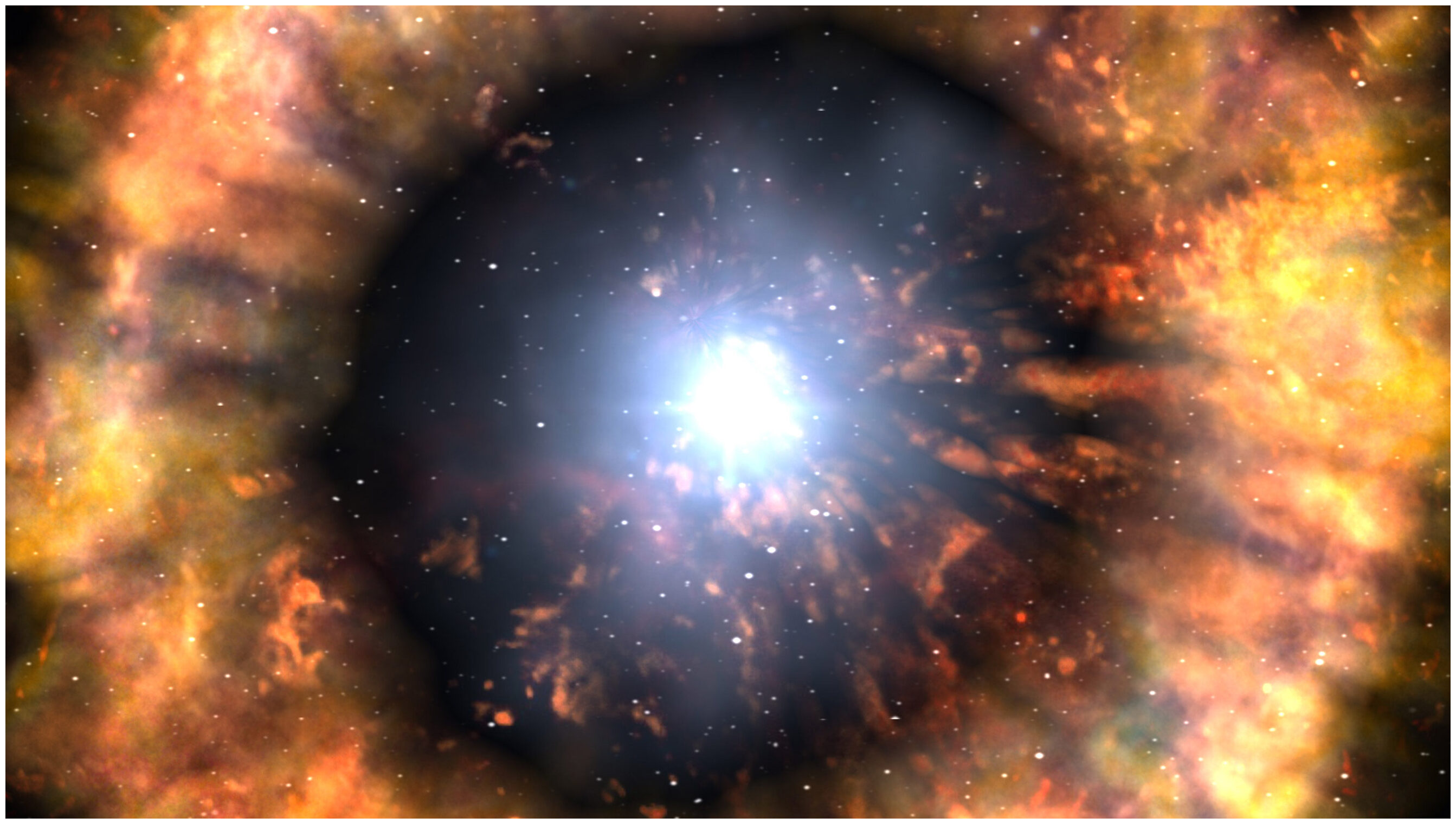
In 1181 CE, Chinese and Japanese astronomers noticed a "guest star" as bright as Saturn briefly appearing in their night sky. In the thousand years since, astronomers have not been able to pinpoint the origins of that event. New observations have revealed that the "guest star" was a supernova, and a strange one at that. It was a supernova that did not destroy the star, but left behind a zombie that is still shining.

"Guest stars" are what modern astronomers now call novae or supernovae, and the brightness of the event in 1181 CE (described as being as bright as Saturn) and its longevity (visible to the naked eye for 185 days) means that it was almost certainly from a supernova. For decades, a pulsar wind nebula in the same region of the sky was thought to be the remnants of that supernova, but new estimates have placed the age of that nebula to be around 7,000 years old, far too old to account for the records from 1181.

Searching through the archives from NASA's Wide-field Infrared Survey Explorer, a team led by astronomers at the University of Hong Kong have found an alternate, and much stranger, possible origin story. Their work recently appeared in the preprint journal arXiv.

Info

Nearby gamma-ray burst defies expectations

gamma-ray burst
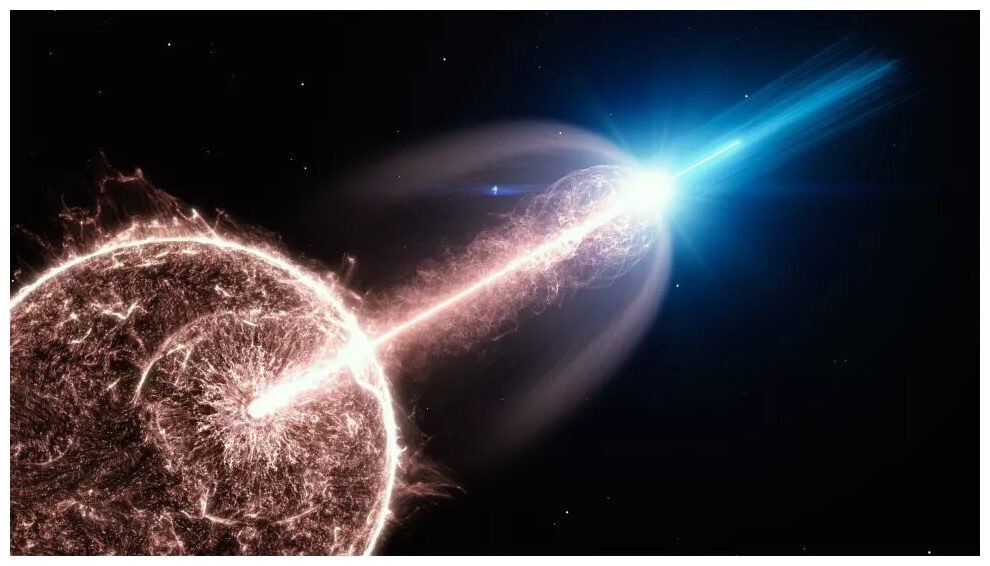
© DESY, Science Communication LabAn artist's depiction of a gamma-ray burst's relativistic jet full of very-high-energy photons breaking out of a collapsing star.
A team of scientists has gotten their best look yet at a gamma-ray burst, the most dramatic type of explosion in the universe.

Astronomers think some of these explosions occur when a massive star — five or 10 times the mass of our sun — detonates, abruptly becoming a black hole. Gamma-ray bursts may also occur when two superdense stellar corpses called neutron stars collide, often forming a black hole. And conveniently, a gamma-ray burst that scientists watched during a few nights in 2019 likely occurred only about 1 billion light-years away from Earth, relatively close by for these dramatic events.

"We were really sitting in the front row when this gamma-ray burst happened," Andrew Taylor, a physicist at the Deutsches Elektronen-Synchrotron (German Electron Synchrotron, or DESY) and co-author on the new paper, said in a statement. "We could observe the afterglow for several days and to unprecedented gamma-ray energies."

Two NASA space-based observatories, Fermi and Swift, first detected the event, which is known as GRB 190829A because it was detected on Aug. 29, 2019. The fireworks came from the direction of the constellation Eridanus, a large swath of sky in the Southern Hemisphere.

When the scientists behind the new research heard about the gamma-ray burst detection, they mobilized a set of five gamma-ray telescopes in Namibia, called the High Energy Stereoscopic System (HESS). Over three nights, the telescopes observed the explosion for a total of 13 hours, in an attempt to understand what took place.

Sun

Skywatchers witness breathtaking rainbow halo around the sun over southern India city

Sun halo in India
© Caters News
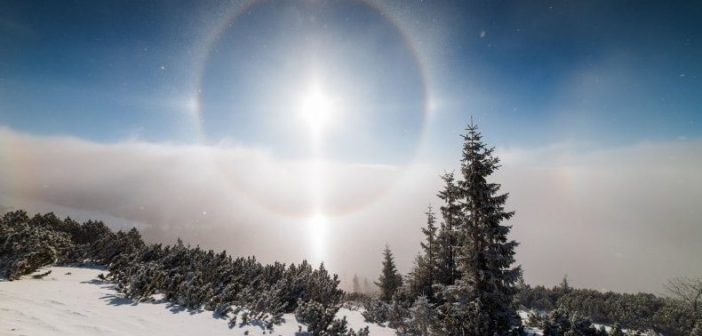
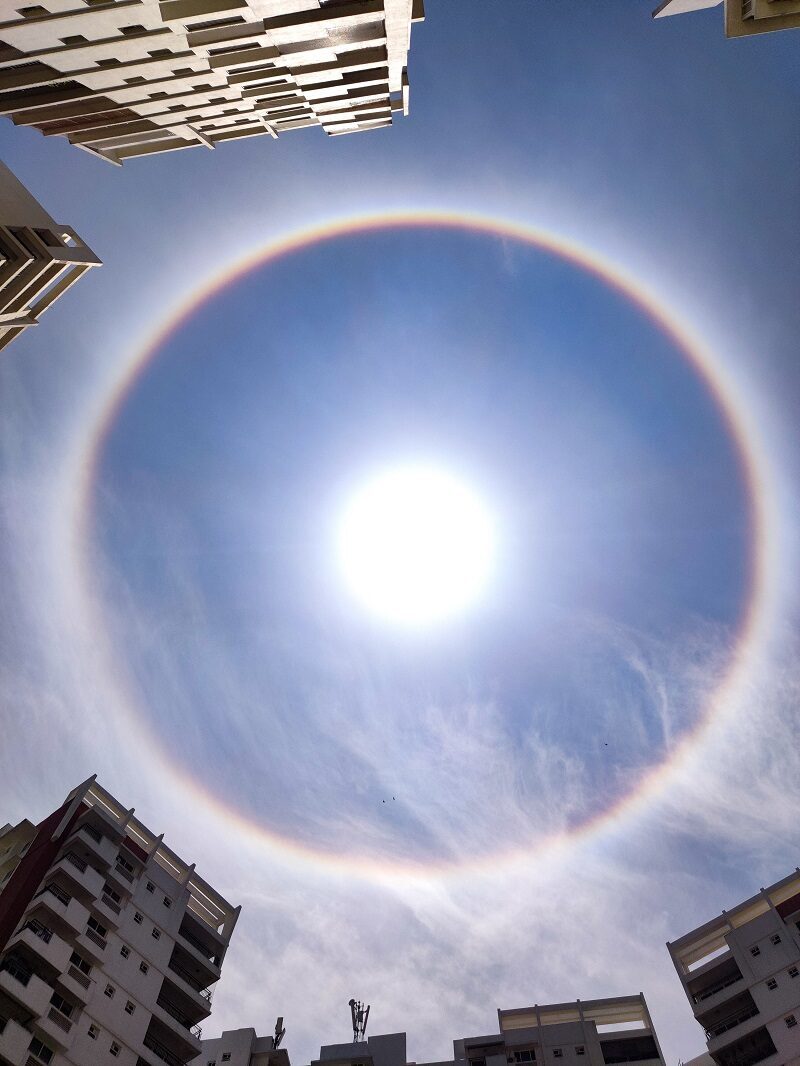
A stunning spectacle was witnessed in the sky over Bangalore on Monday when a rainbow formed a halo around the sun.

Local residents observed and photographed the striking atmospheric phenomenon surrounding the sun in the southern Indian city.

Dr. Gouri Sateesh, 24, who was one of the hundreds of residents who captured the spectacular sight on her camera, said she was awestruck after witnessing the natural marvel.

A rainbow is an optical phenomenon which occurs when light passes through tiny pixel-like droplets of water in the atmosphere and is refracted so that all the colors of the visible light spectrum are made visible.

Likewise, the phenomenon may occur when sunlight passes through clouds (water vapor), causing this similar halo rainbow effect when looking in the direction of the sun.

Cloud Grey

2021 noctilucent clouds season starts earlier than expected

Noctilucent clouds
© Andy Stables/spaceweathergallery.com
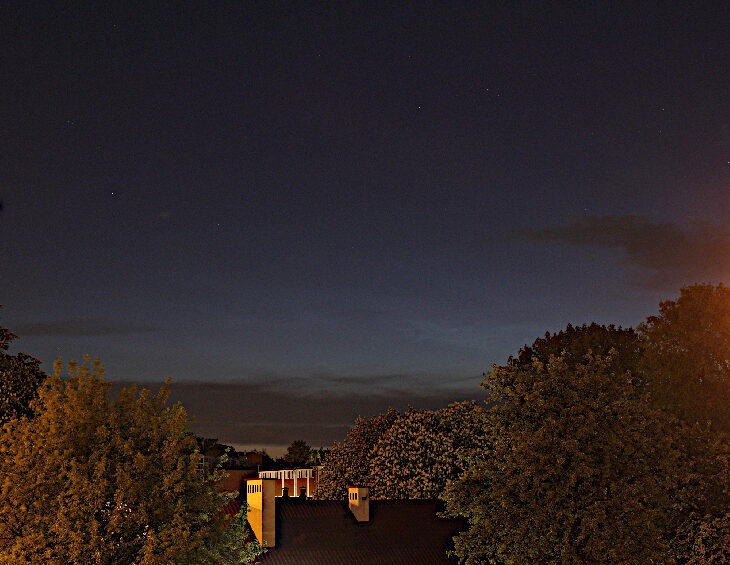
Noctilucent clouds (NLCs) have been spotted over Poland, Czech Republic, Canada, and Scotland, among other countries, on May 25 and 26, marking an early start to the northern hemisphere's 2021 NLC season. The clouds are rapidly intensifying. In only four days since the clouds were first seen, their coverage of the Arctic has multiplied 10 times.

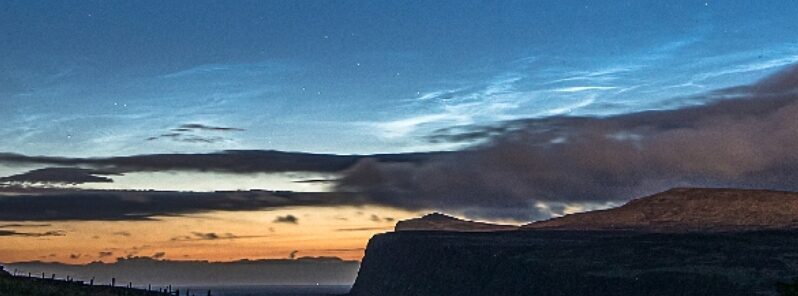
On May 26, 2021, photographer Andy Stables captured NLCs over Milovaig in the Isle of Skye, Scotland. "The NLCs got stronger and this was taken at 00:47 UTC (01:47 LT)," Stables said.

The electric-blue rippers "were clearly visible to the unaided eye," he added. "This is the earliest I have ever seen them here in Scotland."

Dr. Tony Phillips of spaceweather.com described the phenomenon as unusual, noting that the NLCs are already forming even though it is only May. Other witnesses are able to see the clouds from the ground.

"NLCs are Earth's highest clouds," said Dr. Phillips. "Seeded by meteoroids, they float at the edge of space about 83 km (52 miles) above the ground."
NLCs in Poland
© Tomasz AdamEarly NLCs captured in Krakow, Poland, on May 25.