Strange Skies
S


Camera

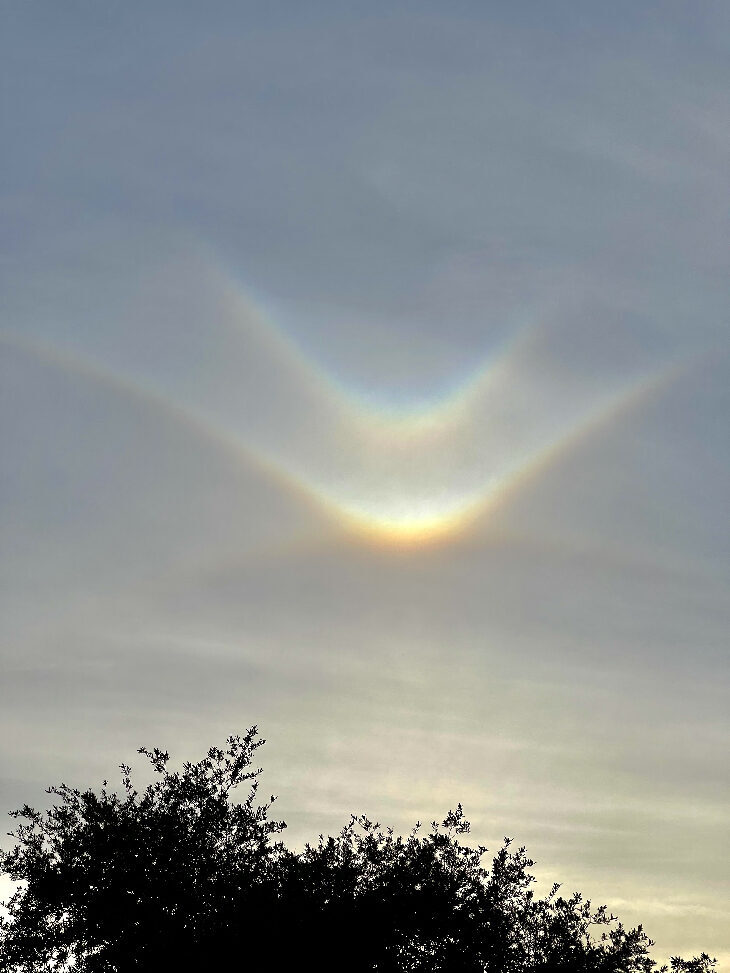
Rare V-shaped sun halo captured over Florida

Sunvex Parry arc taken on April 23, 2021 @ Viera, Florida, USA
© Dan GoreSunvex Parry arc taken on April 23, 2021 @ Viera, Florida, USA
You don't see this every day, especially not in Florida. On April 23rd, a pair of glowing V's appeared above the setting sun, both caused by ice crystals in the air. Dan Gore photographed them from Viera, FL.

"They lingered for about 5 minutes, then they were gone," says Gore. "It was a beautiful sight."

These are sun halos, one rare and one common. The lower 'V' is a common upper tangent arc created by sunlight shining through pencil-shaped ice crystals. The upper 'V' is a rare Parry arc created by similar kinds of ice crystals, but... To make the Parry arc, the crystals had to be horizontal, not rotate, and have two faces horizontal, too. It sounds improbable, and it is. That's why the Parry arc is so rare.

What's all this ice doing in Florida air? The crystals were located in cirrus clouds 5 to 10 km above the ground where the air is always freezing--even in Florida. Parry arcs prefer cold climates, but they can appear in the Sunshine State, too.

Comment: It is likely that atmospheric dust loading from increased comet and volcanic activity is contributing to the 'strange skies' we are witnessing, the cooling effect of which causes ice crystals to form. See also:


Arrow Up

Largest flare from sun's nearest neighbor breaks records

Proxima Centauri
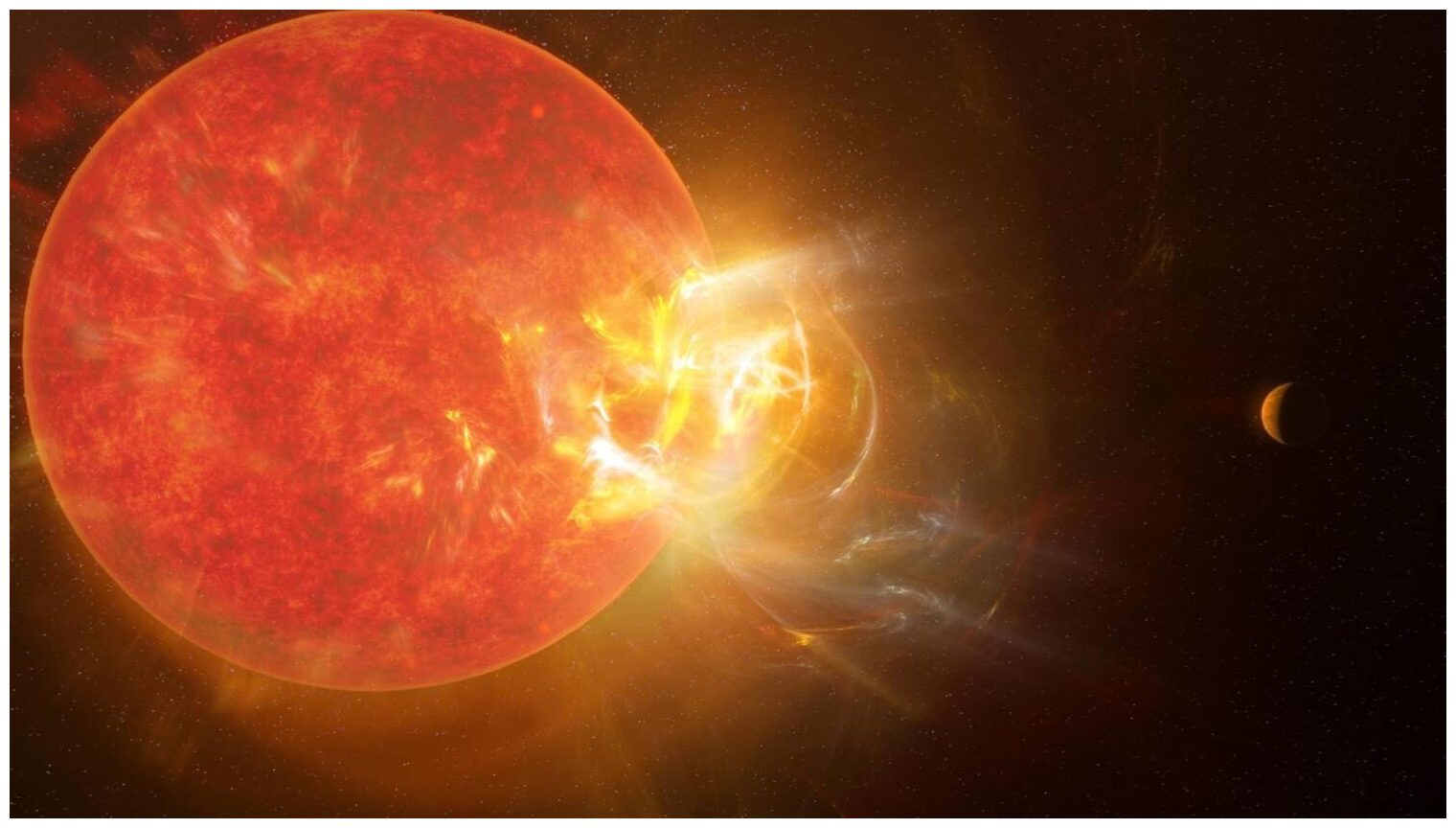
© NRAO/S. DagnelloArtist's conception of a violent flare erupting from the star Proxima Centauri.
Scientists have spotted the largest flare ever recorded from the sun's nearest neighbor, the star Proxima Centauri.

The research, which appears today in The Astrophysical Journal Letters, was led by CU Boulder and could help to shape the hunt for life beyond Earth's solar system.

CU Boulder astrophysicist Meredith MacGregor explained that Proxima Centauri is a small but mighty star. It sits just four light-years or more than 20 trillion miles from our own sun and hosts at least two planets, one of which may look something like Earth. It's also a "red dwarf," the name for a class of stars that are unusually petite and dim.

Proxima Centauri has roughly one-eighth the mass of our own sun. But don't let that fool you.

In their new study, MacGregor and her colleagues observed Proxima Centauri for 40 hours using nine telescopes on the ground and in space. In the process, they got a surprise: Proxima Centauri ejected a flare, or a burst of radiation that begins near the surface of a star, that ranks as one of the most violent seen anywhere in the galaxy.

"The star went from normal to 14,000 times brighter when seen in ultraviolet wavelengths over the span of a few seconds," said MacGregor, an assistant professor at the Center for Astrophysics and Space Astronomy (CASA) and Department of Astrophysical and Planetary Sciences (APS) at CU Boulder.

The team's findings hint at new physics that could change the way scientists think about stellar flares. They also don't bode well for any squishy organism brave enough to live near the volatile star.

"If there was life on the planet nearest to Proxima Centauri, it would have to look very different than anything on Earth," MacGregor said. "A human being on this planet would have a bad time."

Camera

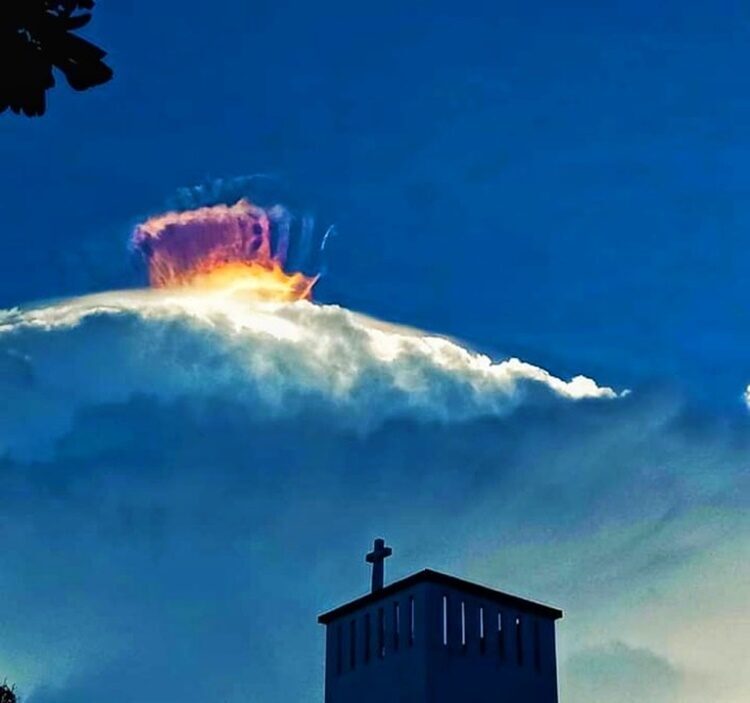
Spectacular cloud formation observed over Mansalay, Philippines

Spectacular cloud formation observed over Mindoro, Philippines
The mysterious cloud formation spotted in Oriental Mindoro garnered various speculations from the online community.

The Facebook page "Youth for Mindoro" has shared the amazing photos of a strange cloud formation in Mansalay, Oriental Mindoro. The phenomenon happened last Wednesday afternoon (April 14, 2021).

According to the witnesses, the mysterious light has been formed above the clouds. The weird light looks like a crown roaring above the cloudy, which garnered various reactions from the social media users.


Comment: It is likely that atmospheric dust loading from increased comet and volcanic activity is contributing to the 'strange skies' we are witnessing, the cooling effect of which causes ice crystals to form. See also:


Cassiopaea

New Nova in Scorpius

With the recent discovery of Nova Scorpii 2021, three bright stellar explosions are now visible in small telescopes from dusk till dawn.
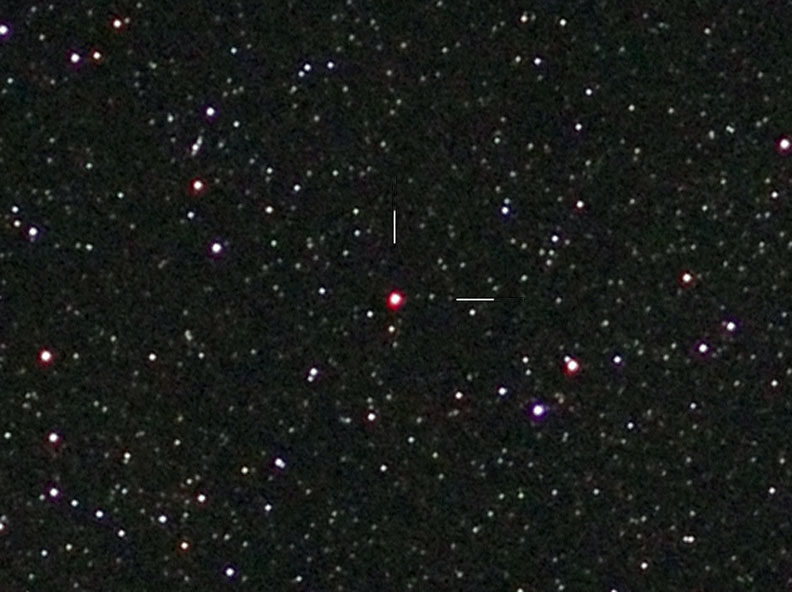
V1710 Scorpii
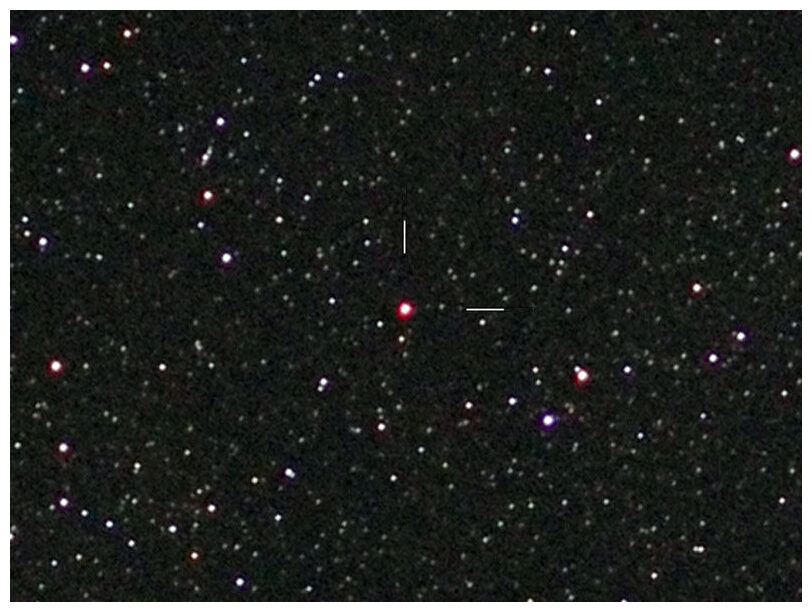
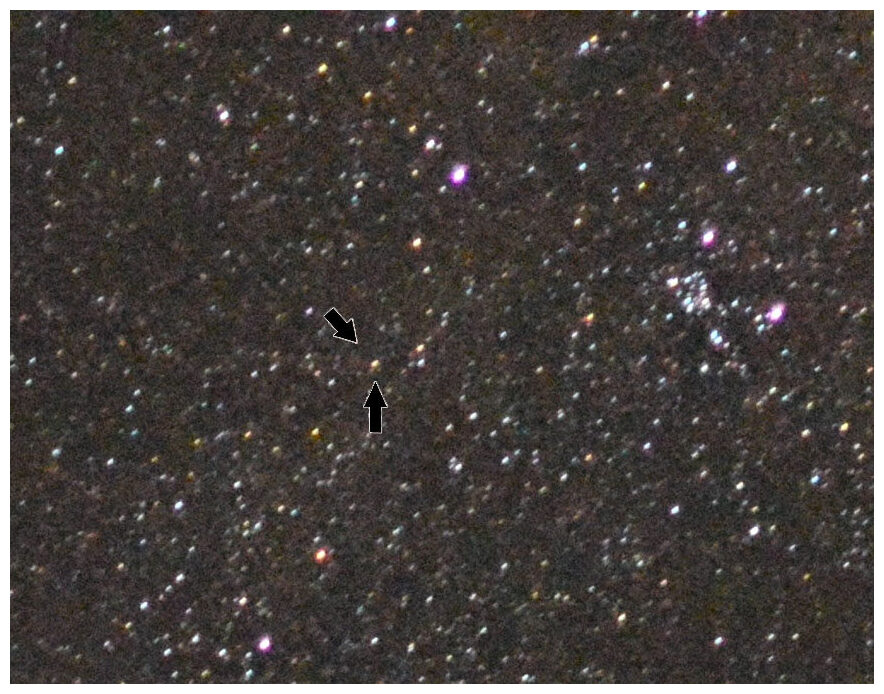
© Rob KaufmanThe new bright nova, V1710 Scorpii, glows conspicuously red in this photo taken on April 14, 2021. It's the third nova discovered in recent weeks that has reached 9th magnitude or brighter.
Wait a minute. Am I going to have to set the alarm and get up at 4 a.m.? Absolutely. And I'll do it without complaint. Not only are the recent novae in Cassiopeia and Sagittarius still bright at magnitudes at 8.1 and 9.9, respectively, but a brand new nova in Scorpius has just joined the scene. Add in Comet ATLAS (C/2020 R4), now at magnitude 9.5, and you know in your heart a dawn observing session is in your future.

Amateur astronomer Paul Camilleri of Northern Territory, Australia and the All-Sky Automated Survey for Supernovae (ASAS-SN) independently discovered the new object early on April 12th at visual magnitude 9.5. Formally named V1710 Scorpii, it brightened quickly to 8.5 before fading slightly, now simmering around 9.5 as of early April 15th. Oscillations like these are common, so the nova might continue to fade or re-brighten just as suddenly.

In an email, Camilleri shared a happy coincidence: "Interestingly, this discovery is my 10th nova, and it was found 30 years to the day of my first discovery in April 1991 and a few days short of my last discovery (April 14, 1993) some 28 years ago."
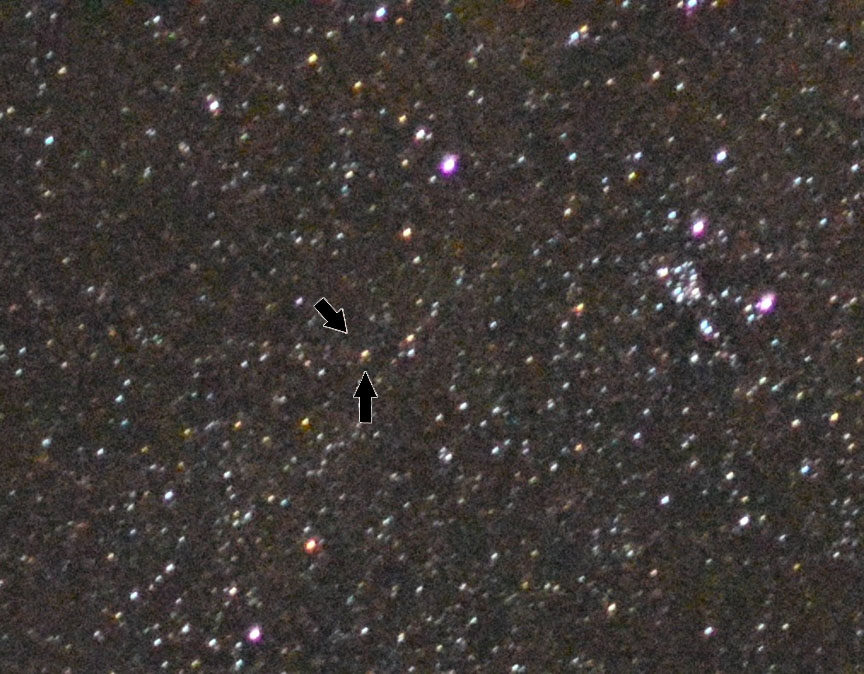
Nova Scorpii 2021
© Paul CamillariThis is Paul Camilleri's discovery image taken on April 12.7625 UT with a Nikon D3200 DSLR and 85mm f/2 lens. The exposure was five seconds at ISO 6400. Since it was made on a tripod without a tracking mount, the stars are slightly trailed.
He noted that the nova had an orange color on his photos, likely caused by emission from ionized hydrogen in the thin, expanding shell of gases ejected during the explosion. Spectra indicate that the object is a classical nova, meaning this is its first recorded eruption, and it belongs to the Fe II class, where prominent emission lines of ionized iron stand out in its spectrum.

Comet 2

New Comet C/2019 U5 (PANSTARRS)

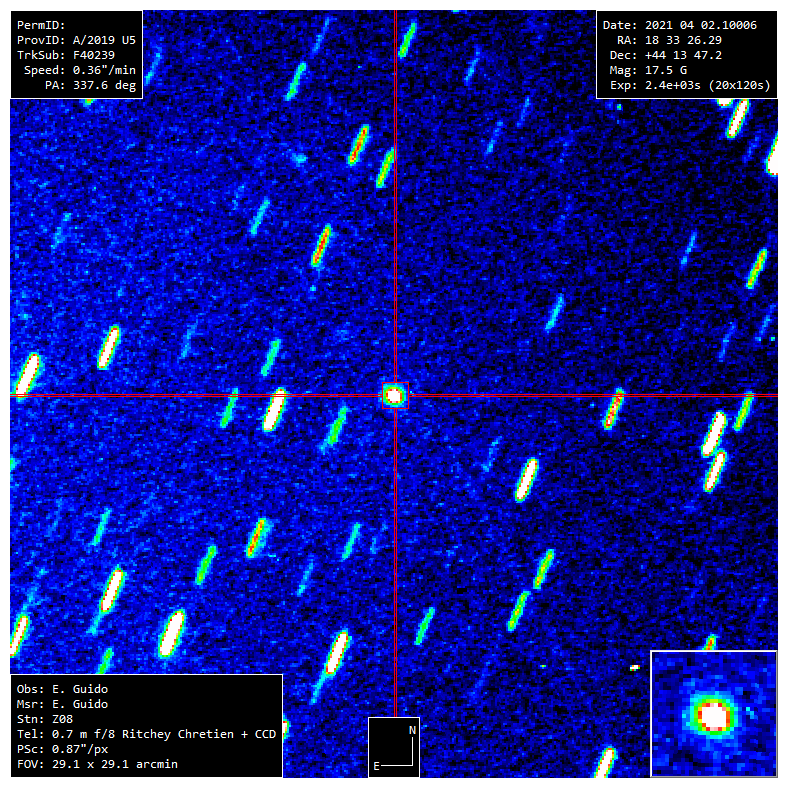
CBET 4953 & MPEC 2021-G80, issued on 2021, April 07, announce that an apparently asteroidal object (magnitude ~21.0) discovered on CCD images obtained with the F51 Pan-STARRS 1 survey's 1.8m Ritchey-Chretien on 2019, October 22.22 and designated A/2019 U5 (cf. MPEC 2019-V10) has been found to show cometary appearance by other CCD observers over the past half year. The new comet has been designated C/2019 U5 (PANSTARRS).

Stacking of 20 unfiltered exposures, 120 seconds each, obtained remotely on 2021, April 02.1 from Z08 (Telescope Live, Oria) through a 0.7 m f/8 Ritchey Chretien + CCD, shows that this object is a comet with a compact coma about 15" arcsec in diameter (Observers E. Guido, M. Rocchetto, E. Bryssinck, M. Fulle, G. Milani, C. Nassef, G. Savini, A. Valvasori).

Our confirmation image (click on it for a bigger version; made with TYCHO software by D. Parrott)

Comet C/2019 U5 (PANSTARRS)
© Remanzacco Blogspot

Attention

Possible nova detected in Sagittarius

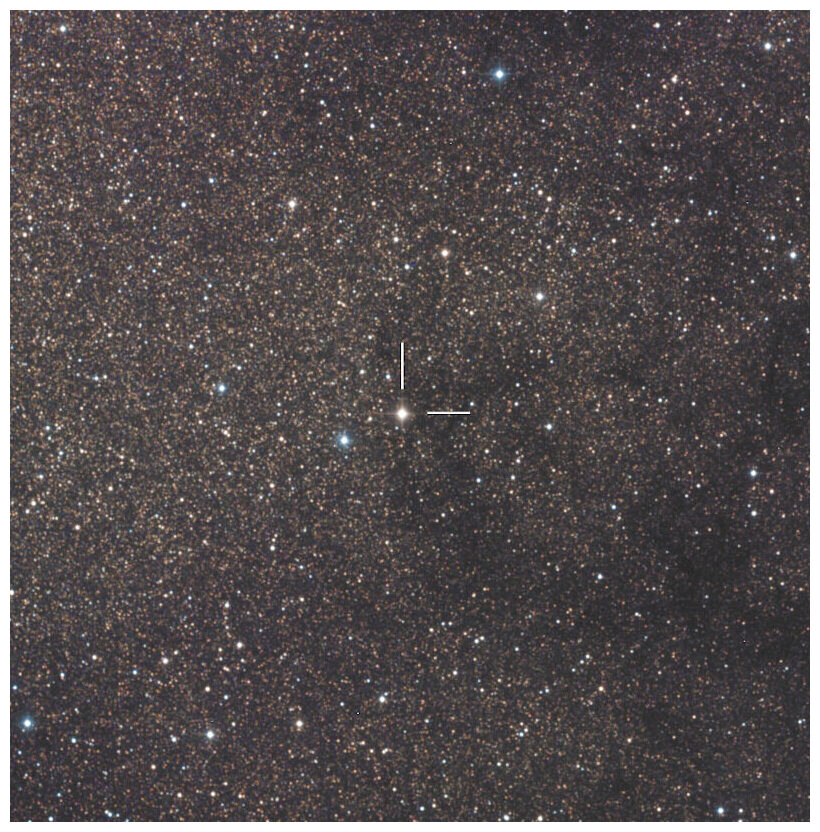
Following the posting on the Central Bureau's Transient Object Confirmation Page about a possible Nova in Sgr (TOCP Designation: PNV J17581670-2914490) we performed some follow-up of this object through a TEL 0.6-m f/6.5 astrograph + CCD located in the El Sauce Observatory in Chile and operated by Telescope Live network (MPC Code X02).

This transient has been discovered by Andrew Pearce at 8.4 mag (unfiltered) on 2021-04-04.825 UT using a Canon 1100D DSLR camera with a 100mm f/2.8 lens. Total exposure time was 20 seconds (2 x 10s images stacked). Rob McNaught reported non-detection on 2021-04-02.776 UT (unfiltered limiting mag 11.0).

On images taken on April 06.40, 2021 we can confirm the presence of an optical counterpart with B-filtered CCD magnitude +8.955 (R-filtered & V-filtered images were saturated in 5-second exposures) at coordinates:

R.A. = 17 58 16.08, Decl.= -29 14 56.4

(equinox 2000.0; Gaia DR2 catalogue reference stars for the astrometry).

Our confirmation image (click on it for a bigger version):
NOVA SAGITTARII 2021 No. 2
© Remanzacco Blogspot

Info

High-energy particle accelerators within our galaxy discovered

Move over, CERN. Unknown sources in the Milky Way dubbed "PeVatrons" accelerate protons to energies of a few peta-electronvolts - dozens of times higher than the yield of the Large Hadron Collider. Now, new data from a high-altitude experiment in Tibet confirm that such very-high-energy cosmic rays are indeed produced in our own galaxy.
Ultra high-energy rays
© APS; Background (atomic hydrogen distribution): HEASARC / LAMBDA / NASA / GFSCUltra high-energy diffuse gamma rays (yellow points) are distributed along the Milky Way Galaxy. The gray shaded area indicates the area outside the detectors' field of view.
"The results paint a much fuller picture of the PeVatron population in the Milky Way," says Pat Harding (Los Alamos National Laboratory), who was not involved in the study.

The distribution of cosmic rays by energy suggests these particles come in two varieties. The most extreme ultra-high-energy cosmic rays (UHECRs) are believed to come from remote galaxies (see the May 2021 issue of Sky & Telescope to learn more about these harbingers). But the majority of cosmic rays, with energies below 4 PeV, are thought to originate in the Milky Way. However, the true nature of the PeVatron particle accelerators has remained unknown, largely because the paths of cosmic rays are bent by galactic magnetic fields, so they do not "point back" to their origin.

A large team of Chinese and Japanese scientists known as the Tibet ASγ Collaboration has now detected a few dozen very-high-energy (VHE) gamma rays from the Milky Way that aren't associated with known sources. These gamma rays, collected between 2014 and 2017, are thought to be produced when cosmic rays slam into atomic nuclei in the interstellar medium. Theory says they carry about 10% of the original cosmic-ray energy. The most energetic one detected by the Tibet ASγ team packs a punch of 0.957 PeV - an all-time record.

Info

Black Hole on the move detected by astronomers

Black Hole
© Center for Astrophysics | Harvard & Smithsonian
Cambridge, MA - Scientists have long theorized that supermassive black holes can wander through space — but catching them in the act has proven difficult.

Now, researchers at the Center for Astrophysics | Harvard & Smithsonian have identified the clearest case to date of a supermassive black hole in motion. Their results are published today in The Astrophysical Journal.

"We don't expect the majority of supermassive black holes to be moving; they're usually content to just sit around," says Dominic Pesce, an astronomer at the Center for Astrophysics who led the study. "They're just so heavy that it's tough to get them going. Consider how much more difficult it is to kick a bowling ball into motion than it is to kick a soccer ball — realizing that in this case, the 'bowling ball' is several million times the mass of our Sun. That's going to require a pretty mighty kick."

Pesce and his collaborators have been working to observe this rare occurrence for the last five years by comparing the velocities of supermassive black holes and galaxies.

"We asked: Are the velocities of the black holes the same as the velocities of the galaxies they reside in?" he explains. "We expect them to have the same velocity. If they don't, that implies the black hole has been disturbed."

For their search, the team initially surveyed 10 distant galaxies and the supermassive black holes at their cores. They specifically studied black holes that contained water within their accretion disks — the spiral structures that spin inward towards the black hole.

Snowflake Cold

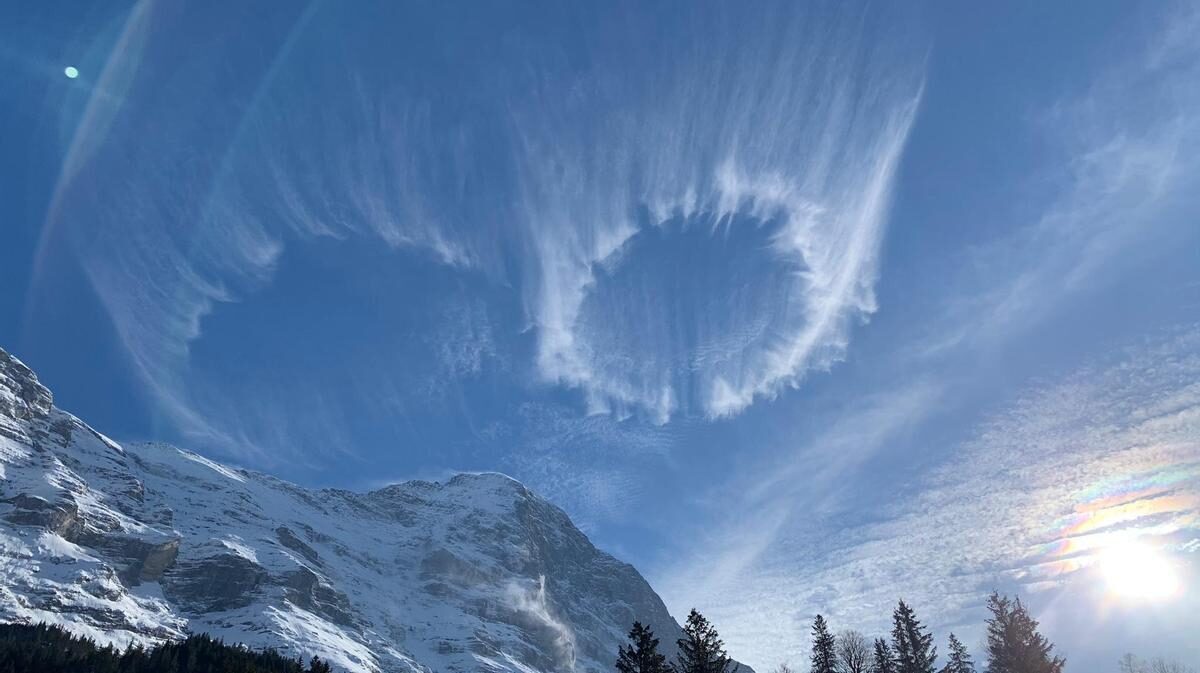
Our cooling atmosphere: Curious circular clouds appear over Swiss Alps alongside an iridescent cloud

circle cloud alps
© 20min.ch
These mysterious cylindrical clouds over the Swiss Alps aren't natural... But, of course, scientists have no clues how they may have formed...


Comment: There are scientific explanations for how these kinds of clouds form, but what is notable is that they're not a common sight and their appearance points to an atmosphere that is undergoing significant cooling; and this is just one of an increasing number of examples.


How did these eerie cylindrical clouds formed in the sky over the Eiger in the Swiss Alps? via

The eerie sky formation hovered over the Eiger, a 3,967-metre (13,015 ft) mountain of the Bernese Alps.

This picture shows the two mysterious cylindrical clouds in the sky over the Swiss Alps on March 10, 2021. via 20min.ch

Comment: See also:


Camera

More 'rare' red auroras captured over Utsjoki, Finland

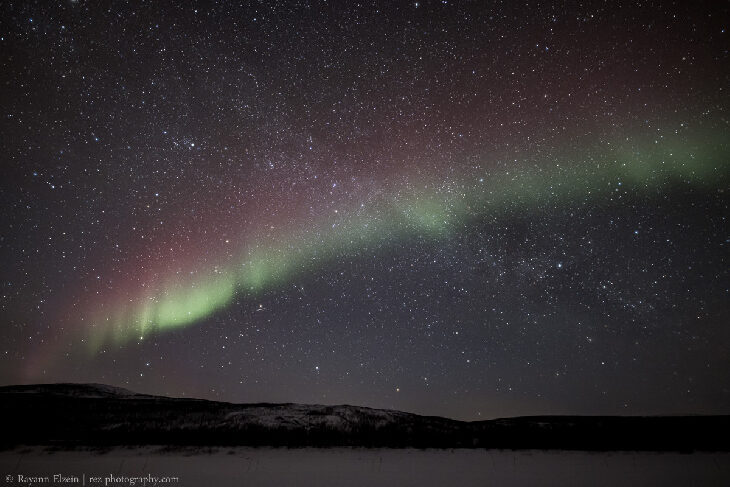
Red auroras on March 10, 2021 @ Utsjoki, Finnish Lapland
© Rayann ElzeinRed auroras on March 10, 2021 @ Utsjoki, Finnish Lapland
It's not easy for Earth's atmosphere to make red auroras. Even longtime Arctic photographers and tour guides rarely see them. Yet, on March 10th, there they were.

Rayann Elzein sends this picture from Utsjoki in the Finnish Lapland. "The red auroras looked pale white to my unaided eye, but a quick exposure with my camera revealed their true color."

What's so tricky about red? The action, if you can call it that, takes place more than 150 km above Earth's surface. At that high altitude, oxygen atoms excited by solar wind slowly spit out red photons. Emphasis on slowly. The radiative lifetime of the transition is 110 seconds--an eternity at the quantum scale. The atoms must remain undisturbed that long to produce their red light.

Perhaps that's why red auroras often appear when conditions are quiet. "The solar wind speed last night was quite low and there was no expectation of a geomagnetic storm," says Elzein. Tonight is expected to be quiet as well. Red auroras, anyone?

Comment: In October last year the same Arctic photographer captured red auroras over Utsjoki, Finland saying, "Rarely have I seen anything like this before."

With the surge in sightings of rare or novel atmospheric phenomena in recent years it seems the electrical nature of our weather and changing atmosphere is becoming more apparent: