Strange Skies
S


Comet 2

New Comet C/2021 K1 (ATLAS)

CBET 4968 & MPEC 2021-K89, issued on 2021, May 27, announce the discovery of a new comet (magnitude ~17.0) on CCD images taken on May 14.5 UT with the 0.5-m reflector + CCD in the course of the ATLAS-HKO (T05) survey. The object was originally found by Peter Veres of Minor Planet Center (MPC) as unusually bright among the MPC's isolated tracklet file (ITF) and linked to the detections from May 22 (F51) and May 14 (T08). A review of the ATLAS images revealed the cometary nature of this object.

As with the ATLAS observations, this object was reported without comments by Pan-STARRS1 1.8-m Ritchey-Chretien reflector at Haleakala on May 22.6 UT (mag 17.6-18.0), submitted as two separate objects on the same night. This object has been found to show cometary appearance also by CCD astrometrists elsewhere after it was posted on the MPC's PCCP webpage. The new comet has been designated C/2021 K1 (ATLAS).

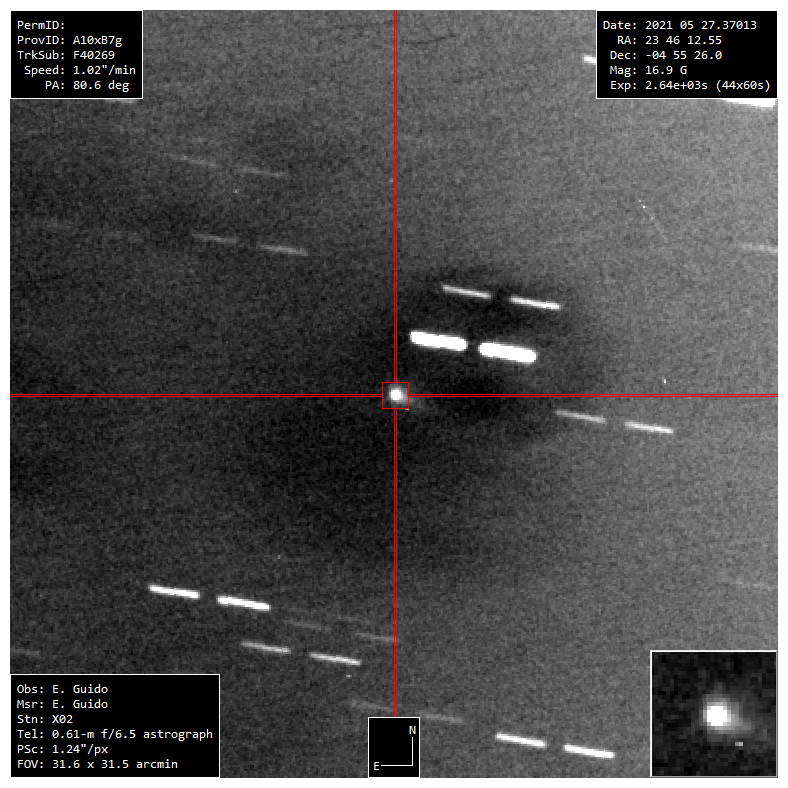
Stacking of 44 unfiltered exposures, 60 seconds each, obtained remotely on 2021, May 27.3 from X02 (Telescope Live, Chile) through a 0.61-m f/6.5 astrograph + CCD, shows that this object is a comet with a compact coma about 20" arcsecond in diameter and a tail 30" long in PA 245 (Observers E. Guido, M. Rocchetto, E. Bryssinck, M. Fulle, G. Milani, C. Nassef, G. Savini, A. Valvasori).

Our confirmation images (click on the images for a bigger version; made with TYCHO software by D. Parrott)
Comet C/2021 K1
© Remanzacco Blogspot

Grey Alien

Pentagon's UFO PsyOps

UFO Psyops
© REUTERS/Rebecca Naden
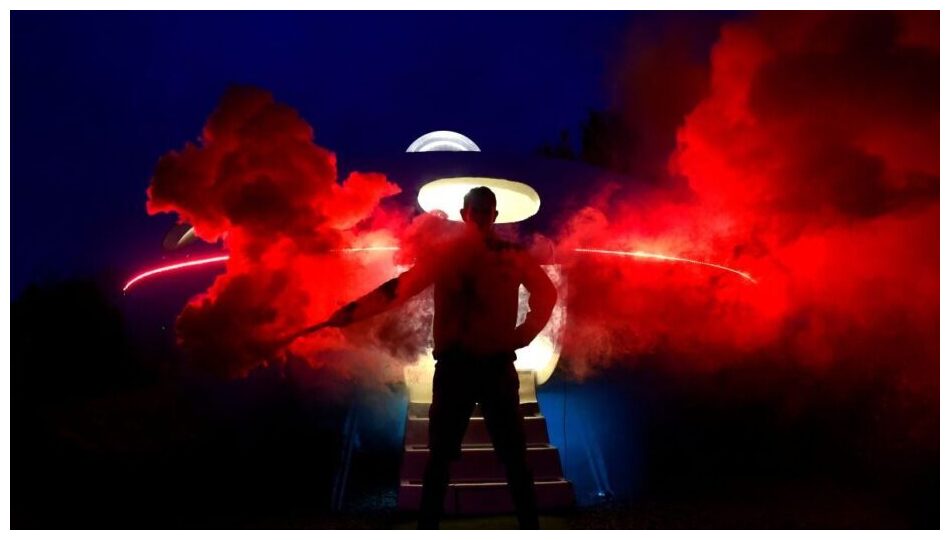
There are reasons to be skeptical. After decades of stonewalling on the issue, suddenly American military chiefs appear to be giving credence to claims of UFOs invading Earth. Several viral video clips purporting to show extraordinary flying technology have been "confirmed" by the Pentagon as authentic. The Pentagon move is unprecedented.

The videos of the Unidentified Flying Objects were taken by U.S. air force flight crews or by naval surveillance and subsequently "leaked" to the public. The question is: were the "leaks" authorized by Pentagon spooks to stoke the public imagination of visitors from space? The Pentagon doesn't actually say what it believes the UFOs are, only that the videos are "authentic".

A Senate intelligence committee is to receive a report from the Department of Defense's Unidentified Aerial Phenomena (UAP) Task Force next month. That has also raised public interest in the possibility of alien life breaching our skies equipped with physics-defying technology far superior to existing supersonic jets and surveillance systems.

Several other questions come to mind that beg skepticism. Why does the phenomenon of UFOs or UAP only seem to be associated with the American military? This goes back decades to the speculation during the 1950s about aliens crashing at Roswell in New Mexico. Why is it that only the American military seems privy to such strange encounters? Why not the Russian or Chinese military which would have comparable detection technology to the Americans but they don't seem to have made any public disclosures on alien encounters? Such a discrepancy is implausible unless we believe that life-forms from lightyears away have a fixation solely on the United States. That's intergalactic American "exceptionalism" for you!

Jupiter

'Clyde's Spot' on Jupiter is starting to look pretty weird

Clyde's Spot_2
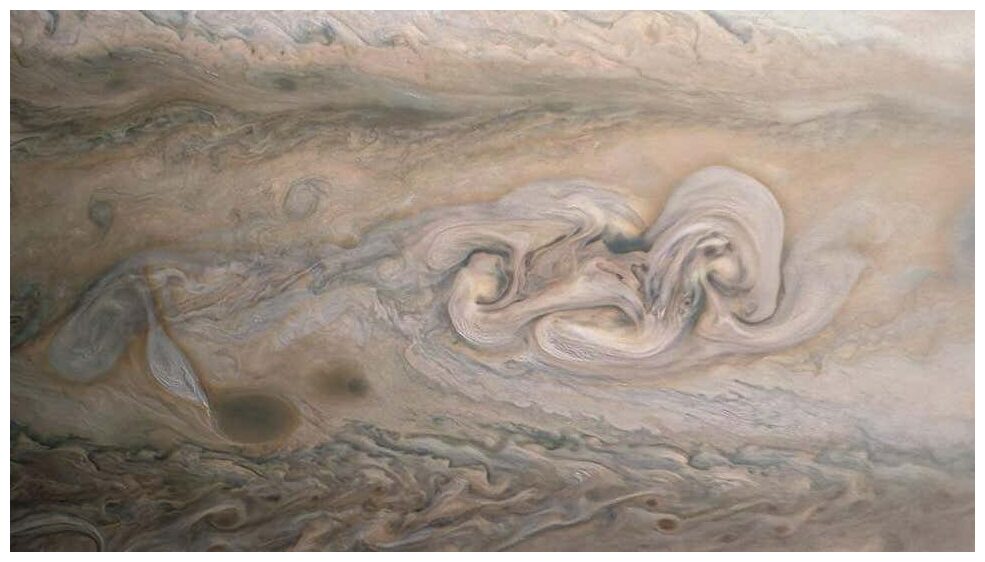
© NASA/JPL-Caltech/SwRI/MSSS/Kevin M. GillClyde’s spot, as spotted by NASA’s Juno probe on April 15, 2021.
Last May, a spot suddenly appeared in Jupiter's southern hemisphere. But as new images from the Juno spacecraft show, the once circular feature has morphed into an enigmatic splotch.

The feature was first detected by Clyde Foster, director of the Shallow Sky section of the Astronomical Society of Southern Africa, on May 31, 2020. Foster spotted the spot using his own 14-inch telescope, and, quite fortuitously, NASA's Juno probe made a close approach two days later, allowing for a close-up view of the new feature.

Clyde's Spot, as it's informally known, is a convective outbreak — a plume of cloud that's reaching out beyond the regular cloud tops — and is located to the southeast of Jupiter's Great Red Spot. Such outbreaks are not uncommon within the gas giant's South Temperate Belt.

On April 15, 2021, Juno performed its 33rd perijove (close flyby) of Jupiter, during which time it captured a new view of Clyde's Spot — or, at least what used to be Clyde's Spot. The new image was taken when the spacecraft was 16,800 miles (27,000 kilometers) above Jupiter's cloud tops. Citizen scientist Kevin M. Gill processed the image from raw JunoCam data, according to NASA.

Rainbow

Residents of Cleveland, Ohio capture breathtaking photos of 'fire rainbows'

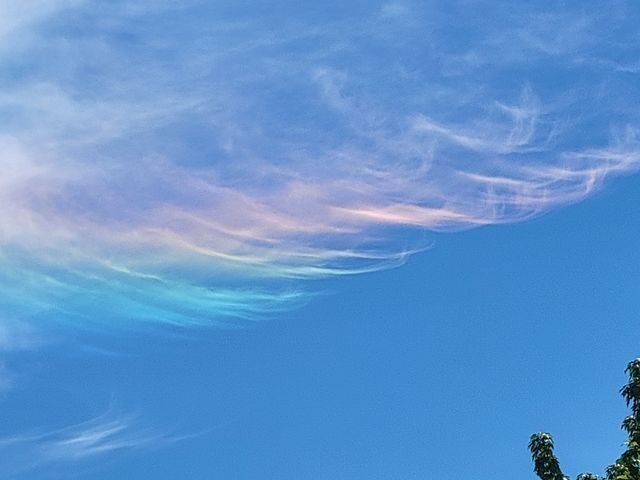
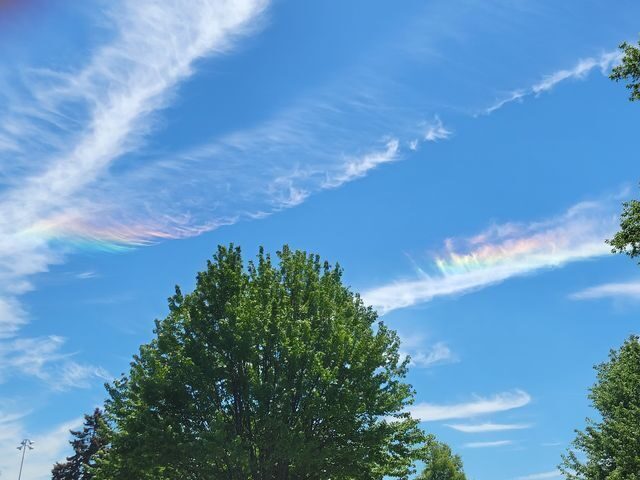
Some News 5 viewers captured a rare weather phenomenon that produced rainbow-like clouds in the sky on Wednesday.
circumhorizontal arc in OH
© Gary Gardner
Iridescent clouds, also known as "fire rainbows" or "circumhorizontal arcs," occur when the sunlight diffracts off hexagonal ice crystals in cirrus clouds.
circumhorizontal arc in OH
© Gary Gardner

Question

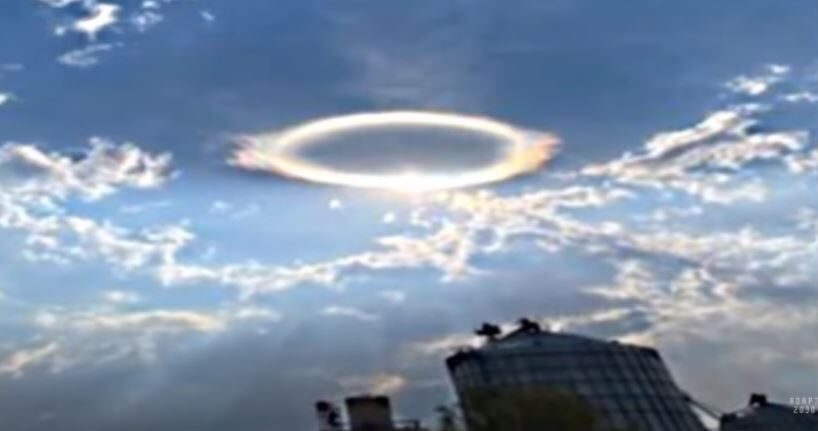
Adapt 2030 Ice Age Report: Natural or man made oddities around the planet

Vermont ring in sky
© YouTube/Adapt 2030 (screen capture)
It seems everywhere you look from the skies to the Earth, the economy or species wise, it is all in the process of changing or metamorphosing to a new era and vibration. What will be the change that allows you to see?


Solar Flares

CME sparks strong geomagnetic storm

Aurora Borealis
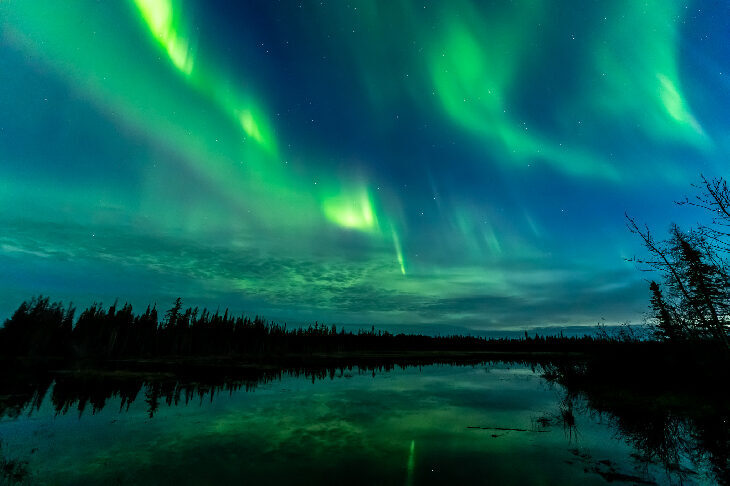
© John David McKinnonAurora Borealis taken on May 12, 2021 @ The Sandhill Crane Marsh, Alberta, Canada.
A coronal mass ejection (CME) hit Earth's magnetic field during the early hours of May 12th, sparking the strongest geomagnetic storm of young Solar Cycle 25. "Very bright and active waves of aurora danced with morning twilight," reports John David McKinnon of Alberta, Canada, who photographed the display from Sandhill Crane Marsh.

The G3-class disturbance lasted 6 full hours. Only one thing stopped sky watchers in Europe and many US states from seeing the auroras: The sun came up. Daylight blotted out an otherwise memorable display.

The storm is subsiding now. Minor G1-class storms are possible on May 13th as Earth exits the CME's wake.

Cassiopaea

Cassiopeia nova brightens suddenly

A star in the constellation Cassiopeia that flared into view during mid-March has erupted to naked-eye visibility. Catch it while you can!
V1405 Cassiopeiae
© Bob KingNova Cassiopeia 2021 (V1405 Cas) shines at magnitude 5.5 on Saturday night, May 8th, from Duluth, Minnesota. It's located about 5.5° above the familiar W of Cassiopeia. The view faces north around 11:30 p.m. local time.
Novae are full of surprises. When discovered at the onset of the explosion, a nova can brighten from obscurity and become visible in binoculars in a matter of hours. Some plateau and then fade. Others fade and then temporarily re-brighten one or more times before returning to their former slumbers.

Enter Nova Cassiopeiae 2021, formally named V1405 Cassiopeiae. Discovered at magnitude 9.6 by Japanese amateur Yuji Nakamura on March 18th, it rapidly brightened to around magnitude 7.5-8.0 magnitude, then remained fairly constant in brightness for the next four weeks at magnitude 8.0. In mid-April the nova began to slowly brighten again, ending the month at magnitude 7.5.

V1405 Cas Brightens
© AAVSOThis light curve of V1405 Cas tracks its changes in brightness from discovery (left) to May 9 UT. The uptick in early May is striking.
The big surprise came on May 6-7, when V1405 Cas did a pole vault, shooting up almost two magnitudes to 5.7! As of May 8-9, it's still climbing, albeit more slowly. I spotted the nova without optical aid on May 9.18 UT at magnitude 5.5. At the time, Cassiopeia hung below the North Star at its nadir. At 20° altitude it appeared faint and required averted vision, but it was still a thrill to see with the naked eye. While several novae are discovered each year, bright ones are uncommon.

Cloud Lightning

First documented case of rare red sprites in New Zealand

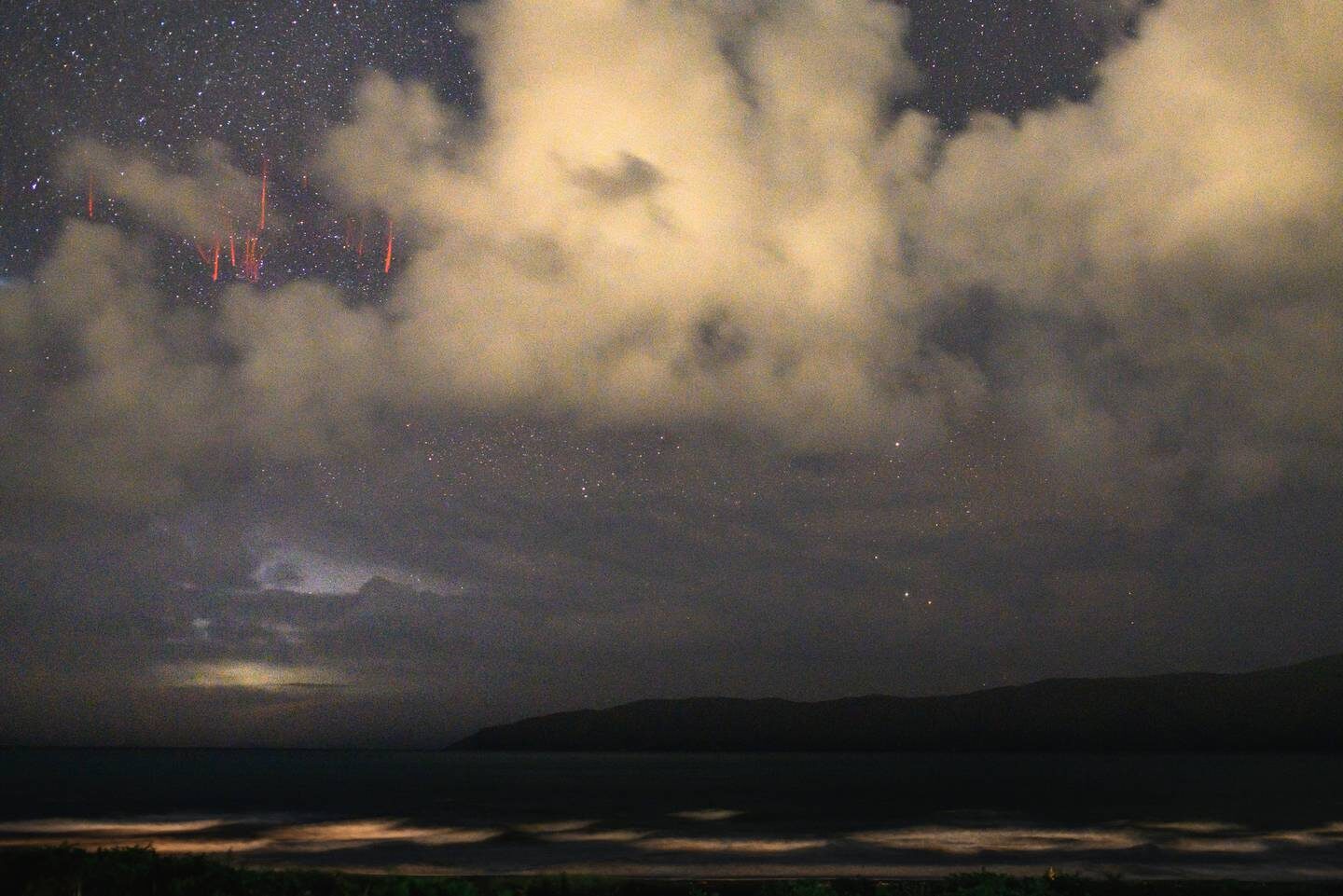
Rare red sprites captured in Kāpiti
© Brendan GullyRare red sprites captured in Kāpiti.


A Kāpiti photographer has captured a rare weather event, so rare it's the first time Metservice has documented the case.


Brendan Gully captured red sprites from the Kāpiti Coast last week during a thunderstorm capturing them not once, but three times.

"I was really stoked to have finally captured them in New Zealand and it was a bit of a relief too," Brendan said.

A landscape photographer who specialises in storms and likes to capture natural phenomena and scenes that are fleeting, Brendan has been chasing storms and red sprites for a few years.

"I started photography in 2015 and it was the storm-chasing that led me to get my first camera.

"I've had a decent number of attempts at them in the past, but just not had the right luck on the day."

Red sprites are rare bolts of red lightning that are rarely seen from the ground due to their high altitude.

They form between 50-90km above the Earth and only last a few milliseconds.

Comment: With the surge in sightings of rare or novel atmospheric phenomena in recent years it seems the electrical nature of our weather and changing atmosphere is becoming more apparent:


Camera

Black auroras captured over Scotland

Aurora Borealis on April 18, 2021 @ Hopeman, Moray, Scotland
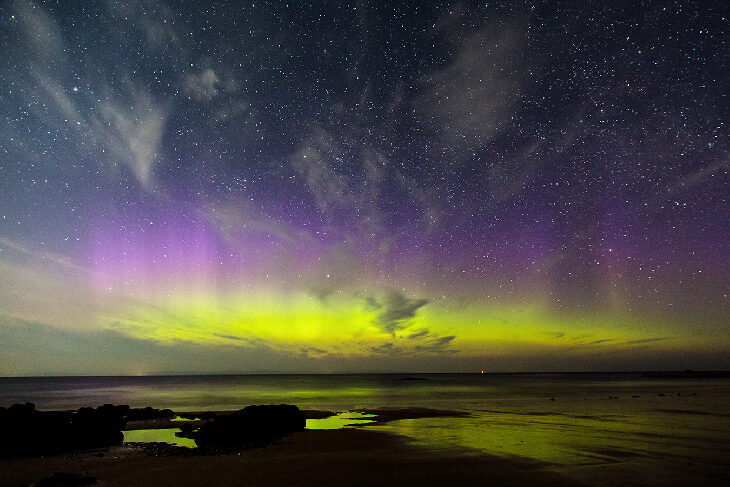
© Alan C ToughAurora Borealis on April 18, 2021 @ Hopeman, Moray, Scotland
Red. Green. Purple. These are the colors we usually see during any display of auroras. On April 18th, Alan C. Tough of Hopeman, Moray, Scotland saw something else. "Black," he says. In the photo below, "note the dark vertical strip above the green band, which is devoid of any normal auroral colour."

Black auroras have been seen before. They are dark rings or black blobs that sometimes appear in an otherwise ordinary expanse of auroral light. Some researchers call them "anti-auroras." The black auroras in Tough's photo are circled here.

Ordinary auroras are caused by electrons raining down from space, hitting Earth's upper atmosphere and making the air glow. Black auroras are the opposite. Instead of electrons raining down, electrons are propelled upward, back into space. This diagram shows what happens:

Cassiopaea

AG Carinae about to go supernova?

AG Carinae
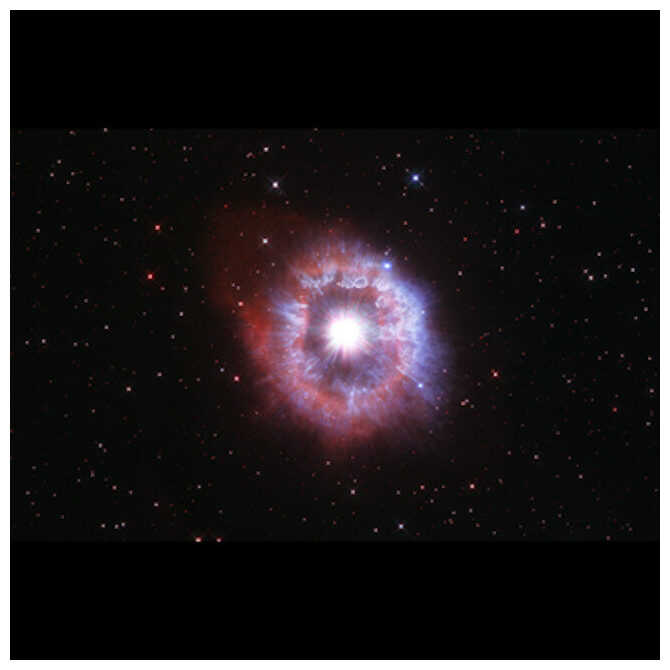
© NASA, ESA, STScISpectacular image of the luminous blue variable star AG Carinae released by Hubble for it’s 31st launch anniversary.
Astrophotography is one of the most gratifying parts of space exploration, and there's nothing better at it than Hubble. Recently, it celebrated the 31st anniversary of its launch by taking a spectacular image of one of the most impressive stars in the sky - AG Carinae. In the not too distant future, Hubble, or a successor, might be able to capture an even more spectacular display from the star when it goes supernova.

AG Carinae, located appropriately in the constellation Carina, is one of the most luminous stars in the sky, though its apparent brightness on Earth is somewhat diminished give its 20,000 light year distance from Earth. The star is famous for a number of reasons, including that it is one of only 50 known luminous blue variable stars.

Luminous blue variables are extremely short lived and violent, barely balancing between exploding into a supernova and collapsing under its own weight into a black hole. As part of their life cycle, they occasionally emit a spectacular outburst that creates a kind of glowing shell around them, as can be seen in the Hubble image of AG Carinae.

Outbursts like the one in the picture only happen once or twice in a luminous blue variable's lifetime. They occur when radiation pressure from the interior of the star expands it out to such an immense size that it pushes material out of itself, then collapses back into a more stable state for potentially millions of years.