Extreme Temperatures
S


Sun

Warmest first half of January ever recorded in Seattle since the 1890's

Seattle
© Bettina Hansen / The Seattle TimesA’joure Johnson, 6, of Seattle takes a leap while visiting Me-Kwa-Mooks Park in West Seattle recently.
If you feel like it's been a mild winter so far, you're not imagining things. This has been the warmest first half of January ever recorded in Seattle, according to the National Weather Service in Seattle.

"The average high temperature at Sea-Tac (International Airport) for the first 16 days of January was 51.8°," the weather service tweeted Thursday.

Those temperature records go back to marks taken at the Federal Building in downtown Seattle since the 1890s, meteorologist Dana Felton said.

A high of 50 degrees is expected on Thursday, Felton said.

There were, however, a few cold mornings: Lows dipped to 33 degrees on Jan. 1, 32 degrees on Jan. 2 and 31 degrees on Jan. 15, he said.

The warmest day so far was last Friday, Jan. 11, when the high climbed to 61, Felton said.

"A 60-degree day is pretty rare in January," he said. "There have only been 16 in the 75 years of records at Sea-Tac."

Snowflake Cold

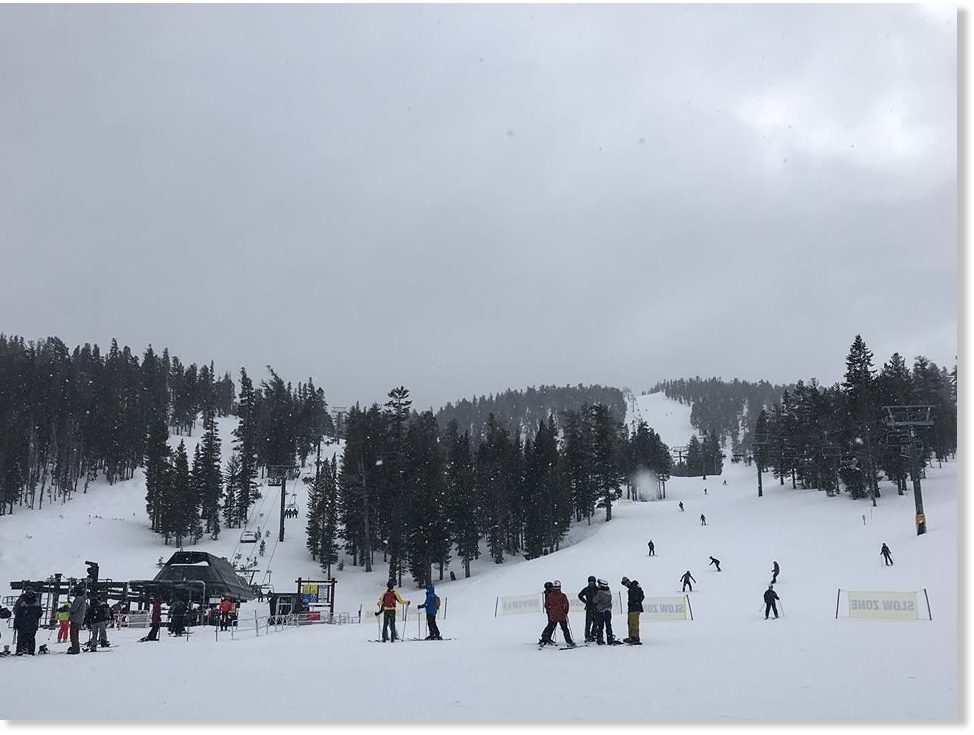
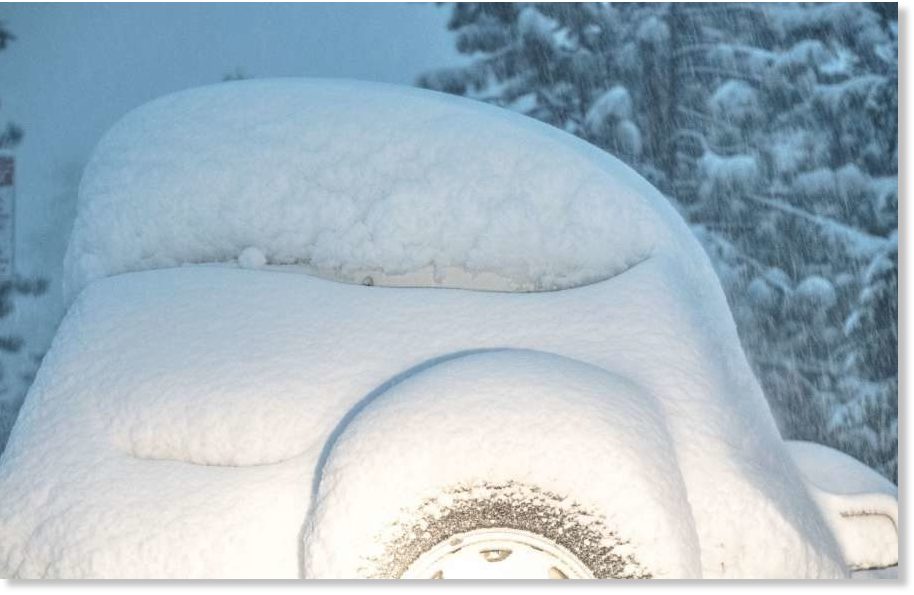
Sierra resorts can count snowfall totals in feet - here's what they look like on Thursday, January 17

Heavenly Mountain reported 12 inches of snow in 24 hours Thursday morning.
© Heavenly Mountain ResortHeavenly Mountain reported 12 inches of snow in 24 hours Thursday morning.
Several ski resorts in the Tahoe area, including Squaw Valley Alpine Meadows and Northstar California, reported receiving two feet of snow between Tuesday and Wednesdayand that's before the brunt of the storm hit.

The snow continued to pile up Wednesday night into Thursday morning, as the storm dumped wet, heavy 'Sierra cement' in the Tahoe basin.

The resorts started to boast about how much snow fell in their neck of the woods and the numbers were impressive all around. Sugar Bowl had received 15 inches of snow just overnight. Squaw Valley reported 28 inches of snow in the past 24 hours, Northstar had 26 inches, Kirkwood had 16 inches, and Heavenly had a foot. June Mountain Ski Area reported a 24-hour total of 36 inches at 7 a.m. Thursday.


Snowflake

Storm dumps up to 18 inches of snow in a day on Lake Tahoe resorts, blizzard warning issued for next 24 hours

Heavenly Mountain
Heavenly Mountain
Some Lake Tahoe ski resorts are reporting over 1 foot of snow Wednesday morning, less than 24 hours into several days of winter storms.

Snow started falling late Tuesday morning and continued throughout the day. After a brief break, snowfall picked back up Wednesday morning.


Here are the 24-hour totals reported by resorts in the South Lake Tahoe and Incline Village areas:

Snowflake Cold

Turkey hit by harsh winter, snowfall

SNOW TURKEY
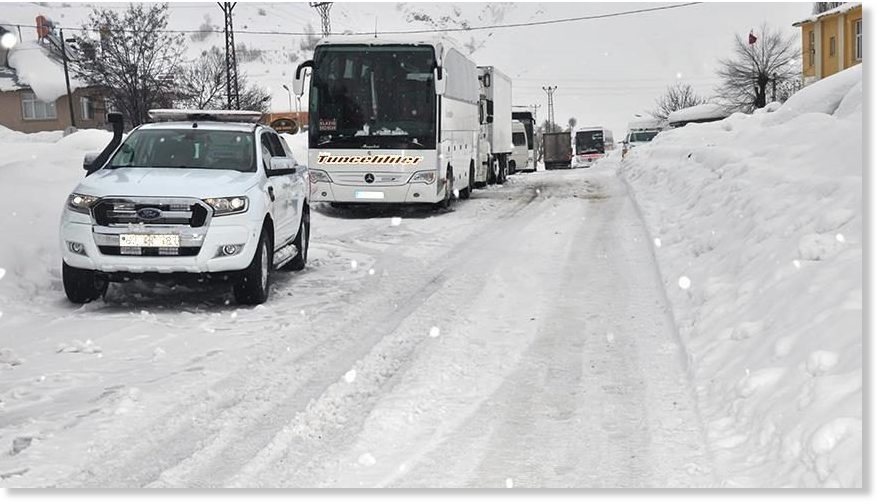
Roads to thousands of villages covered by thick snow

Harsh winter conditions dominate many parts of Turkey, affecting daily life.

An old woman in eastern Bingol province was killed when an avalanche of snow fell over her from the roof of her house.

The roads to thousands of villages across Turkey were covered with snow. In Ovacik district of eastern Tunceli province, the height of snow reached three meters (10 feet).

Roads between Ankara-Izmir, Afyonkarahisar-Usak and Afyonkarahisar-Kutahya cities in western Turkey were blocked early Wednesday due to heavy snow.


Snowflake

Best of the Web: ENORMOUS 'spinning ice disk' appears on river in Maine - Largest one yet?

maine ice disk
A very unusual and impressive sight took shape in Maine this week, a nearly perfect disc of ice -- forming in the Presumpscot River.

The massive ice disc drew curious onlookers to the banks of the river. It's not clear how or exactly when it formed.

According to an official with the city of Westbrook, the disc is roughly 100 yards across and is spinning in a counter clockwise direction.

That same official captured this breathtaking drone footage of the amazing sight.


Comment: That thing's almost 100m across!!!

It is an unusual sight, and so why are these ice disks, and a number of other out of the ordinary but related phenomena, suddenly occurring all over the globe?


Snowflake Cold

Snow Report: Latest conditions in the Alps - metre and a half fell in parts of Austria over weekend

snow
The Alps came up for air today (Tuesday) after another weekend of record-breaking falls, which cut off some Austrian resorts and saw the avalanche risk hit 5 - the highest level.

Up to a metre and a half fell in parts of Austria, in particular the Arlberg region around Lech and St Anton, which were both cut off completely, as were Stuben and St Christoph. Only six lifts in St Anton - out of a possible 39 - were turning yesterday, due to high winds.

Obergurgl was also inaccessible because snow was overwhelming efforts to clear the roads and some lifts in nearby Ischgl were stopped because they were completely buried in places.


Snowflake Cold

Cold wave intensifies in North India: Pahalgam witnesses coldest January night in 5 years at minus 14.6 degrees Celsius

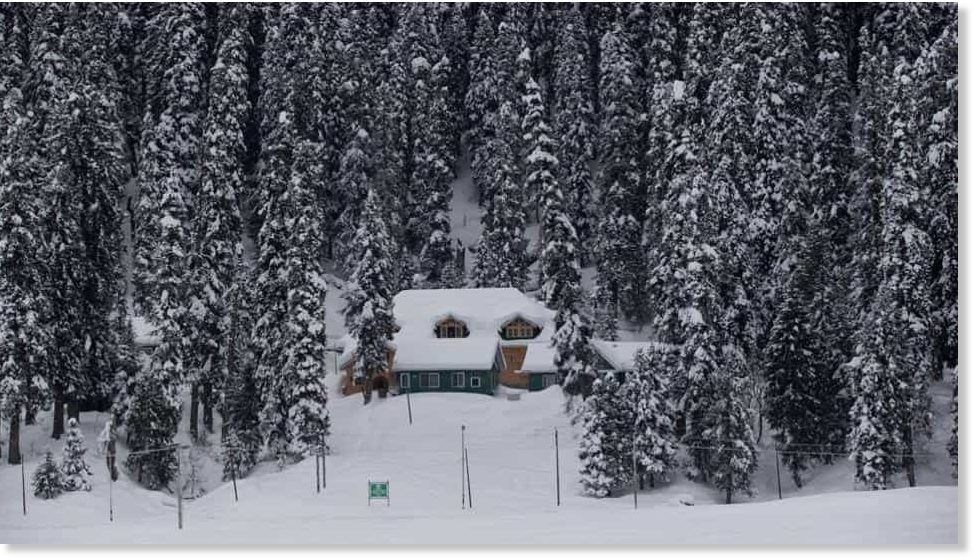
A view of a snow covered hut in Gulmarg, 55 kilometers north of Srinagar,
A view of a snow covered hut in Gulmarg, 55 kilometers north of Srinagar.
Cold wave conditions continued across North India on Monday with fresh bouts of snowfall reported in the Kashmir valley, Ladakh region and Himachal Pradesh. Several places also witnessed a sharp drop in minimum temperatures at night. The Valley, however, saw a sunny Monday morning despite the cold conditions.

Kashmir

Kashmir is under what is known as the 'Chillai-Kalan' — the 40-day harshest period of winter when snowfall is frequent. Chillai-Kalan ends on 31 January and is then followed by a 20-day-long 'Chillai-Khurd' (small cold) and the 10-day 'Chillai Bachha' (baby cold).


Comment: See also this report from early January: Heavy snowfall disrupts life in Kashmir - up to 3 feet measured.


Snowflake Cold

Snow submerges Austrian ski resort

A snowcat drives through the snow at the valley
© ALEX HALADAA snowcat drives through the snow at the valley station of the Hochkar cable car at 1380 m altitude on January 13, 2019 in Hochkar, Lower Austria. - The area around Hochkar in Lower Austria, 150 km west of Vienna, was declared a disaster area due to snow depths of more than 3,5 meters.
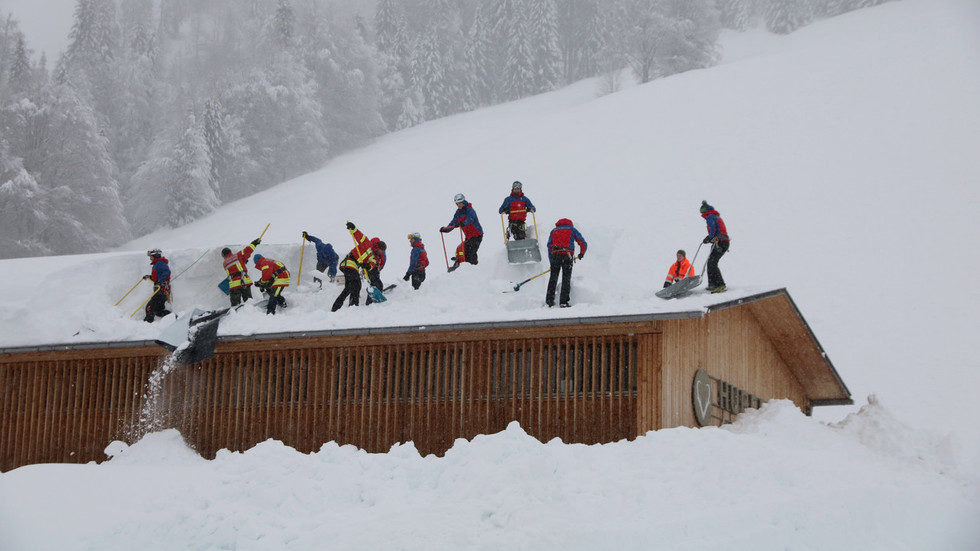
Heavy snowfall in Austria has left an entire ski resort completely submerged in snow.

More than 250 soldiers and firefighters have been digging out the town of Hochkar.

The town's population of 500 was evacuated amid the risk of avalanches. Five of the five hundred residents volunteered to stay behind, one of them a hotel owner who says it's been snowing for a week. The operation to dig out the town could go on for days.


Ice Cube

German hotel buried by huge avalanche as snows claim lives across Europe

avalanche germany hotel
© AFP/Benjamin LissThe Hotel Hubertus buried under tonnes of snow.
A hotel in southern Germany has been buried by an enormous avalanche, sparking an evacuation, as heavy snows cause deaths and disruption across Europe.

Hotel Hubertus reportedly sustained damage after the wall of snow battered the building in the village of Balderschwang, close to the Austrian border, on Monday.

The hotel was evacuated and 100 guests were taken to other buildings in the area. Nobody suffered any injuries in the incident, Süddeutsche Zeitung reports.

More than 1,100 people are now stranded in Balderschwang because several days of intense snowfall has left the roads in and out of the town at risk of being buried by an avalanche at any moment.

Comment: The cold that is sweeping across Europe is being blamed on the meandering jetstream that's bringing arctic air further south and generally disrupting the usual weather patterns. Each year this is occurring more often and bringing longer, more intense winters, meaning even those areas that are used to heavy snow are struggling to cope: And for an idea of why this is occurring, check out SOTT radio's: Behind the Headlines: Earth changes in an electric universe: Is climate change really man-made?

More footage from Austria:


Sun

Australia extreme heatwave: 'Code red' issued as Port Augusta hits 48.9C

Australia is having an extreme heatwave
© Tracey Nearmy/AAPAustralia is having an extreme heatwave, with daytime maximum temperatures forecast to extend up to the mid-40s in parts of South Australia, Victoria and NSW.

Severe weather conditions forecast to bring maximum temperatures 8C to 16C above average, as three towns record overnight minimums of 33C


Port Augusta in South Australia has reached 48.9C on Tuesday, as a heatwave sets in across much of Australia threatening more record hot days.

All-time highest minimum temperatures have also been broken in three places. Meekatharra in Western Australia and Fowlers Gap and White Cliffs in New South Wales all registered an overnight minimum of 33C on Monday.

Severe to extreme heatwave conditions extending from the interior of WA across South Australia, Tasmania, Victoria, the ACT and NSW will bring maximum temperatures of 8C to 12C above average, and in some places up to 16C above average before the end of the week.

From Tuesday through to Friday, parts of South Australia, Victoria and NSW may break January heat records, with daytime maximums extending up to the mid-40s.

"It's quite a significant heatwave because we are expecting a number of records to fall across those areas for both minimum and maximum temperatures," said Dean Sgarbossa, a senior meteorologist with the Bureau of Meteorology.

On Tuesday, Port Augusta in South Australia reached 48.9C, an all-time high since records began in 1962.