Earthquakes
S


Seismograph

Powerful shallow earthquake of magnitude 6.6 hits off Papua New Guinea

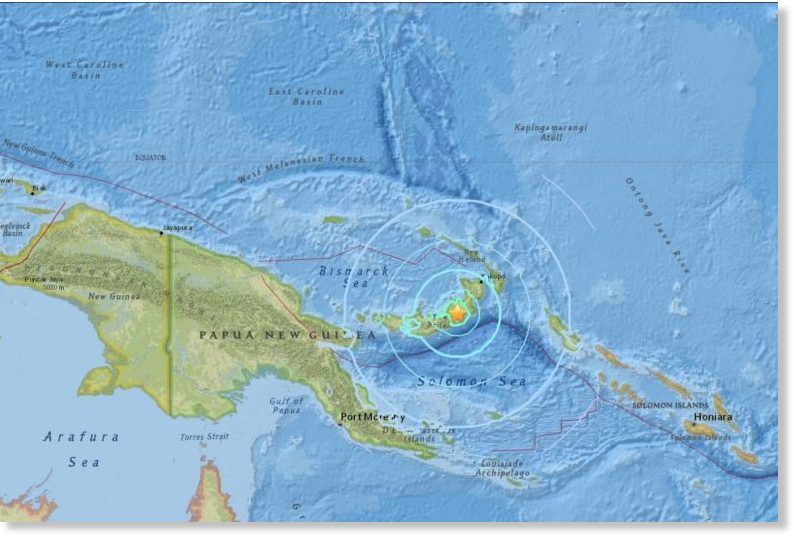
The earthquake struck 180 km west of the town of Rabaul, on New Britain island, at a shallow depth of 10 km, the USGS said.
© USGSThe earthquake struck 180 km west of the town of Rabaul, on New Britain island, at a shallow depth of 10 km, the USGS said.
A shallow 6.6 magnitude earthquake struck off Papua New Guinea on Monday (March 26), the US Geological Survey said, the latest in a series to hit the region in recent days, but there were no immediate reports of casualties or damage.

The quake struck 180km west of the town of Rabaul, on New Britain island, at a depth of 10 km, the USGS said. The quake was initially recorded with a magnitude of 7.0 but was later downgraded. There was no immediate tsunami warning.

"We are okay. No one is injured," said Sylvia Ombul, night desk supervisor at the Kimbe Bay Hotel in the port town of Kimbe, about 140 km to the west of the quake.

Comment: Just 2 days ago: 6.3-magnitude earthquake strikes Papua New Guinea region


Seismograph

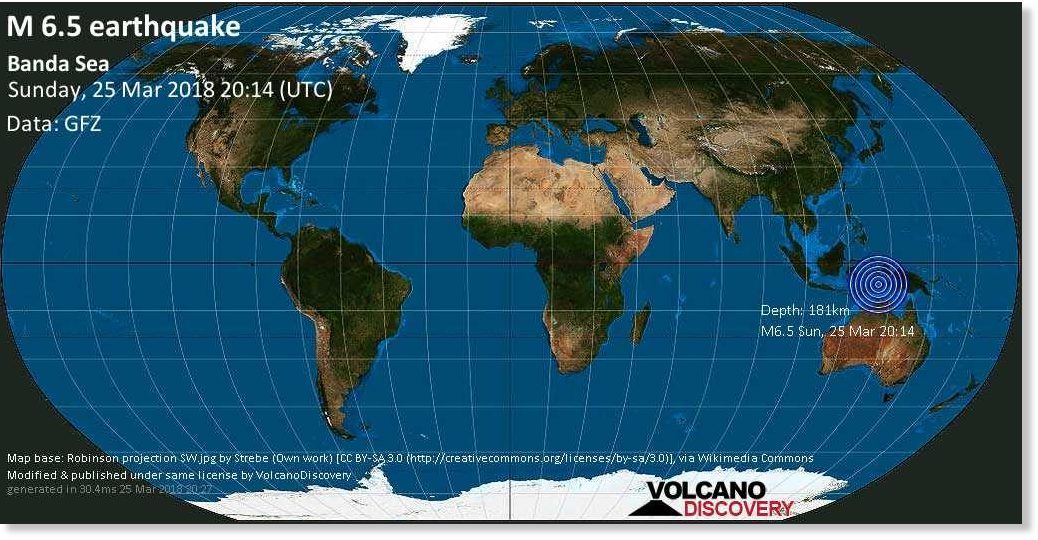
Powerful 6.5 earthquake in the Banda Sea

LOCATION
Date & time: Sun, 25 Mar 20:14:48 UTC

Magnitude: 6.5

Depth: 181.0 km

Epicenter latitude / longitude: 6.7°S / 129.72°E [Map]

Nearest volcano: Nila (31 km)

Primary data source: GFZ

Seismograph

Shallow 6.3-magnitude quake strikes Southeast Indian Ridge

graph
An earthquake measuring 6.3 on the Richter scale jolted Southeast Indian Ridge at 19:58:33 GMT on Saturday, the U.S. Geological Survey said.

The epicenter, with a depth of 10.0 km, was initially determined to be at 45.8299 degrees south latitude and 96.099 degrees east longitude.

Seismograph

6.3-magnitude earthquake strikes Papua New Guinea region

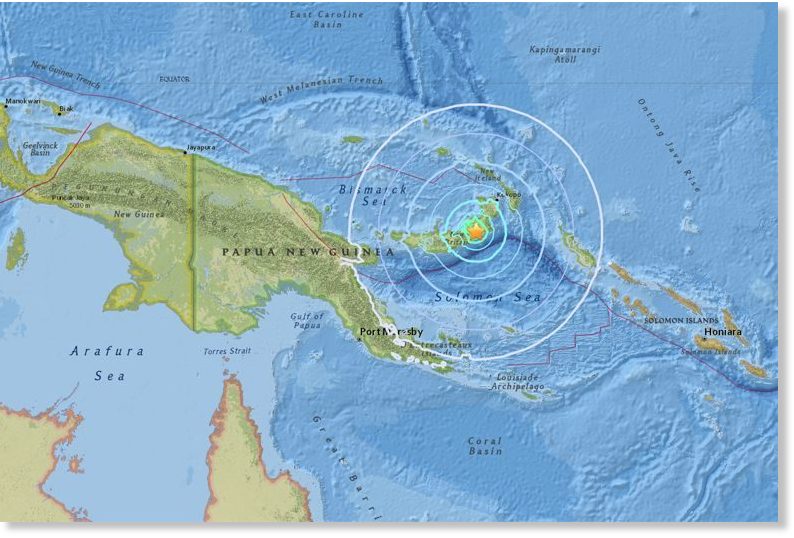
The epicentre of the quake was located 180km south-west of Rabaul on New Britain island, some 900km north-east of the capital Port Moresby, at a depth of 68km.
© USGSThe epicentre of the quake was located 180km south-west of Rabaul on New Britain island, some 900km north-east of the capital Port Moresby, at a depth of 68km
A 6.3-magnitude earthquake struck off the north-east coast of an island of the Pacific Ocean nation of Papua New Guinea on Saturday (March 24), officials said, but the tremor posed no tsunami threat to the region.

There were no immediate reports of damage or casualties from the quake, which was centred in a much more remote region than a magnitude-7.5 tremor that rocked the country's mountainous mainland highlands on Feb 26, killing 100 people.

The epicentre of Saturday's quake was located 180km south-west of Rabaul on New Britain island, some 900km north-east of the capital Port Moresby, at a depth of 68km, the US Geological Survey (USGS) said.

The quake was revised down from an initial reading of magnitude 6.8 and a depth of 60km.

Stock Down

Lloyd's of London reports £2bn loss after natural disasters in 2017

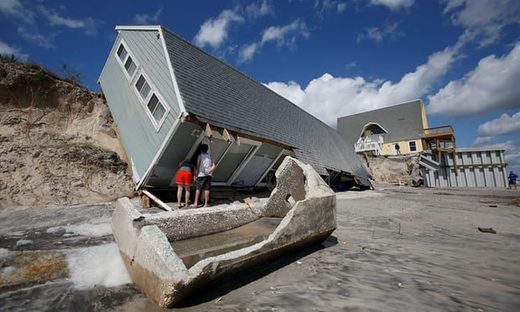
Hurricane Irma damage
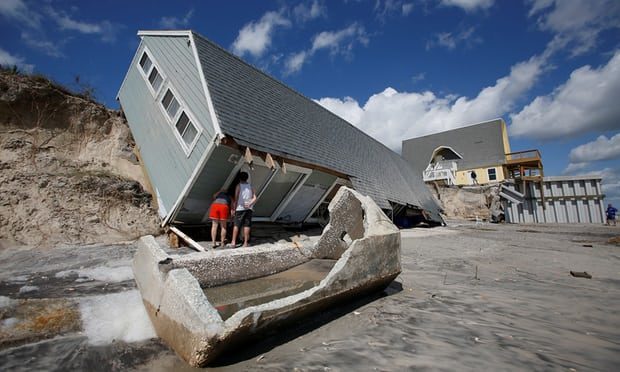
© Chris Wattie/ReutersLocal residents look inside a collapsed coastal house in the wake of Hurricane Irma in Vilano Beach, Florida.
Lloyd's of London reported a £2bn loss after a year of natural disasters

Lloyd's of London has posted its first loss in six years, after what the insurer described as "one of the costliest years for natural catastrophes in the past decade".

The iconic insurance market reported an overall pre-tax loss of £2bn for last year, down from a profit of £2.1bn the year before, despite gross written premiums climbing to £33.6bn from £29.9bn.

Major claims in 2017 were more than double the cost of the previous year, at £4.5bn, which led to an underwriting loss of £3.4bn, compared with profit of £500m in 2016.

This led the group's combined ratio to deteriorate to 114 per cent from 97.9 per cent - a combined ratio of less than 100 per cent means a firm is profitable.

A series of huge storms in the second half of 2017, including Hurricanes Harvey and Irma, left homes and businesses across the south coast of the US and the Caribbean destroyed.

Earthquakes in Mexico and wildfires in California added to the financial losses due to natural disasters, with one study putting the total cost of global disasters last year at $306bn (£218bn).

Comment: The costs of natural disasters are likely to increase in the coming years. See also: World sees rapid upsurge in extreme weather says report


Attention

Tremor swarm at Yellowstone continues - began in February

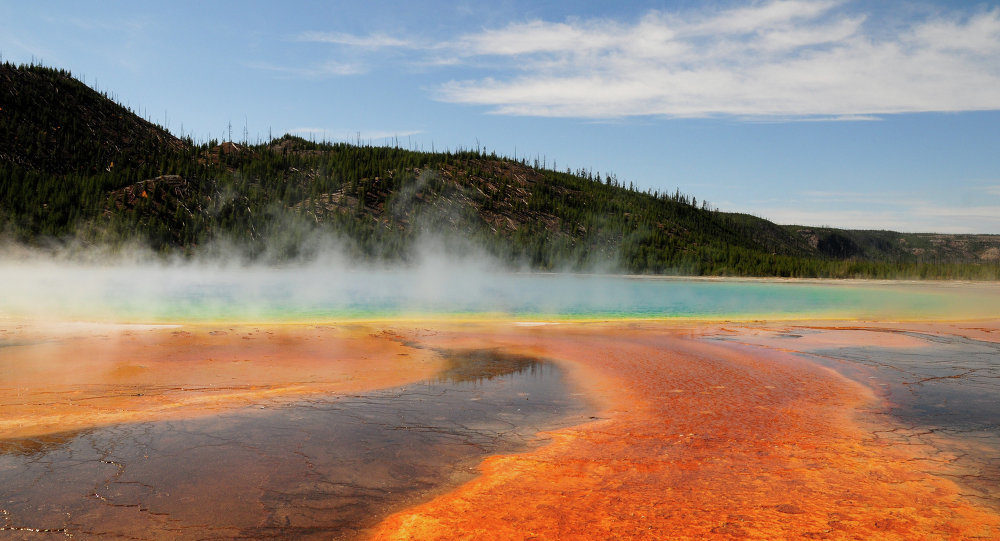
CC BY 2.0 / Michael McCarthy / Yellowstone-4193
© CC BY 2.0 / Michael McCarthy / Yellowstone-4193Yellowstone
Laying underneath the tranquil and beautiful geysers, waterfalls, and mountains of Wyoming lies the Yellowstone caldera. The supervolcano has been worrying some for decades, but now experts fear an eruption could happen soon after reporting a "spate of tremors."

According to WMD, a spate of four mini-tremors in the area following a period of "rest" has raised fears among some that the supervolcano is about to blow. Although the Yellowstone supervolcano hasn't erupted for 631,000 years, scientists have been diligently working to understand the last eruption so they can more accurately predict when a big one will happen again.

The most recent quake came on March 11 when a small 1.5 tremor took place beneath the surface. The strongest one, a 1.8 magnitude earthquake, came just hours before this, and people are concerned that Yellowstone could be about to blow.

Comment: See Also:


Seismograph

Late night 5.2 earthquake strikes Galapagos Archipelago

galapagos earthquake march 2018
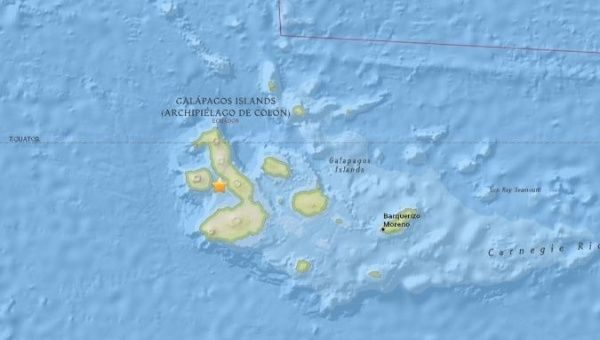
© USGSParts of Ecuador are along the dreaded Ring of Fire.
A tremor measuring 5.2 in magnitude hit Ecuador's Galapagos Islands, the Euro-Mediterranean Seismological Center (EMSC) reported.

The epicenter of the earthquake was located 14 kilometers off the coast Fernandina island. The tremor struck at about 10:00 p.m. local time. There have been no reports of damage or injuries so far.

Fernandina Island is the third largest island of the Galapagos. The island is a shield volcano that has been erupting since April 11, 2009. A shield volcano is a type of volcano usually built almost entirely of fluid lava flows.

Parts of Ecuador are along the dreaded Ring of Fire - an area in the Pacific Ocean which has a large number of seismic and volcanic activity.

Attention

Rapid earthquakes spark fears of fiery eruption at Mount Etna, Italy

etna
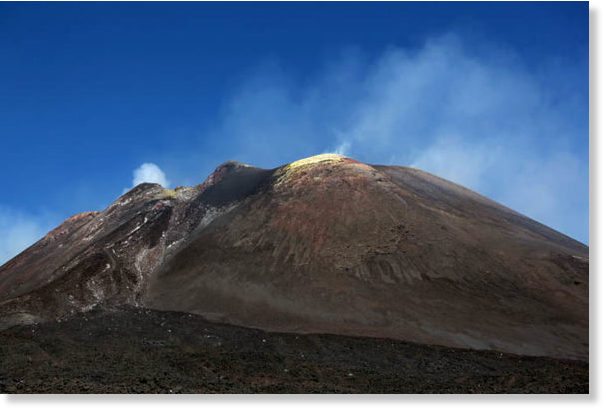
Mount Etna, one of the word's most active volcanoes, sparked fears of a fiery eruption on Thursday after a rapid succession of powerful tremors rocked the fiery mountain.

Residents of the ancient city of Catania on the eastern shores of Sicily were struck with panic after several shocks reverberated through Etna in just five minutes of each other.

The terrifying Etna which only sits 18miles from the coastal town, was rocked by three shallow tremors on its southern slopes.

The National Institute of Geophysics and Volcanology (INGV) of Catania recorded the shocks in the early morning hours.

Fish

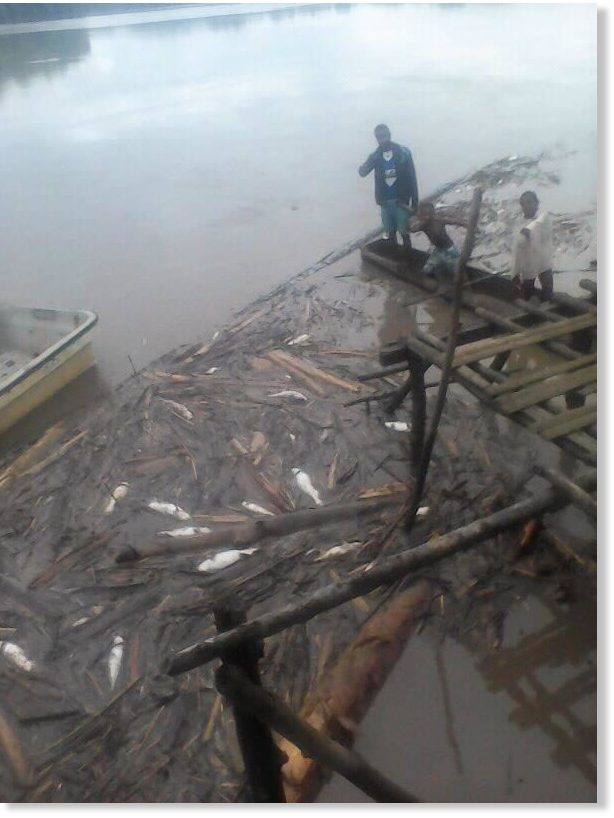
Earthquake-hit Papua New Guinea left with dead fish, eels and prawns in polluted rivers

dead fish
Contaminated drinking water and disrupted rivers are making the aftermath of several powerful earthquakes in Papua New Guinea even worse.

Dead fish, eels, prawns and other debris are clogging silt and mud-laden waterways, causing stench and unsafe water, while properties have also been damaged.

The situation is being described as "disastrous" by the Governor's Office in the badly-hit Gulf Province.

In a public notice, the office stated: "Given the magnitude of the earthquake and its resulting damage upstream in Southern Highlands and Hela Province, consequential effects and changes in the rivers systems downstream is disastrous ...

Seismograph

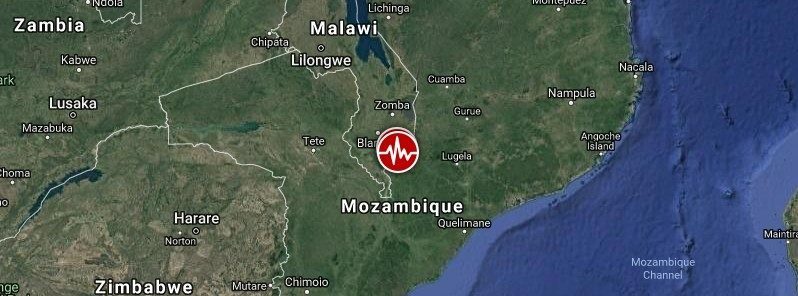
Rare M5.6 earthquake strikes Mozambique-Malawi border, is followed by M5.2

Rare M5.6 earthquake hits Mozambique followed by M5.2
© Google/TW
The first, registered by the USGS as M5.6, hit at 08:49 UTC at a depth of 6.4 km (4 miles) and was followed by M5.2 at 09:52 UTC at a depth of 10 km (6.2 miles). The M5.6 earthquake is expected to have a medium humanitarian impact based on the magnitude and the affected population and their vulnerability.

According to the USGS, the epicenter was located 25.9 km (16.1 miles) NE of Nsanje (population 21 774) and 80.4 km (49.9 miles) S of Mulanje (population 16 483), Malawi.

There are 3 000 000 people living within 100 km (62 miles) and 8 800 within 5 km (3.1 miles).

Some 22 000 people are estimated to have felt very strong shaking, 63 000 strong, 195 000 moderate and 4 783 000 light.

Comment: Earthquakes, volcanoes, sinkholes, landslides and gaping fissures, they just keep coming with a greater frequency and seem to be becoming ever more massive: