Health & WellnessS


Cow

EAT-Lancet propaganda gets push-back from Institute of Economic Affairs

steak filet
© GettyCritics claimed the team of doctors and other experts behind the report want a nanny state.
Red and processed meat should be taxed and given cigarette-style health warnings, a major report will say tomorrow.

The Lancet Com-mission on Obesity says taxing joints and burgers will help people choose healthier options and raise billions for healthcare.

But critics claimed the team of doctors and other experts behind the report want a nanny state.

Comment: Much like the warnings on cigarettes, the idea of putting warnings on meat have no scientific basis and simply fall back on political correctness. Meat is essential to health, making the idea of warning against it a propaganda tool, nothing more.

See also:


Attention

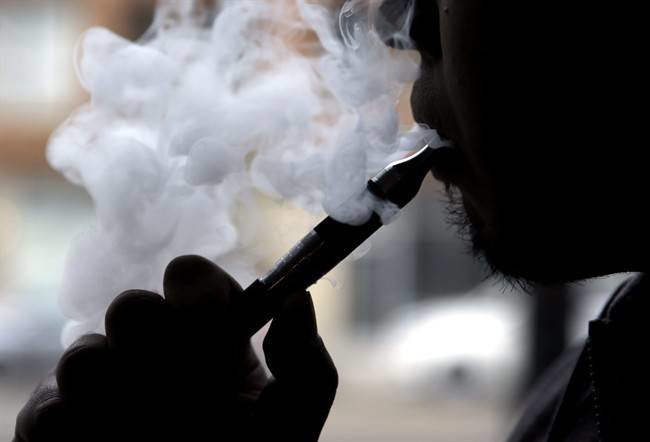
Vaping poses health risks: New study finds e-cigs raise risk of stroke, heart disease, and heart attacks by up to 70%

Vaping
© AP/Nam Y. Huh
Vaping e-cigarettes raises the risks of having a heart attack, stroke, or heart disease, a new study finds.

About one in 20 US adults use e-cigarettes and many of them claim to do so because they are 'healthier' than combustible cigarettes.

But the devices are still relatively new and poorly understood.

As more and more research on them comes out, it becomes increasingly clear that 'safer' doesn't mean safe.

Comment: Vaping is new and only now are we beginning to see its harmful effects. Time for people to make the switch back to tobacco:


Health

Medical intervention may not be doing you any good

X Ray Images
© Dreamstime
Human beings are creatures of habit. Psychology research clearly demonstrates that people develop automatic responses to specific conditions which become more ingrained with repetition, even if they may not be the best choices.

We often think of doctors as immune to these human imperfections. But research demonstrates that physicians are also creatures of habit when it comes to prescribing medical tests and treatments even when new research has demonstrated that these treatments are not effective.

Each year, medical journals published by the American Medical Association document medical overuse-i.e., when doctors recommend medical interventions that are not helpful. Within the last year, researchers published systematic reviews detailing medical overuse in the JAMA Pediatrics and JAMA Internal Medicine.

Bulb

Top 3 dangers of LED lights

LED lightbulbs
The amount and quality of light you're exposed to every day can have an enormous impact on your health. The healthiest light, of course, is natural sunlight, which has a number of benefits beyond the making of vitamin D in your skin. Unfortunately, most of us spend very little time outdoors during the daytime, thereby missing this important health component.

What's worse, most have replaced their incandescent light bulbs - which most closely resemble full spectrum analog natural sunlight - with energy-saving light-emitting diode (LED) lights, which have a number of detrimental biological effects.

LEDs emit a large amount of aggressive blue light that generates high amounts of reactive oxygen species (ROS) and oxidative stress, and are devoid of near-infrared light that would help counteract some of that damage.

Comment: Cleaning up one's light environment can be an important step in improving sleep and overall health. It's an important, yet often overlooked concern.

See also:


Satellite

20,000 satellites for 5G to be launched sending focused beams of intense microwave radiation over entire earth

5G satellites
Public attention about 5G has been focused on the plans of telecom companies to install millions of small cell towers on electric utility poles, on public buildings and schools, on bus stop shelters, in public parks, and anywhere they want in national parks and on federally owned land.

In local urban communities there would be a cell tower approximately every 500 feet along every street.

As bad as these small cell towers might seem from the standpoint of constant exposure to radio frequency (RF) radiation in close proximity to the source, perhaps an even more alarming prospect will be the beaming of millimeter length microwaves at the earth from thousands of new communication satellites.

Comment: There is a great deal of research showing the harmful effects of wireless exposure that goes well beyond the red herrings used in studies "proving" its safety. The fact that the technology is plowing ahead completely unchecked is disturbing, to say the least. When the entire planet is completely saturated with 5G radiation, and there's nowhere left to hide, the true health consequences of this technology will come to bear on the entire planetary ecosystem, humans included.

See also:


Hourglass

Why the eight-hour workday doesn't work

man at computer
© Getty Images
The 8-hour workday is an outdated and ineffective approach to work. If you want to be as productive as possible, you need to let go of this relic and find a new approach.

The 8-hour workday was created during the industrial revolution as an effort to cut down on the number of hours of manual labor that workers were forced to endure on the factory floor. This breakthrough was a more humane approach to work two hundred years ago, yet it possesses little relevance for us today.

Like our ancestors, we're expected to put in 8-hour days, working in long, continuous blocks of time, with few or no breaks. Heck, most people even work right through their lunch hour!

This antiquated approach to work isn't helping us; it's holding us back.

Cow

Why we should resist the vegan putsch

vegan meal
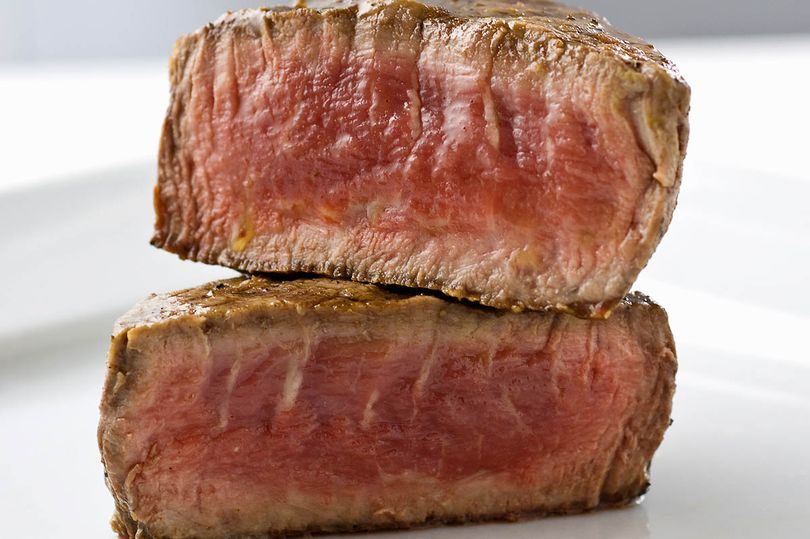
Eat-Lancet has decided we should no longer eat the nutritious animal foods that have sustained us for millennia.
Vegans, about 1% of the population when I last checked, are currently trying to shape the public discourse on food. According to them, all animal foods, irrespective of their production method or level of processing, are catastrophic for both human health and the environment and so must be cut to a minimum, preferably eliminated. This extreme statement is now routinely advanced, and taken at face value by some, as incontrovertible scientific fact.

Look at Veganuary, once little more than a social media hashtag for the vegan party faithful. It has stepped up its propaganda war with emotive public transport ads. 'Love animals? Stop eating us', is one such simplistic slogan.

Animal rights extremists are stepping up 'direct actions' (pickets, occupations) that target the most ethical businesses, such as social enterprise Hisbe, in Brighton, because it dares to sell well sourced, ethically produced meat, fish, eggs, and dairy.

Comment: The propaganda is getting pretty intense with woefully misguided attempt to get the population to turn to veganism. Veganism, or any of its close cousins, are good for neither planet nor the health of the individual. Anyone listening to this propaganda, and taking it onboard, will pay dearly with their health.

See also:


Cow

If you care about the planet, eat more beef

meat grocery
Effective immediately, I have vowed to double my beef consumption and I'm doing it to save the planet.

It seems curious timing, doesn't it, that the week that the British medical journal The Lancet came out with the recommendation to reduce our beef consumption by 90 per cent, that the new Canada Food Guide would mirror the recommendations by saying we need to reduce our consumption of red meat and sugar. Really? Are we to believe that eating meat is as bad for you as eating Halloween candy?

Having watched the environmental movement for a long time, I don't believe in coincidences. Researcher Vivian Krause discovered a co-ordinated attack on our farmed fish industry funded by U.S. interests funnelling money to Canadian environmental groups. She then exposed a co-ordinated attack on our Alberta oil industry funded by U.S. foundations funnelling money to Canadian environmental groups. I want to know who is funding this attack on our beef industry. Whoever it is, the industry needs to fight back.

Comment: See also:


Dollars

Pay for play: Experimental drugs and vaccines on FDA's Fast Track

FDA fast track
With its recent approval of fast track status for ImmusantT's experimental vaccine Nexvax2, which has been designed to protect celiac patients against the adverse effects of gluten exposure,1 the U.S. Food and Drug Administration (FDA) is off to another big year in the accelerated licensing approval process for new drug therapies and biologics (vaccines).

What Does "Fast Tracked" Mean?

The FDA defines drug-approval fast tracking as "a process designed to facilitate the development, and expedite the review of drugs to treat serious conditions and fill an unmet medical need. The stated purpose is to get important new drugs to patients earlier."2 Fast tracking was originally created by Congress in legislation designed to address "a broad range of serious conditions," although that term is now applied more liberally than was initially intended.

Comment: Drug companies pay FDA and NIH to fast track and market vaccines


Bug

There are 'superbug' genes in the Arctic that definitely shouldn't be there

Mountains
Mountains on the island of Spitsbergen, in the Arctic Ocean.
A "superbug" gene that was first detected in India - and allows bacteria to evade "last resort" antibiotics - has now been found thousands of miles away, in a remote region of the Arctic, according to a new study.

The findings underscore just how far and wide antibiotic resistance genes have spread, now reaching some of the most far-flung areas of the planet.

"Encroachment into areas like the Arctic reinforces how rapid and far-reaching the spread of antibiotic resistance has become," senior study author David Graham, a professor of ecosystems engineering at Newcastle University in the United Kingdom, said in a statement. The findings confirm that solutions to antibiotic resistance "must be viewed in global rather than just local terms." [6 Superbugs to Watch Out For]

Comment: See also: Superbugs are breeding, spreading drug-resistant genes at water treatment plants