OF THE
TIMES


The rain may have stopped in Japan, but the country is facing a long recovery process after floods and landslides killed at least 90 people in the southwest.
An additional 13 people have since died from cardiac arrests, raising the total death toll to 103, according to Chief Cabinet Secretary Yoshihide Suga.
With emergency rain warnings lifted, the country is now turning its focus to search and rescue efforts. Police, fire departments and the military are scouring affected areas for the dozens of people still missing or unaccounted for.
"We will unite and move swiftly to deliver those necessities to the disaster victims by coordinating closely with local government," said Prime Minister Shinzo Abe in a meeting with the disaster response task force, also noting "the future need" to improve evacuation centers and temporary housing.
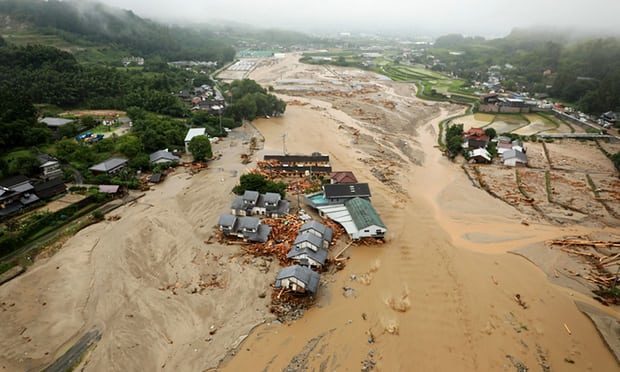
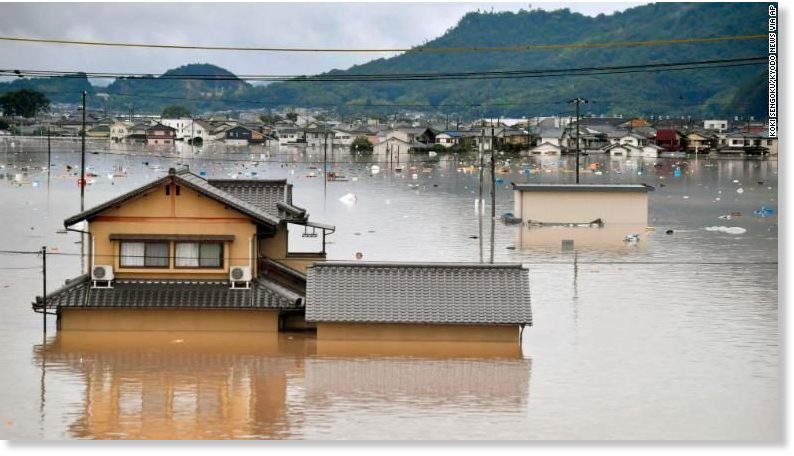
While authorities search for the missing, residents begin the cleanup, wading through flooded houses and streets.Thousands of houses have been damaged, and even the ones that stand intact have been impacted. Nearly 17,000 households are still without power, and phone lines are down across multiple prefectures.Residential buildings are partially submerged in floodwaters caused by heavy rains in Kurashiki, Okayama prefecture, southwestern Japan, Saturday, July 7, 2018.
Further complicating repair efforts is the fact that many railroads and highways are closed, too flooded to operate, placing many affected areas out of reach.
Homes destroyed
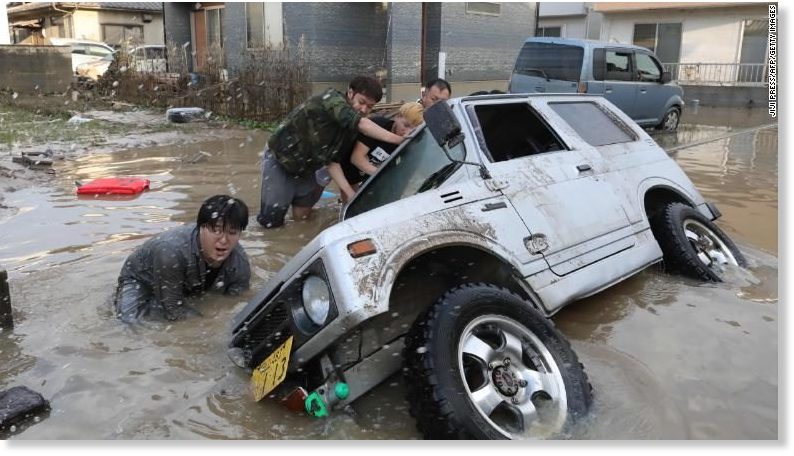
Rains began late last week and intensified over the weekend. Rivers overflowed, landslides crushed buildings, and cars were swept away by floodwater.
"The record rainfalls in various parts of the country have caused rivers to burst their banks, and triggered large scale floods and landslides in several areas," Cabinet Secretary Suga said Sunday.
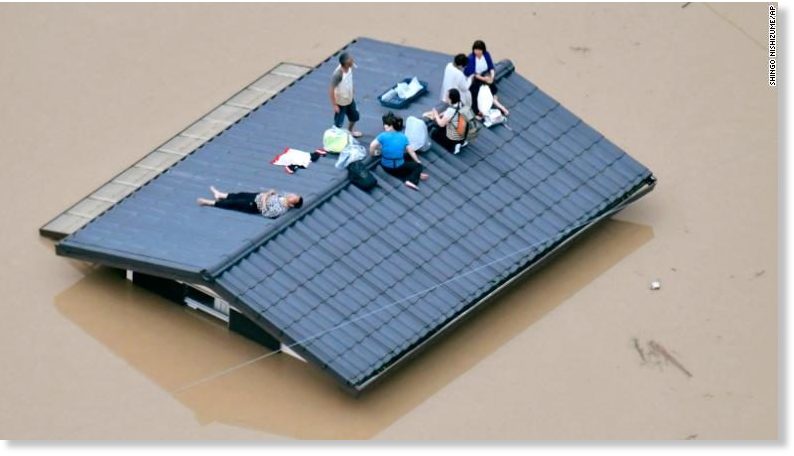
Two million people were forced to flee their homes, advised or ordered by the government to evacuate. Some, unable to leave, took shelter on their rooftops as flash floods swallowed entire streets.
In Kurashiki near Okayama, soldiers were deployed to carry elderly residents from their homes into waiting boats.
At least 126 people are now known to have died in floods and landslides triggered by torrential rain in western Japan, says the government.
It is the highest death toll caused by rainfall that Japan has seen in more than three decades.
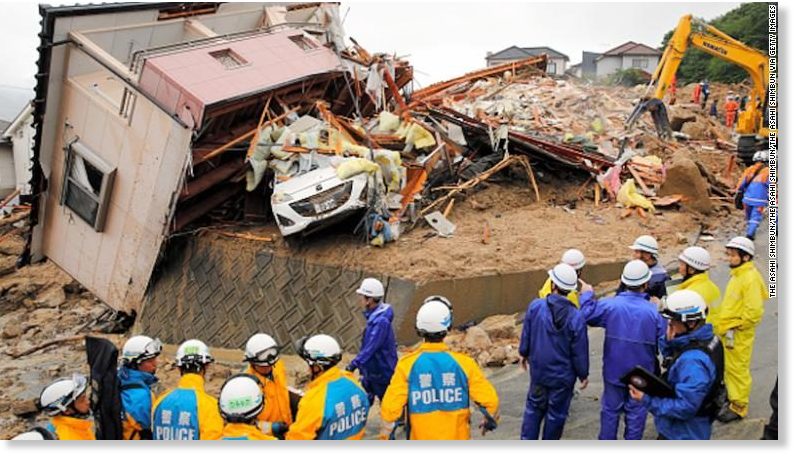
Rescuers are now digging through mud and rubble in a race to find survivors, as dozens are still missing.
About two million people have been evacuated from the region after rivers burst their banks."I have asked my family to prepare for the worst," 38-year-old Kosuke Kiyohara, who has not heard from his sister and her two sons, told AFP.© GETTY IMAGESThis is the worst death toll triggered by rains Japan has seen since 1982, when nearly 300 people died
Prime Minister Shinzo Abe has also cancelled an overseas trip to deal with the flood crisis.
Flood warnings are still in effect for some of the worst hit areas, including Okayama prefecture.
But more settled weather is expected over the next few days which is likely to help with rescue efforts.
Intense heat and water shortages raised fears of disease outbreaks in flood-hit western Japan on Thursday as the death toll from the worst weather disaster in 36 years neared 200.
More than 200,000 households had no water a week after torrential rains caused floods and set off landslides across western Japan, bringing death and destruction to decades-old communities built on mountain slopes and flood plains.
The death toll rose to 195, with several dozen people still missing, the government said on Thursday.
With daily temperatures above 30C and high humidity, life in school gymnasiums and other evacuation centres, where families spread out on mats on the floors, began to take a toll.
Television footage showed one elderly woman trying to sleep by kneeling with her upper body on the seat of a folding chair, arms over her eyes to keep out the light.
With few portable fans in the evacuation centres, many survivors tried to cool themselves with paper fans.
The limited water supply meant that people are not getting enough fluids and in danger of suffering from heatstroke, authorities said. People are also reluctant to use what water they do have to wash their hands, raising fears of epidemics.
"Without water, we can't really clean anything up. We can't wash anything," one man told NHK television.The government has sent water trucks to the disaster area, but supplies remain limited.© RexDisasters set off by torrential rains have become more frequent in Japan, perhaps due to global warming, alleged 'experts' opined.
More than 70,000 military, police and firefighters toiled through the debris in a grim search for the missing.
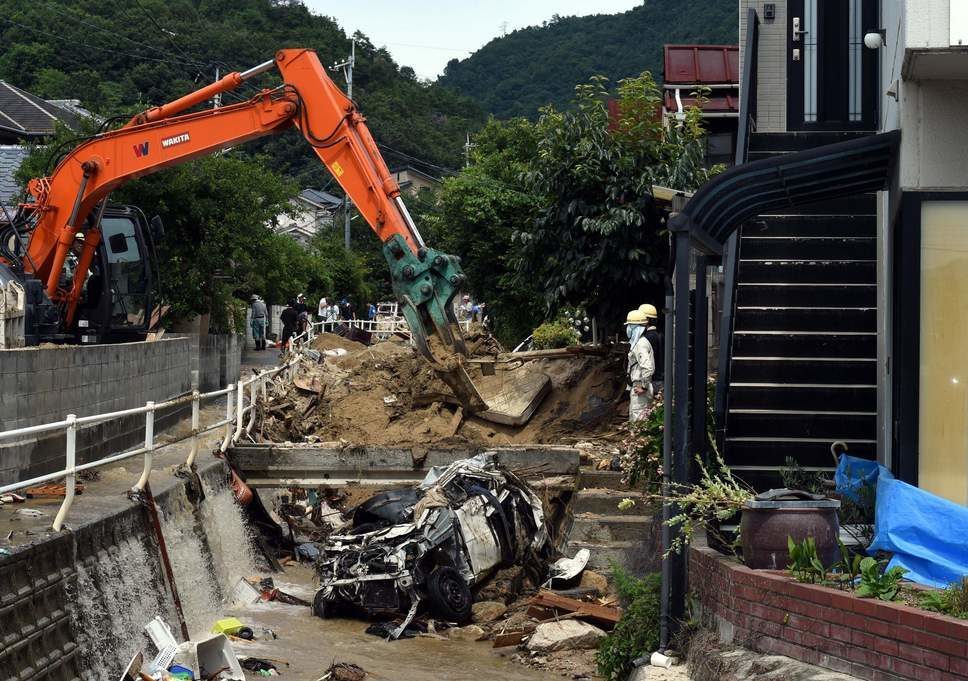
Some teams shovelled dirt into sacks and piled the bags into trucks. Others used diggers and chainsaws to work through landslides and splintered buildings.
Many areas were buried deep in mud that smelled like sewage and had hardened in the heat, making the search more difficult.
Disasters set off by torrential rains have become more frequent in Japan, perhaps due to global warming, experts say. Dozens of people died after similar rains caused flooding around the same time last year.
The global warming lie continues to be pushed. See also: Far from settled': New analysis shows 'Godfather' of global warming was wrong
"It's an undeniable fact that this sort of disaster due to torrential, unprecedented rain is becoming more frequent in recent years," chief cabinet secretary Yoshihide Suga said at a news conference in Tokyo.
The world is in indeed seeing a rapid upsurge in extreme weather according to a recent report. See also:
- Has solar cycle 25 begun? Solar cycle 24 was one of the shortest and weakest ever
- Study: Cosmic rays trigger climate change on Earth by increasing cloud cover
- Ocean cycles, not humans, are responsible for climate change
- Scientists say a fluctuating jet stream may be causing extreme weather events
"Preserving the lives and peaceful existence of our citizens is the government's biggest duty. We recognise that there's a need to look into steps we can take to reduce the damage from disasters like this even a little bit," he added.
Reuters
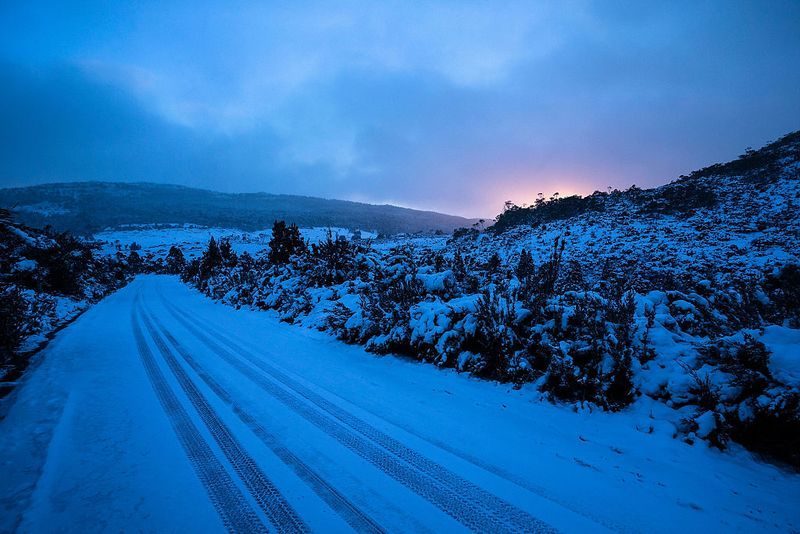
Comment: Record cold temperatures and snowfall are being documented with increasing frequency all over the planet:
- Heavy snowfall across South Africa
- Snow follows record breaking May heatwave in northern Sweden
- Australia hit with extreme cold front as snow hits and people are warned of dangerous conditions
- More than half of Nova Scotia blueberry crop wiped out by JUNE killer frost
- 'Very unusual': April snowfall surprises South Island, New Zealand
- New Zealand blasted by heavy dump of summer SNOW as ex-cyclone Gita wreaks havoc and turns weather patterns on their head (VIDEO, PHOTOS)
- Violent weather anomaly brings giant hail, unseasonal snow and destructive winds in New South Wales, Australia (VIDEO)
- Wild winds, record rainfall and cold temperatures hit Australia
- Australia Bureau of Meteorology hides record cold temperature data
For more on the great changes occurring on our planet check out: SOTT Earth Changes Summary - June 2018: Extreme Weather, Planetary Upheaval, Meteor Fireballs