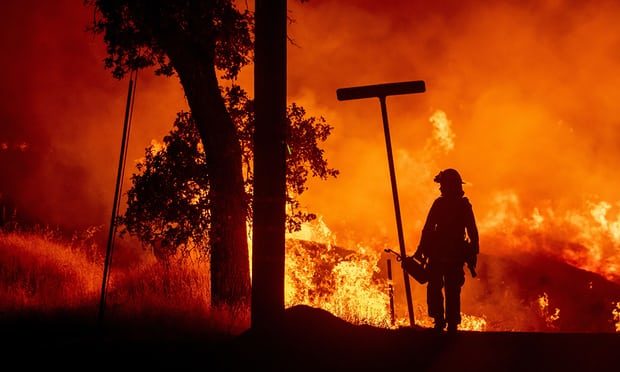
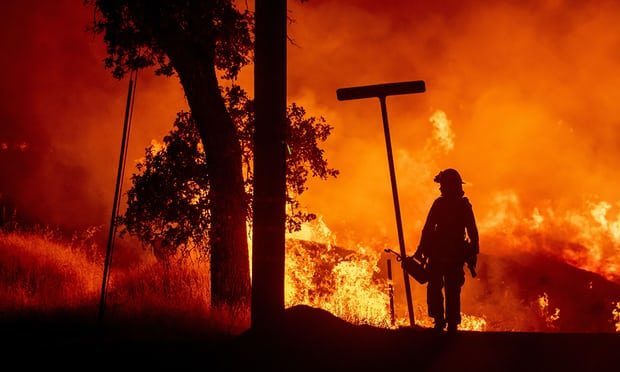
© Josh Edelson/AFP/Getty ImagesMore than 3,000 firefighters have been deployed against the Carr fire in Redding. Hotter, drier summers have prolonged fire season.
At least three dead and thousands evacuated as officials worry potentially devastating fire season has only just begunAt least three people have died and thousands have been evacuated in California as eight active wildfires continue to burn across the state. More than 3,000 firefighters have been deployed to contain the flames, and the destruction is expected to worsen throughout the weekend as high temperatures and dry conditions inhibit efforts.
The state governor, Jerry Brown, has declared a state of emergency in northern California's Shasta county, and in southern California's Riverside county, to help provide local fire crews with the resources they need to battle the blazes. Donald Trump has not yet commented on the fires.
Redding, a city of 92,000 near the Oregon border, is at grave risk from the Carr fire, which has so far killed two people. The fire is only 3% contained and has already scorched more than 44,450 aces. "Really, we're in a life-saving mode right now in Redding," said the Cal Fire battalion chief, Jonathan Cox.
"We're not fighting a fire. We're trying to move people out of the path of it because it is now deadly, and it is now moving at speeds and in ways we have not seen before in this area."The Carr fire erupted on Monday 23 July and is being propelled by "extreme fire behavior and challenging wind conditions", according to CalFire officials. The blaze continues to threaten nearly 5,000 structures and 65 buildings have already been incinerated.

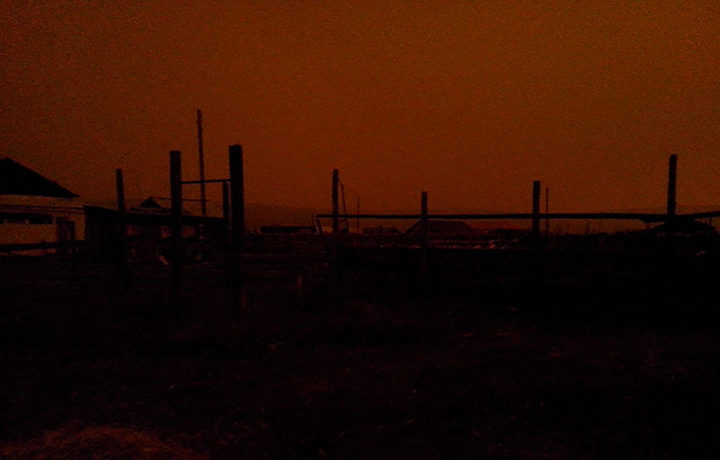
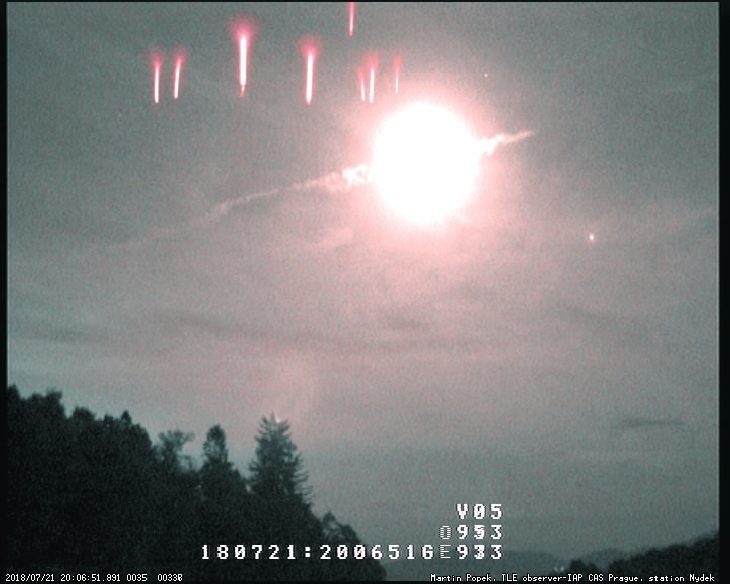





Comment: Wildfire pollution does appear to cover most of the events that occurred; the dust, the oil (which could just be dust combined with liquid), the darkened sky and the dead birds (which died from smoke inhalation?). But while there's nothing too unusual about a wildfire, what is unusual is the apparent atmospheric conditions that combined to transport the smoke from such a distance and to drop it in this area. It's also notable that while much of the Northern hemisphere seems to be on fire, which in itself is ominous, no events similar to that which occurred in Siberia have been reported. Although it may be that the same strange blocking pattern which has set Europe ablaze was somehow related to the events in Siberia. For now at least, the mystery remains unsolved.
Analysis of the dust should shed some light on the situation. But it is true that volcanoes are erupting all over the planet and summer in the northern hemisphere is seeing unprecedented wildfires, and those could explain the dust reported. Although another possibility could be Siberia's methane deposits which seem to be showing signs of increasing instability through outgassing, and in some cases, explosions:
- Methane outgassing discovered in Siberia's Yamal peninsula crater hole say scientists
- Aerial photography reveals unexplained holes appearing in Arctic sea ice
- New info on 'crater-hole' in Siberia: 'Explosion' and 'glow in sky' witnessed 100 km away
- Worldwide volcanic activity uptick update, and new volcano discovered on Jupiter's moon Io
- Sweden requests emergency assistance from EU to fight rapidly spreading, uncontrolled wildfires
- A dark December: In one month Moscow totals 6 minutes of sunlight while Belgium bears just 10.5 hours
- Thousands of underground methane bubbles set to explode in Siberia
UPDATE: 27 July 2018The Siberian times reports: