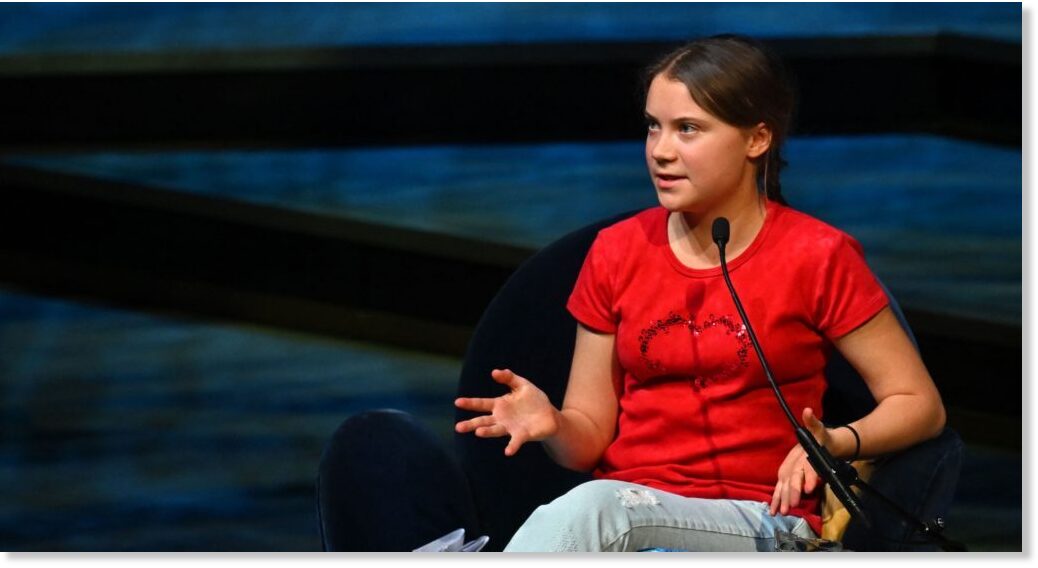
Last night, London's Royal Festival Hall hosted a children's crusade. The purpose? To "celebrate" the launch of
The Climate Book, Greta Thunberg's coffee-table manifesto which collects essays from climate scholars, interspersed with photography and doom data (the cover itself is a colour chart of global temperature, moving from halcyon blue to DEFCON red). London answered the call.
Greta was in conversation with a beaming Samira Ahmed ("You're the coolest 19-year-old I've ever met!"), who gently quizzed her about life as the world's most famous climate activist. The crowd adored her. They lapped up her awkward ingenuousness. It was the perfect middle-class day out, like a trip to Glyndebourne or Blenheim. Some had even brought their young children, clearly hoping to inspire them into the same breed of activism. And, belying her reputation for aggressive sermonising, Greta was perfectly charming. The fury of "How dare you!" Greta has given way to a likeable figure of exasperated passion.
But this isn't the only thing about the Swede that has changed. Previously, she'd sold herself as a five-foot human alarm bell, a climate Cassandra. Her role was to warn, not to instruct: her most viral moments involved her scolding political leaders, not trying to supplant them. She strenuously avoided programmatic detail, saying such things were
"nothing to do with me". But now, on stage and in this book, she has found her political feet, specifically the Left-wing ideology of anti-capitalism and de-growth.


















Comment: See also: