Puppet MastersS


Light Saber

Libyan people declare: The future of Libya is in our hands!

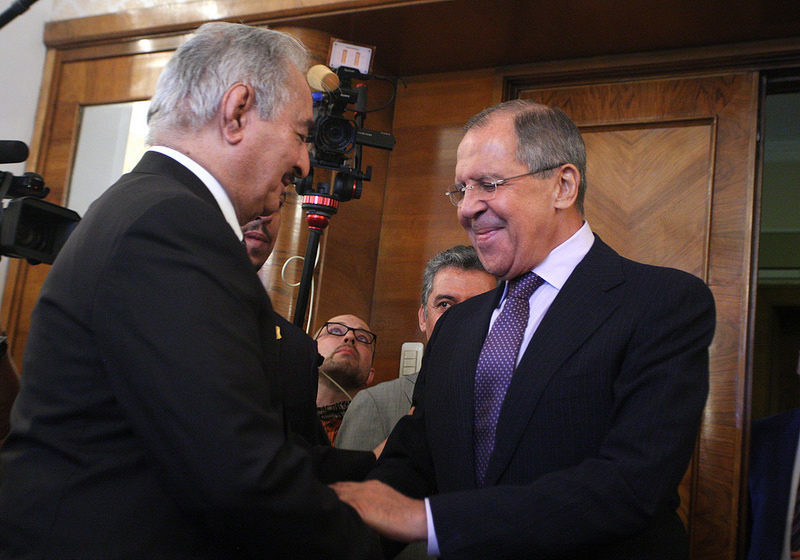
Khalifa Haftar and Sergey Lavrov
Field Marshal Khalifa Haftar and Foreign Minister of Russia Sergey Lavrov
LNA says they will not sign any document favoring militias at the expense of the Libyan people

An official source at the General Command of the Libyan National Army (LNA) revealed early on Tuesday the reasons for not signing the ceasefire document in Moscow. It stated that the most important of these reasons is Turkey's intention to utilize the agreement as a tool to impose itself as a signatory and party in Libya to legitimize the concluded MOUs signed between Ankara and Tripoli.

It also said that Turkey is attempting to legitimize the parallel parliament in Tripoli as a new legislature that contests the authority of the sole and elected Libyan House of Representatives (HOR), and its objective is to break up the social component grassroots that support the Libyan National Army (LNA).

The source confirmed in an exclusive statement to Al-Marsad that Field Marshal Khalifa Haftar, the Commander-in-Chief of the Libyan National Army (LNA) and his accompanying delegation had already left Moscow early Monday night and there would be no signature on any document at the expense of what the source described as "the sacrifices of the heroes and the aspirations of the Libyans to achieve salvation from militias,." It also said that the LNA General Command delegation will not accept signing anything that prevents the LNA from exercising its duties in restricting the monopoly of arms to the military and security apparatuses of the Libyan state, and enforcing law and order in the country.

Comment: BRICS Information Portal reports on the failure of the ceasefire agreement:
Turkish President Recep Tayyip Erdoğan and Russian President Vladimir Putin made a joint statement last week regarding the civil war raging in Libya to "declare a sustainable ceasefire, supported by the necessary measures to be taken for stabilizing the situation on the ground and normalizing daily life in Tripoli and other cities." However, as I said in last week's article, Russia has little influence over the Libyan National Army (LNA) and there is no incentive for General Khalifa Haftar to accept any terms made in any proposed ceasefire agreement.

Russian Foreign Minister Sergei Lavrov had to admit to reporters that talks last night in Moscow "aimed at reaching an agreement on an unconditional and open ceasefire in Libya failed to make significant progress Monday, despite overall progress on the issue."

The ceasefire talks were held separately as neither Haftar or Fayez al-Sarraj, the ethnic Turk leader of the Turkish-backed Muslim Brotherhood and internationally recognized Government of National Accord (GNA) based in Tripoli, wanted to be at the same table. The Russian delegation met with Haftar and the Turkish delegation held a similar meeting with Sarraj. Haftar declined to discuss any possible withdrawal of his troops from the outskirts of Tripoli and asked for more time to consider the parameters of the ceasefire proposal. Haftar made it clear that his army was at an advantage and did not have to make any concessions, but responded positively to the ceasefire that was in place at midnight on Sunday, despite isolated incidents of fire being exchanged. He even criticized Turkey for its involvement in the country and for the support to the GNA, which defends Tripoli with jihadists who also fought in Syria.

Despite initial positive signs at last night's meeting held in Moscow for a ceasefire between the GNA, the LNA, it quickly became explosive. The hope of signing a ceasefire utterly failed with Haftar leaving Russia and military operations in Tripoli intensifying. This occurred because of the insistent unrealistic demands by the GNA, such as calling for Haftar's forces to return to positions they held all the way back in April 2019 when the operation to liberate Tripoli began. This of course was rejected by the LNA since they would lose major territorial gains made.

"The document presented in front of me was a document of shame and betrayal, something the Government of National Accord were happy to sign, but our real Libyan hands never could," said Haftar when explaining why he did not sign the ceasefire.

It is a fact that the big players on the Libyan issue are Russia, despite having little influence over the LNA and Turkey. The U.S. is watching discreetly and remotely while the Europeans are acting powerless to react vigorously and to get enough resolutions. Despite the failure of the ceasefire agreement, Russia has proven once again to be a country that continually works towards peace initiatives, just as it consistently does in Syria through a variety of forums, such as the Astana Peace Process with Turkey and Iran. Russia would have known the ceasefire would not be signed; however, it provided an opportunity to strengthen relations with Turkey as Moscow proves it is willing to actively acknowledge and attempt to deal on issues of importance with Ankara.

It appears that Russia is becoming the power to pacify Turkey after it creates crises. Although Russia is working closely with Turkey to bring peace to Syria and Libya, it cannot be forgotten that Turkey was one of the main players in sowing instability in both Syria and Libya. The militancy against the legitimate government of Syria would not have been possible without Turkish funding, arming and equipment of jihadists, as well as being a base for anti-government forces to mobilize and train. In Libya, the GNA whose stint in power has gone well beyond its two-year mandate, would not have survived for as long as it has without Turkish assistance. While Turkey manufactures crises across the region, it is increasingly appearing that Russia is the one to clean up, or attempting to clean up the chaos created.

Although Moscow, at no fault of its own, failed to convince the LNA to sign a ceasefire agreement, its attempts demonstrate the importance Russia is placing in its relations with Turkey. As Turkey occupies strategic space in Eurasia and controls the Bosporus Straits, strong relations with Ankara is critical for Moscow. For the time being, such relations are crucial for finding peaceful solutions, but Moscow's patience will surely be limited if Turkey continues to create crises.


Snakes in Suits

Labour leadership hopeful uses police brutality at Catalan rallies as example of how to defeat Scottish calls for independence

Catalan Scottish
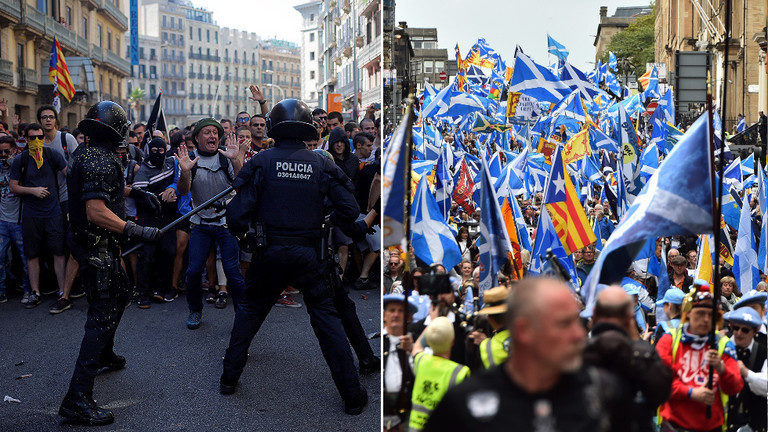
© AFP / ANDY BUCHANAN(L) Catalan separatist protesters clash with police Reuters / Jon Nazca; (R) Scottish independence protesters march in Glasgow
Labour leadership hopeful Lisa Nandy has incensed Scots after citing Catalonia, where Catalans have faced severe police brutality in their quest for independence, as an example of how to beat "narrow and divisive nationalism."

In an interview with the BBC's Andrew Neil on Wednesday night, Nandy was asked to expand on her proposals to set up an international commission that will look for historical examples of "how nationalism has been beaten by social justice."

The leadership contender argued that Britain should be learning lessons from other countries around the world on how to defeat nationalism, using Spain's handling of Catalan independence protests as a beacon for social justice advocates, like her.

Comment: It's always good to know - and remember - what politicians really think: And check out SOTT radio's:


Gift 2

SOTT Focus: More Duma, Less Prezident: Putin Announces Democratic Changes to Russian Constitution

putin state union constitution
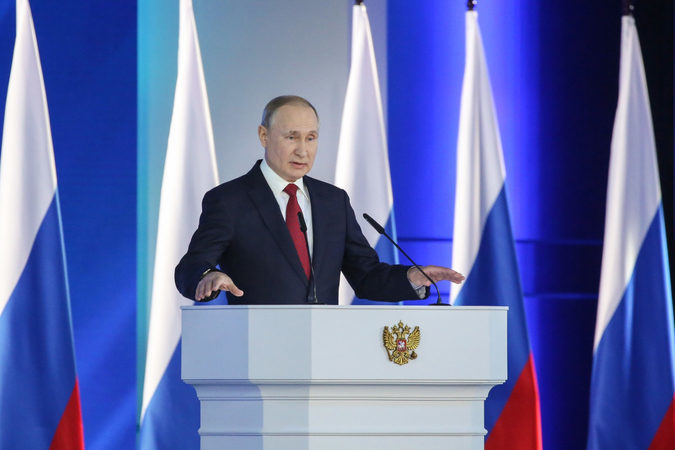
President Vladimir Putin has introduced changes which could dramatically affect Russia's international image and respond to decades-long criticism of the country's political path from the global mainstream media, say international observers discussing the president's historic decision.

Addressing lawmakers, ministers and other high-ranking officials on Wednesday, Russian President Vladimir Putin outlined a number of changes to the country's constitution concerning the executive, legislative and the judicial branches which would give more powers to the Russian parliament and limit the president's prerogatives.

Shortly after the president's speech to the Federal Assembly Russian Prime Minister Dmitry Medvedev announced that the government will be resigning.

'Elegant Solution' That Will Reinforce the Checks & Balances System

The proposed changes triggered a lively debate in foreign media which often seeks to depict Russia as an autocracy with the president possessing much of the power. The Western press often places emphasis on the fact that Vladimir Putin has remained at the helm of the country either as president or prime minister for nearly two decades. Citing the Russian president's latest address CNBC even went so far as to allege that it is aimed at "circumventing or scrapping" the rule that prevents someone from serving more than two consecutive terms as president, given that his fourth term is due to end in 2024.

Bizarro Earth

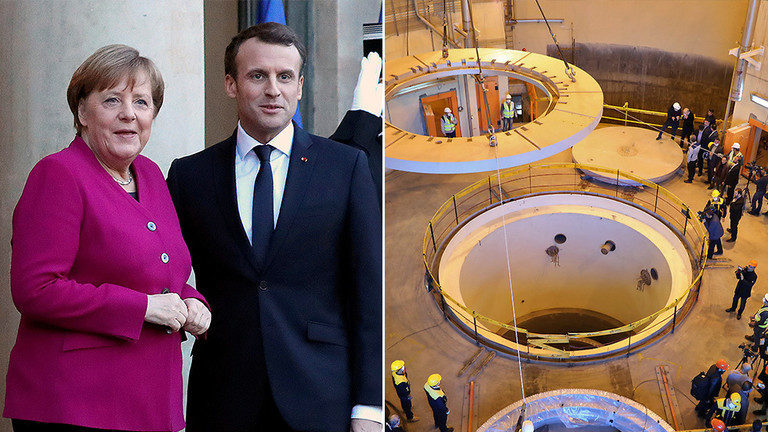
By triggering JCPOA dispute mechanism, EU is helping Trump finish the job of killing Iran nuclear deal

JCPOA merkel macron
© REUTERS/Charles Platiau; AFP / HO / Atomic Energy Organization of Iran
Europe could have saved the Iran nuclear agreement. Instead, it abused the rule of law by inappropriately triggering its dispute mechanism, all but ensuring the agreement's demise.

Disingenuous diplomacy

On January 5, 2020, Tehran announced that it would no longer comply with its obligations under the Iran nuclear agreement, officially known as the Joint Comprehensive Program of Action (JCPOA). Iran's actions are in response to the withdrawal of the US from the JCPOA, and the re-imposition of economic sanctions by the US which had been lifted when the deal came into force.

In response to the Iranian actions, the governments of France, Germany, and the UK - all parties to the deal, along with the European Union (EU) - invoked provisions within the JCPOA, known as the Dispute Resolution Mechanism (DRM), in an effort to bring Iran back into compliance.

Comment: See also:


Dollar

US 'abusing' dollar as reserve currency, Russia de-dollarizing and investing elsewhere - Lavrov

dollar burn
© Global Look Press / Nikolay Gyngazov
While Washington is "abusing" the status of the dollar as the world reserve currency, Moscow will continue to reduce its dependence on the greenback in favor of national currencies, the Russian foreign minister says.

"Against the background of the increasingly aggressive use of financial sanctions by the US Administration, Russia continues its policy aimed at gradual de-dollarization of the economy," Sergey Lavrov told the Times of India. "Expanding settlements in national currencies is one of our priorities."

Russia has been developing mechanisms to mitigate the impact of US restrictions. New Delhi and Moscow are currently working on a new intergovernmental agreement on mutual protection of investments. Additionally, the Russia-led Eurasian Economic Union (EAEU) is mulling establishing a free trade zone with India, which is set to further boost investor protection, according to Russia's top diplomat.

Comment: Lavrov called not just for peace but urged Gulf nations to actively cooperate to ensure regional stability:
Russian Foreign Minister Sergey Lavrov has urged Persian Gulf nations to work toward the creation of a joint security mechanism, noting that Moscow was concerned about the tense standoff in the region.

"We have been suggesting to the Gulf countries to think about collective security mechanisms, something like OSCE for Europe", Lavrov told the international Raisina Dialogue conference in New Delhi on Wednesday.

"It´s not just 'let´s not fight with each other'", Lavrov said, adding that the initiative is about transparency and cooperation, and suggesting that more international players should be involved.
He goes on to say that part of reason the G20 emerged is because the G7 failed to deal with issues of any significance and underrepresentation:
Developing nations, absent from the UN Security Council, enjoy greater representation in the G20 - and its emergence shows that the elitist Group of Seven is steadily losing significance, the Russian Foreign Minister suggested.

The Group of 20 - which includes the G7 countries as well as the five-member bloc of Brazil, Russia, India, China and South Africa (BRICS) - proved workable, especially when developing countries "have grievances regarding the lack of progress in reforming the Security Council," Sergey Lavrov told an audience during his trip to New Delhi.

"The creation of G20 was recognition that G7 can no longer decide any issue of any significance."

"I would say the deficiency - the main, and probably the only, deficiency of the Security Council - is underrepresentation of the developing countries," Lavrov acknowledged.

Russia has always backed the accession of two emerging economic giants - India and Brazil - to the council, he said.

"Our position is that the purpose of the reform is to make sure that the developing countries have a better treatment in the central organ of the United Nations."
See also: America escalates its "democratic" oil war in the Near East


Airplane

Was Flight 752 shot down with a MANPAD? Tor-M1 missile would have immediately blown up the plane

This is a follow-on to the excellent reporting by Russell Bentley at Fort Russ News, as well, this author's initial piece at Fort Russ on the subject of Flight 752.

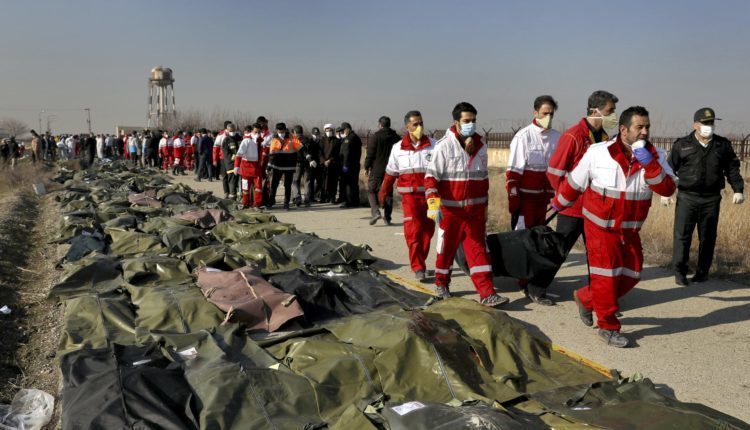
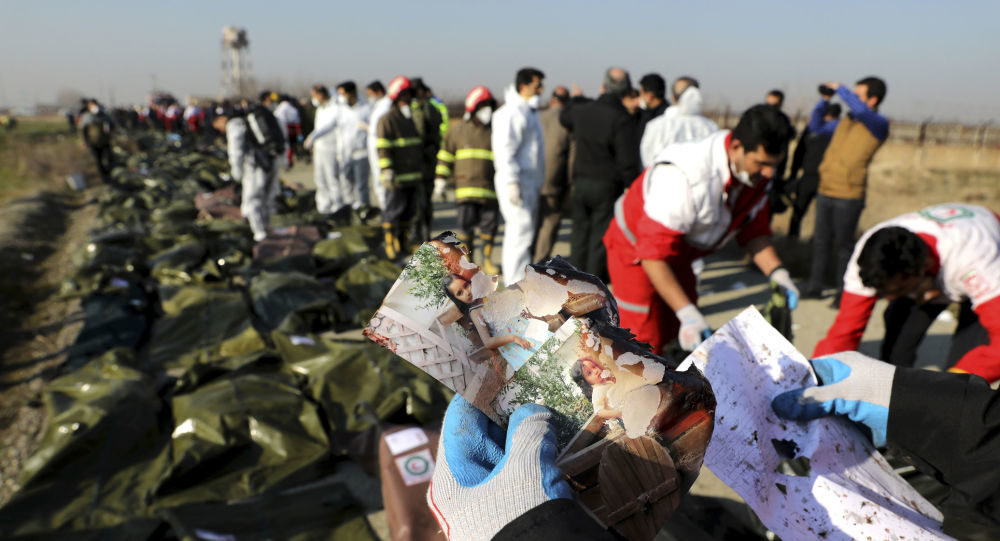
bodies ukraine flight 752
In the downing of Flight 752 we'll look at three kilogram verses fifteen kilogram warheads and a direct hit versus a 'proximity' detonation.1, 2

A proximity detonation is preferred over a direct hit in surface to air missile defense against hostile aircraft.3

The rationale behind designing anti-aircraft, surface to air missiles, for proximity detonations is simple. The initial rationale for proximity was a narrow miss in the early days. As accuracy and dependability improved, proximity fuses were often kept, in addition to impact fuse, as it had been discovered an aircraft's air-frame can actually contain the effect of the explosive warhead, depending on the design of the aircraft and the location of impact. A modern missile guided to proximity detonation (a mere few feet away from the aircraft) is likely to inflict greater damage, more often than not, because the shrapnel from the high explosive warhead has a better chance at penetrating and damaging a wider area of the target, more readily compromising critical flight control systems (especially wing-flaps and associated hydraulics.) This is why light mobile combat systems such as the Russian Strela 10's early and middle models (through 1988) with a three kilo warhead had both impact and proximity fuses. The Strela, proximity fused three kilogram warhead used by Iraq in Desert Storm (1991) was capable of taking down the American A-10 'Warthog' (two A-10s shot down by this missile, according to the American military), one of the toughest planes to shoot down with ground-fire in modern combat (to this day).4

By the era of the Stinger, very effective against Soviet helicopters in Afghanistan, missiles had become so maneuverable and accurate, the Stinger was only adapted for a proximity fuse in later (recent) development phases; to be effective against very small (difficult to direct hit) UAVs (drones.) The three kilo (average) warhead launched with a MANPAD (shoulder launched) surface to air missile, it was likely a Stinger FIM-92J (proximity fused warhead), provided by CIA to the so-called 'moderate opposition', is what had brought down a SU-25 in Syria:


Comment: See also:


Seismograph

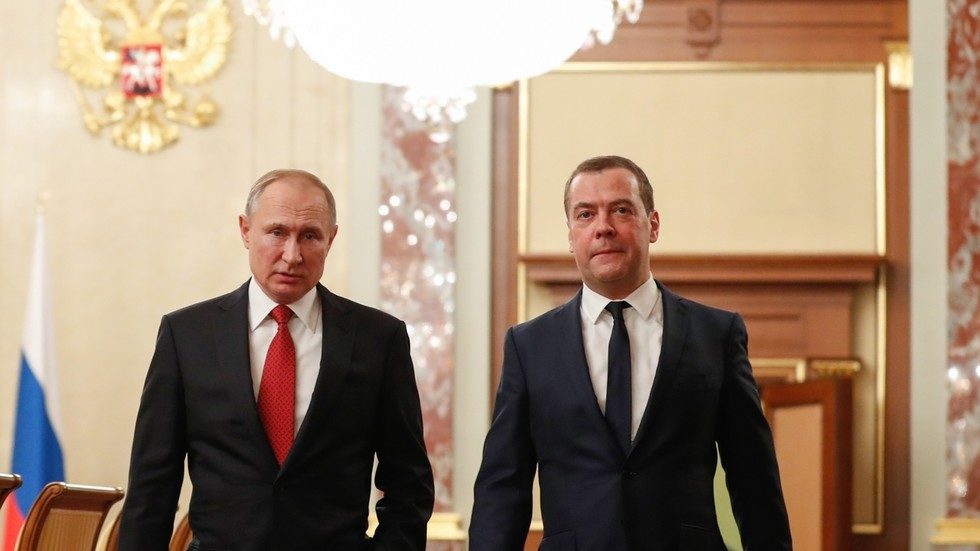
Best of the Web: Russian political earthquake: Putin sets out plan for Kremlin departure & Medvedev resigns

Putin and Medvedev
© Sputnik / Dmitry Astakhov
They say life comes at you fast. A seemingly routine 'state-of-the-nation' address by Vladimir Putin unexpectedly turned into one of the most memorable afternoons in recent Russian political history.

On Wednesday, Russia's government resigned. Dmitry Medvedev departed the political frontline, Vladimir Putin effectively confirmed he will leave the presidency at the end of his present term, and Mikhail Mishustin became the new Russian prime minister. As Van Morrison once crooned, there will be days like this.

And it's only the 15th of January. A week after Russians observed Orthodox Christmas, and a fortnight since they celebrated New Year, it didn't take long for real business to resume.

In the morning, Mishustin was so unknown outside of Russia that he didn't even have an English language Wikipedia page. And his profile inside the country was minor, beyond the world of political and administrative wonks.

Comment: Let's hope everything does indeed "work out" for Russia and that it continues being a role model for the rest of the world once Putin steps down. See also:


Chess

India seeks to strengthen relationships with Iran and Russia as US-made chaos threatens New Delhi

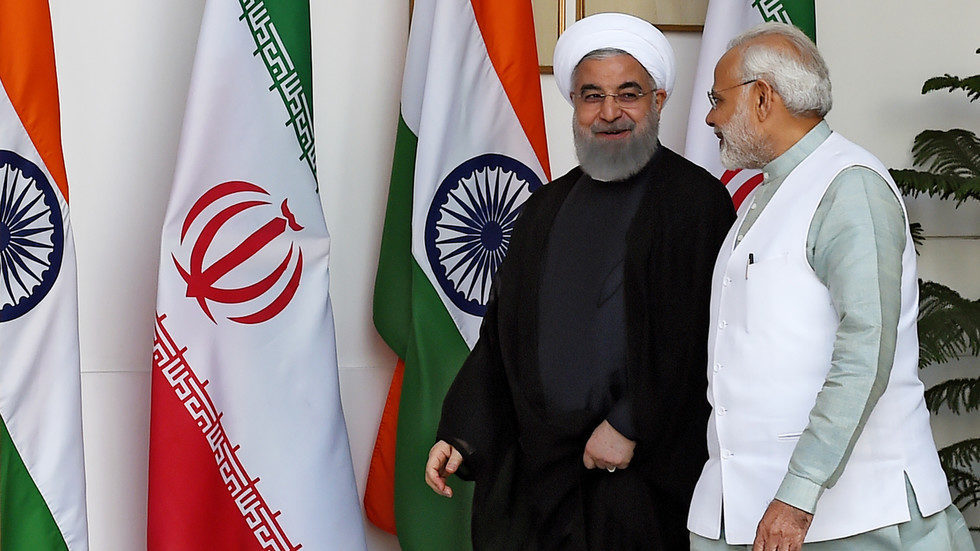
Hassan Rouhani - Narendra Modi
© AFP / Money SharmaIranian President Hassan Rouhani and Indian Prime Minister Narendra Modi meet in New Delhi in 2018
India has not quite switched sides in the Middle East, but today's visit from two important guests from Russia and Iran could spell a diplomatic change of course for India in 2020 and beyond.

Russian Foreign Minister Sergey Lavrov and his Iranian counterpart Mohammad Javad Zarif will both be in New Delhi on Tuesday and will meet — albeit separately — with their Indian counterpart, Dr Subrahmanyam Jaishankar. Lavrov and Zarif will also meet Prime Minister Narendra Modi, who will no doubt be keen to discuss how India can balance its vital interests in the Middle East in the face of increasing tensions between the US and Iran.

Washington's recent killing of top Iranian commander Qassem Soleimani came as a shock to Delhi, occurring just one month after Washington hosted a two-plus-two meeting between both countries' foreign and defense ministers — in which no indication was given of what was to come, despite the move being one which threatens India's domestic and foreign interests.

Attention

Megxit wants to be the global Queen of Woke

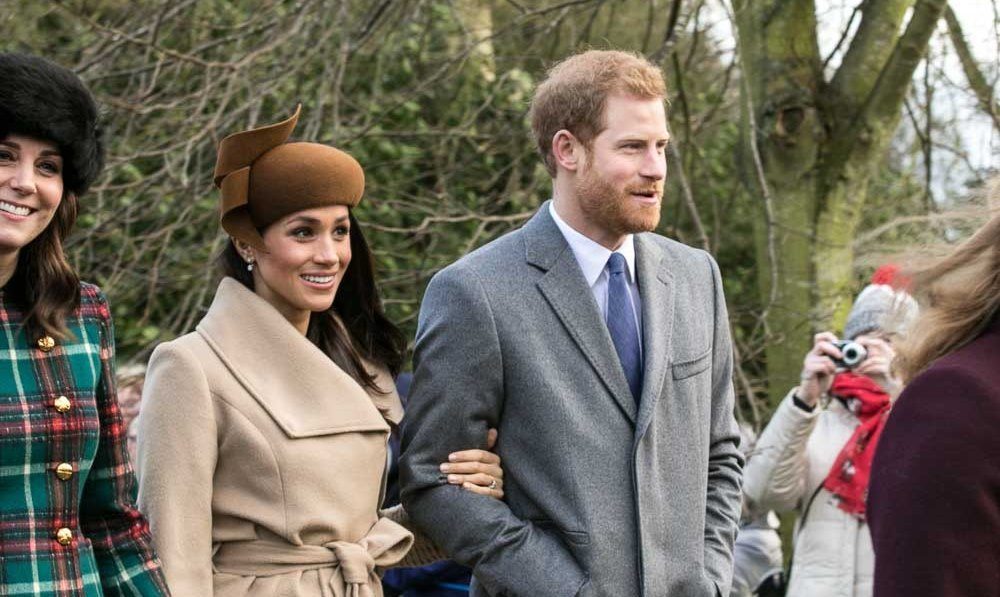
Prince Harry Meghan Markle
So Harry and Meghan are stepping back. They're resigning from The Firm. They're ducking out of the Sovereign Grant and royal duties and going it alone. They're going to split their time between the UK and North America - think of all the CO2! - and become more 'independent'.

Why? Come on, we all know why. Forget the tripe about them fleeing the racism of the UK tabloids and the nonsense about the first DOC (duchess of colour) not being made to feel welcome in the stiff, white House of Windsor. No, H&M, the most right-on royals in history, are breaking off so that they can foist even more woke bollocks on the plebs without having to worry about receiving a tutting phone-call from Her Maj's press secretary reminding them that they're royalty and not virtue-signalling Hollywood celebs.

Megxit, as this royal bombshell is wittily being called, is a striking sign of the times. What Harry and Meghan are doing is virtually unprecedented in the history of the royals. They are jacking in their jobs (I say jobs) as senior royals and pursuing a more 'financially independent' path that will allow them to earn, travel and - this is important - jabber on about their pet concerns and causes as much as they like.

Airplane

SOTT Focus: Iran Jet Disaster Setup: Was Electronic Warfare in Play?

tehran plane crash
© AP / Ebrahim Noroozi
The 19-second video published by the New York Times last week showing the moment an Iranian missile hit a passenger jet has prompted much social media skepticism.

Questions arise about the improbable timing and circumstances of recording the precise moment when the plane was hit.

The newspaper ran the splash story on January 9, the day after a Ukrainian airliner was brought down near Tehran. It was headlined: 'Video Shows Ukrainian Plane Being Hit Over Iran'. All 176 people onboard were killed. Two days later, the Iranian military admitted that one of its air defense units had fired at the plane in the mistaken belief that it was an incoming enemy cruise missile.

"A smoking gun" was how NY Times' journalist Christiaan Triebert described the video in a tweet. Triebert works in the visual investigations team at the paper. In the same tweet, he thanked - "a very big shout out" - to an Iranian national by the name of Nariman Gharib "who provided it [the video] to the NY Times, and the videographer, who would like to remain anonymous".


​The anonymous videographer is the person who caught the 19-second clip which shows a missile striking Flight PS752 shortly after take-off from Tehran's Imam Khomenei airport at around 6.15 am. This person, who remains silent during the filming while smoking a cigarette (the smoke briefly wafts over the screen), is standing in the suburb of Parand looking northwest. His location was verified by the NY Times using satellite data. The rapid way the newspaper's technical resources were marshaled raises a curious question about how a seemingly random video submission was afforded such punctilious attention.

Comment: Not the Americans. They were 'playing war' with Iran that night, in which they essentially 'agreed' to let Iran conduct limited airstrikes, then immediately 'de-escalate'.

For the probable culprit, ask: Who is it that likes waging war by deception?