OF THE
TIMES
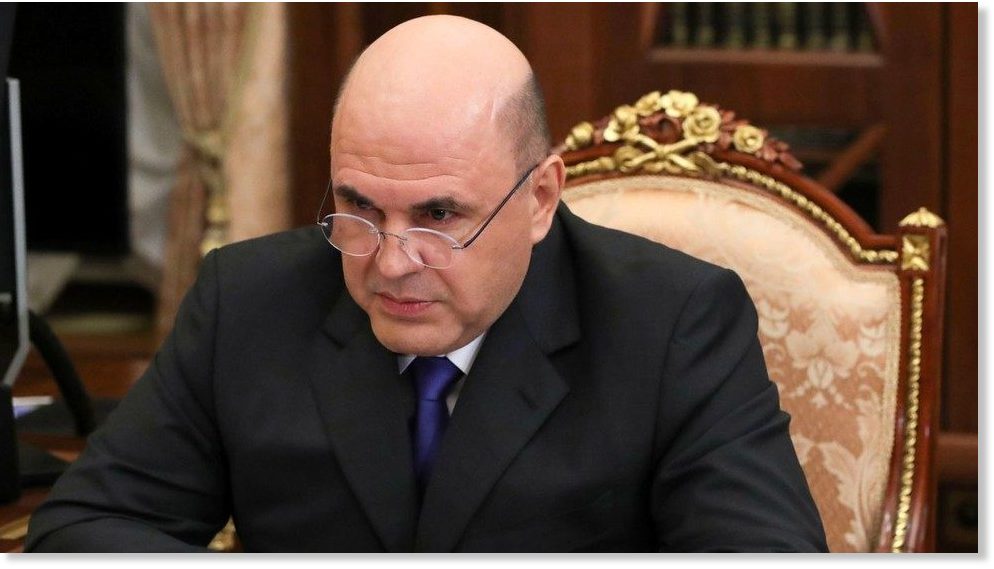
Russian President Vladimir Putin has suggested the head of Federal Tax Service as a candidate for the post of Prime Minister after the government resigned earlier on Tuesday.See also:
Putin has met with Mishustin and offered him the PM's position which he accepted, the Kremlin said.
Mishustin went to the State Duma straight from the Kremlin for an extraordinary meeting of the Parliament's Council, which includes the speaker and the heads of the factions.
During the meeting, it was agreed that the MPs will decide on the nominee for prime minister on Thursday.
Mikhail Mishustin, 53, holds Ph.D. in economics and had a long career as a government official with some breaks for running his own business a decade ago. He was heading Russia's Tax Service since 2010.
Mishustin is a "worthy candidate" for the position of prime minister, according to Nikolay Zhuravlev, deputy speaker of parliament's upper house the Federation Council. "He's a huge professional, who proved his effectiveness in actual practice. His agency is among the leading ones."
Mishustin's work as tax boss has been praised not only at home, but also in the West. Last year, the Financial Times said that he created the "future of tax administration" in Russia by introducing a real-time digitalized system, which enabled them to expose errors and fraud while also significantly raising revenues for the state.
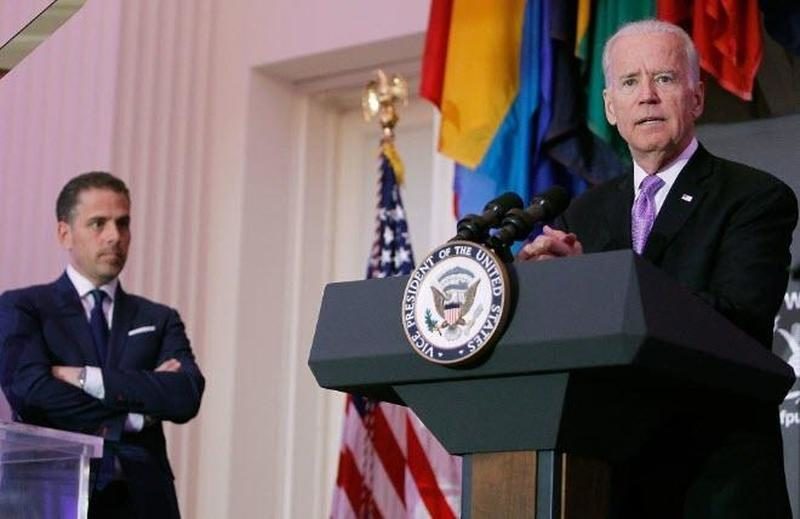
No files have been released from the "hack," but that hasn't stopped American political and media thought leaders from issuing dire warnings to any journalists thinking of publishing or even reading them if they ever are released. To do so would be giving aid and comfort to the enemy - one step above treason - and nothing less than a capital thoughtcrime, these individuals have suggested.
Daily Beast editor Noah Shachtman put out a notice to his fellow editors warning them to steer clear of any information that could possibly have come from the hack. Since there was no confirmation of any data being copied, planted, or removed in that "hack," editors might just want to be safe and ignore any negative information that might emerge relating to Biden. Problem solved!
According to Area 1, the Burisma "hack" echoed the setup that brought down Clinton campaign director John Podesta and the Democratic National Committee in 2016 - a phishing scheme in which executives received emails linking to fake login pages and a few hapless dupes fed their passwords to the scammers. Area 1 didn't share what (if any) data had been accessed or stolen - they merely informed the media that "the timing of the Russian campaign mirrors the GRU hacks we saw in 2016 against the DNC and John Podesta...in what we can only assume is a repeat of Russian interference in the last election."
As if on cue, 2016's victim-in-chief, former Secretary of State and almost-president Hillary Clinton, leapt into the fray, lamenting that "Russians appear to be re-running their 2016 hacking playbook." She warned the media against "playing along" by publishing any 'hacked' material, lest "the Russians help pick our POTUS again."
A CNN reporter weighed in, warning "Russia could leak Burisma emails, and slip in some doctored emails, to harm Biden later on, if he is the Democratic nominee." Russiagate true-believer Malcolm Nance predicted an oddly specific version of the same thing. And MSNBC took that conspiratorial line public, essentially warning Americans to discard any and all leaked emails, lest a few fakes (or deepfakes!) slip by.
"We are just not clear on what's real and what's not anymore," an 'expert' lamented, sounding vaguely panicked.
News of the "hack" follows closely on the heels of anonymous US officials' claim that "Russian disinformation operations" are targeting Biden - once the surefire Democratic frontrunner, but lately second to Bernie Sanders, Elizabeth Warren, and even Pete Buttigieg, depending on the poll. The Biden campaign seized on news of the "hack" as proof their candidate was still a force to be reckoned with, making sure to get in a dig at President Donald Trump at the same time in campaign spokesman Andrew Bates' comment to the New York Times.
"Any American president who had not repeatedly encouraged foreign interventions of this kind would immediately condemn this attack on the sovereignty of our elections," he said, surprising anyone who didn't realize 'the sovereignty of our elections' extends deep into Ukraine.
Area 1 specializes in "preemptive cybersecurity," and asking the entire US news media to ignore any data that might potentially have come from a phishing attack on a Ukrainian energy firm fits that definition rather well. But interfering with freedom of the press in the name of preventing foreign interference means there's no need for a Russian bogeyman anymore - the political establishment can defeat itself.
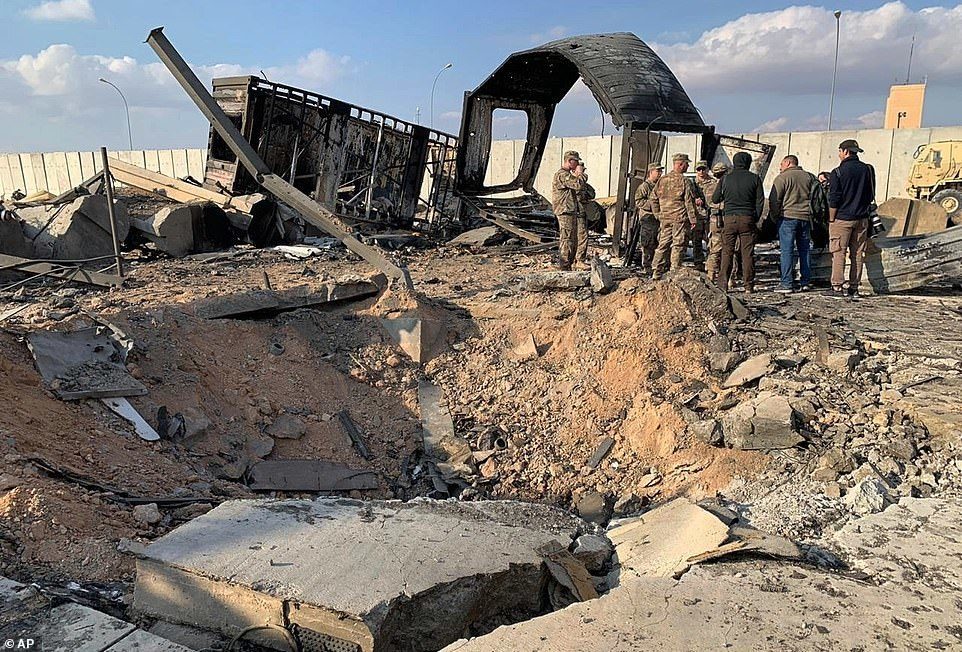
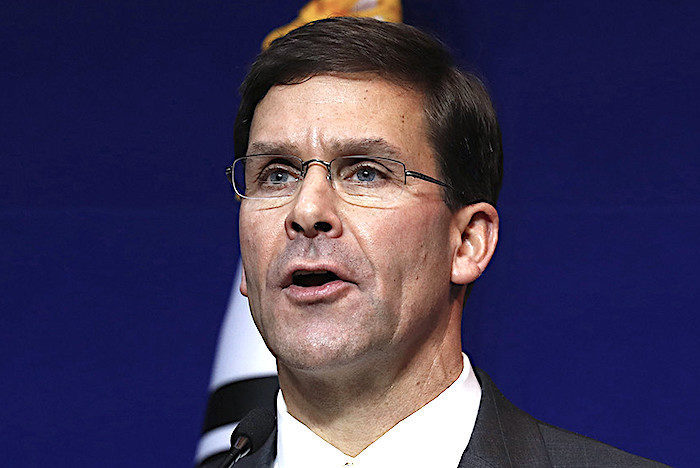
"We hold Iran responsible for its proxies, and we will retain the right to exercise self-defense and take action, where legally available and appropriate, to hold those proxies accountable for their actions."However, Esper seemed confused over whether this potential retaliation would be limited to Iraqi soil, or could include strikes on Iran itself.
"According to experts, the US military had deliberately changed the information on the Ukrainian Boeing 737 flight, making it a real target for the Iranian air defense systems."
A video, shared by state-run media outlet the Iranian Students' News Agency, appears to show the plane on fire in the air before hitting the ground and filling the sky with flames. The video's content and connection to this crash has not yet been confirmed.
Comment: