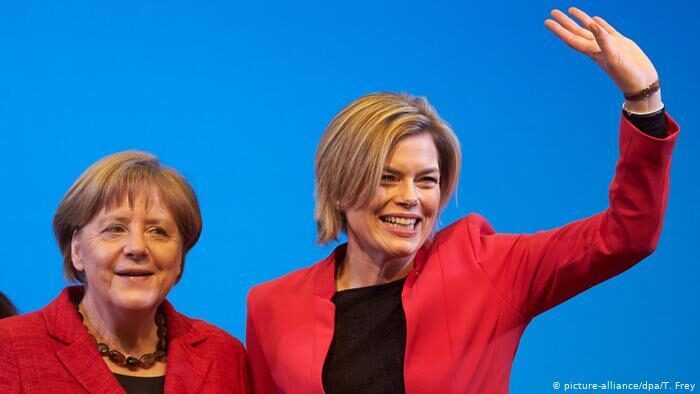
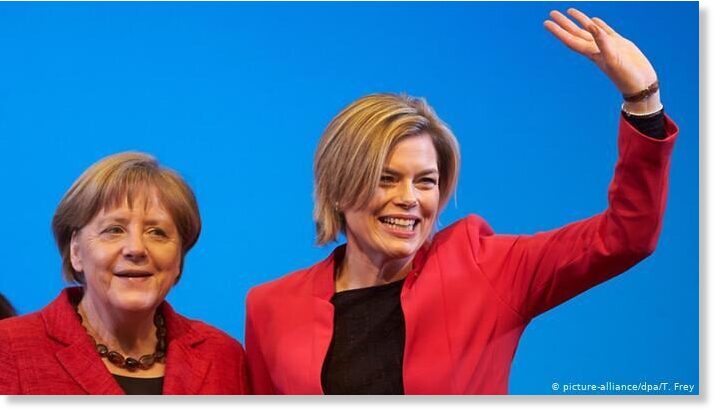
Julia Klöckner with Angela Merkel
Using the conditions of the most recent coronavirus lockdown, the German government's agriculture minister has made a stealth decision, without open debate, to re-instate a banned class of systemic insecticides known as neonicotinoids. The German move follows a similar move by the French Macron government and puts the entire food security of the EU in serious danger. Ironically, or maybe not, the move comes at a time when food security worldwide is in grave stress owing to consequences of the global COVID lockdowns that have disrupted huge parts of the global food chains.
On December 15, Julia Klöckner (CDU), the German minister responsible for agriculture, approved "emergency" certification of "limited" use of the highly controversial insect killing chemicals known as neonicotinoids. While the order is disguised as a limited emergency exception to a current EU-wide ban on the chemicals, environmental organizations argue that
it is just the beginning of a stealth re-approval of the chemicals that have been banned since 2013.Bee colony collapseIn 2012 several scientific studies showed that the use of neonics as they are called, spread into agricultural irrigation channels and soil where they remained. The studies also linked the chemicals to a dramatic rise in bee colony deaths across the EU. In 2013 the EU official agency, the European Food Safety Authority (EFSA), after a formal review declared that neonicotinoids pose an unacceptably high risk to bees, and that the industry-sponsored studies from Bayer, Syngenta and other agrochemical firms upon which regulatory agencies' claims of safety have relied on were flawed. That resulted in the first EU-wide ban of the chemicals.

















Comment: See also: