Puppet MastersS


Info

Rep. Ilhan Omar: It would be 'staggeringly hypocritical' for US to support war crimes investigation into Putin without joining International Criminal Court

rep ilhan omar
© AP Photo/J. Scott ApplewhiteRep. Ilhan Omar, D-Minn., during a news conference at the Capitol in Washington, Tuesday, Nov. 30, 2021.
Rep. Ilhan Omar said it would be hypocritical for the US to support a war crimes investigation by the International Criminal Court without moving to become a member.

"To me, there is staggering evidence that Putin and Russian forces have committed war crimes in Ukraine. I believe we should fully support an investigation into those crimes, and the best way to do that is to support the body that will carry out that investigation, the International Criminal Court," Omar said in a statement to Insider.

"It would be staggeringly hypocritical to support an ICC investigation into Russia, while opposing the court's very existence as a non-member," she continued.

Comment: There's very little chance the US will join the ICC. As long as they continue to not recognize the body, they can ignore any ruling it has on US war crimes (or Israel's). They'll likely continue to simply pretend the body doesn't exist.

See also:


Bad Guys

Ex-German FM calls out Ukrainian 'conspiracy theories'

german fm Sigmar Gabriel
© John MACDOUGALL / AFPSigmar Gabriel
Sigmar Gabriel says Berlin has every right to refute false narratives spread by Kiev.

Sigmar Gabriel, who served as Germany's top diplomat from 2017 to 2018, says the current government in Berlin can and should defend itself against "conspiracy theories" leveled at it by the likes of Ukrainian Ambassador Andrey Melnik.

In an op-ed published by Der Spiegel on Sunday, Gabriel described as "dangerous" the narrative peddled by the Ukrainian representative in Berlin, according to which German President Frank-Walter Steinmeier had "for decades established a cobweb of contacts with Russia," allegedly involving members of the current German government.

Comment: See also:


Cult

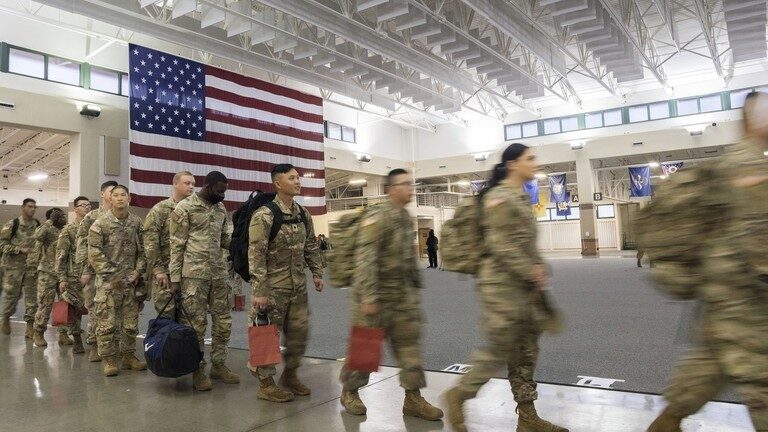
Biden ally floats idea of US troops in Ukraine

US Army
© AP / Stephen B. Morton
Senator suggests Ukraine may 'turn into Syria' unless the US and NATO 'stop Putin'

US Senator Chris Coons, a politician described by media outlets as President Joe Biden's closest Senate ally, has raised the idea of deploying American troops to fight Russians in Ukraine, saying he fears the former Soviet republic will "become the Syria of Eastern Europe."
"The American people cannot turn away from this tragedy in Ukraine," Coons said on Sunday in a CBS News interview. "I think the history of the 21st century turns on how fiercely we defend freedom in Ukraine and that Putin will only stop when we stop him."
Asked by host Margaret Brennan about his recent comments calling for US leaders to discuss troop deployments to Ukraine, Coons said policy makers must consider the "level of brutality" exhibited by Russian forces. He credited Biden with pulling Western allies together to impose "crushing sanctions" on Russia, but suggested that more direct action may be needed as Russian President Vladimir Putin raises the stakes.

Comment: Coons is a complete moron and just another useful idiot of the PTB. He is absolutely right that at some point they will inevitably have to confront the reality and that will be a real shock for them because they live in their wishful thinking bubble, which is far from the harsh reality.

See also:


Eye 2

SOTT Focus: "One less traitor": Zelensky Oversees Campaign of Assassination, Kidnapping And Torture of Political Opposition

Alexander Matjuschenko 1
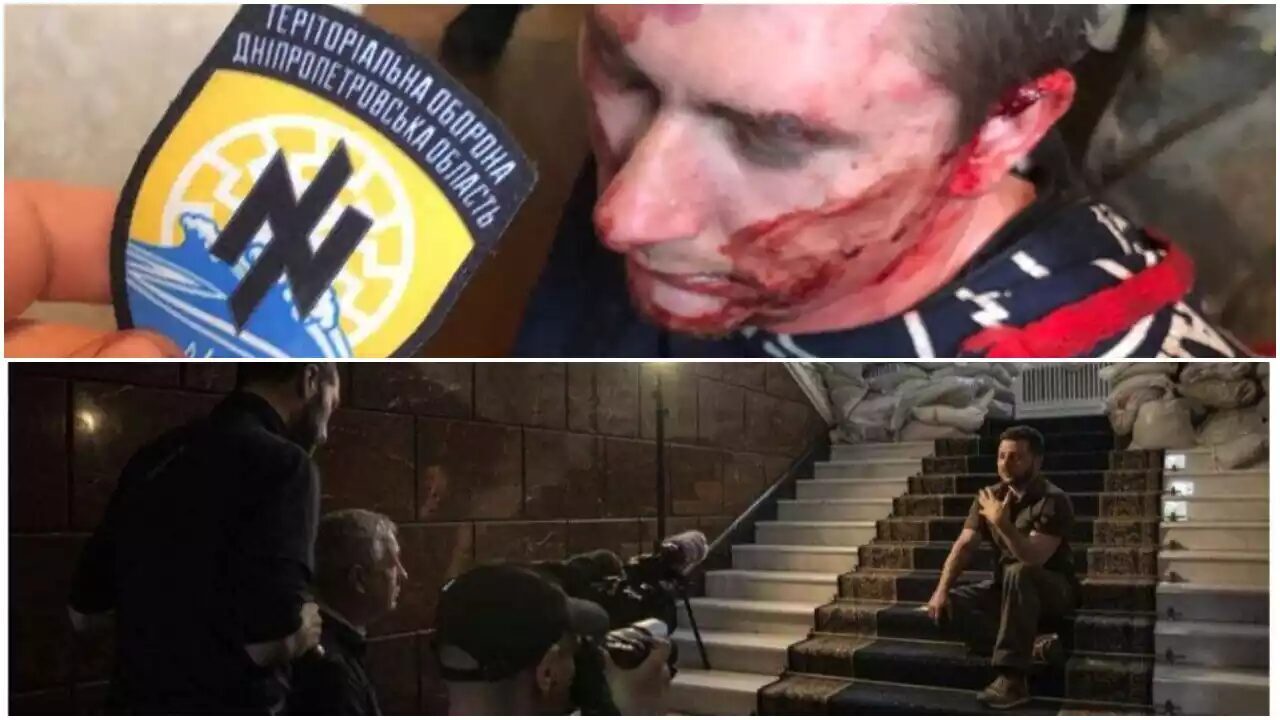
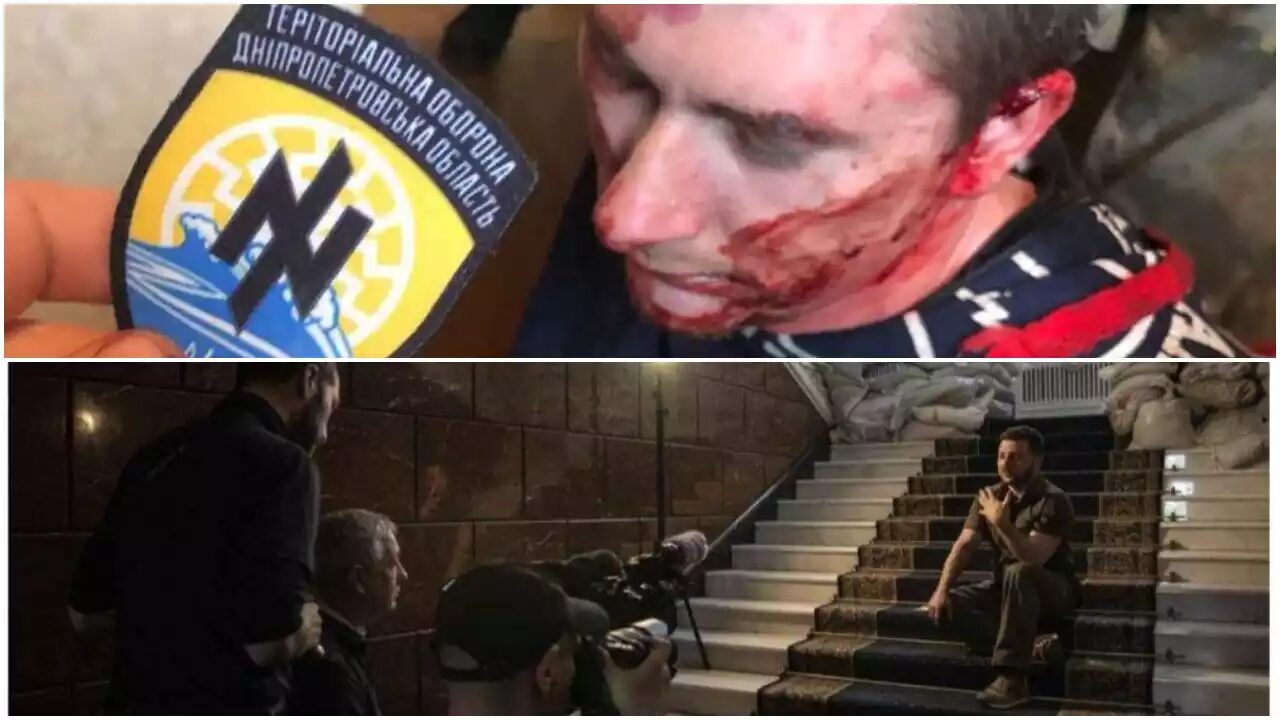
Above: The torture of left-wing activist Alexander Matjuschenko on March 3 in Dnipro, recorded by Azov members. Below: President Volodymyr Zelensky poses during a media engagement.
While claiming to defend democracy, Ukraine's Volodymyr Zelensky has outlawed his opposition, ordered his rivals' arrest, and presided over the disappearance and assassination of dissidents across the country.

Ukrainian President Volodymyr Zelensky has framed his country's war against Russia as a battle for democracy itself. In a carefully choreographed address to US Congress on March 16, Zelensky stated, "Right now, the destiny of our country is being decided. The destiny of our people, whether Ukrainians will be free, whether they will be able to preserve their democracy."

US corporate media has responded by showering Zelensky with fawning press, driving a campaign for his nomination for the Nobel Peace Prize and inspiring a flamboyant musical tribute to himself and the Ukrainian military during the 2022 Grammy awards ceremony on April 3.

Western media has looked the other way, however, as Zelensky and top officials in his administration have sanctioned a campaign of kidnapping, torture, and assassination of local Ukrainian lawmakers accused of collaborating with Russia. Several mayors and other Ukrainian officials have been killed since the outbreak of war, many reportedly by Ukrainian state agents after engaging in de-escalation talks with Russia.

"There is one less traitor in Ukraine," Internal Affairs Ministry advisor Anton Geraschenko stated in endorsement of the murder of a Ukrainian mayor accused of collaborating with Russia.

Bullseye

Best of the Web: US, EU sacrificing Ukraine to 'weaken Russia' - Former NATO adviser

NATO Ukraine insider
© The GrayzoneFormer Swiss intelligence officer and NATO adviser Jacques Baud on the roots of the Ukraine-Russia war and its growing dangers.
As the Russia-Ukraine war enters a new phase, former Swiss intelligence officer, senior United Nations official, and NATO advisor Jacques Baud analyzes the conflict and argues that the US and its allies are exploiting Ukraine in a longstanding campaign to bleed its Russian neighbor.

Guest: Jacques Baud. Former intelligence officer with the Swiss Strategic Intelligence Service who has served in a number of senior security and advisory positions at NATO, the United Nations, and with the Swiss military.

Comment: Also check out SOTT radio's: NewsReal: Shanghai Lockdown - Moskva Hit - Escalation in Ukraine?


Light Sabers

Serbia's President explains rejection of Russia sanctions, country's airports suffer false bomb threats from Kiev and 'unnamed EU state'

Aleksandar Vucic serbia president
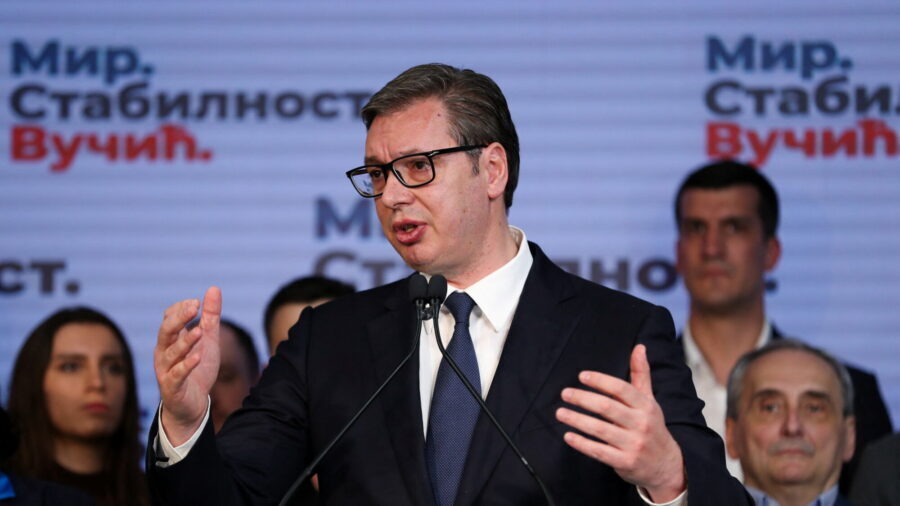
© Antonio Bronic/ReutersSerbian President and presidential candidate Aleksandar Vucic (C) speaks after the results of the presidential election, in Belgrade, Serbia, on April 3, 2022.
It has cost Serbia a lot to defy the West's push to impose sanctions on Russia over its military operation in Ukraine, President Aleksandar Vucic said on Sunday.

He believes he would be celebrated by the West and hailed as a hero had Belgrade backed the economic restrictions against Moscow.

"It costs us a lot not to have imposed sanctions on Russia. But if we imposed them, it would cost us our principle of not supporting sanctions against anyone, because we know from our own experience that sanctions are immoral and inefficient," Vucic told Pink TV.

Comment: See also: And check out SOTT radio's: NewsReal: Shanghai Lockdown - Moskva Hit - Escalation in Ukraine?


Putin

Best of the Web: Western 'economic blitzkrieg' has failed - Putin

PUtin
© UnknownRussian President Vladimir Putin
Western nations have failed in their attempts to destabilize the Russian economy with sanctions, Russian President Vladimir Putin said at a government meeting on economic issues on Monday.
"The situation is stabilizing, the ruble exchange rate has returned to the levels of the first half of February and is supported by a strong balance of payments... Foreign cash is returning to the country's banking system, and the volume of deposits by citizens is growing. As for the consumer market, after a short rush to buy a number of goods... retail demand has returned to normal. Commodity stocks in retail chains are recovering."
Overall, he noted that sanctions have failed to break the country's economy:
"The goal [of sanctions] was to quickly undermine the financial and economic situation in our country, provoke a panic in the markets, trigger a collapse of the banking system and a large-scale shortage of goods in stores. But this policy has failed - the economic blitzkrieg has run aground."
Meanwhile, according to Putin, the sanctions have backfired on the countries that introduced them, namely the US and the EU, leading to a spike in inflation and unemployment in these countries, a worsening of the standard of living of its citizens, and devaluation of their savings.

Comment: While the economic situation in Russia could have been much worse, there are positive changes in the works:
The Russian economy is entering a period of major adjustments to cope with the impact of the sanctions placed on Moscow by the US and its allies, Elvira Nabiullina, the head of the country's central bank, said speaking to the State Duma on Monday.
"Our economy is entering a difficult period of structural changes associated with sanctions. As I said, sanctions primarily affected the financial market, but now they will begin to increasingly affect the economy."
Russia still has reserves to support the economy, but they won't be able to sustain it much longer, especially after roughly half of them were frozen abroad by sanctions. She said:
"The period when the economy can live on reserves is over. And already in the second - beginning of the third quarter, we will enter a period of structural transformation and the search for new business models."
While Russia still has the opportunity to use about half of its reserves (around $300 billion), these consist largely of gold, yuan, and IMF drawing rights, which is of no help in managing the situation with the currency on the domestic market.

The official praised the measures that Russia has already introduced to support the economy amid sanctions, including switching to its own financial messaging system, SPFS, after the country was cut off from SWIFT in March.
"When the threat of disconnection from SWIFT first appeared in 2014, we developed the SPFS, which operates according to the SWIFT standards. Foreign participants interested in working with Russian partners can join and are already joining it. At the moment, 52 foreign organizations from 12 countries have joined the SPFS."
Nabiullina stressed that sanctions cut off most of the Russian economy from settlements in reserve currencies, the US dollar and the euro, which made it crucial for Russia and partners to develop payments in national currencies.
"We are not starting from scratch here either. We have already launched and developed such bilateral projects with a number of countries. Now we are negotiating with partners in different countries in order to normalize the situation with payments as soon as possible."
The 20% rate introduced last month resulted in a rapid deceleration of the inflation jump that occurred in March, which enabled the regulator to reduce the rate to 17%.
"We will not try to lower [inflation] by drastic measures. This would prevent businesses from adapting... and we definitely need to cope with a period of adaptation."


Pistol

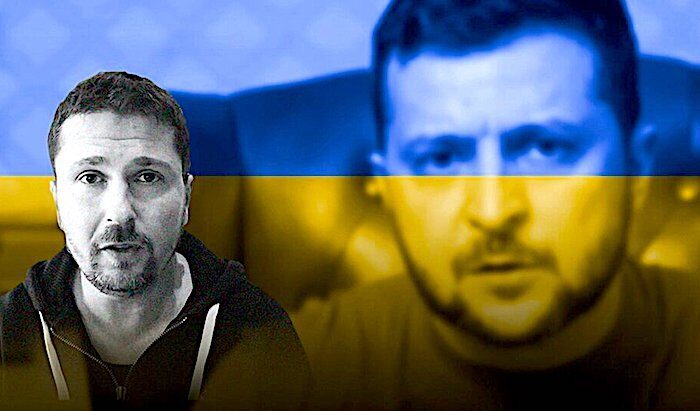
Testimony reveals Zelensky's secret police plot to 'Liquidate' opposition figure Anatoly Shariy

Anatoly Shariy
© Antonio CabreraAnatoly Shariy • Volodymyr Zelensky
Accounts from the Ukrainian SBU's torture prison reveal Zelensky's plot to assassinate exiled opposition figure and leading journalist Anatoly Shariy.

On March 7, Anatoly Shariy, a Ukrainian opposition figure and one of the country's most popular journalists, received an email from Igor, an old acquaintance with whom he had not communicated for years (Igor is an alias used to protect his identity).

"Please help me find a place to live, suggest an apartment or an agent. I'm ready to do any work for you, whatever you say," the email read.

"I realized that he was in the hands of the SBU," Shariy told me, using the acronym for Ukraine's domestic intelligence agency, notorious for its persecution of anyone accused of sympathy for Russia. "I understood whom I was talking to and did not particularly answer anything."

Shariy suspected that the SBU wanted Igor to surveil him for an assassination attempt.

Dollars

How Pentagon contractors are cashing in on the Ukraine Crisis

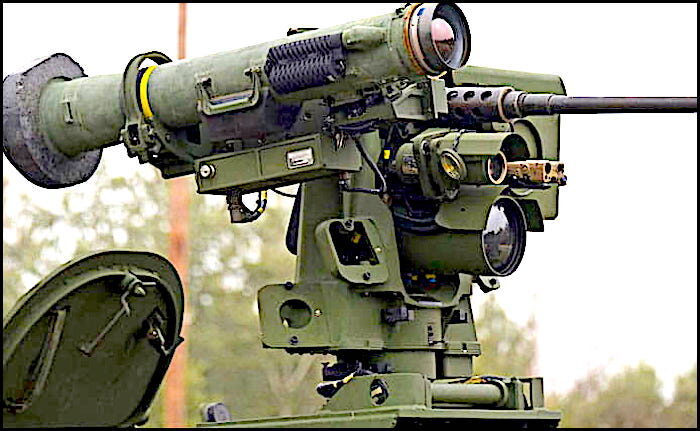
Javelin Missile
© US Army/Markus RauchenbergerJavelin Missile
The Russian invasion of Ukraine has brought immense suffering to the people of that land, while sparking calls for increased military spending in both the United States and Europe. Though that war may prove to be a tragedy for the world, one group is already benefiting from it: U.S. arms contractors.

Even before hostilities broke out, the CEOs of major weapons firms were talking about how tensions in Europe could pad their profits. In a January 2022 call with his company's investors, Raytheon Technologies CEO Greg Hayes typically bragged that the prospect of conflict in Eastern Europe and other global hot spots would be good for business, adding that
"we are seeing, I would say, opportunities for international sales... [T]he tensions in Eastern Europe, the tensions in the South China Sea, all of those things are putting pressure on some of the defense spending over there. So I fully expect we're going to see some benefit from it."
In late March, in an interview with the Harvard Business Review after the war in Ukraine had begun, Hayes defended the way his company would profit from that conflict:
"So I make no apology for that. I think again recognizing we are there to defend democracy and the fact is eventually we will see some benefit in the business over time. Everything that's being shipped into Ukraine today, of course, is coming out of stockpiles, either at DoD [the Department of Defense] or from our NATO allies, and that's all great news. Eventually we'll have to replenish it and we will see a benefit to the business over the next coming years."

Comment: Case in point:

Ukraine can fight Russia 'for 10 years' claims Zelensky, as neo-Nazi led military suffers heavy losses & demands West supply ever more arms


Footprints

Turkey launches new military offensive in northern Iraq

Hulusi Akar
© AP/Turkish Defense MinistryDefense Minister Hulusi Akar visits Turkish troops in Hakkari province, Turkey.
Turkey has launched a new ground and air offensive against Kurdish militants in Iraq, Turkey's defence minister announced Monday. Turkish warplanes, artillery and troops attacked targets belonging to the Kurdistan Workers' Party (PKK) in northern Iraq, ranging from camps to ammunition stores.

The military operation - named Operation Claw Lock - was part of a long-running Turkish campaign in Iraq and Syria against militants of the PKK and Syrian Kurdish YPG, which Ankara regards as terrorist groups.

Jets and artillery struck shelters, bunkers, caves, tunnels, ammunition depots and headquarters belonging to the PKK, said Turkish Defense Minister Hulusi Akar in a video posted on the ministry's website early Monday. Turkish commandos - with the support of helicopters and drones - then crossed into the area by land or were flown in by helicopters.

Anadolu news agency quoted Akar as saying: "Our operation is continuing successfully as planned. The targets identified in the first phase have been captured." No information on casualties was given or how many troops and warplanes participated in the action.

Comment: Turkey's military operation will be air and ground tactics:
The military offensive will include an extensive airstrike campaign using jets, helicopters, and drones, as well as a ground incursion by commando troops, according to the Turkish Defense ministry.

According to the minister, Turkish forces are only targeting "terrorists," and they are taking extra precautions to avoid civilian casualties and damage to cultural heritage.

The Turkish military operation in northern Iraq began 4 days ago, yet Ankara officially announced it on Monday.
Turkey intends to make this a fight to the finish "until the last terrorist is neutralized."
The Turkish military operation in northern Iraq has achieved all of its initial objectives, the country's defense ministry said in a Monday morning update, adding that the operation will continue "with determination until the last terrorist is neutralized," although no projected time frame for that was provided.

The Turkish military has conducted a number of cross-border campaigns against Kurdish forces in both Syria and Iraq over the years. The latest operation focused on the Iraqi regions of Metina, Zap, and Avasin-Basyan, according to the Turkish ministry. Ankara claimed its incursion into Iraqi Kurdistan was legitimate under the national self-defense clauses of the UN Charter.
"Our activities are carried out in a way that respects the territorial integrity and sovereign rights of friendly and brotherly Iraq."
The official claimed his nation's armed forces only targeted "terrorist forces" and did everything possible to avoid harm to civilians, cultural and religious sites, and the environment.