Science & TechnologyS


Better Earth

Best of the Web: Dr. Zach Bush Interview With Del Bigtree: Literally Everything They're Telling You About Covid-19 is Wrong

zach bush del bigtree
Triple board-certified M.D., Dr. Zach, joins Del in an evolutionary discussion on why Coronavirus is here, what it's trying to tell us, and how we emerge from the darkness. Dr. Zach brings his knowledge of viruses, environmental toxicity and diseases to bear on the Covid-19 pandemic, in the process exposing the entire edifice of false assumptions it is built on.

Literally everything the authorities and the media have told you about Covid-19 is wrong. From the death numbers to what this particular virus is to what viruses generally do to why some places saw higher death tolls to what people should do to protect their health to what it all means spiritually... this interview has it all!


Comet 2

New Comet P/2019 LM4 (Palomar)

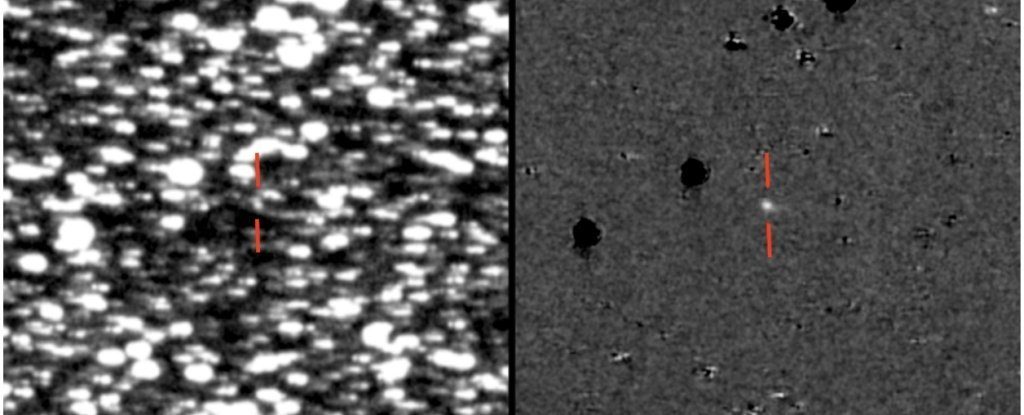
CBET 4775 & MPEC 2020-J68, issued on 2020, May 14, announce that an apparently asteroidal object discovered on images taken at Palomar on 2019 June 4 and 7 with the 1.2-m f/2.4 Schmidt telescope (and given the minor-planet designation 2019 LM_4 when published on MPS 1001527, along with observations made elsewhere on June 8) has been re-discovered showing cometary appearance at two other observatories. The new comet has been designated P/2019 LM4 (Palomar).

According to the CBET 4775: B. Li reported the discovery by G. Zhaori of an extended object on images taken by L. F. Hu with the 1.04-m f/1.8 Schmidt telescope at the XuYi Station of Purple Mountain Observatory on May 11 UT in the course of the "Chinese Near Earth Object Survey" (discovery observations tabulated below). Before the object was posted on the Minor Planet Center's NEOCP webpage, it wasdiscovered independently in images obtained with the Pan-STARRS1 1.8-m Ritchey-Chretien reflector at Haleakala on May 12, with Y. Ramanjooloo (University of Hawaii) reporting that the full-width-at-half-maximum size was 3".6 compared to 1".2 for nearby stars. Observations were subsequently identified at the Minor Planet of yet another apparent independent discovery of the comet from 2020 May 9.5 at mag 16.4-17.0 with a 0.5-m f/2 Schmidt reflector at Haleakala, Hawaii, in the course of the "Asteroid Terrestrial- Impact Last Alert System" (ATLAS) search program, though it appears that the ATLAS team did not report it as a comet.

Comet P/2019 LM4Palomar
© Remanzacco Blogspot

Sheeple

This philosopher is challenging all of evolutionary psychology

Subrena Smith
© University of New HampshireSubrena Smith
It's not often that a paper attempts to take down an entire field. Yet, this past January, that's precisely what University of New Hampshire assistant philosophy professor Subrena Smith's paper tried to do. "Is Evolutionary Psychology Possible?" describes a major issue with evolutionary psychology, called the matching problem.

The field of evolutionary psychology is no stranger to critiques, given its central idea: that human behaviors can be explained in evolutionary terms and that the core units governing our actions haven't changed since the Stone Age. But Smith's paper garnered a particularly strong response after science journalist Adam Rutherford discussed it on Twitter and PZ Myers discussed it in his Pharyngula blog.

We at Gizmodo have long rolled our eyes at the often-nonsensical conclusions that some people come to when employing evolutionary psychology theory, so we were excited to chat with Smith about her work. This interview has been condensed and edited for clarity.

Gizmodo: Your paper's main refutation of the field is something called the matching problem. Can you explain what that is?

Subrena Smith: Evolutionary psychologists' thought is that, for at least some of our behaviors, they believe that we have — dare I use this term — hard-wired cognitive structures that are operating in all of us contemporary human beings the same way they did for our ancestors on the savannas. The idea is that, in the modern world, we have sort of modern skulls, but the wiring — the cognitive structure of the brain itself — is not being modified, because enough evolutionary time hasn't passed. This goes for evolutionary functions like mate selection, parental care, predator avoidance — that our brains were pretty much in the same state as our ancestors' brains. The sameness in how our brains work is on account of genetic selection for particular modules that are still functional in our environment today. [Editor's note: These "modules" refer to the idea that the brain can be divided up into discrete structures with specific functions.]

Beaker

Canadian scientists develop tool to sequence circular DNA

CIDER-Seq tool sequence circular DNA
© Devang MehtaIllustration of the newly developed CIDER-Seq tool sequencing circular DNA. The tool will help scientists better understand how circular DNA works in bacteria and viruses, as well as human and plant cells.
A new tool invented by University of Alberta biologists to sequence circular DNA will provide scientists with richer, more accurate data that could help advance research on viruses, agriculture and perhaps even cancer.

The tool — called CIDER-Seq, which uses DNA sequencing technology called PacBio — was made available online by the U of A researchers for other scientists to use, along with step-by-step lab and computer protocols for analyzing the DNA sequences.

"With our invention of CIDER-Seq, we can begin to understand the function of these mysterious circular DNAs in human and plant cells," said Devang Mehta, a post-doctoral fellow who is the lead author of the study.

Sherlock

Gigantic dinosaur footprints are found on the roof of a cave

Castelbouc
© Jean-David Moreau et al./J. Vertebr. Paleontol.A scientist on a caving trip happened to spot dinosaur tracks in the ceiling of Castelbouc Cave in France.
Prints show the tracks of three 'titanosaurs' that took a seaside stroll more than 165 million years ago. A scientist exploring deep inside a cave in France has discovered huge dinosaur footprints, measuring up to 1.25 metres long, made by some of the largest creatures ever to walk the Earth.

According to Jean-David Moreau at the University of Burgundy-Franche-Comté in France and his colleagues, the footprints probably belong to an unknown species of titanosaur, a category of long-necked herbivorous dinosaur that includes the heaviest and longest land animals in the planet's history. The tracks were made 166 million to 168 million years ago, when three dinosaurs traversed the shoreline of a sea. The site was then at the planet's surface, but geological processes have buried and tilted the sediments, and the prints are now on the cave's roof, 500 metres underground.

Comment: See also:


Microscope 1

3D model of the SARS-CoV-2 virus at atomic resolution

sars-cov-2 coronavirus model
© Visual Science3D Model of the SARS-CoV-2 Virus at Atomic Resolution
Biomedical visualization studio Visual Science has created the most detailed and scientifically accurate 3D model of the SARS-CoV-2 virus at atomic resolution. The model is based on the latest scientific research into the structure of coronaviruses, as well as input from expert virologists involved in the research. This is the most accurate model of the SARS-CoV-2 viral particle currently available. To produce it, Visual Science employed the same techniques of structural bioinformatics used in basic research and drug development.

The SARS-CoV-2 virus model is a part of Visual Science's non-commercial Viral Park project. Viral Park's past successes include models of HIV, influenza A/H1N1, Ebola, papilloma, and Zika virions.

We use the same color scheme throughout the whole Viral Park project. Bright colors show the proteins encoded by the viral genome. Shades of gray correspond to the structures taken by viruses from the host cell. Thus we emphasize the parasitic and non-autonomous nature of the viruses.

SOTT Logo Radio

SOTT Focus: MindMatters: The Lighter Side of Space Rocks - The Holy Grail, Directed Panspermia and the Origin of Life

panspermia
If you think of asteroids, meteors and comets as potentially destructive and life-threatening forces, you're correct. After all, the arrivals of these celestial bodies are typically associated with catastrophic impacts on earth, profound environmental changes, impact winters, plagues and famines. But that's not all. Over the last century, a number of scientists have speculated that they might also bring life to the barren outreaches of the galaxy, such as our solar system. Not only that, they may even have positive evolutionary effects on existing flora and fauna.

This week on MindMatters we continue our discussion of near-earth objects as symbolized and alluded to in the Grail legends. Further to this warning from the past - that has been encoded for understanding by future generations - we'll be examining such ideas as directed panspermia, or the "creative" dimension of space rocks. Biological material and other life-seeding elements are the surprise feature of these death-dealing amalgamations.


Running Time: 01:12:07

Download: MP3 — 66 MB


Sun

Solar system's oldest molecular fluids could hold the key to early life

Framboidal
© Chi MaFramboidal (raspberry-like) magnetite grains in the Tagish Lake meteorite, magnetically aligned following formation in water.
The oldest molecular fluids in the solar system could have supported the rapid formation and evolution of the building blocks of life, new research in the journal Proceedings of the National Academy of Sciences reveals.

An international group of scientists, led by researchers from the Royal Ontario Museum (ROM) and co-authors from McMaster University and York University, used state-of-the-art techniques to map individual atoms in minerals formed in fluids on an asteroid over 4.5 billion years ago.

Studying the ROM's iconic Tagish Lake meteorite, scientists used atom-probe tomography, a technique capable of imaging atoms in 3-D, to target molecules along boundaries and pores between magnetite grains that likely formed on the asteroid's crust. There, they discovered water precipitates left in the grain boundaries on which they conducted their ground-breaking research.

Comment: See also: And check out SOTT radio's:


Info

New evidence reveals that giant meteorite impacts formed parts of the Moon's crust

Moon Impact
© Daniel D. Durda/FIAAAAn artist’s impression of how the early Moon was reshaped by an intense period of bombardment. A new study reveals that large impacts could have produced the range of lunar rocks sampled by the Apollo missions over 4.3 billion years ago.
Toronto, Canada - New research published today in the journal Nature Astronomy reveals a type of destructive event most often associated with disaster movies and dinosaur extinction may have also contributed to the formation of the Moon's surface.

A group of international scientists led by the Royal Ontario Museum has discovered that the formation of ancient rocks on the Moon may be directly linked to large-scale meteorite impacts.

The scientists conducted new research of a unique rock collected by NASA astronauts during the 1972 Apollo 17 mission to the Moon. They found it contains mineralogical evidence that it formed at incredibly high temperatures (in excess of 2300 °C/ 4300 °F) that can only be achieved by the melting of the outer layer of a planet in a large impact event. In the rock, the researchers discovered the former presence of cubic zirconia, a mineral phase often used as a substitute for diamond in jewellery.

The phase would only form in rocks heated to above 2300 °C, and though it has since reverted to a more stable phase (the mineral known as baddeleyite), the crystal retains distinctive evidence of a high-temperature structure. An interactive image of the complex crystal used in the study can be seen here using the .

Cassiopaea

Two new supernovae spotted this month

Two new supernovae for amateur telescopes are keeping things lively this month!
Supernova 2020jfo
© Gianluca MasiThe Zwicky Transient Facility discovered supernova 2020jfo in the bright galaxy M61 in Virgo on May 6, 2020 — the 8th supernova recorded in this galaxy since 1926. North is up.
My gosh, the sky is so busy with comets right now, do we really need a bunch of distracting supernovae?

Yes! Good fortune has delivered two exploding stars to the evening sky, one a faint supernova in a bright galaxy and the other a bright supernova in a faint galaxy.