Science & TechnologyS


Fireball 2

Two asteroids to race past Earth as NASA pens deal with Space Force to bolster planetary defenses

asteroid
© NASA
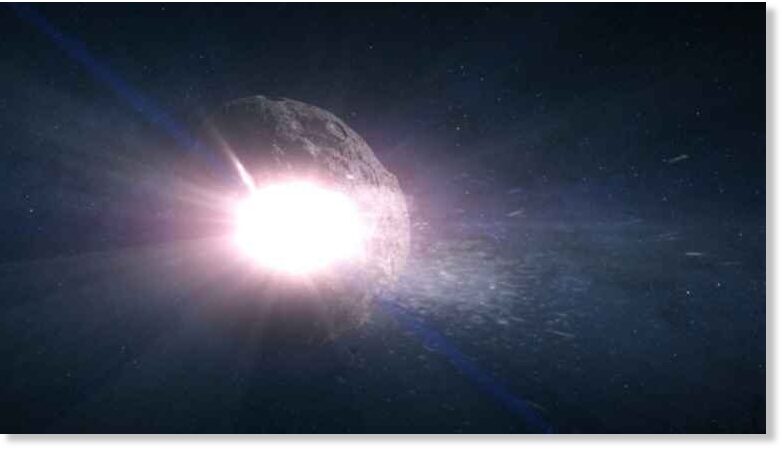
Just one day after World Asteroid Day, NASA's Center for Near-Earth Object Studies (CNEOS) has warned of two space rocks due to soar through the Earth's backyard, as planetary defense preparations start to ramp up.

The first of the incoming objects is the 69-foot wide 2019 AC3, an Apollo-class asteroid travelling at roughly 8,000 miles per hour and due to fly past at a safe distance of 2.5 million miles away.

Later on Wednesday, at almost double the size and over twice the speed of its predecessor, the 135-foot, Aten-class asteroid 2020 MK3 will shoot past at 19,000 miles an hour. The asteroid will come much closer to us, passing within 440,000 miles of our planet. While this is a close shave in space rock terms, it's still over 1.5 times the distance between us and the moon, so there's nothing to worry about.

Info

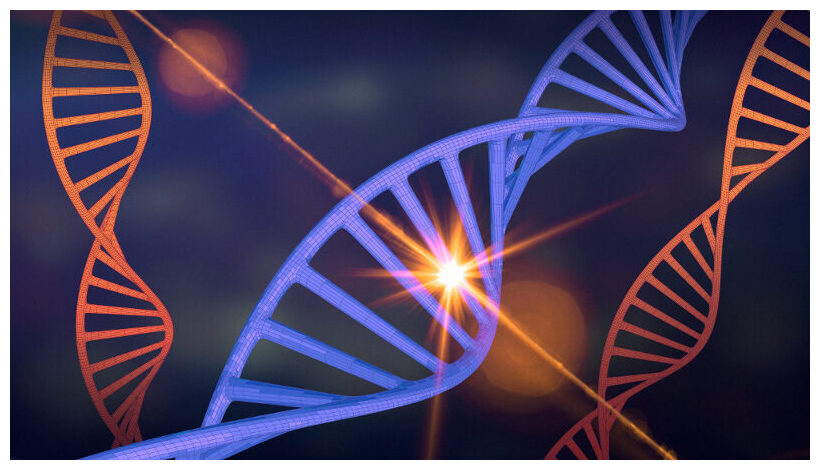
Life's bias for right-handed DNA maybe explained by cosmic rays

Cosmic Rays and DNA
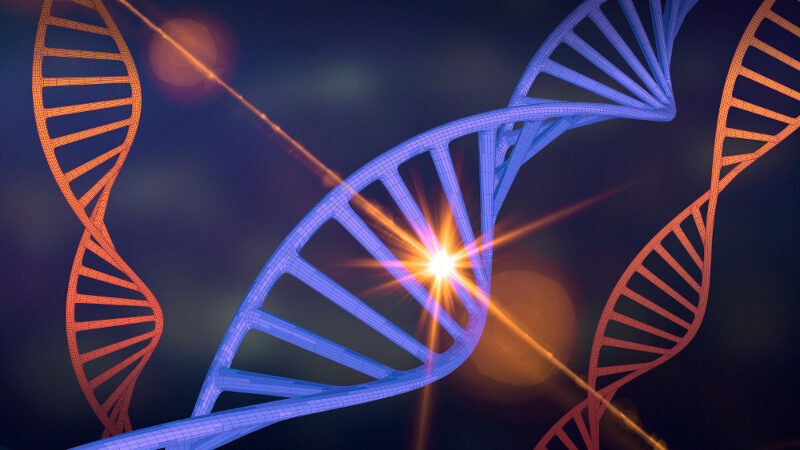
© Samuel Velasco/Quanta MagazineLopsided interactions between cosmic-ray particles and chiral biomolecules may explain why all life on Earth relies exclusively on right-handed DNA and RNA helixes.
If you could shrink small enough to descend the genetic helix of any animal, plant, fungus, bacterium or virus on Earth as though it were a spiral staircase, you would always find yourself turning right — never left. It's a universal trait in want of an explanation.

Chemists and biologists see no obvious reason why all known life prefers this structure. "Chiral" molecules exist in paired forms that mirror each other the way a right-handed glove matches a left-handed one. Essentially all known chemical reactions produce even mixtures of both. In principle, a DNA or RNA strand made from left-handed nucleotide bricks should work just as well as one made of right-handed bricks (although a chimera combining left and right subunits probably wouldn't fare so well).

Yet life today uses just one of chemistry's two available Lego sets. Many researchers believe the selection to be random: Those right-handed genetic strands just happened to pop up first, or in slightly greater numbers. But for more than a century, some have pondered whether biology's innate handedness has deeper roots.

"This is one of the links between life on Earth and the cosmos," wrote Louis Pasteur, one of the first scientists to recognize the asymmetry in life's molecules, in 1860.

Now two physicists may have validated Pasteur's instincts by connecting the unvarying twist in natural DNA with the behavior of fundamental particles. The theory, which appeared in May in The Astrophysical Journal Letters, doesn't explain every step of how life acquired its current handedness, but it does assert that the shape of terrestrial DNA and RNA is no accident. Our spirals might all trace back to an unexpected influence from cosmic rays.

Microscope 2

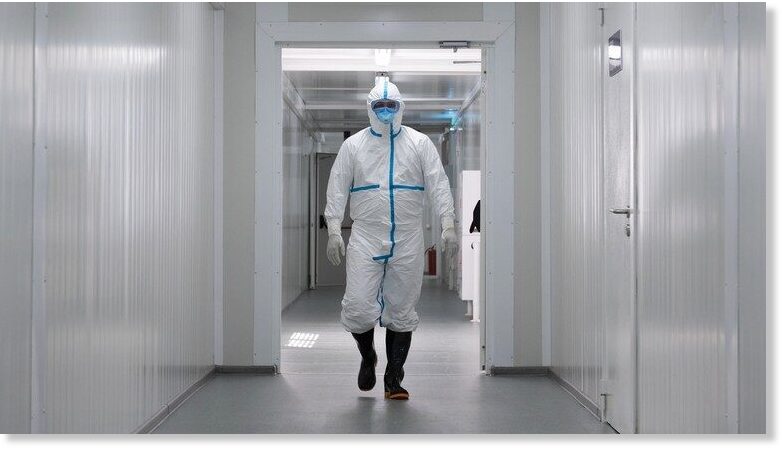
Leading Russian scientist says genetics & blood type can determine risk of death from Covid-19 infection

lab worker
© Sputnik / Timur Batyrshin
Genetic predisposition, as well as the blood group to which the patient belongs, determines the risk a person has of dying from coronavirus, that's according to a top Russian expert.

Mikhail Churnosov says that about 90 percent of human diseases are of a genetic nature and Covid-19 is no exception in this regard. Almost anyone can get the coronavirus, but some people have a sensitivity to this disease due to factors in their genome.

"Why do some get infected and get seriously ill, while others don't? One of the explanations is the individual genetic characteristics of a person, including those that determine the functioning of certain enzymes, in particular the angiotensin-converting enzyme," Churnosov told news agency TASS. He is the head of the laboratory of human molecular genetics and a professor at the Belgorod State National Research University.

Comet 2

The rapid brightening of comet NEOWISE, plus noctilucent clouds in 3D

Neowise
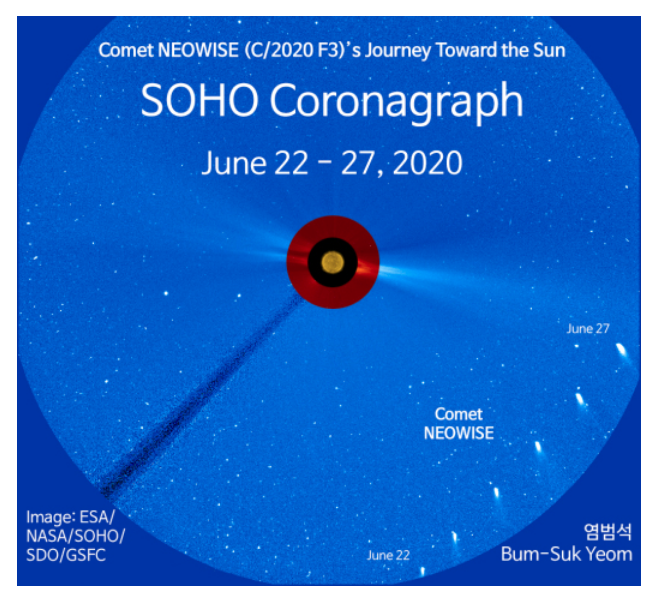
Comet NEOWISE (C/2020 F3) is passing by the sun this week-and it's looking good. The comet just experienced a sharp increase in brightness recorded by coronagraphs onboard the Solar and Heliospheric Observatory (SOHO). Click to play a 4-day movie of the surge:

"During the transit, Comet NEOWISE increased in brightness from magnitude +4 to +1.8-an almost 8-fold jump," says planetary scientist Qicheng Zhang of Caltech, who analyzed the images. "If the comet maintains this brightness, it will be visible to the naked eye when it emerges from the sun's glare in July."

Zhang is a bit concerned, however, that the rapid brightening might be too much of a good thing. "When a comet brightens this quickly (2.2 magnitudes in only ~4 days) it could be a sign that the nucleus is unstable. Comet NEOWISE might yet disintegrate," he cautions.

Comment: See also: And check out SOTT radio's: Behind the Headlines: Earth changes in an electric universe: Is climate change really man-made?


Info

Complex linguistic feature not unique to humans says new study

Complex linguistic features
© S. Ferrigno, Harvard University
Evidence is piling up to suggest humans are not as different from animals as many like to think.

New research adds more fuel to the debate, showing that a complex ability thought to be a hallmark of human language is not only innate across different ages and cultures, but can also be picked up by monkeys.

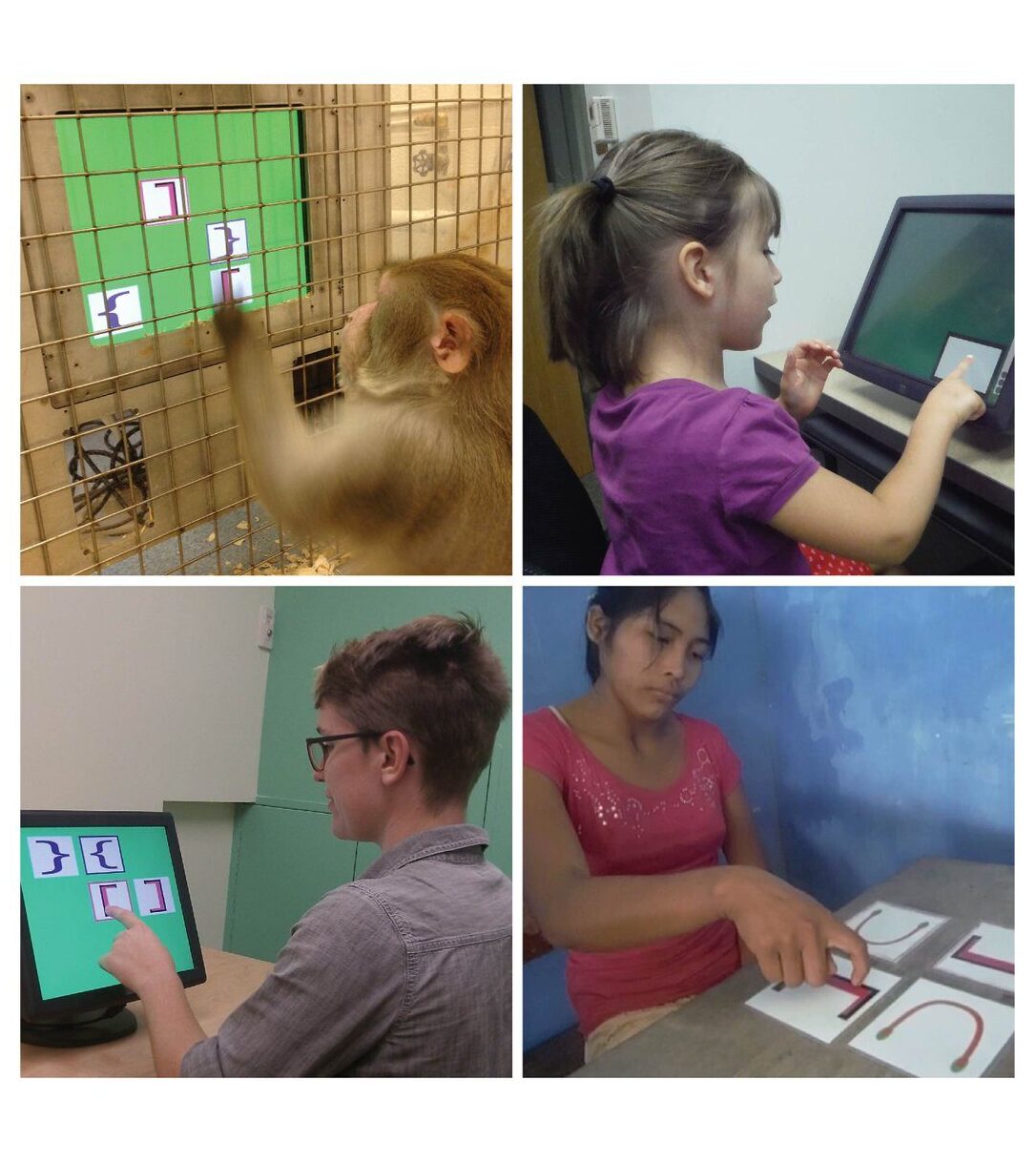
The study, published in the journal Science Advances, tested the ability to embed a smaller phrase within another phrase in three- to five-year-old children, US adults, native Bolivian adults and three rhesus macaques named Horatio, Beyoncé and Coltrane.

Nesting phrases, or recursion, enables us to organise ideas in language, by creating the structure of a pair within another pair, for example.

"You can take a phrase like 'the cat meowed', and nest 'the dog chased' in the centre of the sentence to make 'the cat the dog chased meowed'," explains lead author Stephen Ferrigno from Harvard University, US.

"To understand the meaning of this sentence, the inner noun needs to be matched to the inner verb. The same is true with the outer noun/verb pair."

Bug

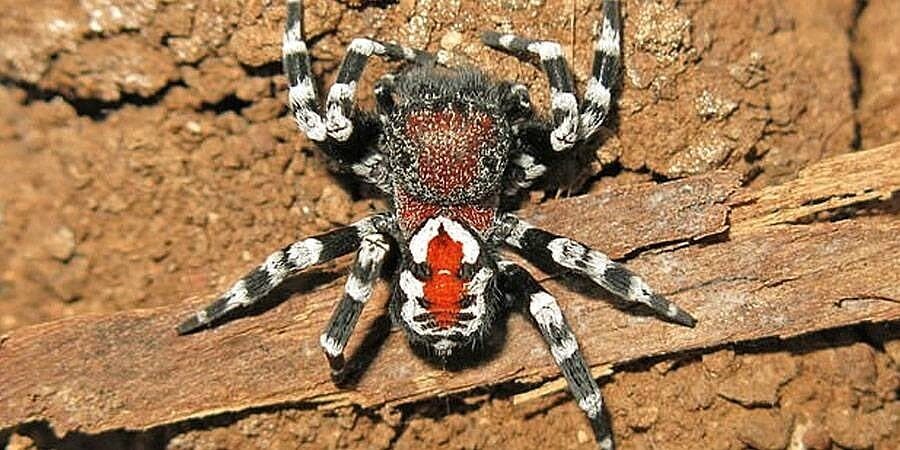
Scientists name new spider species after actor Joaquin Phoenix, markings resemble 'Joker' character

joker face spider
© @revista_skyview/TwitterNewly discovered spider named in honor of Joaquim Phoenix
Researchers say that discovering the arthropod was quite challenging, as this genus of spiders spend most of their lives in their subterranean nests and are active above ground only for a period of three weeks.

Scientists from Finland's University of Turku have discovered a new spider species that they have named after Hollywood actor Joaquin Phoenix. The arthropod has a red-and-white pattern on its back that resembles the makeup Phoenix wore in the movie Joker, where he played the famous comic book villain.

​"Recently, me and my colleague named a new species of this genus from Iran as Loureedia phoenixi, after the American actor, producer and animal rights activist Joaquin Phoenix in recognition of his praised portrayal of the title character in the 2019 movie 'Joker' and as a reference to the male abdominal pattern of the new species, which resembles the famous facial makeup of the character", said the study's lead author Alireza Zamani, an arachnologist and doctoral candidate in the Biodiversity Unit at the University of Turku in Finland.

Chalkboard

Physicists just quantum teleported information between particles of matter

quantum semiconductor
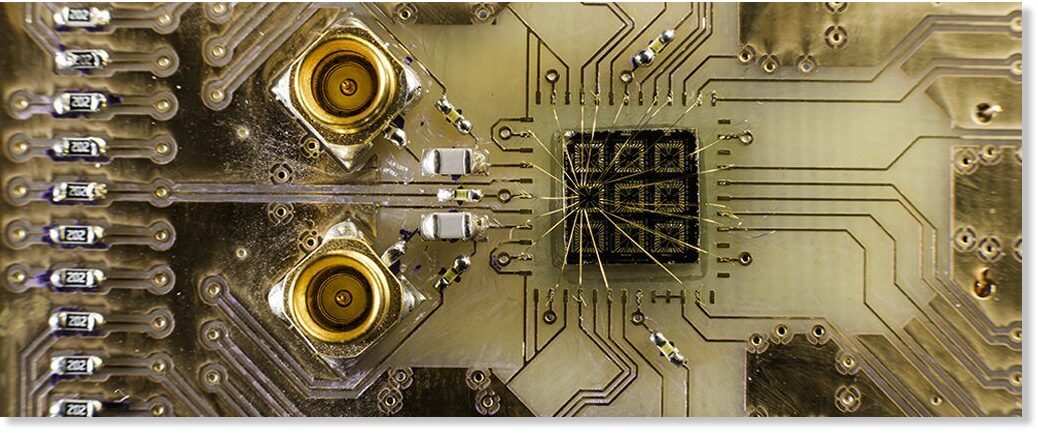
© University of Rochester/J. Adam FensterA semiconductor chip for quantum processing
By making use of the 'spooky' laws behind quantum entanglement, physicists think have found a way to make information leap between a pair of electrons separated by distance.

Teleporting fundamental states between photons - massless particles of light - is quickly becoming old news, a trick we are still learning to exploit in computing and encrypted communications technology.

But what the latest research has achieved is quantum teleportation between particles of matter - electrons - something that could help connect quantum computing with the more traditional electronic kind.

"We provide evidence for 'entanglement swapping,' in which we create entanglement between two electrons even though the particles never interact, and 'quantum gate teleportation,' a potentially useful technique for quantum computing using teleportation," says physicist John Nichol from the University of Rochester in New York.

"Our work shows that this can be done even without photons."

Entanglement is physics jargon for what seems like a pretty straightforward concept.

Arrow Up

Theorists calculate an upper limit for possible quantization of time

Hour Glass
© Pixabay/CC0
A trio of theoretical physicists at the Pennsylvania State University has calculated the upper limit for the possible quantization of time — they suggest 10−33 seconds as the upper limit for the period of a universal oscillator. In their paper published in the journal Physical Review Letters, Garrett Wendel, Luis Martínez and Martin Bojowald outline their theory and suggest a possible way to prove it.

For many years, theoretical physicists have been trying to explain a major problem — the general theory of relativity suggests that time is a continuous quantity, one that can move slower or faster depending on acceleration and gravity conditions. But quantum mechanics theories suggest that time ticks away at a steady pace, like the frames of a movie being played out. In this scenario, time must be universal. For both theories to be right, this contradiction must be explained in a rational way.

Books

Younger Dryas Impact Hypothesis receives support in new book by eminent geologist - Graham Hancock

Magnetic microspherule
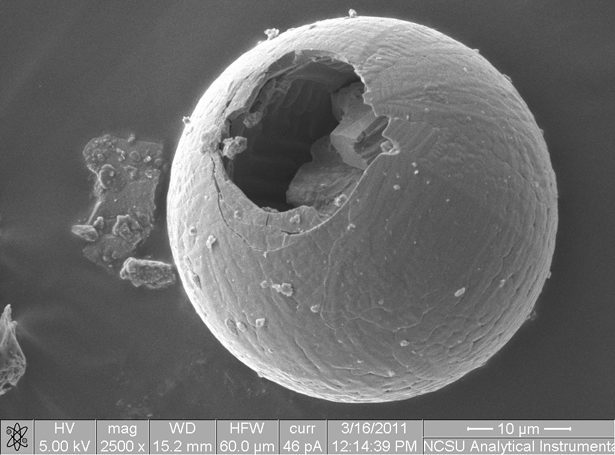
© Proceedings of the National Academy of SciencesMagnetic microspherule found in the Younger Dryas boundary
Did impacts and airbursts from multiple fragments of a disintegrating comet cause the onset of the Younger Dryas global cataclysm 12,800 years ago? After more than a decade of acrimonious scientific controversy around the Younger Dryas Impact Hypothesis (YDIH), an important new book by eminent geologist Dr James L. Powell answers this question in great depth and sets the record straight with a resounding YES.

Titled "Deadly Voyager: The Ancient Comet Strike That Changed Earth and Human History" (http://deadlyvoyager.net/), this thoroughly researched and eminently readable study systematically demolishes all the criticisms of the YDIH that have been made over the years by scientific opponents.

Of particular note is Powell's careful dismembering of several studies which claimed that the evidence on which the YDIH is built is "irreproducible" - a damning criticism in science and one that opponents of the YDIH often gleefully repeat as though the claim is an established and unquestionable fact that "debunks" the hypothesis.

Comment: See also: And check out SOTT radio's:


Beaker

Evolutionary theorizing depends on magic words

Magic Carpet
© Lambert/Getty Images
Here is a quick tale about the evolution of the automobile.
  1. Billions of years ago, a chassis appeared.
  2. The chassis acquired an engine.
  3. The crankshaft found a side gig as a steering wheel.
  4. The steering wheel linked up with the brake pedal to form a universal joint.
  5. Seats developed. They probably arose when the first hood evolved.
Now consider leading journals publishing this account after it has whisked through peer review. Is this not exactly what goes on in evolutionary theorizing? Darwinians have mastered the use of magic words that replace rigor with imagination. And they get away with it; nobody ever blows the whistle on what should be tagged a major scientific foul.

New Findings About Aminoacyl-tRNA Synthetases

Here is an example in The Scientist, a news magazine for working scientists who should know better. In the article, "Protein Synthesis Enzymes Have Evolved Additional Jobs," writer Amber Dance explains new findings about aminoacyl-tRNA synthetases, abbreviated AARS, the enzymes that attach amino acids to transfer RNAs. This important family of 20 enzymes stands between the DNA code, written in triplet nucleotide codons, and the protein code, written in amino acids. Ms. Dance recounts new findings that show several of these enzymes "moonlight" as workers with other functions.