Floods
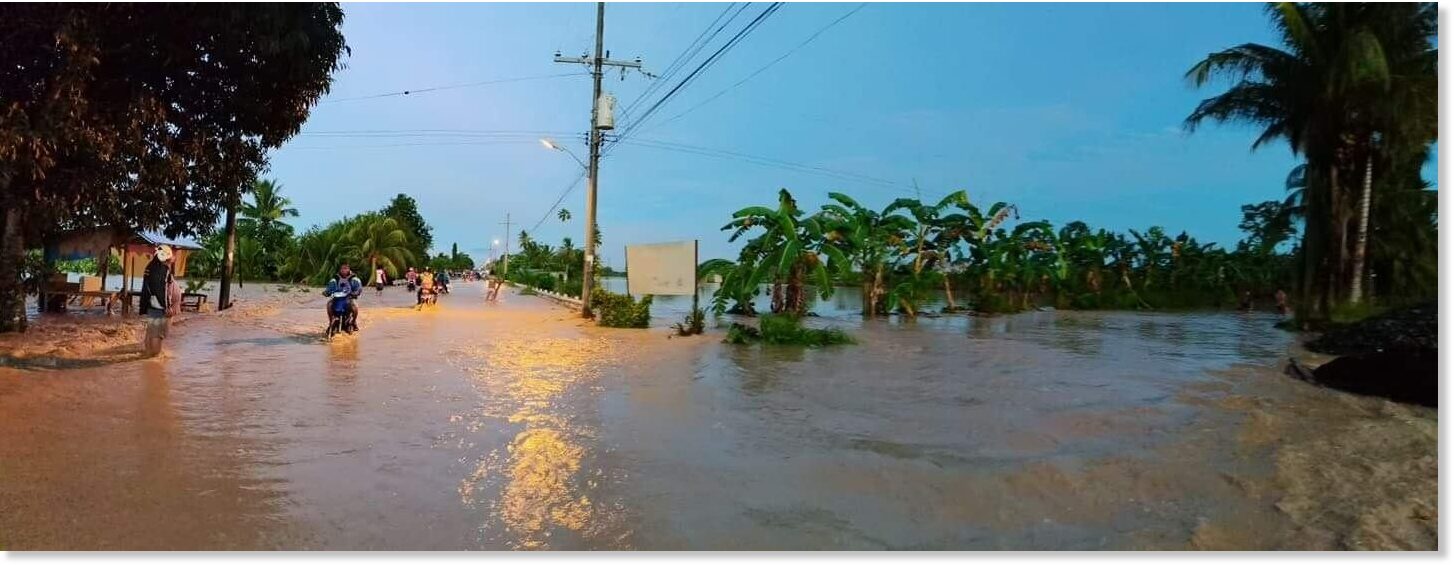
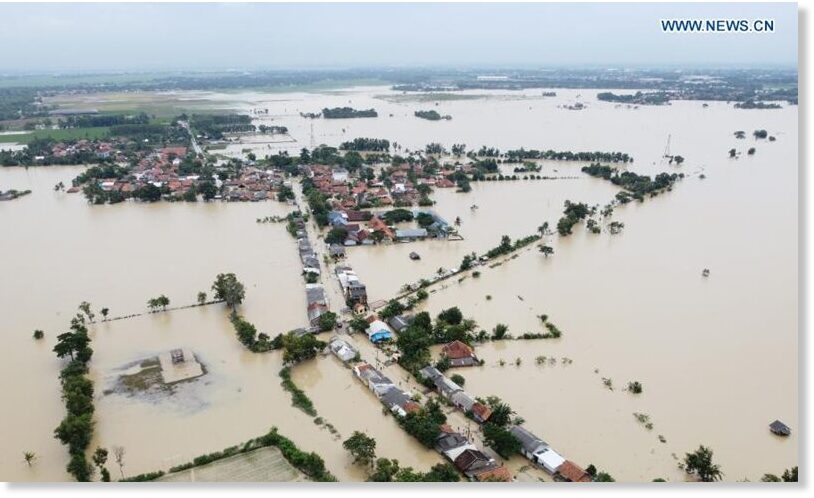
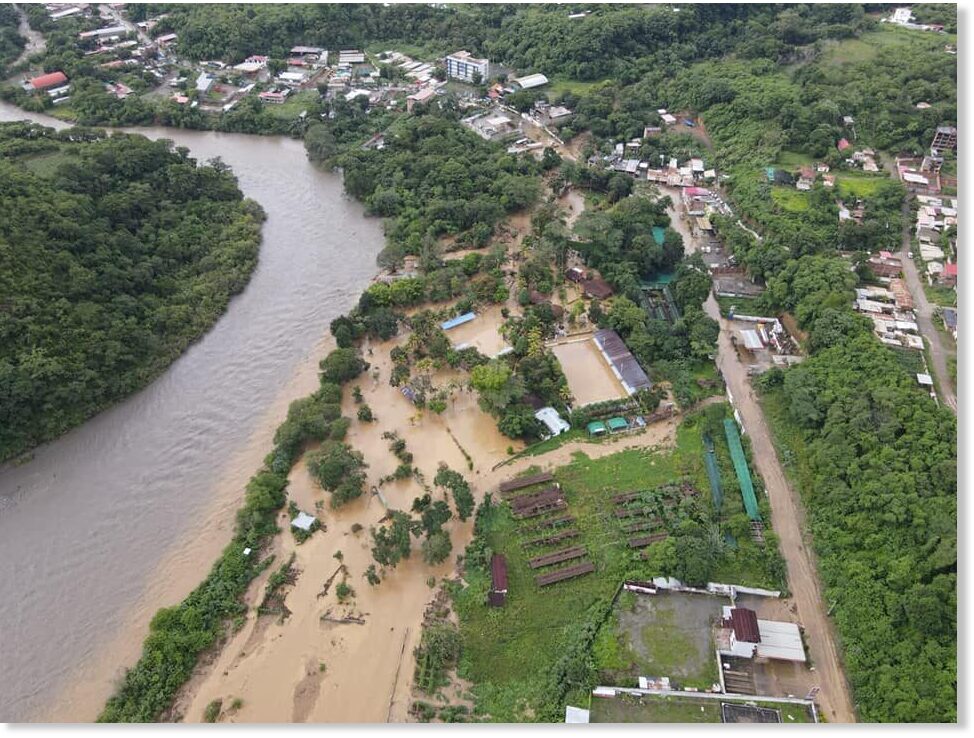
Heavy rain began to fall in the country from 07 November, causing flooding in several provinces. Over 200 mm of rain fell in 24 hours between 07 and 08 November in Luperón, Puerto Plata. Several other locations recorded more than 100 mm of rain in 24 hours.
The flooding in Dominican Republic comes just a few days after floods in neighbouring Haiti left 10 people dead.
Both countries, in particular Haiti, suffered severe damage and loss of life from Hurricane Matthew in October this year.
Severe flooding also struck both countries in May this year. Powerful storms were measured dropping rain at a rate of almost 300 mm (11.8 inches) per hour on 08 May 2016, according to NASA.

Motorcyclists slowly make their way along the flooded road at Pu Chao Saming Phrai intersection in Samut Prakan, Thailand on Tuesday morning
Over 7,000 people have been affected in Aceh, Indonesia and over 20,000 in four states in Thailand, including the southern states of Krabi and Satun.
Parts of Penang state in Malaysia have been flooded for the fourth time in a matter of weeks. Landslides have also been reported in the state.
Indonesia
Indonesia's National Disaster Mitigation Agency, or BNPB reports that at least 7,300 people from 2,143 families have been affected by flooding in five sub-districts in Aceh Jaya district, Aceh.
Heavy rain fell from Sunday 06 November causing flooding by early Monday 07 November in Jaya, Darul Hikmah, Indra Jaya, Sampoiniet and Setia Bakti subdistricts. In some areas flood water is 150 cm deep.
Temporary shelters have been set up for those displaced and a joint team including Military, Aceh Police, Disaster Agency personnel, Red Cross and volunteers, is working in the area to ensure the health and safety of any flood victims. No injuries or fatalities have been reported.
Further heavy rain has been falling in the area and the number of displaced is expected to grow.

A man crawls onto the roof of a flooded car in Kashar, 10 kilometers (6 miles) from the Albanian capital Tirana.
Heavy rain in the Balkans caused swollen rivers to overflow Tuesday, flooding some homes and cutting electricity to remote areas. Authorities in Albania reported two deaths.
Serbia's state TV said surging waters cut a regional road in the southwest of the country and forced a dozen people to leave their homes.
A second day of rain caused floods in northern Montenegro, near the border with Serbia. Authorities in the town of Berane warned residents not to drink tap water.
Albanian authorities said a body was found in a river in Tirana, the capital, while another man died while trying to cross a stream with his car, and there were unconfirmed reports of other deaths as the country struggled to cope with up to 100 millimeters (4 inches) of rain in some areas.
About 3,500 soldiers and emergency personnel have spread across the country to evacuate residents, more than 100 families, mainly ones living near rivers.
Flooding in Bedfordview at the Gillooly's Interchange Traffic brought traffic to a standstill with some vehicles left submerged. Traffic was also brought to a standstill on the R24 westbound due to flash flooding while Boksburg, Rondebult and Northrand are also heavily flooded.
️ Lightning bolt strikes a palm tree in Bedfordview this afternoon. More here: https://t.co/n5KJY4NAsM pic.twitter.com/u9oFrS5Zsv
— Eyewitness News (@ewnupdates) November 9, 2016
Lightning bolt strikes a palm tree in Bedfordview this afternoon. More here: https://t.co/n5KJY4NAsM pic.twitter.com/u9oFrS5Zsv
— Eyewitness News (@ewnupdates) November 9, 2016
Booms of thunder accompanied the giant lightning bolts that could also be see lighting up the night skies.
A number of other roads leading to hotels in the popular holiday resort were also closed as tractors were deployed in an effort to remove the huge quantities of water drenching the streets across the city.
Since midnight, 27.7mm of rain fell in the port city, according to facts provided by the National Weather Service, with not less that 21.4mm falling over the course of two hours in the morning.
The amount of rain which saturated the city in just one night therefore, is similar to the entire annual average of rain that usually sunny Eilat sees.
What is more, the torrential rains contrast heavily with the temperatures in the area which are expected to reach up to 31 degrees celsius on Friday.
Earlier this week, one man died and thousands of homes and businesses were left damaged after floods in the city of Bandung, West Java. Reports said that 77 mm of rain fell in just 1.5 hours.
Gorontalo
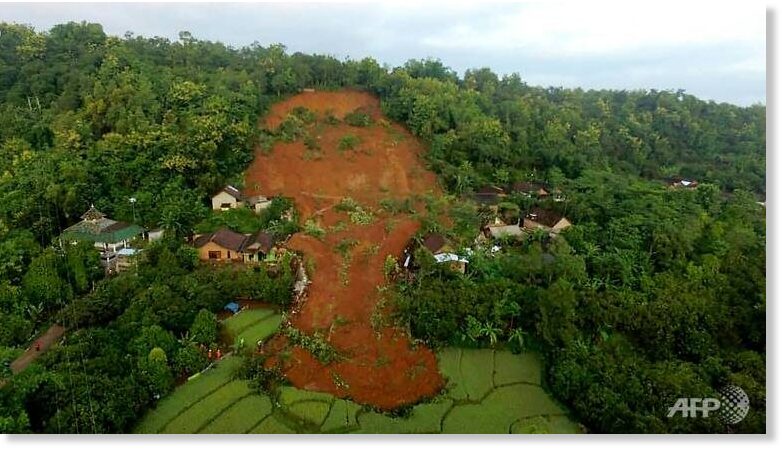
Indonesia's National Disaster Management Authority (BNPB) reports that heavy rain in Gorontalo since 25 October triggered several rivers to overflow, causing floods that left at least 1,500 homes damaged. Several landslides also occurred in some places, causing damage to roads and bridges. Around 4,500 people were forced to evacuate their homes. No deaths have been reported at this time.
BNPD says that the Boyonga, Marisa, Meloopu and Bulota rivers all broke their banks around the same time during the evening of 25 October. The flooding affected the districts of Limboto, West Limboto, Pulubala, and Tolangohula. In some areas the flood water has already started to recede.
In some areas the flood water was up to 1 metre deep. Over 100 patients had to be evacuated from a local hospital, and moved to a hospital in the city of Gorontalo.
The floods, which have become a perennial problem on the island, also meant that a bleak Deepavali was on the cards for the Hindu community.
In Jalan P. Ramlee and arterial roads at Bandar Baru Air Itam, more than 100 houses were submerged in knee-deep water, forcing residents to salvage whatever they can.
Several roads in Lebuhraya Thean Teik and Jalan Thean Teik were also badly flooded, leaving dozens of cars submerged and their owners ruing the damages.
Floods waters also struck Jalan Masjid Negeri, one of the island's main arterial roads. Water levels rose quickly, reducing traffic to a crawl. Several cars which later attempted to brave the flood waters ended up stalled halfway.
The water also seeped into the common area on the ground floor at a densely-populated block of flats in Bandar Baru Air Itam.

Heavy rain floods a street in the Egyptian city of Ras Gharib in Red Sea province on October 27, 2016
A further 72 people were injured following the floods over the weekend, according to the ministry.
In South Sinai, nine people were killed and another was injured. In Upper Egypt's Sohag, eight people were killed, 23 injured, and in Beni Suef, a further five people were injured.
In the Red Sea, nine people were killed and 35 others injured.
On Saturday, Egypt's President Abdel-Fattah El-Sisi ordered a total of EGP 50 million (around $5.6 million) to be allocated as compensation to the victims of the floods nationwide, while a further EGP 50 million was allocated for an urgent restoration of infrastructure in areas affected by the floods.

Flooding in the north west of Buenos Aires province, Argentina
The flooding has affected the low-lying rural, farming areas of Carlos Tejedor, Rivadavia, General Villegas and Trenque Lauquen. Roads are under water and villages left isolated. Some families have been evacuated. However, it is crops and farmland that have been worst hit.
Long-term, persistent rainfall and flood water from the overflowing Quinto River has devastated crops and farmland so severely, farmers have been left with nowhere else to turn but to the provincial government for help and assistance. Dairy farmers are also severely affected. Wide areas of grazing land is underwater and blocked roads have hindered milk collection and distribution.
Yesterday, Buenos Aires Province Minister for Agribusiness, Leonardo Sarquís, visited affected areas and declared the agricultural emergency in order to help affected farmers.
Why does our planet experience an ice age every 100,000 years?
Deep storage of carbon dioxide in the oceans may have triggered this unexplained phenomena, new research shows.

LR04 δ18O from Lisieki and Raymo (2005) correlated to the temperature anomaly inferred from the deuterium concentration in ice cores from EPICA Dome C, Antarctica (Jouzel et al., 2007). The main orbital (purple), tectonic (brown) and oceanic (blue) events are indicated (see the text for the references of each event). The orange box represents the start of the onset of the Northern Hemisphere glaciations. 100 kyrs and 40 kyrs correspond to the orbitally-driven glacial/interglacial cycles period. This period changed from 41 kyrs to 100 kyrs during the Mid-Pleistocene Transition toward 1 Ma (MPT). click to enlarge
This mysterious phenomena, dubbed the '100,000 year problem', has been occurring for the past million years or so and leads to vast ice sheets covering North America, Europe and Asia. Up until now, scientists have been unable to explain why this happens.
Our planet's ice ages used to occur at intervals of every 40,000 years, which made sense to scientists as the Earth's seasons vary in a predictable way, with colder summers occurring at these intervals.
However there was a point, about a million years ago, called the 'Mid-Pleistocene Transition', in which the ice age intervals changed from every 40,000 years to every 100,000 years.
New research published today in the journal Geology has suggested the oceans may be responsible for this change, specifically in the way that they suck carbon dioxide (CO2) out of the atmosphere.