Animals
S


Attention

Signs and Portents: Two-headed serpent spotted in Bali, Indonesia

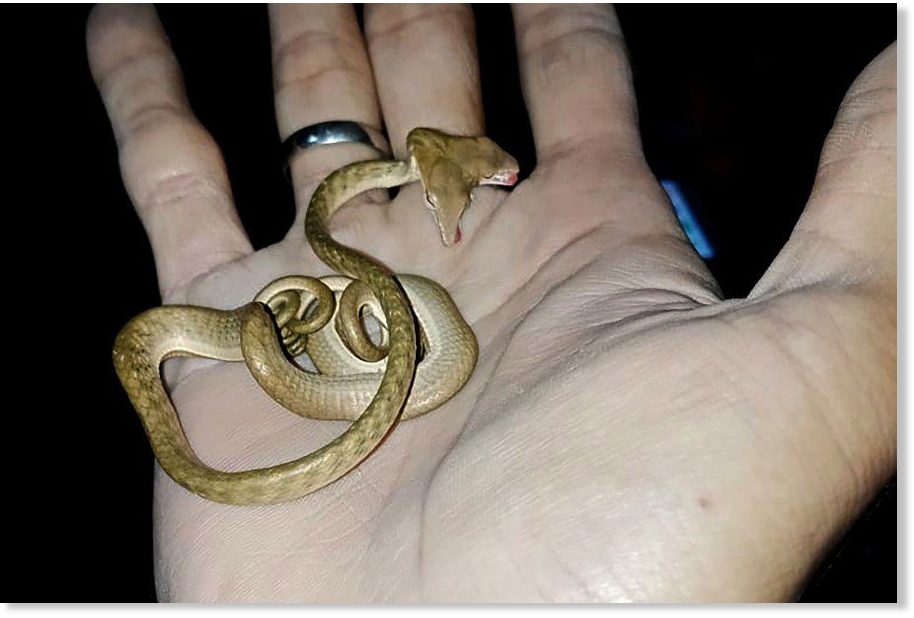
A rare two-headed snake is seen in the palm of a person's hand in Tabanan, on the resort island of Bali.
© AFPA rare two-headed snake is seen in the palm of a person's hand in Tabanan, on the resort island of Bali.
Residents of a village in Bali got a shock when they spotted a two-headed snake in their midst — a rare find in the wild.

The reptile was seen slithering in the central part of the Indonesian holiday island last week.

"When I got home from work, I parked my motorbike next to the snake," said local resident Gusti Bagus Eka Budaya.

"I looked more closely and it turned out to have two heads. I was shocked."


Fish

New whale species discovered along the coast of Hokkaido

beaked whales
© Tadasu K. Yamada et al., Scientific Reports. August 30, 2019Unidentified beaked whales sighted in the Nemuro Strait.

In a collaboration between the National Museum of Nature and Science, Hokkaido University, Iwate University, and the United States National Museum of Natural History, a beaked whale species which has long been called Kurotsuchikujira (black Baird's beaked whale) by local Hokkaido whalers has been confirmed as the new cetacean species Berardius minimus (B. minimus).

Beaked whales prefer deep ocean waters and have a long diving capacity, making them hard to see and inadequately understood. The Stranding Network Hokkaido, a research group founded and managed by Professor Takashi F. Matsuishi of Hokkaido University, collected six stranded unidentified beaked whales along the coasts of the Okhotsk Sea.


The whales shared characteristics of B. bairdii (Baird's beaked whale) and were classified as belonging to the same genus Berardius. However, a number of distinguishable external characteristics, such as body proportions and color, led the researchers to investigate whether these beaked whales belong to a currently unclassified species.

Comment: It would appear new species and the rediscovery of presumed extinct species is occurring fairly often, meanwhile there's a collapse in other realms of the animal kingdon:


Doberman

Seven-year-old girl mauled to death by dogs in Uttar Pradesh, India

canine attack
© Angela Antunes / CC by 2.0
A seven-year-old girl was mauled to death by a pack of stray dogs in Ayodhya, while she was going to play. As canines attacked the minor, other kids managed to escape and inform the family. However, by the time help could reach her, the girl died.

The tragedy took place in Naseerpur area of Raunahi police circle on Thursday evening when Riya Varma (7) went out to play with her brother, Raunak, and other kids from the neighbourhood. They were walking towards the canal in the village when dogs attacked them.

Attention

More and more whales, dolphins washing up dead on UK's shores - nearly 5,000 in last decade

Almost 5,000 dolphins, porpoises and whales have been found washed up dead on shores around the United Kingdom in a single seven-year period. Pictured, a mass stranding of long-finned pilot whales on a b
It was an increase in strandings of 15 per cent on the previous seven-year period

The number of whales, dolphins and harbour porpoises washed up on UK shores has risen to just under 5,000 in the last decade, a study has found.

A total of 4,896 were were reported to have washed up on beaches between January 1 2011 and December 31 2017, the Government said.

It marks an increase in strandings of 15 per cent on the previous seven-year period, according to the research.

Of the 4,896 incidents, 4,311 were dead strandings, 186 were dead at sea including 21 entangled at sea, and 399 live strandings, only 132 of which were returned alive to the sea.

Info

Adapt 2030 Ice Age Report: Deformed barbell corn - Where is our food disappearing to?

Deformed corn
© YouTube/Adapt 2030 (screen capture)
Deformed Barbell Corn found in Ohio, VegReady runs out of stock and suspends monthly subscription service, a glimpse into China pork and the global food delivery system.


Cloud Lightning

Lightning strike kills mountain goat at wildlife park in Kaslo, British Columbia

lightning
© MGN
BC Wildlife Park staff are mourning the loss of mountain goat Gustav, who was struck and killed by lightning during Tuesday's thunderstorm.

"It is with incredibly heavy hearts that we share the devastating news," wildlife park staff wrote on their Facebook page. "This tragedy has left the entire BC Wildlife Park team in shock and disbelief."

Gustav was found wandering alone on May 21, 2018, by the owners of the Wing Creek Resort in the west Kootenay town of Kaslo.

The orphaned mountain goat was eventually transferred by the BC Conservation Service to the BC Wildlife Park's rehabilitation centre.

Attention

Insect 'apocalypse' in US driven by increase in toxic pesticides

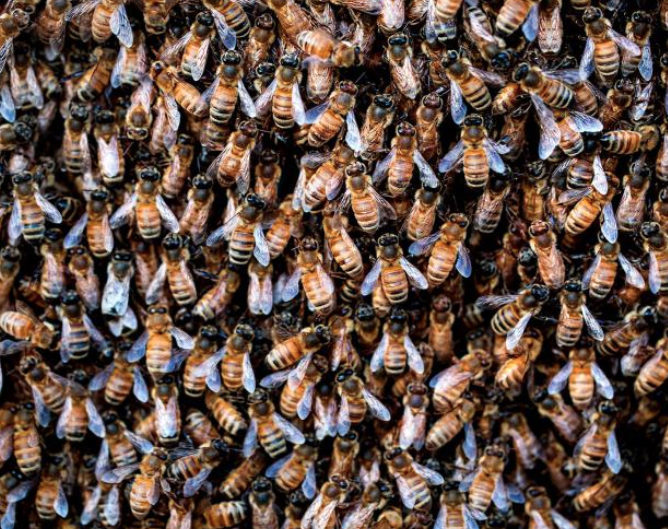
bees
© National GeographicBees, butterflies, and other insects are under attack by the very plants they feed on as U.S. agriculture continues to use chemicals known to kill.
America's agricultural landscape is now 48 times more toxic to honeybees, and likely other insects, than it was 25 years ago, almost entirely due to widespread use of so-called neonicotinoid pesticides, according to a new study published today in the journal PLOS One.

This enormous rise in toxicity matches the sharp declines in bees, butterflies, and other pollinators as well as birds, says co-author Kendra Klein, senior staff scientist at Friends of the Earth US.

"This is the second Silent Spring. Neonics are like a new DDT, except they are a thousand times more toxic to bees than DDT was," Klein says in an interview.

Using a new tool that measures toxicity to honey bees, the length of time a pesticide remains toxic, and the amount used in a year, Klein and researchers from three other institutions determined that the new generation of pesticides has made agriculture far more toxic to insects. Honey bees are used as a proxy for all insects. The U.S. Environmental Protection Agency does the same thing when requiring toxicity data for pesticide registration purposes, she explained.

Comment: Read more about the effects neonicotinoids have on the bee population (a keystone species in the food chain)
It's often said that we have bees to thank for one out of every three bites we take of food. In addition to producing honey, honeybees literally criss-cross the United States, pollinating almonds, oranges, melons, blueberries, pumpkins, apples, and more. And while carrots are a biennial root crop that are harvested long before they flower, all carrots are planted from seed, and honeybees pollinate the carrot flowers that produce the seeds. Other species of bees, both social and solitary bees, pollinate other crops. And the populations of all these species of bees are in decline...


Snowflake

Protein identified that lets creatures sense cold

Ice Crystal
© University of Michigan
Ann Arbor — Researchers have identified a receptor protein that can detect when winter is coming.

The findings, published Aug. 29 in the journal Cell, reveal the first known cold-sensing protein to respond to extreme cold.

"Clearly, nerves in the skin can sense cold. But no one has been able to pinpoint exactly how they sense it," said Shawn Xu, a faculty member at the University of Michigan Life Sciences Institute and senior author of the study. "Now, I think we have an answer."

When environmental temperatures drop to uncomfortable, and even dangerous levels, receptor proteins within the sensory nerves in the skin perceive the change, and they relay that information to the brain. This is true for organisms from humans all the way down to the tiny, millimeter-long worms that researchers study in Xu's lab at the Life Sciences Institute: the model system Caenorhabditis elegans.

"When you step outside and you sense it's too cold, you're going to take action to get back to a warmer environment as soon as you can," said Xu, who is also a professor in the U-M Medical School's Department of Molecular and Integrative Physiology. "When the worms sense cold, they also engage in avoidance behavior — moving away from cold temperatures, just like humans."

But unlike humans or other complex organisms, C. elegans have a simple, well-mapped genome and a short lifespan, making them a valuable model system for studying sensory responses.

Attention

Bear rips open tent and drags student towards forest in Russia

Incredibly student Nikolay survived the bear attack
The brown bear was shot dead after straying into the area where Nikolay Maksimov, 22, was camping in Russia

A student incredibly survived after a brown bear ripped open his tent and tried to drag him into the forest.

Nikolay Maksimov, 22, said he screamed in terror as he was grabbed by the wild animal in the Russian Far East.

A friend of Nikolay, who was part of an international scientific expedition, tried to cling to his legs and screamed for help.

Other members of the group, which traveled to remote Lake Kisi, woke and fired shots into the air to scare away the predator.

After it released Nikolay, the beast was shot dead.

Comment: Other recent reports demonstrating the increasingly aggressive behavior shown by these hirsute forest dwellers which have resulted in serious injuries and even fatalities:

Doberman

Maid mauled to death by employer's dog in East Jakarta, Indonesia

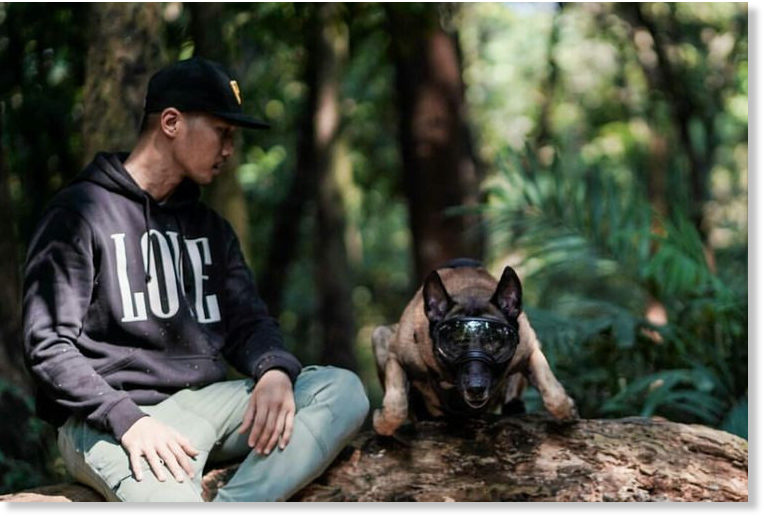
TV presenter Bima Aryo with one of his two Belgian Malinoises.
A domestic helper named Yayan, 35, was mauled to death on Friday night when trying to feed her employer's pet dog in Cipayung district, East Jakarta. The dog belongs to TV presenter Bima Aryo, who hosts popular adventure program My Trip My Adventure.

Bima owns three dogs in his house, two Belgian Malinoises named Sparta and Doby and a poodle.

Yayan, who had only been working for Bima's family for two weeks, was tasked with feeding one of the dogs. She reportedly refused the request at first out of fear of being attack by the dog, but one of his employers, a 72-year-old woman identified only as TD, assured her that it was safe to open the dog's cage.

As soon as the cage was opened, one of the dogs brutally attacked Yayan. Despite rescue efforts, the worker died on the way to Kramat Jati Hospital.