
Extreme Temperatures
S


Attention

Adapt 2030 Ice Age Report: US Planting Report: Delays, cold damage, drought and disease

crop damage
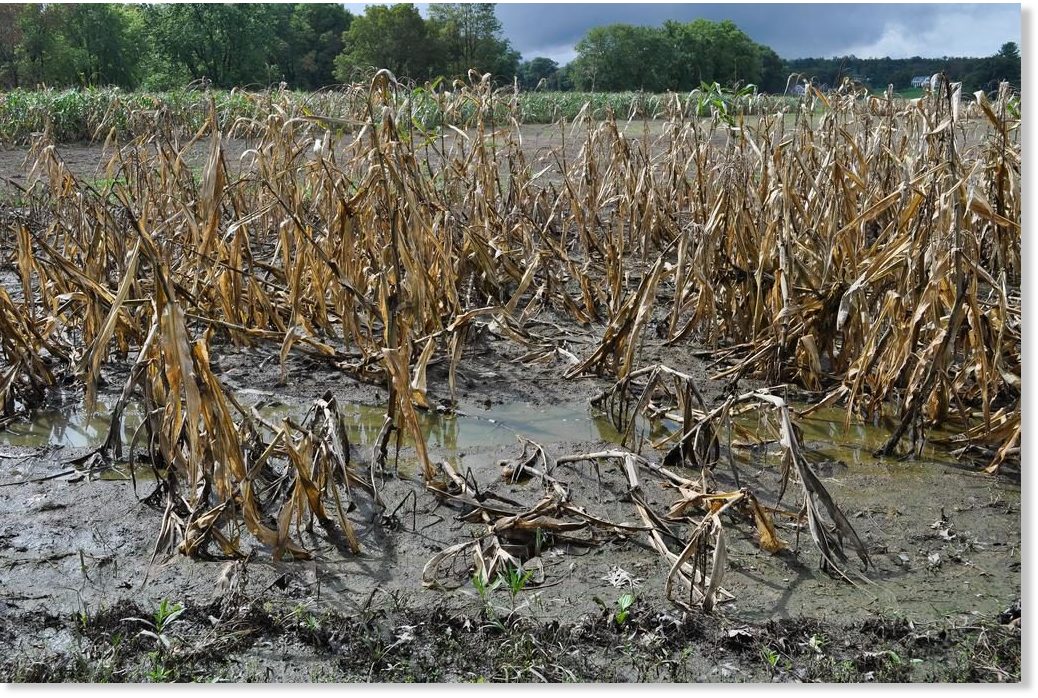
With the totals from the USDA as 3% of Spring Wheat planted vs 25% in the 30 year average, and corn at 5% vs 16% for the average and descriptions as "despicable" and a "snail's pace" for planting along with cold damage and drought across the central U.S. states they have described it as the "most stress" a wheat crop can handle. I've included a full timeline for crop losses moving forward to 2025 and this weeks incredible lack of planting. If this video doesn't not wake you up, nothing will.


Sources

Snowflake

More snow and record cold at the end of April in Great Lakes and interior northeast

late snow
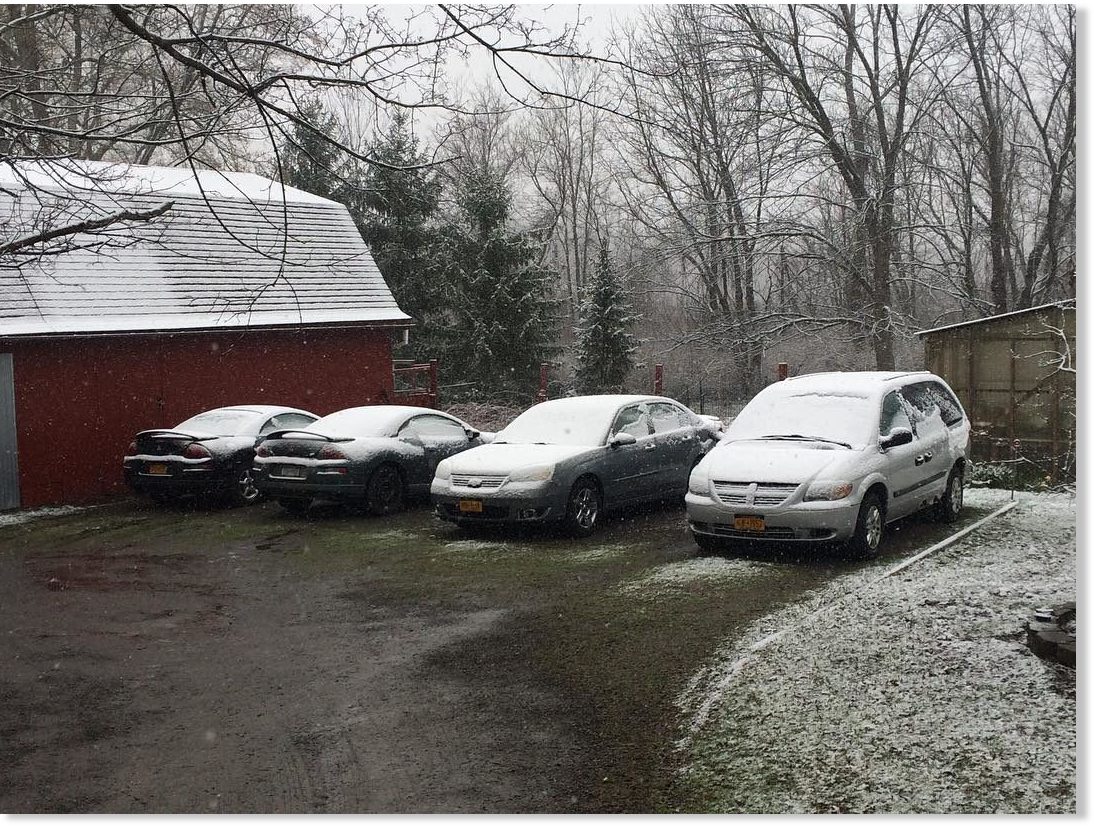
Snow fell in upstate New York and northwest Pennsylvania Sunday morning as record lows were set in the Great Lakes and Ohio Valley, putting an exclamation mark on what has a been an awful April in those regions.

Residents in western New York shared photos on social media showing their displeasure of this wintry weather on the next to last day of April.

Accumulations, if any, were light in most areas, but the snow was a fitting end to one of the coldest Aprils on record in parts of upstate New York.

Although it wasn't snowing in the western Great Lakes and Ohio Valley Sunday morning, the cold temperatures did set several daily record lows.

Cloud Precipitation

Adapt 2030 Ice Age Report: 2018-2019 forecast - where crop yields will decline globally

crop damage
This is a forecast based on repeated Y-O-Y losses, and persistent below normal temperatures in the same crop zones. The map series is for 2018-2019 and covers Australia, China, South Africa, USA / Canada. Ive included some commodity prices as well so you get an indication of where food prices are headed.


Sources

Snowflake Cold

On-track for coldest April in recorded history for some major US cities

cold weather ahead
"Some cities in the east are experiencing temperatures a full 10 to 15 degrees F colder than normal, says meteorologist Jaclyn Whittal. Those cities include Buffalo, Chicago and Detroit.
Those in the northern tier of the U.S. either graciously accept winter with open arms or drag their feet the entire way. So, for those who would willingly trade in the snow for sand, it's been a rough season that has been painfully etched into our memories after the ice storm that rolled through the Great Lakes just weeks ago.

For some communities, April won't just be memorable... it well might just go down in history. How? Well there are so many fascinating statistics to swoon over that we dug up! While doing some number crunching for Detroit Metropolitan International Airport, it wasn't an eye opener that April has been about 10 F below seasonal norms. The normal monthly average daytime high is 59.1 F, we only got 49.7 as an average. Another stat that won't come as a surprise is the lack of warmth - we have yet to crack 70ºF more than once this April in Detroit, Chicago and Buffalo!

Comment: It looks like we'd better get used to this!

See also:


Info

Earth's 'greatest two-year cooling event in a century' shock

world
© Adam Berry/Getty
Our planet has just experienced the most extreme two-year cooling event in a century. But where have you seen this reported anywhere in the mainstream media?

You haven't, even though the figures are pretty spectacular. As Aaron Brown reports here at Real Clear Markets:
From February 2016 to February 2018 (the latest month available) global average temperatures dropped 0.56°C. You have to go back to 1982-84 for the next biggest two-year drop, 0.47°C—also during the global warming era. All the data in this essay come from GISTEMP Team, 2018: GISS Surface Temperature Analysis (GISTEMP). NASA Goddard Institute for Space Studies (dataset accessed 2018-04-11 at https://data.giss.nasa.gov/gistemp/). This is the standard source used in most journalistic reporting of global average temperatures.

The 2016-18 Big Chill was composed of two Little Chills, the biggest five month drop ever (February to June 2016) and the fourth biggest (February to June 2017). A similar event from February to June 2018 would bring global average temperatures below the 1980s average. February 2018 was colder than February 1998.

Wine n Glass

Global wine output falls to 60-year low due to poor weather conditions in EU

vinyard poor weather conditions lowers wine output
A staff member works in a wine yard in Vinzel, Switzerland, April 24, 2018.

Global wine output fell to its lowest level in 60 years in 2017 due to poor weather conditions in the European Union that slashed production in the bloc, international wine organisation OIV said.

Wine production totaled 250 million hectoliters last year, down 8.6 percent from 2016, data from the Paris-based International Organisation of Vine and Wine (OIV) released on Tuesday showed.

It is the lowest level since 1957, when it had fallen to 173.8 million hectoliters, the OIV told Reuters.

A hectoliter represents 100 liters, or the equivalent of just over 133 standard 75 cl wine bottles.

All top wine producers in the EU have been hit by harsh weather last year, which lead to an overall fall in the bloc of 14.6 percent to 141 million hectoliters.

Comment: Unpredictable and extreme weather events have been taking a toll on crops worldwide:


Snowflake Cold

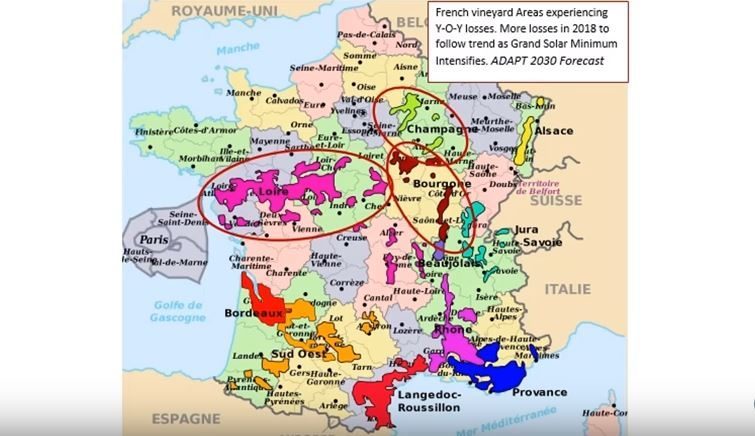
Adapt 2030 Ice Age Report: Climate pattern shift in Europe with vineyard & grain crop losses

predicted french vineyard losses
© YouTube/Adapt 2030 (screen capture)
Climate patterns are shifting in Europe as Atlantic waters become cooler, and as what happened with European agriculture will occur again and already is. Colder and wetter resulting in vineyard, orchard and grain losses. French vineyard loss map provided by ADAPT 2030. Romania orchard losses and historical wheat pricing in bad harvests circa 1770 Europe.


Snowflake

Mt. Baker ski resort in Washington finishes season with 70 feet of snow - third-highest this century

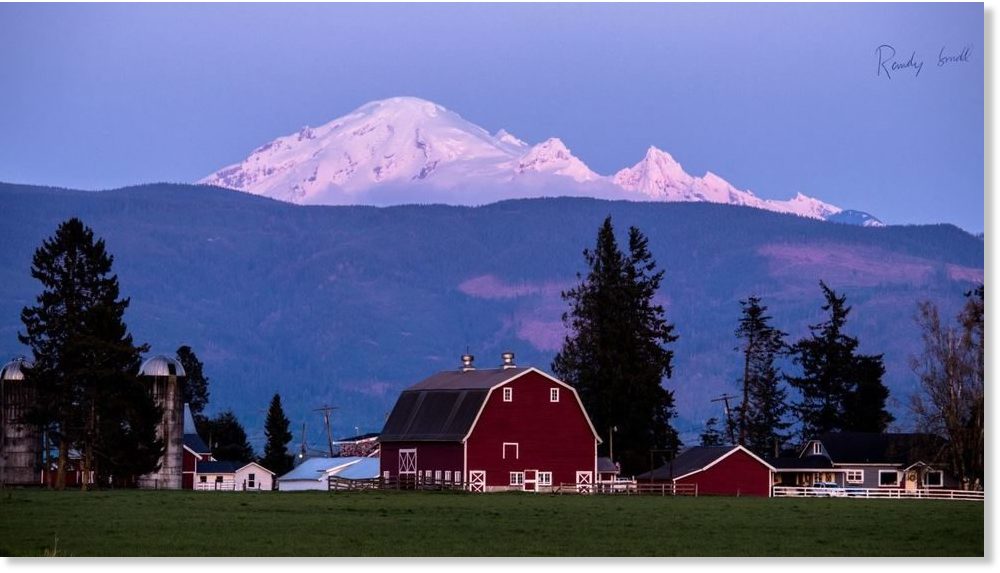
Mt. Baker shows off its massive coat of snow as seen from Lyden, Wash.
© Randy SmallMt. Baker shows off its massive coat of snow as seen from Lyden, Wash.
You'd expect the spot that holds the World Record for most snow in a season to get quite a bit of snow in a winter, and this year was no different for Mt. Baker.

The ski resort declared their 2017-2018 season over on Monday, and what a season it was. The resort measured 840 inches of total snow through Monday -- 70 feet! That's the third-highest amount recorded this century, behind last year's 866 inches and the 857 inches recorded in 2010-2011.

Their 15 year average is 663 inches.


Snowflake

Michigan still almost 40 percent covered in snow, and it's nearly May

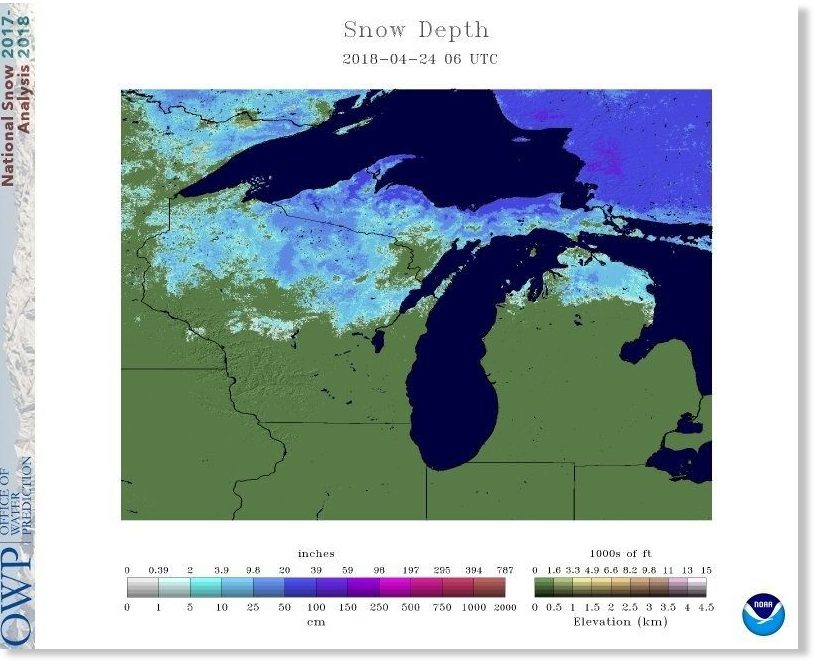
Snow cover on April 24, 2018
© National Snow AnalysisSnow cover on April 24, 2018
After a fully wintry three weeks in April, Michigan still has a significant amount of land covered in snow. One area still has almost three feet of snow on the ground.

Michigan has 37 percent of our ground still covered with snow on April 24, 2018. That's down from 49 percent on March 24, 2018.

The snow is melting fast. The average snow depth at locations with snow is only 2.9 inches. However, there are places that have much more snow on the ground.

Sun

Heat index over 41 degrees Celsius in several areas in the Philippines

heatwave
Filipinos across the country are at risk of heat exhaustion and even heat stroke as the heat index spiked to over 41 degrees Celsius in several areas.

According to data released by PAGASA, the heat index rose past 41°C in at least 14 areas in the country on Sunday, April 22, rising to a high of 47.7°C in Sangley Point in Cavite.

The heat index is the measure of the temperature that a person feels, and is essentially the "apparent temperature" felt by the human body, which is computed by factoring in the humidity as well as the ambient dry bulb temperature (what we usually think of as air temperature in general).