Health & WellnessS


Snowflake Cold

Better than opioids: Swimming in cold water could be an alternative to strong painkillers

cold adaptation
Swimming in cold water could be an alternative to strong painkillers, doctors believe.

A short, sharp plunge into the open sea cured a British man of the debilitating pain he had been suffering for two and a half months.

Experts at Cambridge University and the University of East Anglia have now called for research into cold-water therapy as a treatment for serious pain, in light of his case.

Doctors believe the shock of sudden immersion may have disrupted his nervous system, jolting him out of a cycle of pain.

Writing in the journal BMJ Case Reports, Dr Tom Mole from UEA, and Pieter Mackeith from Cambridge, report the 'unexpected, immediate, complete and sustained remission' of the persistent pain suffered by a 28-year-old patient following an operation.

The man, who is not named, had been suffering from debilitating pain for 10 weeks when he decided to jump from a rocky outcrop into the sea 'as distraction'.

He said: 'I initially thought - "damn this is so cold I'm going to die!"

'I just swam for my life - Once I was in the water, I had tunnel vision - for the first time in months, I completely forgot about the pain or the fear of shooting pains in my chest if I moved.

Comment: See also:


Apple Red

Dr. Mark Hyman: The calorie myth is the most damaging food lie we have ever been told

calorie counting
Other than the lie that fat makes you fat and causes heart disease (which has been thoroughly debunked by myself in Eat Fat Get Thin, in Harvard doctor David Ludwig's book Always Hungry, and even in our new 2015 US Dietary Guidelines), the biggest lie that has caused endless suffering for tens of millions of people is that to lose weight you need to eat less and exercise more.

This lie goes something like this: All calories are the same. Weight loss is about math - calories in/calories out. If you eat more than you burn you will gain weight. If you eat less than you burn you will lose weight. This is called the Energy Balance Hypothesis. This seems logical, except it is scientifically wrong. It is the message that our government tells us, the message that almost every doctor, nutritionist, and weight loss program tell us. And, it's even what our public health and professional organizations tell us, including the American Nutrition and Dietetic Association, the American Heart Association, and the American Diabetes Association (which, by the way, all get huge amounts of funding from the food industry).

Comment: The calorie myth is right up there with the cholesterol myth as being damaging for human health. How many people have needlessly starved themselves and sweated themselves to exhaustion on the stair-climber at the prompting of misinformed 'experts'?

See also:


Pills

H3N2: The deadly flu no one saw coming

hospital
© pixabay.com
Thousands of people have been treated at hospitals, including seemingly healthy adults, marking the worst season in a decade

Heather Holland, a second-grade teacher, came home feeling a little sick on the last Monday in January.

"It just sounded like her throat was scratchy," said her husband, Frank Holland, a discomfort easy to ignore at first for a working mother. Over the next days, she made seemingly inconsequential decisions, including skipping a medicine because of the cost. Then her symptoms suddenly worsened, eventually sending Ms. Holland, 38 years old, to the hospital, on the brink of death.

Her battle was among the most severe fought during this influenza season, America's worst in a decade. It has taken the U.S. by surprise, pitting a weak flu vaccine against particularly virulent strains.

Comment: Misinformation and downright deception abound with regard to flu vaccines. and some safe, natural alternatives


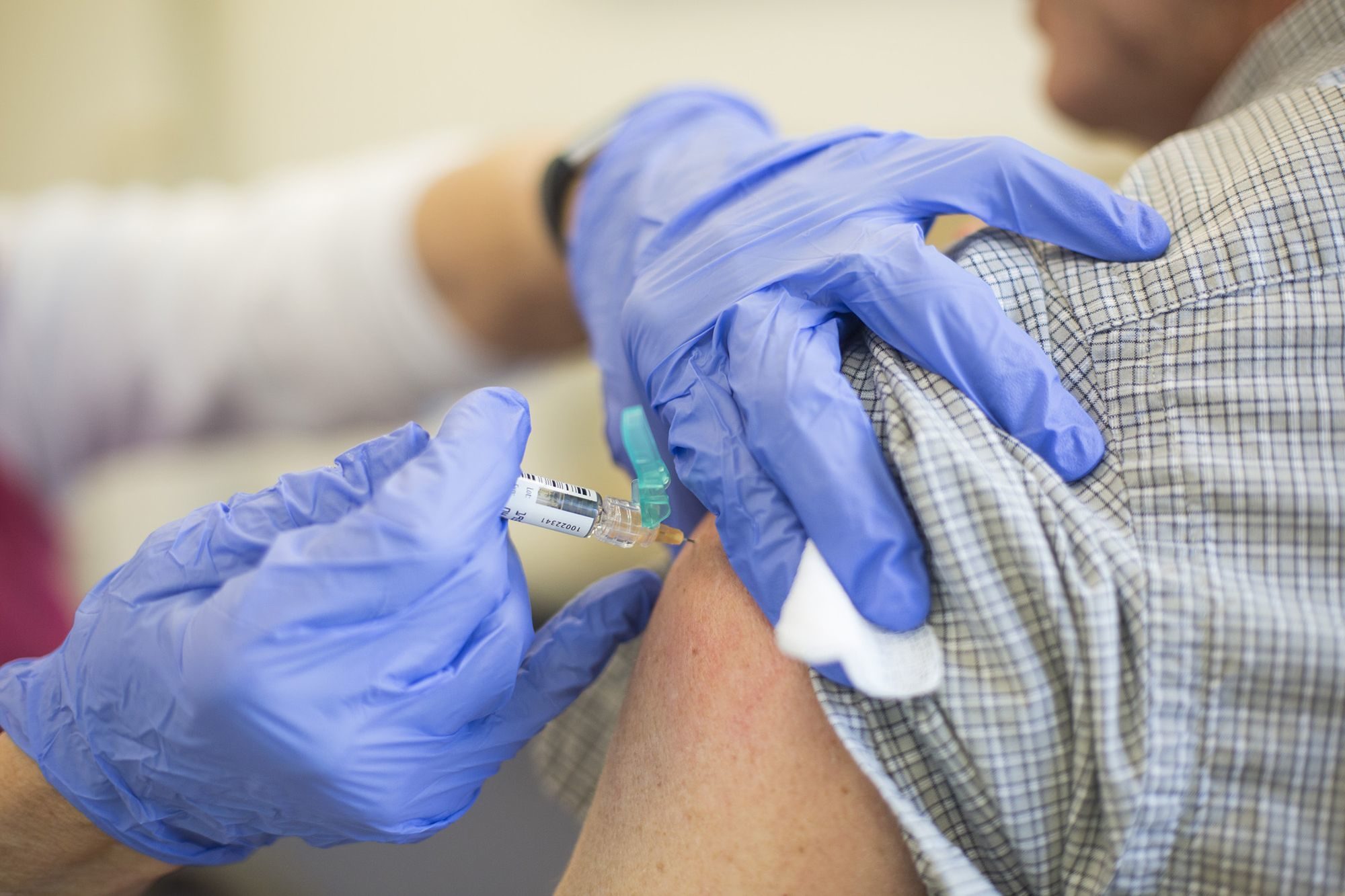
Syringe

1 in 10 American deaths caused by flu, and climbing

flu jab vaccine
© Derek Davis/Portland Press Herald via Getty Images
The amount of influenza ravaging the U.S. this year rivals levels normally seen when an altogether new virus emerges, decimating a vulnerable population that hasn't had a chance to develop any defenses.

It's an unexpected phenomenon that public health experts are still trying to decode.

The levels of influenza-like illnesses being reported now are as high as the peak of the swine flu epidemic in 2009, and exceed the last severe seasonal flu outbreak in 2003 when a new strain started circulating, said Anne Schuchat, the U.S. Centers for Disease Control and Prevention's acting director. Swine flu, which swept the globe in 2009 and 2010, sickened 60.8 million Americans, hospitalized 274,304 and killed 12,469, according to CDC data. Deaths from the current outbreak will likely far outstrip those of the 2009-2010 season.

"This is a difficult season, and we can't predict how much longer the severe season will last," she said. "I wish there was better news, but everything we are looking at is bad news."

Comment: See also:


Treasure Chest

Get off your duff and shake your stuff: The health benefits of dancing

dance
The evidence-based health benefits of dancing are numerous and profound. In fact, if dancing were a drug it would be considered unethical not to use it.

If you already love to dance, you know how easy it is to work up a sweat on the dance floor. Far from the monotony of the treadmill, dancing is an exercise that engages not only the body, but also our creativity and sense of fun. Who knows where a dance will take you? When the music starts playing, it can feel almost like a trance: toes start tapping, hips begin to sway, and before you know it, you are creating your own moves that flow from within-no choreographer needed! Dancing can be a deep release that melts away stress and worry, while simultaneously delivering a great workout. Talk about a win-win!

Comment: Read more about the health benefits of dancing:


Coffee

Bits of bugs in your cup of Joe? What's inside your coffee is likely a bit grosser than you want to know

coffee
© MR.RAWIN TANPIN/Shutterstock
After a year of daily coffee drinking, you've probably consumed more than 130,000 insect fragments.

Every coffee drinker has their own preference. For the purists, it's straight up "black, hold the sugar," while the lactose-inclined tend to enjoy a bit of milk with their morning brew. Then there are the ingredients none of us have a say in selecting. For starters, how about insects?

If you just spat a mouthful of joe back into your mug, that's fair enough. But the reality of the situation is that coffee is just one of many daily ingredients we ingest that likely contain a bit of bug. In fact, the FDA makes special allowances it calls "unavoidable defects" for all the insect fragments that end up in common foods like cornmeal, macaroni and peanut butter, as well as fruits and vegetables. How many insect fragments exactly?

Attention

Labeling kratom as a schedule 1 drug will cause more opioid deaths

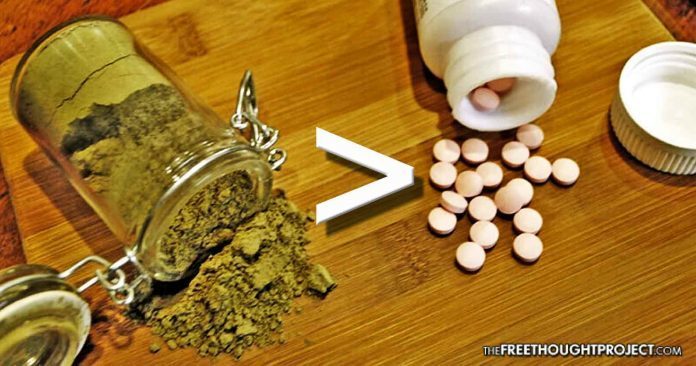
kratom and pills
The United States Food and Drug Administration ramped up its "War on Kratom" this week by labeling the natural herb as an opioid, and a group of scientists is stepping up to vouch for kratom's safety, and to argue that banning it would only lead to more opioid-related deaths.

In a statement, FDA Commissioner Scott Gottlieb warned that there is "even stronger evidence of kratom compounds' opioid properties." He claimed that there is evidence of 36 deaths related to kratom, but that "many of the cases received could not be fully assessed because of limited information provided."

In response, a group of scientists came together to send a letter to the acting administrator of the Drug Enforcement Administration, Robert Patterson; and the counselor to the president who is overseeing the administration's response to the opioid crisis, Kellyanne Conway.

The letter strongly criticized the FDA's recommendation to label kratom as a Schedule I drug, which would mean that the government will claim that it has no medicinal value.

Comment: For more on kratom, see:


Ice Cube

Ice-cold water feels like no water: Young Kazakhstan woman shares her all-weather swim

Zarina Andryushina, a resident of Aktau
© Ruptly
A young woman from Kazakhstan made a video extolling the virtues of her daily exercise routine, involving a dip in the ice-cold Caspian Sea. The video has since gone viral.

Zarina Andryushina, a resident of Aktau on the eastern coast of the sea, had to break through ice covering the surface to get her daily plunge on January 30. After sharing a video of her braving the cold in a bikini on her Instagram page, she caught the attention of local media.

"You don't really feel water when it's ice-cold. It's like walking through dry ice," she told Kazakhstan's Tengri News. "But after you come out you feel such a heat and regret nothing."

Comment: Check out this Health and Wellness show on cold adaptation: The Health & Wellness Show: The benefits of cold adaptation


2 + 2 = 4

Canadian college forced to scrap homeopathy program due to '3yrs of pseudoscience nonsense'

A homeopathic globule held on a teaspoon.
© Karl-Josef Hildenbrand/dpa / www.globallookpress.comA homeopathic globule held on a teaspoon.
A college in the Canadian province of Ontario has been forced to cancel its established three-year course in homeopathy after critics said the publicly funded institution is wasting taxpayers money on "pseudoscience."

Georgian College in Barrie has created a three-year advanced diploma program aimed at teaching students "classical and contemporary homeopathic principles and techniques in the evaluation and treatment of acute and chronic health conditions," based on "individualized, holistic and natural approaches to health and healing." However, as soon as the program was publicly announced for next fall, it came under pressure from a local physician eager to shut the course down.

Comment:


Brain

How sugar affects the brain

sugar human body receptors
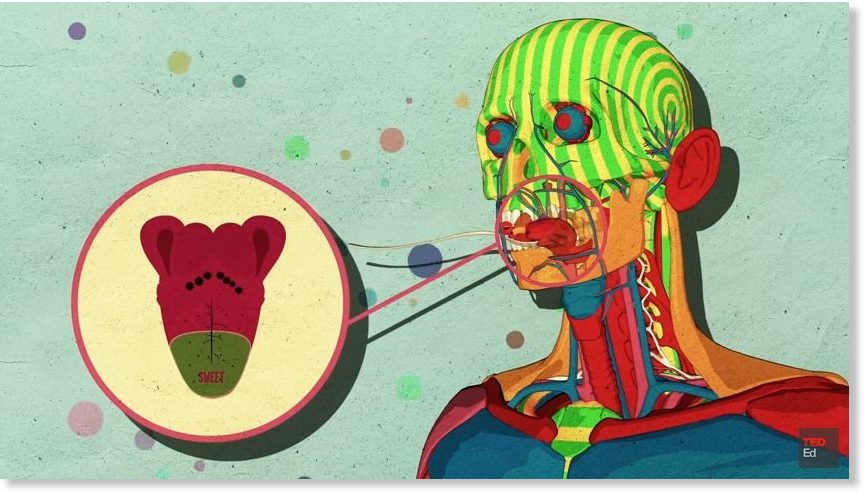
When you eat something loaded with sugar, your taste buds, your gut and your brain all take notice. This activation of your reward system is not unlike how bodies process addictive substances such as alcohol or nicotine -- an overload of sugar spikes dopamine levels and leaves you craving more. Nicole Avena explains why sweets and treats should be enjoyed in moderation.


Comment : See also :