Health & WellnessS


Beer

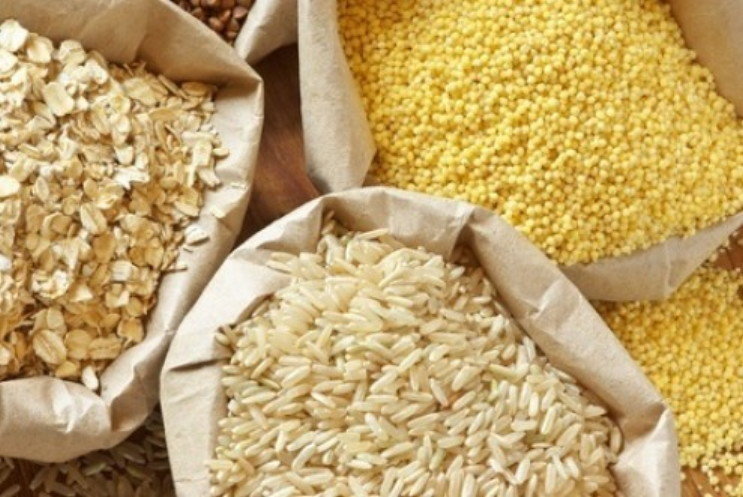
Grains are not a health food, but a recreational treat that spikes your blood sugar and makes you hungrier

grains
For many years, we have been told by experts to eat lots of grains. In the infamous 1992 Food Pyramid, we were told to eat 6 to 11 servings of bread rice, cereal, and pasta every day! And we listened... and turned America into the "Fat Nation" with 70% of us now overweight.

Even the Bible says that bread is the "staff of life." But, it's important to note, a completely different type of wheat was used in those times. On top of the traditional assumption that grains are good, brilliant marketers have been able to twist our view of grain products using phrases like "whole wheat goodness," leading us to believe it must be a healthy choice.

As much as anything else, grains made America. The evidence is in the sheer acreage of farmland we devote to wheat, corn, barley, and sorghum and the excessive amount of grain we consume and export to the rest of the world. Grain-based foods are by far the number one source of calories in the American diet.

The grains that go into those foods- mainly wheat, corn, rice, and sorghum-are among the crops that receive billions in federal farm subsidies annually. So, even our tax dollars are devoted to keeping grain-based foods like bread, pasta, rice, cereals, cookies, cake, pizza, oatmeal, and crackers on top.


Comment: With no real health benefits but with numerous indications of real harm, there doesn't appear to be any reason to include them in the diet. For more information, see:


Life Preserver

Grass to the rescue: Why pasture raised beef is healthier for people and the soil

grass fed beef
Even though grass fed and grain-finished beef sales have grown by 1,500 percent since 2012, according to ABC News, they are still overshadowed by conventional beef sales in the U.S., which topped $105 billion in 2015.1 While there is a long way to go before grass fed beef will become as popular as its conventional counterpart, the tides are changing as more consumers are demanding higher quality, safer meat products.

Once again, the health benefits of grass fed beef - to both the consumer and the soil - are making news. An ABC News feature highlights the success Texas farmers had in surviving a multiyear drought using regenerative agriculture practices and rotational grazing. The solution to their success was so simple and it can be applied anywhere: healthy soil + healthy grass = healthy grass fed beef.

Comment: See also:


Hearts

Man left with two beating hearts after transplant surgery surprise

heart transplant
© NewsFlare
A man has been left with two hearts after surgeons discovered a donated organ was too small minutes before a life-saving transplant.

Following a seven-hour procedure the 56-year-old has become one of only 150 people worldwide to have ever undergone such an operation.

He was suffering from end stage heart failure and had been admitted to Apollo hospital in the South Indian city of Hyderabad, where surgeons discovered the discrepancy in organ size.

Dr A.G. Krishna Gokhale said the donor heart, belonging to a brain dead 17-year-old, was a normal fist-size while the recipient's was the size of a small football.

Health

Magnesium and why you need it for optimal health

magnesium
Magnesium deficiency is extremely common, and recent research shows even subclinical deficiency can jeopardize your heart health. Magnesium is also important for brain health, detoxification, cellular health and function, and the optimization of your mitochondria. In short, magnesium has enormous potential to influence your health and general well-being, especially the prevention of heart disease and cancer, but also for general energy and athletic performance.

Why You Need Magnesium

Magnesium is the fourth most abundant mineral in your body and is involved in more than 600 different biochemical reactions. For example, magnesium plays an important role in:

Health

The benefits of Ashwagandha for men's health

ashwagandha
As men age, they can begin to experience a slow down in testosterone production and the bodily functions it's related to. This condition, otherwise known as andropause (or male menopause in some circles), is extremely common yet not always discussed. It's time to bring the problem to light and discuss honest solutions - which can include the use of various herbal therapies.

One herb in particular, withania somnifera, better known as Ashwagandha, has been used for thousands of years as an aphrodisiac, as an enhancer of cognitive function, to relieve stress, for greater energy, and to promote male vitality. [1] For men, this Ayurvedic herb can have far reaching effects on proper hormone function and long term health.

Comment: Ashwagandha: The flagship herb of Ayurveda


Donut

Dr. Davis: Is sugar making you age faster?

sugar
Americans consume the equivalent of 300 loaves of bread each year (representing enormous exposure to the amylopectin A carbohydrate that behaves like sugar or worse). They also consume 200 pounds of sugar. It is not uncommon for sugar alone to comprise a quarter of all calories taken in over the course of the day-some of it out in the open, some of it hidden.

To understand the adverse effects of sugars-sucrose, high-fructose corn syrup, and other fructose-rich sweeteners, such as agave, honey, and maple syrup-we need to understand two phenomena:
  • Insulin resistance
  • Glycation

Comment: Why sugar is called the 'White death'
Take a look at the sugar consumption trends over the past 300 years:
  • In 1700, the average person consumed about 4 pounds of sugar per year.
  • In 1800, the average person consumed about 18 pounds of sugar per year.
  • In 1900, individual consumption had risen to 90 pounds of sugar per year.
  • In 2012, more than 50% of all Americans consume 1/2 pound of sugar per day - translating to a whopping 180 pounds of sugar per year!
In 1890, only 3 people out of 100,000 had diabetes. In 2012, almost 8,000 out of every 100,000 people was diagnosed with diabetes!


Health

What a difference 6 inches can make: Are you ready to start sleeping on an incline?

incline bed
Oftentimes the simplest strategies pay great dividends. Getting sensible sun exposure and grounding to the Earth are two examples. Sleeping on an incline is another. While few have heard of it, and sleeping on a horizontal surface is a well-established norm, raising the head of your bed 6 to 8 inches so that your you're sleeping on a 5-degree incline may have a number of benefits, including:
  • Improving blood circulation
  • Boosting metabolism
  • Improving glymphatic drainage from the brain
  • Improving immune system function
  • Improving respiratory function
  • Easing symptoms associated with Alzheimer's, diabetes, glaucoma, migraines, multiple sclerosis, sleep apnea, acid reflux, edema, varicose veins and more

Health

Get to know your moles

mole on face
Skin is your body's largest and fastest growing organ, used to protect your body from bacteria and germs, regulate your temperature, get rid of waste products and house a nervous system that allows you to feel and sense your environment.1 Your skin is what others first notice about you, and is an indicator of both internal and external aging.

Skin cancer is one of the most common types of cancer in the U.S.2 Estimates suggest nearly 20 percent of all Americans will experience some form of skin cancer during their life. Non-melanoma skin cancers affect nearly 3 million Americans each year and more than 1 million are living with melanoma. The rates of diagnosis of basal cell (BCC) and squamous cell carcinomas (SCC), non-melanoma skin cancers, have been rising dramatically.

There has been an increase of 145 percent of BCC between 1976 to 1984 and 2000 to 2010, and a 263 percent increase of SCC during the same period.3 Routinely inspecting your skin increases the likelihood you'll recognize changes that may need medical attention, and will help you become more familiar with your unique pattern of moles (nevi), freckles and blemishes.

Monthly self-inspection is done in a well-lit room with the assistance of mirrors to inspect areas that are difficult to see. Your first examination may take longer as you record the location of moles and freckles on your body. This enables you to confirm the location and any changes each month forward. You might notice that a mole suddenly appears where there wasn't one before, or a mole you've had for years may start to disappear.

Bulb

The Precautionary Principle asks 'How much harm is avoidable?' rather than 'How much harm is acceptable?'

sinking ship
© Jared Rodriguez / Truthout
In 1980, a government scientist discovered that breast milk in the US was so contaminated with DDT, PCBs and other industrial poisons that, if it were cow's milk, it would be subject to ban by the US Food and Drug Administration. After two more decades of failed "chemical regulation," a 2001 study showed that babies everywhere in the world were drinking industrial toxicants in breast milk. Worse, in 2005 a small study of the umbilical cord blood from 10 randomly chosen newborns in the US showed that babies are now coming into this world "pre-polluted" with 200 industrial compounds. (Despite all this bad news, breast feeding is still by far the best way to nourish a baby.)

Perhaps not surprisingly, in the US, children's health is deteriorating. The incidence of childhood cancers has risen 27 percent since 1974. In the 12 years between 1994 and 2006, childhood chronic conditions (asthma, obesity, learning and behavior problems) doubled (from 13 percent of all kids in 1994 to 27 percent in 2006).

Wine n Glass

French wine study shows humans can taste fungicides and glyphosate-based herbicides

wine
The results of the first ever study on the ability of humans to recognize the taste of pesticides in wine have been published in the Food and Nutrition Journal.

Professor Gilles-Eric Séralini and the chef Jérôme Douzelet's study involved 195 blind tests carried out by professionals from the wine and culinary industry.

Firstly, 16 pairs of organic and non-organic wines were produced in 7 French regions. The same varieties of grapes were grown both organically and conventionally on the same soils (in neighboring vineyards), in the same climate and in the same year.