
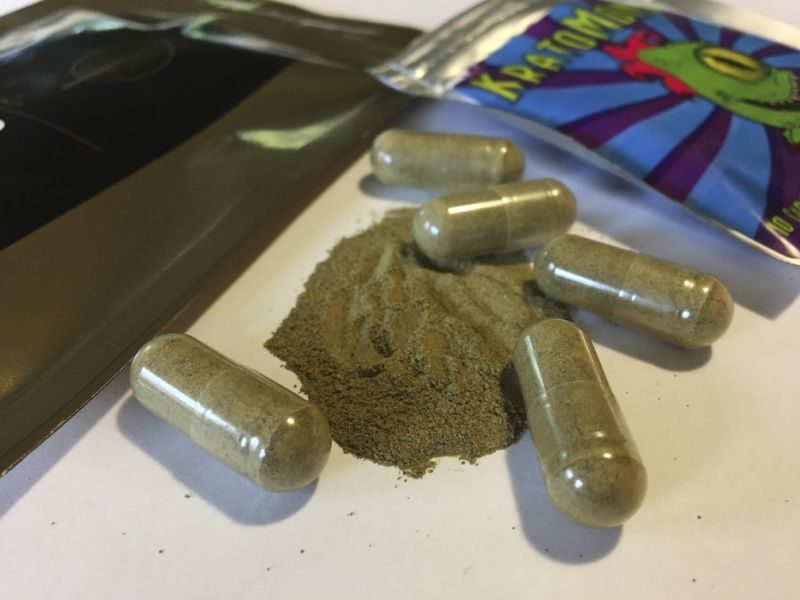
© AP Photo/Mary Esch, FileIn this Sept. 27, 2017 photo, kratom capsules are displayed in Albany, N.Y. U.S. health authorities say kratom, a herbal supplement promoted as an alternative pain remedy, contains the same chemicals found in opioids, the addictive family of drugs at the center of a national drug abuse crisis. The Food and Drug Administration analysis, published Tuesday, Feb. 6, 2018, makes it more likely that kratom could be banned by the federal government.
The Food and Drug Administration analysis, published Tuesday, makes it more likely that the supplement, kratom, could be banned by the federal government.
The FDA also said it has identified 44 reports of death involving kratom since 2011, up from 36 reported in November.
Sold in various capsules and powders, kratom has gained popularity in the U.S. as a treatment for pain, anxiety and drug dependence. Proponents argue that the substance is safer than opioid painkillers like OxyContin and Vicodin, which have contributed to an epidemic of drug abuse. More than 63,000 Americans died in 2016 from drug overdoses, mostly from opioids.
















Comment: The fact that kratom contains compounds that behave like opioids should really not be an issue. So do wheat and dairy, as well as chocolate, coffee and spinach, but nobody is moving to make those illegal. The fact that people are using kratom for such benefit as pain management and addictions would move any person of conscience to better understand the plant and its possible uses rather than simply trying to find good reasons to ban it.