Health & WellnessS


Attention

Regrettable substitution: EPA finds replacements for toxic teflon chemicals...Toxic

Teflon
PFAS coated pans provide non-stick properties, but at what price?
The EPA has released draft toxicity assessments for GenX chemicals and PFBS, both members of a larger group of chemicals known as per- and polyfluoroalkyl substances (PFAS). GenX and PFBS are being used as replacement chemicals for PFOA and PFOS, the original Teflon chemicals that were forced off the market due to their decades-long persistence in the environment and their link to serious health harms in exposed people and wildlife.

EPA's assessment confirms what many have feared - taking PFOA and PFOS off the market and out of products has only led to industry replacing them with related PFAS chemicals that pose similar risks - a 'regrettable substitution'.

Comment: Report: Replacement chemical in Teflon causing cancer in lab rats


Beaker

Scientists prove link between Aluminum and early onset Alzheimer's disease

Scientists Prove Link Between Aluminum and Early Onset Alzheimer’s Disease
In today's world, aluminum is omnipresent, building up within our system from everyday products. Now, we are learning that aluminum toxicity can manifest itself in alarming ways.

As many of us are aware, the human body is being bombarded with aluminum in everyday products. Many of our foods, vaccinations, medications, baby products, cosmetics, cleaning products and even soft furnishings contain aluminum and it appears that we are powerless to prevent the ever-increasing onslaught.

This is extremely worrying because, according to Professor Exley, a scientist from Keele University in Staffordshire, aluminum can accumulate in the body and has the potential to do harm wherever it ends up.

Comment: Dr. Chris Exley: Aluminum toxicity expert


Cow

The enormous threat to America's last grasslands

North Dakota grasslands
© Ryan SchuesslerNorth Dakota grasslands.
Over the past few years, Neil Shook has watched his world burn acre by acre.

"I could tell something was happening," Shook recalled, when he first noticed the plumes of smoke in 2011. By 2013, fires were raging every day, sending smoke billowing into the air - imagery that reminded Shook of Kuwait's burning oil wells during the Persian Gulf War.

Hundreds of acres of rolling green grasslands in North Dakota were being intentionally burned, plowed and planted in a matter of days. Shook, who manages the U.S. Fish and Wildlife Service's Chase Lake National Wildlife Refuge and surrounding conservation area, watched as landowners backed out of federally funded conservation programs, opting instead to cash in on the state's economic boom.

"This was all grass," Shook shouted as he wildly gestured toward a vast expanse of plowed, brown farmland near the wildlife refuge in June. "Now, what do you see?"

Comment: The vital necessity of grasslands for the health of the environment can simply not be stated enough. Yet we shortsightedly plow them over to plant yet more corn and soybeans, causing ecological catastrophe in the process. It seems that very few actually understand this, buying into the vegetarian myth that growing crops is somehow neutral in its environmental impact. The future looks rather grim.

See also:


Whistle

Former 'Vaccine bully' pediatrician now claims unvaccinated children are healthiest

Dr. Robert Zajac
© Health Impact NewsDr. Robert Zajac
Dr. Bob Zajac is a board-certified pediatrician with additional expertise in asthma/allergy care, developmental/behavioral pediatric care, and natural/holistic care. He received his degree in Child Development, and pursued an additional four years of training in a PhD program (Early Childhood Special Education), followed by his medical degree (MD - University of Minnesota - 2000) and residency training (pediatrics - 2000-2003). Prior to starting New Kingdom Pediatrics, Dr. Bob completed his masters of business degree (MBA, Crown College, 2011-2013).

Dr. Zajac and his wife Julie have been married for over 25 years and have 8 children.

In terms of education and experience, no one can criticize Dr. Zajac as being "uniformed" when it comes to children's health.

Dr. Zajac starts out in this interview by explaining medical doctors do NOT receive a lot of training in vaccines, so he had to spend years researching vaccines independently. He began his research after seeing some of his patients get injured from vaccines.

Comment: Unvaccinated Children are Healthier


Attention

High levels of glyphosate discovered in K-12 school breakfast foods across America

Cheerios
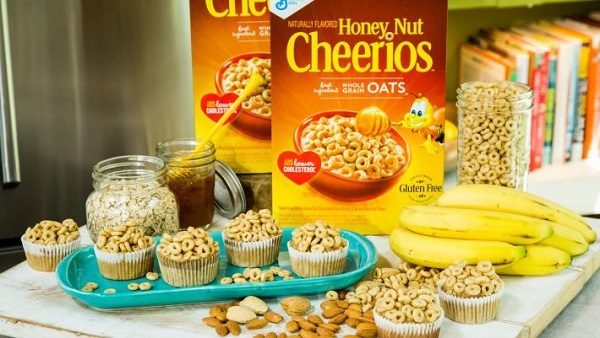
A new report by the Center for Environmental Health (CEH) found high levels of the toxic weed killer glyphosate in over 70 percent of the oat-based breakfast foods commonly served in K-12 schools across the U.S..

Glyphosate, the active ingredient in Monsanto's Roundup, the world's most widely used herbicide, is applied on farms that grow corn, soybeans, oats, and hundreds of other crops. From there, it can make its way into our food, especially popular breakfast cereals and nutrition bars.

CEH tested 13 popular breakfast foods served to school children. The report prioritized school districts with high rates of participation in the National School Breakfast Program since low-income children are already disproportionately exposed to toxic chemicals. Items containing the highest levels of glyphosate include Quaker Maple, Brown Sugar Instant Oatmeal, and Quaker Old-Fashioned Oats. CEH did not find glyphosate residues in any of the certified organic cereals tested.
Glyphosate Box

Glyphosate Residue Free Certification for Food Brands - Click Here

Test Your Food and Water at Home for Glyphosate - Click Here

Test Your Hair for Glyphosate and other Pesticides - Click Here to Find Our Your Long-Term Exposure

Comment: See also: Erin Brockovich: The weedkiller in our food is killing us


Display

NIH study: Children who spend 7 hrs a day staring at screens are changing the structure of their brains

screen time affects brain structure
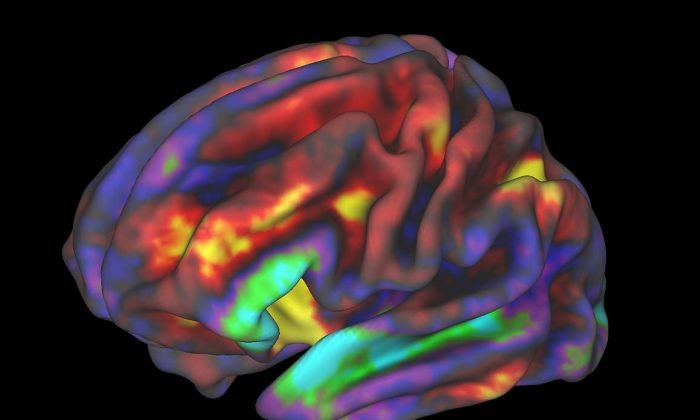
© Richard Watts, PhD, University of Vermont and Fair Neuroimaging Lab, Oregon Health and Science UniversityfMRI image of preteen brain while child performs a working memory task, released by ABCD researchers. The regions in yellow and red are most active.
A groundbreaking, $300 million study has discovered that children who spend at least seven hours a day on smartphones or tablets are changing the structure of their brains.

The new research was funded by the National Institute of Health, a government agency, showing the results of technology on children.

Researchers made their finding by scanning the brains of 4,500 children, and scientists are in the process of following more than 11,000 9-year-olds and 10-year-olds over the course of about a decade. The first bit of data has revealed that too much screen time might have an adverse effect on children.

"Scientists can look at brain characteristics associated with impulsive action or early psychopathology; the impact of health behaviors (e.g., sleep, physical activity) on cognitive and brain development; or traits associated with media use, including screen time exposure. For example, a recent study (link is external) by ABCD investigators showed associations between differing amounts and kinds of screen time (e.g., video games vs. social media) and different structural brain characteristics, psychological traits, and cognitive function," reads an abstract from the National Institute of Health.

"Scientists will be able to follow participants over time to understand how media use will influence a person's development, underscoring the unique opportunity provided by the ABCD study," it said.

Namely, scientists discovered that daily screen usage showed that children had premature thinning of the brain cortex, which is the outermost layer that processes information. Those who have less screen usage showed a difference than those who did, but NIH study director, Gaya Dowling, cautioned against making a conclusion yet.


Comment: While the study authors appear reluctant to draw obvious conclusions, there is abundant evidence showing negative effects from even much less screen exposure: What you can do to help counteract the effects: Protecting the brain from the effects of daily screen time


Attention

Erin Brockovich: The weedkiller in our food is killing us

Bad apple
© Illustration: Francesco CiccolellaBad Apple
Growing research show that glyphosate, one of the most widely used herbicides in the US, causes cancer

On a recent Saturday afternoon, in an estuary near Tampa Bay, Florida, I watched airboats move up and down the river banks, spraying massive plumes of weedkiller on to the vegetation. The state of Florida was trying to control and kill off scores of plant species. Nearby, children were lying out in the sun, though they knew better than to swim in the water, which has recently been blooming with toxic algae. Mists of weedkiller drifted downwind toward them.

The main active ingredient in that mist, and in the weedkiller being sprayed throughout Tampa Bay, is glyphosate, one of the most widely used herbicides in the US. First registered for use here in 1974, it is now an ingredient in more than 750 products, including the most widely deployed herbicide in the world, Monsanto's Roundup. For more than a generation, Americans have been using Roundup and other glyphosate-based chemicals to improve agricultural yields, manage forests, ripen fruit and kill the dandelions sprouting from our front lawns.

Beaker

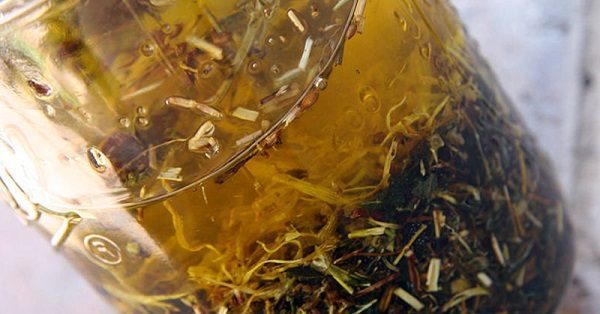
How to make Thieves Oil and why it should be used daily

Thieves oil
Most of you probably know what Thieves Oil is, but if not have I got a story for you! The name and recipe for Thieves Oil have an interesting backstory and explains why this blend of oils is so good for you.

The recipe varies and dates back to the Middle Ages where Thieves Oil kept a group of merchants safe from the Black Plague. The mixtures of antiseptic, antibacterial, and antimicrobial properties were able to stave off the Plague and keep these merchants safe.

The Thieves Story

In the early 1990s Gary Young studied essential oils and recreated a blend he had been researching. According to Gary there are 17 different version of the "Story of Thieves" and each contains a different amounts of different oils. This intrigued Gary to research essential oils and make the perfect Thieves Oil blend for everyday use.

He researched the properties of the different oils in the multiple ingredients lists he found. His research lead to a proprietary oil blend called Young Living Thieves Essential Oil. His research also lead him to the historical story of the "Thieves" this blend is named after.

Brain

Brain scans suggest OCD sufferers have 'inefficient' links that could cause the issue

Brain
Scientists believe the brains of people with obsessive-compulsive disorder (OCD) could have "inefficient" links.

A study published in the journal Biological Psychiatry indicates such brains are too sensitive to errors and don't work hard enough to block signals that can trigger distressing symptoms.

The mental illness is characterized by repetitive thoughts, urges and mental images that can be debilitating. These can fall into obsessions, such as intrusive thoughts about taboos or germs, or compulsions such as counting and repeatedly checking on things like the front door or the oven.

The condition affects around 2.2 million Americans, according to the Department of Health, and it remains unclear what causes it. Previous research has pointed to brain abnormalities, although such studies haven't had enough participants to be conclusive, Dr. Luke Norman, lead author of the study and a postdoctoral research fellow in the University of Michigan Department of Psychiatry, told Newsweek.

Biohazard

Could Monsanto be responsible for the global health crisis?

roundup spraying
Kathleen DiChiara did everything right when it came to taking care of her health. She exercised regularly and avoided "junk foods," eating all the right things - yet her health failed, as did her family's. After doing some detective work, she discovered that the foods she and her family were eating contained "secret ingredients" - one of which was glyphosate, the active ingredient in the herbicide Roundup. After switching her family to a non-GMO, all-organic diet, those health problems miraculously cleared up.

DiChiara's story is featured in a new documentary film titled Secret Ingredients. Released almost a month ago, the film has flown largely under the radar, despite its availability through a number of online outlets. Through DiChiara's story and others, the film exposes the connection between GMO crops and herbicides - namely, Roundup and its active ingredient, glyphosate - and the alarming increase in chronic illnesses around the world.

Comment: It's a very real possibility that much of the plague of chronic health issues we see currently is thanks in no small part to glyphosate. Proving this would be a challenge, yet it is undeniable that avoiding as much of this toxic herbicide is absolutely vital to maintaining your health.

See also: