Health & WellnessS


Bacon n Eggs

Open letter from health practitioners to Canada Food Guide: The healthiest diets include meat and dairy

steak and potatoes
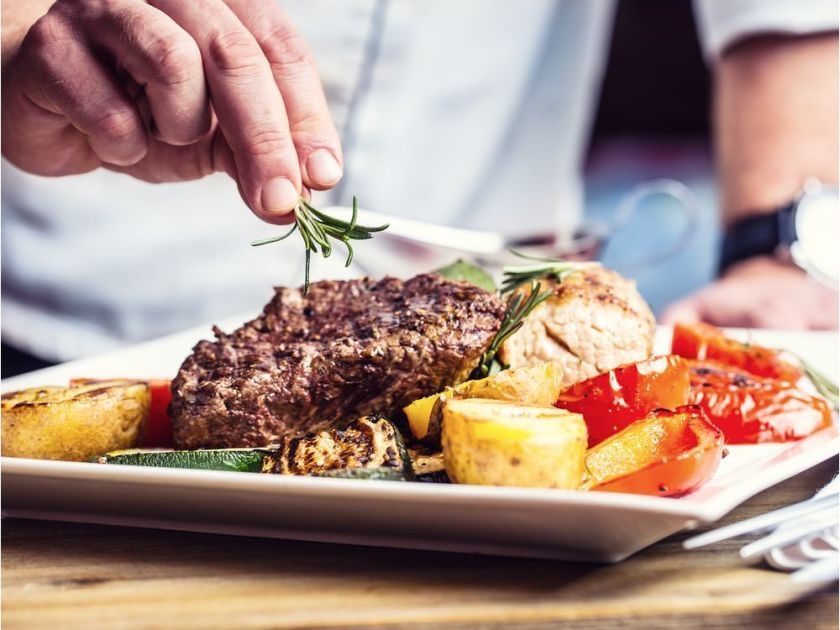
© Getty ImagesMeat and dairy products should be part of a healthy diet, says a group of health practitioners. A Food Guide directive encouraging a plant-based way of eating may have unintended, but not unforeseen, consequences.
We have read the opinion article titled "Health Canada's new Food Guide is on the right track" (Calgary Herald, Nov. 27) with interest. We represent a growing number of Canadian physicians and health professionals, called the Canadian Clinicians for Therapeutic Nutrition, who use whole-food nutritional strategies, which often include meat, eggs and dairy, to prevent and often put into remission the burden of chronic non-communicable disease in our patients. This usually involves lower levels of carbohydrates and higher levels of natural fats than is currently recommended, a therapeutic nutritional strategy well supported in the literature.

We wholeheartedly agree with ensuring the food industry is not involved in creating new guidelines, but we do not believe the evidence supports a global, population-level switch to a plant-based diet. In fact, a comprehensive review of the scientific evidence for a plant-based diet published this year concluded that the current evidence is insufficient to conclude that a plant-based diet is generally healthy, and expressed concerns related to specific subgroups of the population. We believe that Canadians should be encouraged to maintain nutritious, whole food animal-based products such as meat and cardio-protective full-fat dairy in their diet if they choose, not because of any impact on the meat industry's profits, but because animal products have always been a cornerstone of a healthy diet for humans. To our knowledge, there is no record of a population eating a "plant-based diet" in the history of human evolution; humans evolved eating meat and eggs and eventually, dairy.

Comment: See also:


Info

Your doctor doesn't know much about nutrition

There are certain things that doctors are great at. How to prescribe medications? Yes. How to do surgery? Yes. Nutrition and weight loss? No, definitely not. You might be a little stunned to hear that admission, coming from a highly trained medical specialist like myself. But, it all comes down to a physician's training and what they see as their circle of competence.

Medical training extends over more than a decade, and there is barely any attention paid to nutrition or the equally thorny question of how to lose weight. Medical training begins in medical school, where standard curricula include a mandated number of hours for nutrition which varies depending upon where you did your training. Generally, during the 4 years of medical school, it is about 10-20 hours. I did my medical training at the University of Toronto and the University of California, Los Angeles (UCLA) but my experience was not unlike most other schools in North America.

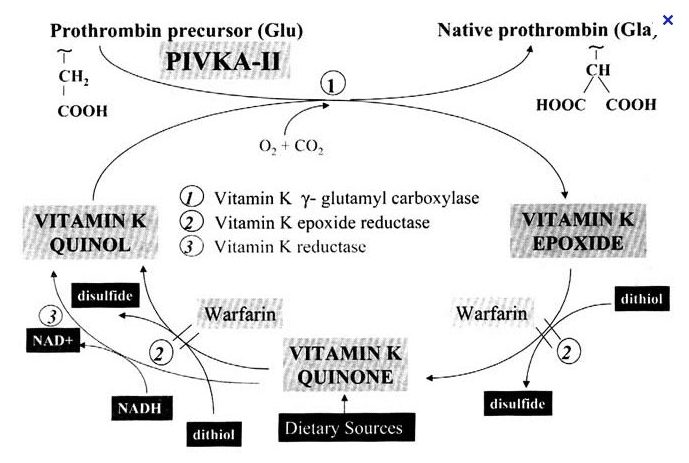
Medical school consisted of nutritional lectures discussing things like biochemical pathways of vitamin K metabolism or learning the pathway of vitamin D activation in the kidney and skin. Yes, perhaps you might consider them nutrition, but they are really much closer to biochemistry. Vitamin D becomes 25-OH vitamin D in the kidneys and then becomes activated in the skin during sun exposure to the active 1,25-OH vitamin D. So very useful knowledge when trying to understand how to help patients lose weight.

Chart
© Medium
We also learned about such common everyday diseases such as scurvy (Vitamin C deficiency) and pellagra. Gums bleeding and hair follicles that are corkscrewed? Avast ye mateys. Your bloody gums are a-fouling my pirate ship, you scurvy dog. Knowledge of scurvy certainly came in handy during exams, and also for the last patient that I diagnosed with scurvy, with was, uh, never. That's probably because I am a modern-day physician and not a pirate of the Caribbean.

Heart - Black

Are ADHD rates rising because we send children to school at younger ages?

Child
© CEphoto, Uwe Aranas
Every parent knows the difference a year makes in the development and maturity of a young child. A one-year-old is barely walking while a two-year-old gleefully sprints away from you. A four-year-old is always moving, always imagining, always asking why, while a five-year-old may start to sit and listen for longer stretches.

Growing Expectations vs. Human Behavior

Children haven't changed, but our expectations of their behavior have. In just one generation, children are going to school at younger and younger ages, and are spending more time in school than ever before. They are increasingly required to learn academic content at an early age that may be well above their developmental capability.

In 1998, 31 percent of teachers expected children to learn to read in kindergarten. In 2010, 80 percent of teachers expected this. Now, children are expected to read in kindergarten and to become proficient readers soon after, despite research showing that pushing early literacy can do more harm than good.

Microscope 1

Woman dies from brain-eating amoeba after using Neti pot with filtered tap water in Seattle, US

neti pot
A woman used filtered tap water in a Neti pot rather than saline, which doctors think led to her death.
A Seattle woman died from a brain-eating amoeba after she ran tap water through her Neti pot, according to a recent report.

The woman, 69, saw a specialist for a recurring sinus infection and was told to try running saline through her sinuses. But instead of using sterilized water or saline, she used tap water that had been filtered with a Brita purifier.

Doctors say that is likely how she contracted a Balamuthia mandrillaris, an amoeba found in soil and fresh water that can cause an infection of the central nervous system. Nasal irrigation, where someone tries to flush their nasal cavity to rid it of mucus and other things, has been linked to the contraction of another potentially fatal amoeba, which led doctors to make the connection.

Both are extremely rare, but the report, published in the International Journal of Infectious Diseases, said that it could happen to others.

Comment: Worryingly, cases of brain-eating amoeba seem to be in the news more often these days:


Info

Can't exercise? A hot bath may help improve inflammation, blood sugar levels, study suggests

Bath
Hot water treatment may help improve inflammation and blood sugar (glucose) levels in people who are unable to exercise, according to a new study. The findings are published ahead of print in the Journal of Applied Physiology.

Physical stress such as exercise can cause the short-term elevation of inflammatory markers. After exercise, the level of an inflammatory chemical (IL-6) rises. In a process called the inflammatory response, this activates the release of anti-inflammatory substances to combat unhealthily high levels of inflammation, known as chronic low-grade inflammation. Recent research has shown that raising body temperature augments the inflammatory response and provides a rationale for identifying exercise alternatives that reduce low-grade inflammation in the body. Previous studies have also found a connection between a spike in body temperature and nitric oxide production, a substance that aids blood flow and helps carry glucose throughout the body.

Researchers studied markers of inflammation and blood sugar and insulin levels in a group of sedentary, overweight men. The volunteers participated in both hot-water immersion and ambient room temperature (control) trials separated by at least three days. The researchers took blood samples before and after the participants rested in an 80-degree F room for 15 minutes.

Comment: See also: Insomniac? Fall asleep naturally with these tips


Marijuana

Research proving cannabis kills cancer cells safely has been suppressed since 1974

Cannabis
Remember the hassles Rick Simpson went through in his Canadian Nova Scotia town trying to bring the cannabis oil cures he and others used to cure themselves of various cancers? Rick assumed the world was ready for him to share the good news from his and his townspeople's experiences.

After several attempts to get cannabis oil allowed through the court system with many testimonials from those who had been helped, Rick realized this important harsh reality: The cancer industry does not want a cure for cancer.

He was growing the hemp on his land, making the cannabis oil, and sharing it without cost to those who had needed it after curing his skin cancer and a fiercely intense neurological post concussion disorder from a head injury that pharmaceuticals only exacerbated. The townspeople were cured of several disorders, including lung cancer. All of them had been failed by mainstream medicine.

Comment: If cannabis can kill "incurable" brain cancer, why is it criminalized?


Pills

Dangerous, mind-altering drugs: 20 million schoolchildren have been prescribed drugs known to cause suicidal thoughts

drugs
A news article published in 2017 reported that, according to the latest data, a staggering 12.7 percent of all US citizens over the age of 12 were taking antidepressants. Thrive Global, who reported these figures, stated that:
For many, antidepressants have been a long-term course of medication: 68 percent of people in the most recent survey said they'd been taking them for two or more years, and 25 percent had been taking them for more than a decade."
In reality, more children are being prescribed these drugs than the public are aware of. This fact was highlighted by the Citizens Commission on Human Rights (CCHR) in their film, Psychiatry: an Industry of Death. They stated that currently around 20 million school children are being prescribed stimulants and psychotropic drugs.

This information is extremely worrying, especially when you consider that professionals worldwide have been linking the use of antidepressants to suicide, suicidal thoughts, and attempted suicide, for many years.

Comment: Warning: Antidepressants May Lead to Suicidal Tendencies


Magnify

Microplastics found in guts of every species of sea turtle across world

sea turtle
Fragments of plastic have been found in every single species of turtle in a new study spanning the world's oceans.

Microplastic particles and tiny fibres were found in the guts of more than 100 turtle carcasses from the Atlantic, Pacific and Mediterranean.

A large proportion of the material extracted came in the form of fibres like those used in clothing, cigarette filters and fishing nets, but the scientists also found microbeads of the kind used in cosmetics.

Comment: See also:


Cow

Danish doctor warns: Vegan food may lead to mental retardation

vegan food
Chief physician Allan M. Lund at Rigshospitalet in Copenhagen warns that vegan food can have severe consequences, such as epilepsy and ultimately developmental disorders.

In Denmark, there is now a debate about the suitability of an increasing number of families giving their children only vegan food. Critics are opposed to scrapping all animal products in small children's diet.

The problem is that poor food, which for example requires the addition of vitamin B12, can have serious consequences for children. And as a result several children on a vegan diet have been treated at Rigshospitalet in Copenhagen.

Comment: A little video evidence that the good doctor is correct:


Bacon

Do cured meats really cause cancer?

cured meats
Flies were swarming throughout the shop as temperatures raced into the upper nineties. Forty-pound wheels of cheese sat behind the glass and under the counter, extracting whatever cool air they could from the refrigerated enclosure. We ordered a half pound of the comté cheese, which was being strangled by a several inch-thick rind. The cheese monger gestured to us that it was edible, and in response to our surprise, he cut off a large piece, popped it in his mouth, and after minimal chewing, swallowed it whole. We spoke little French and he spoke no English, but we were instantly united in our mutual love of cheese. He showed us several pictures of Eastern France, where the unpasteurized cow's milk was converted to cheese during its storage in the caves below the Franche-Comté region. However, as he was handing us the wrapped cheese, we spotted the cured duck links hanging from the ceiling. Below them was a sign with several words, one of which was saucisson. He pointed and said "canard." With little to no French vocabulary, I knew what canard meant. Throughout the trip, I had eaten duck every day, for nine straight days. I had never had cured duck before, and after trying it later that night, I realized I had been missing out for the first 36 years of my life.

Rewinding several years before my epicurean awakening blessed by duck prosciutto, the issues of processed meat were thrust into the spotlight when the IARC at the World Health Organization classified processed meat as a Group 1 carcinogen to humans, citing data linking it to colorectal cancer. While red meat has taken a beating for years, it pales in comparison to the beat-down given to processed meats, including cured meats, hot dogs, sausage, pickled meats, and beef jerky, to name a few. But are all processed meats the same? Should I feel guilty for the immense enjoyment I received from the duck prosciutto?